Pet Food Processing Market worth $6.2 billion by 2026

The report “Pet Food Processing Market by Type (Mixing & Blending Equipment, Forming Equipment, Baking & Drying Equipment, Cooling Equipment, Coating Equipment), Form (Dry, Wet), Application (Dog Food, Cat Food, Fish Food), and Region – Global Forecast to 2026”, is projected to grow from USD 4.4 billion in 2019 to USD 6.2 billion by 2026, recording a CAGR of 5.0% during the forecast period. The major factors driving the growth of the Pet Food Processing Market include the increasing trend of pet food product premiumization, rising pet adoption, and acceptance of pets across regions.

The wet segment is projected to be the fastest-growing segment in the pet food processing market during the forecast period.

The increasing demand for wet pet food products is mainly due to its high nutritional content and the presence of animal-based proteins, which is essential for the development of pets. Though it is less economical, the increasing trend of pet humanization and product premiumization has encouraged increasing demand for premium and high-quality pet food products among pet owners. These factors are projected to drive the growth of the wet segment in the pet food processing market.

Inquiry Before Buying: https://www.marketsandmarkets.com/Enquiry_Before_BuyingNew.asp?id=9535004

The dog food segment is projected to account for a major share in the pet food processing market during the forecast period.

The dog food segment is projected to account for the largest share in the global pet food market. The increasing population of dogs and the rising trend of pet humanization have encouraged dog owners to accept them as companions, which is projected to drive the demand for premium dog food. These factors are projected to drive the growth of the overall pet food processing equipment market. Dogs have the largest population among other pets globally. Pet owners are witnessing an increasing trend of purchasing premium-priced and nutrition-rich pet food products and prefer opting for high-quality food for their pets. Due to these factors, the dog food segment is projected to account for the largest market share.

The forming equipment segment is projected to account for the largest share in the pet food processing market during the forecast period.

The forming equipment segment is projected to account for the largest market share due to the increasing demand for extrusion solutions and increasing application in the pet food processing market. Some of the major extrusion equipment manufacturing companies in the pet food industry are Buhler AG (Switzerland), Baker Perkins Ltd. (UK), and Clextral SAS (France). The introduction of innovative extrusion machinery for manufacturing customized pet food has encouraged manufacturers to opt for extrusion-based manufacturing, which is projected to drive the growth of the forming segment. In addition, this segment is projected to account for the largest market share during the forecast period.

Request for Customization of the Report: https://www.marketsandmarkets.com/requestCustomizationNew.asp?id=9535004

The Asia Pacific region is projected to be the fastest-growing market for pet food processing during the forecast period.

The Asia Pacific region is projected to be the fastest-growing market for pet food processing during the forecast period. The region witnesses a high demand for pet food products due to the increasing acceptance of pets. The rising concerns among pet owners regarding the health of pets have led to an increase in demand for high-quality pet food products that require specialized machinery. These factors are projected to create growth opportunities for equipment manufacturers in countries such as India, China, Japan, and Thailand.

The pet food processing market comprises major players, such as Andritz Group (Austria), Buhler Holding AG (Switzerland), The Middleby Corporation (US), GEA Group (Germany), Baker Perkins Ltd. (UK), Clextral SAS (France), Precision Food Innovations (US), Mepaco Group (US), Coperion GMBH (Germany), F.N. Smith Corporation (US), Reading Bakery Systems (US), and Selo (Netherlands). The study includes an in-depth competitive analysis of these players in the pet food processing market, with their company profiles, recent developments, and the key market strategies.

About MarketsandMarkets™

MarketsandMarkets™ provides quantified B2B research on 30,000 high growth niche opportunities/threats which will impact 70% to 80% of worldwide companies’ revenues. Currently servicing 7500 customers worldwide including 80% of global Fortune 1000 companies as clients. Almost 75,000 top officers across eight industries worldwide approach MarketsandMarkets™ for their painpoints around revenues decisions.

Our 850 fulltime analyst and SMEs at MarketsandMarkets™ are tracking global high growth markets following the “Growth Engagement Model – GEM”. The GEM aims at proactive collaboration with the clients to identify new opportunities, identify most important customers, write “Attack, avoid and defend” strategies, identify sources of incremental revenues for both the company and its competitors. MarketsandMarkets™ now coming up with 1,500 MicroQuadrants (Positioning top players across leaders, emerging companies, innovators, strategic players) annually in high growth emerging segments. MarketsandMarkets™ is determined to benefit more than 10,000 companies this year for their revenue planning and help them take their innovations/disruptions early to the market by providing them research ahead of the curve.

MarketsandMarkets’s flagship competitive intelligence and market research platform, “Knowledgestore” connects over 200,000 markets and entire value chains for deeper understanding of the unmet insights along with market sizing and forecasts of niche markets.

Contact:
Mr. Sanjay Gupta
MarketsandMarkets™ INC.
630 Dundee Road
Suite 430
Northbrook, IL 60062
USA : 1-888-600-6441
sales@marketsandmarkets.com

Seed Coating Market is Projected to Reach $3.0 billion by 2025

The report Seed Coating Market by Additive (Polymers, Colorants, Pellets, Minerals/Pumice, Active Ingredients), Process (Film Coating, Encrusting, Pelleting), Active Ingredient (Protectants and Phytoactive Promoters), Crop Type, Region – Global Forecast to 2025″, is projected to grow at a CAGR of 8.5% from USD 1.8 billion in 2019 to reach a projected value of USD 3.0 billion by 2025. The quality, appearance, and nutritive value of seeds are the key factors contributing to the growth of the seed coating market. Seed coatings offer help to raise the commercial value of seeds by enhancing their appearance, improved handling, flowability through planters, and making them more productive. Hence, seed coatings are projected to offer business opportunities for manufacturers in the next five years. Due to these factors, many multinational players are focusing on producing various types of seed coating products.

The cereals & grains segment is estimated to account for a larger market share, in terms of value, in 2019

Seed coatings are applied to cereals,  grains, oilseeds, pulses, vegetables, flowers, ornamentals, and other crops, such as turf and forage grass. The demand for seed coating materials is projected to remain high due to the high consumer awareness about the key attributes of coated seeds and their advantages to increase the crop yield and protection against soilborne pests and diseases.

Speak to Analyst: https://www.marketsandmarkets.com/speaktoanalystNew.asp?id=149045530

The polymer segment is estimated to hold the largest share in seed coatings market, in terms of value, in 2019

Key additives of seed coatings include polymers, colorants, active ingredients, pellets, minerals/pumice, and other additives. Seed coating polymers are widely used as coatings in two major forms, which are polymer gels and superabsorbent polymer gels. These are water-based polymers of low viscous range that are required for enhanced seed germination. Ease of handling and improved flowability through planters are also the key factors, due to which this segment accounts for a major share in the market.

Innovative, environment-friendly, and cost-effective solutions—the key to success for manufacturers in the North American and European region

The North American and European region accounted for the largest share in the global seed coating market in 2018. Increasing awareness about the benefits of seed coatings is projected to drive the growth of the market in these regions. In addition, adding seed coatings is an economical option and is preferred by the Canadian farmers as a risk-hedging technique, which has led to increased sales of coated seeds in the North American market. North America and Europe dominated the market and accounted for the largest share globally, as seed coating products are gaining acceptance among the organic cultivators, which prefer only biodegradable techniques of seed coating production for cultivation.

Request for Sample Report Pages: https://www.marketsandmarkets.com/requestsampleNew.asp?id=149045530

This report includes a study of marketing and development strategies, along with the product portfolio of leading companies. It includes the profiles of leading companies, such as BASF SE (Germany), Bayer AG (Germany), Clariant AG (Switzerland), and Croda International Plc (UK).

About MarketsandMarkets™

MarketsandMarkets™ provides quantified B2B research on 30,000 high growth niche opportunities/threats which will impact 70% to 80% of worldwide companies’ revenues. Currently servicing 7500 customers worldwide including 80% of global Fortune 1000 companies as clients. Almost 75,000 top officers across eight industries worldwide approach MarketsandMarkets™ for their painpoints around revenues decisions.

Our 850 fulltime analyst and SMEs at MarketsandMarkets™ are tracking global high growth markets following the “Growth Engagement Model – GEM”. The GEM aims at proactive collaboration with the clients to identify new opportunities, identify most important customers, write “Attack, avoid and defend” strategies, identify sources of incremental revenues for both the company and its competitors. MarketsandMarkets™ now coming up with 1,500 MicroQuadrants (Positioning top players across leaders, emerging companies, innovators, strategic players) annually in high growth emerging segments. MarketsandMarkets™ is determined to benefit more than 10,000 companies this year for their revenue planning and help them take their innovations/disruptions early to the market by providing them research ahead of the curve.

MarketsandMarkets’s flagship competitive intelligence and market research platform, “Knowledgestore” connects over 200,000 markets and entire value chains for deeper understanding of the unmet insights along with market sizing and forecasts of niche markets.

Contact:
Mr. Sanjay Gupta
MarketsandMarkets™ INC.
630 Dundee Road
Suite 430
Northbrook, IL 60062
USA : 1-888-600-6441
sales@marketsandmarkets.com

Increasing Demand for Plant-Based Food Products to Drive the Market for Meat Substitutes Market

The meat substitutes market is estimated to be valued at USD 1.6 billion in 2019 and is projected to reach USD 3.5 billion by 2025, recording a CAGR of 12.0% during the forecast period. Growth of the meat substitutes market is driven by factors, such as the changing preferences of people for vegan food products as well as increasing obesity.

The key players in the meat substitutes market include Archer Daniels Midland Company (US), DuPont (US), Roquette Frères (France), Kerry (Ireland), Ingredion (US), The Nisshin OilliO Group,Ltd (Japan), Axiom Foods (US), Sotexpro S.A (France), Wilmar International Limited (Singapore), CRESPEL & DEITERS (Germany), CHS INC. (US), Suedzucker (Germany), MGP Ingredient (US), Puris (US), Sonic Biochem Ltd. (India),  The Top Health Ingredients (Canada), The Emsland Group (Germany), and Cargill (US).

To know about the assumptions considered for the study download the pdf brochure

Cargill (US) is involved in the manufacturing and marketing of food ingredients; agricultural products; and risk management, financial, and industrial products & services around the globe. Its key business segments include specialty food ingredients & applications and bulk ingredients. It comprises 75 businesses, which are classified into four main divisions, namely, agriculture, food, financial, and industrial. The products & services provided by the company are in the area of animal nutrition and feed, commodity trading and processing, industrial/bio-industrial products, energy and fuels, farmer services, financial and risk management, food & beverage ingredients, health and personal care, and salt. The company mainly focuses on various investments to strengthen its position in the meat substitutes market. For instance,

  • In August 2019, Cargill invested $ 75 million in PURIS (US), a key distributor of pea protein ingredients to Beyond Meat (US). This investment would enable PURIS to double its production of pea proteins.

Archer Daniels Midland Company (ADM) produces food & beverage ingredients, feed & feed ingredients, industrial ingredients, biofuels, and naturally derived alternatives to industrial chemicals. It operates through five segments—agricultural services, oilseeds processing, corn processing, wild flavors and specialty ingredients, and others. Its network spans across more than 170 countries around the world. It operates globally through 271 processing plants and more than 450 procurement facilities, where cereal grains and oilseeds are processed into products used in the food, beverage, nutraceutical, industrial, and animal feed markets. It also has 46 innovation centers and owns approximately 200 warehouses and terminals, which are used as bulk storage facilities. It mainly focuses on various partnerships to expand itself to strengthen its product portfolio in the meat substitutes market. For instance,

  • In August 2019, ADM (US) and Marfrig (Brazil) entered into a partnership to provide plant-based burgers in Brazil. Marfrig (Brazil) currently offers plant-based burgers in Brazil, whereas ADM provides natural ingredients and plant-based protein flavors to its US customers.

Request for Sample Report Pages: https://www.marketsandmarkets.com/requestsampleNew.asp?id=979

Ingredion (US) is an ingredient solutions company whose product line includes sweeteners, starches, and unique ingredients from plant sources, such as corn, tapioca, rice, sago, and potato. It also sells biomaterial solutions derived from the wet milling and processing of corn and other starch-based materials to a range of industries, both domestically and internationally. It caters to a variety of customers in diverse industries around the world, including food, beverage, paper & corrugating, brewing, pharmaceutical, textile, and personal care, as well as the global feed and corn oil markets. Its key reportable segments include food, beverages, animal nutrition, brewing, and others. It maintains a strong operational base of 44 manufacturing facilities and has a presence across 60 countries.

Ingredion produces a diverse variety of flours made out of pulses. These flours are used in bakery products, snacks, cereals, meat alternatives, pasta, batters, and breading. Meat alternatives are produced from pea, faba beans, chickpea, and lentils. The company mainly focuses on various expansions & investments to expand itself in the meat substitutes market. For instance,

  • In May 2019, Ingredion invested about USD 185 million toward a new facility in Vanscoy, Canada, which would be operational by 2020. The new facility would play a key role in the development and production of new protein concentrates and flours from lentils, faba, peas, and beans.

Enzymes Market – It’s Opportunities & Challenges

The enzymes market was valued at USD 10.0 billion in 2019 and is projected to reach USD 14.7 billion by 2025, recording a CAGR of 6.7% during the forecast period. The demand for enzymes is increasing significantly, as it is being used across various industries and as a substitute for chemicals.

Inquiry Before Buying: https://www.marketsandmarkets.com/Enquiry_Before_BuyingNew.asp?id=46202020

Market Dynamics:

Drivers:

  • Growing environmental concerns and increasing demand for biofuel
  • Advancements in R&D activities for technical enzymes
  • Advancements in enzyme engineering & green chemistry and the introduction of genetically engineered enzymes
  • Multifunctionalities of enzymes

Restraints:

  • Stringent regulatory framework

Opportunities:

  • Demand for an alternative to synthetic chemicals

Challenges:

  • Concerns over quality, safety, and consumer perception toward enzymes

Target Audience:

  • Enzyme manufacturing companies and government organizations
  • Service providing company officials
  • Government and research organizations
  • Research officers
  • CEOs and vice presidents
  • Marketing directors
  • Product innovation directors and related key executives from manufacturing companies and organizations operating in the market
  • Manufacturing and marketing companies

Request for Sample Report Pages: https://www.marketsandmarkets.com/requestsampleNew.asp?id=46202020

Geographical Prominence:

The enzymes market in Asia Pacific is expected to witness the highest growth due to the increasing demand for enzymes in industrial and specialty applications. Technological innovations in machinery, synthetic fibers, logistics, and globalization of business have made the textile & leather industry one of the essential sectors in the Asia Pacific region. Furthermore, the shift of industrial operations from developed regions, such as North America and Europe to Asia Pacific, has further contributed to the growth of the enzymes market in this region. The use of enzymes in the biofuel industry will grow further due to the increase in bioethanol production and its usage in fueling automobiles and electricity. In addition, the majority of the population resides in the Asia Pacific region, which is contributing to the growth of the pharmaceutical industry. Enzyme usage in pharmaceutical products will further drive the enzymes market in the Asia Pacific region.

Key Players:

  • BASF (Germany)
  • DuPont (US)
  • Associated British Foods (UK)
  • Novozymes (Denmark)
  • DSM (Netherlands)
  • Dyadic International (US)
  • Advanced Enzymes Technologies (India)
  • Aumgene Biosciences (India)

Outlook on Key Players in the Gelatin Market

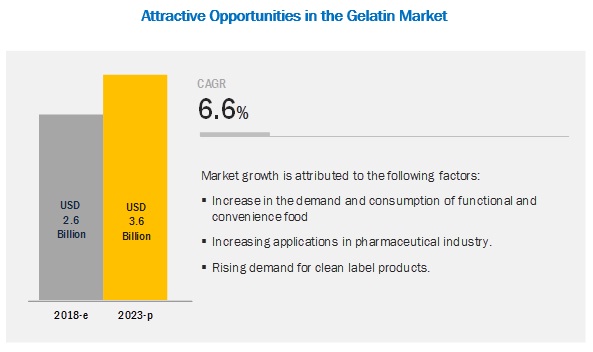
he global gelatin market size is projected to grow from USD 2.6 billion in 2018 to USD 3.6 billion by 2023, at a CAGR of 6.6% during the forecast period. Growing demand for functional and convenience food & beverage products and rising preferences for clean-label products are projected to drive the market for gelatin.

The major gelatin vendors include Darling Ingredients (US), Gelita (Germany), Nitta Gelatin (Japan), Tessenderlo Group (Belgium), Weishardt (France), Trobas Gelatine (Netherlands), India Gelatine & Chemicals (India), Lapi Gelatine (Italy), Junca Gelatines (Spain), Sterling Biotech Group (India), Italgelatine (Italy), and Gelnex (Brazil). These players have adopted various growth strategies such as expansions & investments and new product launches to expand their presence in the global gelatin market. Expansions & investments are the most dominating strategy adopted by major players. This has helped key players to increase their presence in different regions.  

To know about the assumptions considered for the study download the pdf brochure

Darling Ingredients is one of the major companies involved in the manufacturing of natural ingredients from edible and inedible bio-nutrients. It serves a wide range of applications including food, health & pharma, feed, pet food, fuel, bio-energy, and fertilizer. The company has its processing units in over 200 countries across the globe. It operates through three business segments, namely, feed ingredients, food ingredients, and fuel ingredients. It offers gelatin under its food ingredients segment. The company’s gelatin products and solutions are manufactured by Rousselot (France). Rousselot is a leading market provider of gelatin and hydrolyzed collagen for the food, nutrition, pharmaceutical, and technical industries with operations across Europe, China, South America, and the US.

The company focuses on new product launches and acquisitions to increase its product offerings mainly in the gelatin segment to provide advanced solutions to the food and pharmaceutical industries. Rousselot launched a new range of medical grade gelatin “X-pure,” which is useful for in-body applications.

Furthermore, Tessenderlo Group is involved in providing specialty solutions for applications in food, agriculture, water management, and efficient use and re-use of natural resources. PB Gelatins/PB Leiner is a subsidiary of Tessenderlo Group, which produces a complete range of gelatin, hydrolysates, and collagen peptides that are used in food processing. Globally, the company has its presence in more than 100 locations across the globe, which covers various regions including Europe, South America, North America, Asia, and Rest of the World (RoW). The company operates its business through three major segments, which include agro, bio-valorization, and industrial solutions. It offers gelatin products under its bio-valorization segment. The company has been focusing on offering gelatin products to food & beverage and pharmaceutical manufacturers. In April 2016, PB Leiner, a part of Tessenderlo Group, entered into a collaboration with Viachem (US) for the sales, marketing, and distribution of collagen hydrolysates and specialty gelatin products.

ADM (US) and AAK AB (Sweden) are the Key Players in the Release Agents Market

The key players profiled in the report have a strong presence in the global release agents market; these include major players such as ADM (US), Avatar Corporation (US), Par-Way Tryson (US), AAK AB (Sweden), and Associated British Foods (UK). Apart from these companies, other release agents companies, such as Cargill (US), Mallet & Company (US), DowDuPont (US), IFC Solutions (US), Lecico (Germany), Lallemand (Canada), Masterol Foods (US), Puratos (Belgium), Zeelandia (Netherlands), DÜBÖR (Germany), Sonneveld (Germany), and Bakels (Switzerland). These players adopted growth strategies such as expansions & investments and acquisitions to cater to the increasing demand for release agents. They are increasing their research & development expenditure to expand their release agent product portfolio.

The core strength of the key players is their strategic expansion to enhance their presence in the release agents market. Companies such as Archer Daniels Midland Company and AAK AB are expanding their production as well as R&D facilities to develop new release agents. Such strategies are expected to maximize market share and increase their overall customer base. Players such as Associated British Foods plc, DowDuPont, and Cargill adopted the acquisition strategy to improve their distribution network, gain a stronger foothold, and enhance their market share. These companies are also focused on offering a diverse range of release agents to be in line with the government policies of different regions.

To know about the assumptions considered for the study download the pdf brochure

Archer Daniels Midland Company is a wholly integrated food and agricultural business that includes processing, manufacturing, and distribution of its products. The company possesses a well-established distribution network of local and international suppliers and distributors in the US and international markets, which help it to manufacture and deliver quality products at a reasonable price. The company also has a dedicated team to work in collaboration with regional, national, and international contractors and suppliers, which contribute to its strategic expertise in the market. The company is striving to maintain its leading position in the release agents market. It is focusing on the geographic expansion & sourcing, marketing, and selling its release agents products. In line with this strategy, the company expanded its business in India in May 2014. This expansion helped the company’s network and its presence in the Asia Pacific region.

AAK AB is a leading manufacturer of high-value-added specialty vegetable oils and fats solutions. It is present in diversified markets, which helps it minimize business risks and dependency on any particular business. The company has a strong product portfolio and brand image, which enables it to strengthen its position in the market. In 2016, AAK AB acquired California Oils Corporation (US); this acquisition helped the company expand its food ingredients and chocolate & confectionery fat business in the US. It has strong R&D capabilities and also offers customized product solutions that provide strategic advantages to meet the market demands.

Strong Demand for High-Throughput Screening in Plant Phenotyping Processes

The advantages of obtaining accurate qualitative and quantitative measurements using plant phenotyping technologies are the key reasons contributing to the growth of this market, globally. Plant phenotyping technologies are likely to gain traction in agricultural research and plant breeding programs and prove to be an important tool for agriculture companies, research organizations, and academic institutions focused on analyzing the environmental and genetic factors impacting the physical factors in plants. The plant phenotyping market is projected to reach USD 268.1 million by 2023, at a CAGR of 11.14% from 2018.

Automation and significant advancements in the application of imaging sensors for high-throughput data collection, growing importance of sustainable crop production using improved crop varieties, and increasing expansions and investments in plant phenotyping in developed regions are the factors expected to play a significant role in the growth of the plant phenotyping market. However, the lack of technical and conceptual awareness of the plant phenotyping process serves as a restraint for the growth of the market.

To know about the assumptions considered for the study download the pdf brochure

The concept of using drones as a plant phenotyping platform is likely to witness a positive trend in terms of identification of different plant characteristics, morphology, and physiology. This platform type is projected to grow at a higher rate, as it has high demand in countries with limited manpower. Among all platform/carrier types, conveyor-based or modular systems are widely used as they have multiple functionalities when it comes to application and can also be easily integrated with additional accessories such as sensors and/or software.

In terms of services, the statistical analysis segment is projected to grow at a higher rate from 2018 to 2023. The increasing need for making sense of the quantitative data acquired in abundance is likely to have a positive effect on the services market for plant phenotyping. This is due to the need for the generation of highly reliable data and rising interest of plant breeders for this service.

Asia Pacific is projected to be the fastest-growing region in the plant phenotyping market from 2018 to 2023. The region has a higher demand for food and feed to meet the challenges of the ever-growing population. Owing to the increasing research activities in the Australian market for plant phenotyping, the region is expected to witness a rise in the overall plant phenotyping market in the coming years. Multinational companies are also focusing on marketing their products and services of plant phenotyping in these regions, through collaborations and networks to increase awareness among plant-based science research communities. There is an urgent need to develop/design plants in this region that can tolerate stress related to the changing climatic conditions along with providing higher biomass yield for feeding the population.

Associated British Foods (UK) and Lesaffre (France) are the Leading Players in the Specialty Yeast Market

The specialty yeast market is estimated to be valued at about USD 2.7 billion in 2019 and is projected to reach about USD 4.0 billion by 2025, at a CAGR of 7.2% during the forecast period. The increasing demand for fermented food and beverage products is driving the growth of the specialty yeast market, globally. The use of specialty yeast in feed, bioethanol, biotechnology, cosmetics, and personal care products is trending, which increases the demand for specialty yeasts from these industries. Also, a ban on the use of antibiotics in the feed products in the European region is further expected to create lucrative opportunities for specialty yeast in the coming years.

The key players in this market include Associated British Foods (UK), Angel Yeast (China), Lallemand (Canada), Lesaffre (France), and Chr. Hansen (France) among others. Acquisitions, expansions, and agreements were some of the core strengths adopted by the leading players in the specialty yeast market to increase their presence. It also helped them diversify their businesses geographically, strengthen their distribution networks, and enhance their product portfolios. Other players in the market include Koninklijke DSM N.V (Netherlands), Archer Daniels Midland (US), Leiber GmBH (Germany), Kerry Group (Ireland), Biorigin (Brazil), Nutreco N.V (Netherlands), Synergy Flavors (UK), Oriental Yeast (Japan), Beldem (Belgium), Levex (Turkey), and Kemin Industries (US).

To know about the assumptions considered for the study download the pdf brochure

Associated British Foods (UK) is one of the major players in the specialty yeast market. The company caters to the specialty yeast market through its subsidiary—Ohly (Denmark), which is a part of the company’s ingredients business. It has presence in Europe, Africa, the Middle East, Asia, and the Americas. AB Mauri (UK), another subsidiary of Associated British Foods also provides specialty yeast which finds application in distilled spirits, alcoholic beverages, bioethanol, and nutrition. In January 2019, Ohly (Denmark) and Lallemand (Canada), entered into a strategic partnership for the divestment of Ohly’s Hutchinson Torula Yeast facility and associated Torula whole cell business in the US. The long-term supply partnership between these companies aimed at benefitting Ohly by ensuring sustainable security of the Hutchinson site.

Lesaffre (France) is one of the leading players in the global fermentation industry. The company produces and sells yeast, ingredients, sourdoughs, and yeast extracts which are utilized in the baking, taste, healthcare, and biotechnology industries. It has 63 production sites with a presence in approximately 185 countries across the world. The company also has a very strong focus on R&D and has partnered with 60 universities and research centers across the globe to bring about new products to cater to the growing demand. In November 2018, Biospringer (Paris), a business unit of Lesaffre invested in Strasbourg for the establishment of a new production plant manufacturing yeast extracts. This production plant would cater to the customers demand in the region.

Market Leader in Pulse Ingredients Market

The pulse ingredients market is estimated to be valued at USD 17.4 billion in 2018 and is projected to reach USD 21.6 billion by 2023, at a CAGR of 4.5% during the forecast period. The growth of the pulse ingredients market is driven by factors such as increased health-consciousness among consumers and the popularity of protein-rich food products.

By source, the chickpeas segment is projected to be one of the fastest growing segments for the pulse ingredients market. In the US, chickpeas are added as ingredients in soups. Batory Foods (US) offers chickpea flour, which is used in a variety of applications such as bakery, dairy, confectionery, beverages, meat, and sauces. Chickpea flour offers numerous health benefits as it helps in stabilizing blood sugar levels, improving digestion, weight management, and minimizing the risk of heart attack.

On the basis of type, the pulse flour segment is projected to be the fastest-growing segment in the pulse ingredients market. Pulse flours enable food manufacturers and retailers to produce food products that are highly nutritious, protein-fortified, have a low-glycemic-index, and are gluten-free. Pulse flours undergo heat treatment, protein treatment, enzyme treatment, vitamin & mineral treatment, and water treatment, to increase their stability, regularity, and other functions as well as enhance their nutritive values.

To know about the assumptions considered for the study download the pdf brochure

On the basis of application, pulse ingredients are widely used in meal & meal centers, followed by soups, sauces, seasonings, snacks, fruits & vegetables, processed fish, meat, egg products, and bakery & confectionery products. Pulse ingredients find application in various food & beverages, where they act as stabilizers, thickeners, and gelling agents. Pulses including peas, beans, lentils, and chickpeas are high in dietary fiber, micronutrients; and are nutritious. As consumers are expecting high content of proteins in food products, the use of proteins is a growing trend, which drives the demand for pulses ingredients.

The Asia Pacific is the fastest-growing market for pulse ingredients and is projected to record the highest CAGR during the forecast period. The pulse ingredients market in the Asia Pacific is driven by the rise in disposable incomes, expansion of the food & beverage industry, an increase in the number of middle-class population, and urbanization. Adaption of urbanized lifestyle has urged consumers to opt for convenience foods such as bakery products and snacks with added health benefits boosting sales of pulse ingredients in the region. Apart from this, the region is backed countries such as China and India, which have a large population base and are projected to be key revenue generating pockets for pulse ingredients manufacturers in the coming years.

Pulse ingredients manufacturers are focusing on product innovations to expand their consumer base in the market. Leading players operating in the pulse ingredients market include Ingredion (US), Roquette Frères (France), Emsland Group (Germany), The Scoular Company (US), and ADM (US). Expansion of the food processing industry due to the increased demand for convenience foods in the emerging countries of the Asia Pacific and South America is projected to create lucrative opportunities for pulse ingredients manufacturers in the coming years.

Increased Consumer Demand for Reduced Calorie Products With Original Taste of Sugar Drives the Market for Taste Modulators

The report Taste Modulators Market by Type (Sweet Modulators, Salt Modulators, and Fat Modulators), Application (Confectionery Products, Bakery Products, Dairy Products, Snacks & Savory Products, and Meat Products), and Region – Global Forecast to 2023″, The global taste modulators market is estimated at USD 1,084.2 million in 2018 and is projected to reach USD 1,758.7 million by 2023, at a CAGR of 10.2% during the forecast period. The market is driven by factors such as the growing awareness among consumers about the ill-effects of excessive salt intake and the increased consumer demand for low-calorie products while retaining the original taste. There has been an increasing demand for reduced/zero calorie and reduced salt products that do not compromise on the taste. This has fueled the demand for taste modulators as well.

Download PDF Brochure: https://www.marketsandmarkets.com/pdfdownloadNew.asp?id=169998886

The sweet modulators segment, by type, estimated to account for the largest market share in 2018

The sweet modulators segment is estimated to dominate the global taste modulators market in 2018. Sweet modulators provide a sweet taste with zero calories to food products. It is used by manufacturers to restore the sweet taste. Taste modulators are gaining popularity among consumers owing to enhanced taste and nutritional benefits.

The beverages segment, by application, is estimated to hold a larger share in 2018.

Beverages are broadly classified into two categories, namely, alcoholic and non-alcoholic beverages. The non-alcoholic beverages segment was the largest; it includes both carbonated drinks and non-carbonated beverages such as juices, energy drinks, sports drinks, and fortified drinks. Taste modulators are used to alter the taste and support the reduction of calories in drinks (being used in conjunction with sugar substitutes) to meet consumer demand for healthy beverage products.

Speak to Analyst: https://www.marketsandmarkets.com/speaktoanalystNew.asp?id=169998886

The Asia Pacific market is projected to grow at the highest CAGR from 2018 to 2023.

The Asia Pacific region is expected to grow at the highest CAGR during the forecast period. China and India have witnessed major growth in the taste modulators market, acquiring significant shares in the region. The region witnesses a high demand for taste modulators due to the rise in meat consumption, population growth, and increase in awareness about healthy & nutritional food products.

This report includes a study of various taste modulators, along with the product portfolios of leading companies. It includes the profiles of leading companies such as DSM (Netherlands), Kerry (Ireland), Ingredion (US), Givaudan (Switzerland), and Firmenich (Switzerland).