Polyglycerol Fatty Acid Ester Market Size, Share & Industry Analysis Report

marketsandmarkets logo

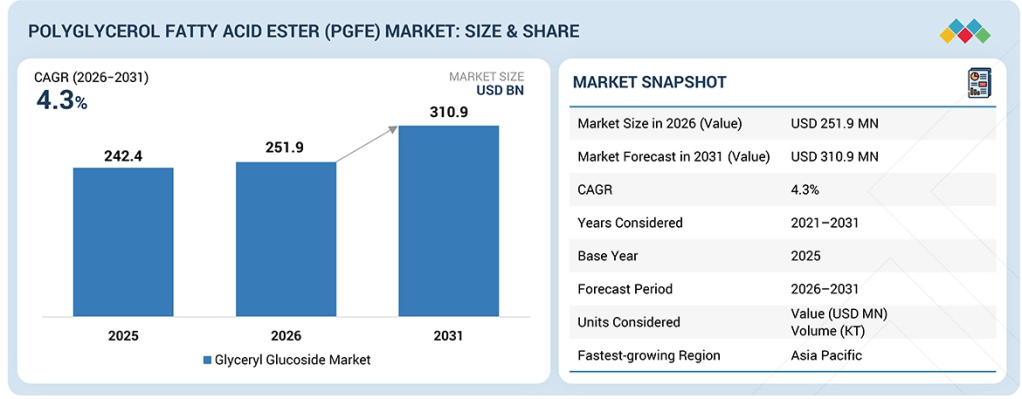
The global polyglycerol fatty acid ester market is projected to grow from USD 251.9 million in 2026 to USD 310.9 million by 2031, registering a compound annual growth rate (CAGR) of 4.3% during the forecast period.

The market has experienced steady expansion in recent years, supported by increasing demand for high-performance, multifunctional ingredients across the food & beverage and personal care industries. In particular, the growing use of creams, lotions, serums, and haircare products is accelerating the adoption of PGFEs due to their superior emulsification, conditioning, and moisturizing properties.

The shift toward premium skincare solutions—focused on anti-aging, skin rejuvenation, elasticity enhancement, and sensitivity management—is further strengthening market demand. Additionally, rising consumer preference for clean-label and bio-based ingredients, combined with increased investments in research & development and formulation technologies by leading global manufacturers, is fostering innovation in the PGFE space. These developments are resulting in more stable, compatible, and multifunctional ingredient solutions.

Download PDF Brochure: https://www.marketsandmarkets.com/pdfdownloadNew.asp?id=68919615

Low-PG Esters Dominate the Market by Concentration

Low-polyglycerol esters (PG-3 to PG-5) are expected to account for the largest share within the concentration segment. These variants are widely preferred due to their optimal hydrophilic-lipophilic balance (HLB), enhanced sensory performance, and versatility across applications including food emulsification, personal care formulations, and mild surfactant systems.

Their cost-effective production and compatibility with natural and clean-label formulations have further contributed to their dominance. Increasing demand from processed food manufacturers and cosmetic formulators for safe, plant-derived, multifunctional surfactants continues to drive growth in this segment.

Vegetable Oil-Based Sources Lead the Market

Among raw material sources, vegetable oil-based PGFEs are projected to hold the largest market share. This dominance is attributed to the widespread availability, renewability, and cost efficiency of feedstocks such as palm oil, sunflower oil, and soybean oil.

These materials align well with the growing emphasis on sustainability, clean-label positioning, and non-animal-derived ingredients. Their consistent fatty acid composition and strong emulsification and stabilization properties make them highly suitable for both food and cosmetic applications. Increasing regulatory support for plant-based ingredients and consumer demand for natural products further reinforce the segment’s growth.

Request Sample Pages: https://www.marketsandmarkets.com/requestsampleNew.asp?id=68919615

Europe Emerges as a Key Regional Market

Europe is expected to account for the second-largest share of the global PGFE market. The region’s well-established personal care and cosmetics industry, coupled with strong consumer demand for premium skincare products, is a major growth driver.

Additional factors include the presence of numerous cosmetic manufacturers and ingredient suppliers, along with increasing demand for sustainable and bio-based formulations. Consumer preference for advanced skincare solutions targeting hydration, anti-aging, and skin barrier repair is also contributing to market expansion.

Furthermore, stringent regulatory frameworks ensuring product safety and quality are encouraging the adoption of high-performance ingredients such as polyglycerol fatty acid esters across the European market.

Leading Polyglycerol Fatty Acid Ester Companies:

The report profiles key players such as Croda International Plc (UK), Clariant AG (Switzerland), Lonza Group AG (Switzerland), Sakamoto Yakuhin Kogyo Co., Ltd. (Japan), Taiyo Kagaku Co., Ltd. (Japan), Riken Vitamin Co., Ltd. (Japan), Palsgaard A/S (Denmark), Nisshin Oillio Group Ltd. (Japan), Gattefossé (France), Stéarinerie Dubois (France), Oleon NV (Belgium), Ataman Kimya A.S. (Turkey), Foodchem International Corporation (China), Guangzhou Cardlo Biotechnology Co., Ltd. (China), and Henan Chemsino Industry Co., Ltd. (China).

Environmental DNA Market Dynamics: Drivers, Restraints, and Future Scope

marketsandmarkets logo

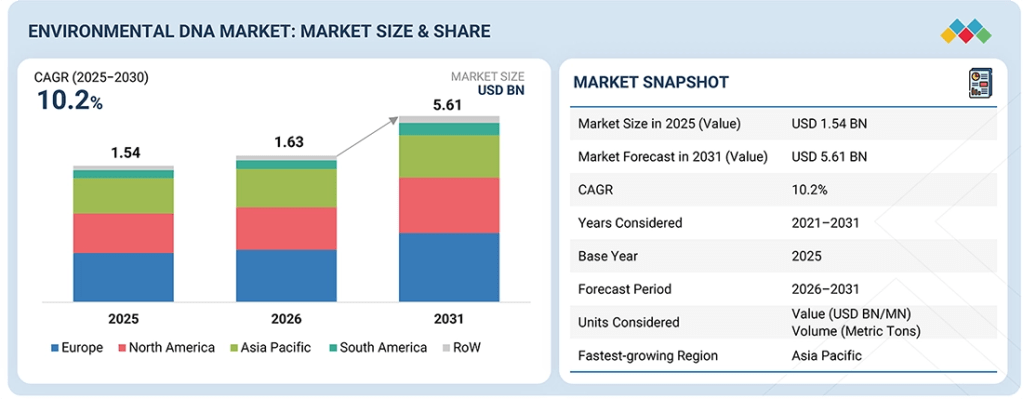
The environmental DNA market is expected to expand from USD 1.63 billion in 2026 to USD 5.61 billion by 2031, registering a Compound Annual Growth Rate (CAGR) of 10.2% over the forecast period. This growth reflects the increasing adoption of molecular-based techniques for efficient and accurate environmental monitoring across multiple sectors. eDNA is widely applied in biodiversity assessment, invasive species detection, conservation programs, water quality evaluation, and climate impact research. Its demand is accelerating as it provides a cost-effective, non-invasive alternative to conventional survey methods by detecting species from trace DNA present in water, soil, and sediment samples. Adoption is increasing among research institutions, environmental agencies, and industries such as aquaculture. Continuous advancements in PCR technologies, next-generation sequencing, and bioinformatics are further strengthening market growth. In addition, stricter environmental regulations and rising biodiversity conservation funding are supporting broader implementation. Standardized workflows are also improving scalability and operational efficiency. As competition intensifies, market focus is shifting toward delivering high-accuracy data, faster processing times, and integrated end-to-end solutions spanning sample collection to final reporting.

Download PDF Brochure: https://www.marketsandmarkets.com/pdfdownloadNew.asp?id=87204702

By type of solution, the services segment accounts for a significant share.

The services segment, encompassing sample collection, field operations, laboratory testing, sequencing, bioinformatics analysis, data interpretation, and end-to-end project management, holds a notable share of the environmental DNA market. This dominance is driven by the demand for comprehensive, turnkey solutions. Many end users—including environmental agencies, research organizations, and commercial enterprises—prefer outsourced services as they eliminate the need for in-house technical infrastructure and specialized expertise. These service offerings cover the entire workflow, beginning with field sampling and progressing through laboratory processing and sequencing, ultimately delivering structured reports and actionable insights. This integrated approach enables the execution of large-scale and complex environmental monitoring initiatives. Laboratory and sequencing services ensure high detection accuracy, while bioinformatics converts raw genetic data into meaningful ecological interpretations. End-to-end services further streamline project execution and improve efficiency. Growing requirements for biodiversity monitoring, regulatory compliance, and environmental impact assessments are further driving demand. Additionally, service providers offer standardized methodologies, consistency, and faster turnaround times, which are critical for time-sensitive applications.

By detection method, the metabarcoding segment is estimated to maintain strong growth.

The metabarcoding segment is projected to sustain strong growth in the environmental DNA market due to its capability to identify multiple species simultaneously from a single environmental sample. In contrast to targeted methods such as qPCR, which detect individual species, metabarcoding utilizes high-throughput sequencing to analyze mixed DNA samples and provide a comprehensive overview of biodiversity. This makes it highly suitable for large-scale ecological assessments across aquatic and terrestrial environments. It is extensively used in biodiversity monitoring, ecosystem evaluation, and environmental impact studies where understanding species diversity and community structure is essential. The method enables simultaneous detection of fish, plants, microorganisms, and other taxa, offering a holistic view of ecosystems. Market growth is supported by continuous improvements in sequencing technologies, declining sequencing costs, and the expansion of reference genetic databases. Furthermore, advancements in bioinformatics tools and the development of standardized analytical workflows are improving data reliability and reproducibility.

Request Sample Pages: https://www.marketsandmarkets.com/requestsampleNew.asp?id=87204702

Based on region, Europe holds a substantial share.

Europe represents a significant share of the environmental DNA market, driven by strong environmental regulations and structured ecological monitoring frameworks. Regulatory initiatives such as the EU Water Framework Directive and the EU Biodiversity Strategy mandate continuous monitoring of aquatic and terrestrial ecosystems, which has accelerated the adoption of eDNA-based approaches. The technology is widely utilized by governmental agencies, academic institutions, and environmental service providers for applications including freshwater monitoring, invasive species detection, and ecosystem health assessments. Key countries such as the UK, Germany, France, and Nordic nations demonstrate consistent adoption, supported by well-established research infrastructure and collaborative environmental programs. Steady funding for environmental research further strengthens market development, with universities, regulators, and private organizations working together on monitoring initiatives. This collaboration has contributed to greater standardization of methodologies and improved data reliability. Additionally, the region benefits from advanced laboratory networks and experienced service providers, enabling efficient execution of large-scale and complex environmental studies.

Top Environmental DNA Companies:

The market landscape includes leading players such as Thermo Fisher Scientific Inc. (US), QIAGEN (Netherlands), Illumina, Inc. (US), Eurofins Scientific (Luxembourg), SGS Société Générale de Surveillance SA (Switzerland), NatureMetrics (UK), EnviroDNA (Australia), EDNAtec (Canada), SPYGEN (France), ID-GENE ecodiagnostics Ltd. (France), Takara Bio Inc. (Japan), Stantec (Canada), Applied Genomics (UK), AllGenetics (Spain), and Jonah Ventures (US).

Planting Equipment Market Growth Drivers, Restraints, and Emerging Trends

marketsandmarkets logo

The planting equipment market is projected to grow from USD 21.74 billion in 2026 to reach USD 29.4 billion by 2031, at a Compound Annual Growth Rate (CAGR) of 6.3% during the forecast period. The planting equipment market is expanding as more farmers adopt modern and mechanized planting tools like planters, seed drills, and air seeders. These machines have proven to be highly advantageous for agriculture by enabling precise crop planting. Additionally, the government is encouraging the mechanization of farming, promoting sustainable practices, and boosting crop yields. This support further drives the growth of the planting equipment market. Currently, practices such as GPS and variable-rate seeding in precision farming are also fueling market expansion. In today’s agricultural landscape, precision farming is essential because it not only enhances crop productivity but also optimizes resource use and reduces costs.

Download PDF Brochure: https://www.marketsandmarkets.com/pdfdownloadNew.asp?id=26629474

Planting Equipment Market, By Type

The planting equipment market, by type, is segmented into planters, seed drills, air seeders, and others, each catering to specific crop and farm requirements. Planters account for a significant share due to their ability to ensure precise seed placement, uniform spacing, and optimal depth control, making them suitable for row crops such as corn and soybeans. Seed drills are widely used for cereals and grains, offering efficient sowing over large areas. Air seeders are gaining traction in large-scale farming due to their high capacity and ability to handle multiple seed types.

Planting Equipment Market, By Design

The planting equipment market, by design, is segmented into mechanical and automated systems, each addressing different levels of farm mechanization and technological adoption. Mechanical planting equipment continues to hold a significant share, particularly in developing regions, due to its lower cost, ease of operation, and suitability for small and medium-sized farms. In contrast, automated planting equipment is witnessing faster growth, driven by increasing adoption of precision agriculture technologies such as GPS guidance, sensors, and variable rate seeding. These systems enable higher accuracy, improved efficiency, and reduced labor dependency, making them increasingly preferred in large-scale and technologically advanced farming operations.

Request Sample Pages: https://www.marketsandmarkets.com/requestsampleNew.asp?id=26629474

North America held the second-largest share in the planting equipment market.

North America ranks second in the market due to the high level of mechanization in agriculture and the prevalence of large-scale commercial farms. The region mainly focuses on crops like corn, soybeans, and wheat, which require precise planting. Widespread use of planting equipment, along with strong dealers and manufacturers such as Deere & Company and AGCO Corporation, is expected to further boost the market in North America. Additionally, the adoption of technologies like GPS and automation is also likely to support market growth in the region.

The report profiles key players such as Deere & Company (United States), AGCO Corporation (United States), CNH Industrial N.V. (United Kingdom), Väderstad AB (Sweden), Kinze Manufacturing (United States), Bourgault Industries Ltd. (Canada), KUHN Group (France), SeedMaster Manufacturing Ltd. (Canada), HORSCH Maschinen GmbH (Germany), MaterMacc S.p.A. (Italy), LEMKEN GmbH & Co. KG (Germany), Maschio Gaspardo (Italy), Kubota Corporation (Japan), Sfoggia Agriculture Division (Italy), and Yanmar Co., Ltd. (Japan).

North America Food Encapsulation Market: Regional Analysis and Growth Potential

marketsandmarkets logo

The North America food encapsulation market is valued at USD 4.68 billion in 2025 and is projected to reach USD 6.98 billion by 2030, expanding at a compound annual growth rate (CAGR) of 8.3% over the forecast period. The market is experiencing steady growth as food manufacturers increasingly adopt encapsulation technologies to protect sensitive ingredients such as vitamins, minerals, probiotics, enzymes, flavors, and omega-3 oils from exposure to heat, moisture, and oxygen. Encapsulation improves ingredient stability throughout processing and storage, ensuring functional performance and product quality across the supply chain.

The rising demand for functional and fortified foods is a major growth driver. Encapsulation is widely used in dairy products, bakery items, beverages, and nutrition products to manage ingredient behavior, enable controlled release, improve absorption, and mask strong or unpleasant tastes. Established large-scale production methods such as spray drying, extrusion, and emulsion technologies continue to dominate due to their efficiency, scalability, and industrial reliability.

Download PDF Brochure: https://www.marketsandmarkets.com/pdfdownloadNew.asp?id=114459686

Functional Foods Lead Market Applications

By application, functional food products account for the largest share of the North America food encapsulation market. Encapsulation enables the integration of active ingredients into everyday foods without compromising stability, taste, or shelf life. Consumer demand for foods that support health, immunity, digestion, and energy is driving the growth of fortified dairy, cereals, bakery products, and nutrition bars. Food manufacturers increasingly rely on encapsulation to meet both performance standards and clean-label expectations, reinforcing this segment’s dominant position in the market.

Nanoencapsulation Emerges as the Fastest-Growing Technology

By technology, nanoencapsulation is projected to be the fastest-growing segment in the market. Nano-scale delivery systems enable enhanced protection of bioactive compounds, improved ingredient dispersion, and precise control over release mechanisms during digestion. These capabilities support the growing use of bioactive ingredients in functional and fortified foods. As manufacturers move toward high-performance, precision-driven formulations, nanoencapsulation adoption is accelerating faster than traditional encapsulation technologies.

Request Sample Pages: https://www.marketsandmarkets.com/requestsampleNew.asp?id=114459686

United States Drives Regional Growth

On a country basis, the United States is recording significant growth within the North America food encapsulation market. Strong adoption across food and beverage manufacturers, advanced processing infrastructure, and robust R&D ecosystems are supporting rapid commercialization of encapsulated ingredients. Encapsulation is widely used to enhance ingredient stability, extend shelf life, and improve sensory performance in packaged foods. Expansion of health-focused product lines across supermarkets, mass retailers, and e-commerce platforms, combined with clear regulatory standards, continues to reinforce the U.S. as a key growth engine for the regional market.

The report profiles key players such as Cargill, Incorporated (US), Ingredion (US), Sensient Technologies Corporation (US), Balchem Corporation (US), Encapsys LLC (US), International Flavors & Fragrances Inc. (US), DuPont (US), Aveka Group (US), Microtek Laboratories, Inc. (US), and Innophos Holdings, Inc. (US).

Asia-Pacific Food Encapsulation Market Outlook: Innovation, Demand, and Industry Dynamics

marketsandmarkets logo

The Asia Pacific Food Encapsulation Market is projected to grow from USD 3.68 billion in 2025 to USD 5.82 billion by 2030, expanding at a Compound Annual Growth Rate (CAGR) of 9.6% during the forecast period. Food and nutrition companies across the region are increasingly adopting advanced encapsulation technologies to enhance ingredient stability, shelf life, bioavailability, and functional performance in food products. This technological shift is driving sustained market growth across applications, including functional foods and beverages, dietary supplements, infant nutrition, bakery, dairy, and confectionery products. Encapsulation enables controlled release, taste masking, and protection of sensitive ingredients from heat, moisture, and oxidation—making it a critical innovation platform for next-generation food formulations.

Growth is strongly supported by rising health awareness, rapid urbanization, expanding middle-class populations, and increasing demand for fortified and clean-label food products across key economies such as China, India, Japan, South Korea, and Southeast Asia. Advancements in formulation technologies—including spray drying, lipid-based systems, and nano-scale encapsulation approaches—are accelerating commercialization across the food sector. In parallel, supportive regulatory frameworks in food safety and nutrition fortification, combined with strong investments by regional and global ingredient suppliers in local manufacturing capacity and R&D, are strengthening market adoption. Preventive healthcare trends and the shift toward functional nutrition continue to stimulate product innovation and differentiation across the Asia Pacific food industry.

Download PDF Brochure: https://www.marketsandmarkets.com/pdfdownloadNew.asp?id=245671954

Vitamins & Minerals Segment to Lead by Core Material

By core material, the vitamins & minerals segment is estimated to account for the largest market share.

These micronutrients are widely used in the fortification of staple foods, functional foods, and dietary supplements. Governments and public health authorities in countries such as India, China, Indonesia, and the Philippines are actively promoting micronutrient fortification to address deficiencies in iron, iodine, vitamins A and D, and folic acid.

Food encapsulation provides a protective matrix for fragile micronutrients, shielding them from thermal degradation, moisture exposure, oxidation, and processing losses, while ensuring uniform dispersion and extended shelf stability in mass-consumption products. Rising consumption of fortified dairy alternatives, cereals, beverages, and nutrition powders, along with increasing disposable incomes and preventive healthcare awareness among urban consumers, continues to fuel demand. For manufacturers, encapsulation enables regulatory compliance, consistent nutrient delivery, and clean-label positioning, making vitamins and minerals the most commercially dominant core materials in the regional market.

Polysaccharides to Dominate Shell Material Segment

By shell material, the polysaccharides segment is projected to hold the largest market share in Asia Pacific.

Polysaccharides—including starch derivatives, maltodextrins, alginates, gum arabic, and modified cellulose—are widely adopted due to their natural origin, regulatory acceptance, cost efficiency, and functional versatility. Their strong compatibility with spray-drying and emulsification processes, combined with excellent film-forming and protective properties, makes them highly suitable for large-scale food manufacturing.

Aligned with clean-label, plant-based, and natural ingredient trends, polysaccharides are extensively used in encapsulating vitamins, minerals, flavors, and nutraceuticals across functional food and beverage applications. Strong agricultural supply chains in the region ensure reliable raw material availability and economic scalability. Their ability to protect sensitive actives from heat, moisture, and oxidation positions polysaccharides as the preferred shell material in the Asia Pacific food encapsulation market.

Request Sample Pages: https://www.marketsandmarkets.com/requestsampleNew.asp?id=245671954

China Emerges as the Largest Country-Level Market

China is estimated to be the largest country-level market in the Asia Pacific food encapsulation industry. Growth is driven by its advanced food processing infrastructure, large consumer base, and rising demand for fortified foods, dietary supplements, and infant nutrition products. Increasing health awareness, micronutrient deficiencies, and strong government-backed nutrition initiatives continue to stimulate demand for encapsulated ingredients.

With substantial investment in food technology innovation, manufacturing modernization, and regulatory alignment, China remains a focal point for encapsulation deployment. International ingredient suppliers continue to expand local manufacturing, R&D capabilities, and regulatory integration under frameworks governed by the National Medical Products Administration (NMPA). High domestic consumption, export-driven functional food production, and government-supported nutrition programs reinforce China’s leadership position in the regional market.

Leading Asia Pacific Food Encapsulation Companies:

The report profiles key players such as Yakult Honsha Co., Ltd. (Japan), Danone (France), Nestlé (Switzerland), Morinaga Milk Industry Co., Ltd. (Japan), Inner Mongolia Yili Industrial Group (China), Mengniu Dairy (China), By-Health Co., Ltd. (China), Meiji Holdings (Japan), Fonterra Co-operative Group (New Zealand), Amul (India), CJ CheilJedang (South Korea), and Sanzyme Biologics Pvt. Ltd. (India).

Food Nanoencapsulation Industry Analysis: Market Dynamics, Innovation Trends, and Forecast

marketsandmarkets logo

According to MarketsandMarkets™, The food nanoencapsulation market is projected to grow from USD 991.4 million in 2025 to USD 1,856.8 million by 2030, expanding at a Compound Annual Growth Rate (CAGR) of 13.4% during the forecast period. The market is gaining strong momentum as food and nutrition manufacturers increasingly adopt nanoencapsulation technologies to enhance ingredient performance at the molecular level. Nano-scale delivery systems are transforming the way sensitive food ingredients—including vitamins, minerals, omega-3 fatty acids, flavors, probiotics, and bioactive compounds—are protected, stabilized, and delivered across complex food matrices.

Food Nanoencapsulation Market

At the nanoscale, encapsulation systems significantly improve ingredient stability, bioavailability, and functional efficiency, offering protection against heat, moisture, oxygen, and processing stress. In commercial food applications, nanoencapsulation enables controlled release, taste masking, uniform nutrient distribution, and enhanced shelf stability, making it indispensable for functional foods, dietary supplements, infant nutrition, and medical nutrition products.

The growing global demand for clean-label products, preventive healthcare solutions, and health-focused nutrition continues to accelerate adoption. Advances in nanoemulsions, lipid-based carriers, polymeric nanoparticles, and biopolymer coatings are improving scalability, formulation flexibility, and industrial processing efficiency. Supported by improved regulatory clarity and maturing manufacturing capabilities, food nanoencapsulation is rapidly emerging as a cornerstone technology in modern food processing innovation.

Download PDF Brochure: https://www.marketsandmarkets.com/pdfdownloadNew.asp?id=51067411

Nanoemulsification Leads by Encapsulation Technique

By encapsulation technique, nanoemulsification holds the largest market share, driven by its broad applicability, processing flexibility, and strong performance in delivering lipophilic and heat-sensitive ingredients. Nanoemulsification creates nano-sized droplets (typically <200 nm), enabling superior physical stability, improved bioavailability, and seamless integration into liquid food systems.

This technique is widely used for encapsulating omega-3 fatty acids, fat-soluble vitamins, antioxidants, flavors, and bioactive compounds across dairy, functional foods, and dietary supplements. Its compatibility with transparent formulations, preservation of sensory attributes, and ability to protect ingredients from oxidation, light, and thermal degradation make it commercially attractive. The scalability of high-pressure homogenization and ultrasonic emulsification systems further supports its industrial adoption.

Vitamins & Minerals Dominate by Core Material

By encapsulated ingredient type, vitamins and minerals account for the largest market share. Their high sensitivity to heat, moisture, oxidation, and processing conditions makes nanoencapsulation essential for preserving stability, potency, and bioavailability.

Nanoencapsulation enables improved dispersion, enhanced absorption, taste masking, and controlled delivery in functional foods, fortified dairy products, dietary supplements, infant nutrition, and clinical nutrition formulations. Rising demand for preventive healthcare, micronutrient fortification, clean-label nutrition, and regulatory-supported food fortification programs continues to drive this segment’s dominance globally.

Request Sample Pages: https://www.marketsandmarkets.com/requestsampleNew.asp?id=51067411

North America Leads the Global Market

By region, North America holds the largest market share, supported by advanced food technology infrastructure, strong regulatory frameworks, and high consumer demand for functional foods and fortified nutrition products. The region hosts well-established dietary supplement, functional food, infant nutrition, and medical nutrition industries, particularly in the United States and Canada.

Regulatory support through frameworks such as FDA GRAS notifications and safety guidance for nano-ingredients, along with regulatory facilitation from Health Canada’s Natural and Non-prescription Health Products Directorate (NNHPD), has strengthened commercialization pathways and accelerated industry adoption.

Collaborative innovation among food manufacturers, universities, and government-funded research institutions—including the USDA and NSF—has further propelled advancements in nanoemulsification systems, liposomal delivery platforms, and biopolymer-based nanocarriers, reinforcing North America’s leadership in both technology development and consumption.

Leading Food Nanoencapsulation Companies:

The food nanoencapsulation market is integrated with global ingredient suppliers, specialty chemical companies, and food technology providers that possess formidable know-how in encapsulation science, formulation, and large-scale manufacturing. Key players in this market include DSM-Firmenich, Givaudan, International Flavors & Fragrances (IFF), Kerry Group, Archer Daniels Midland (ADM), BASF SE, Cargill, Incorporated, Ingredion Incorporated, Tate & Lyle PLC, and Sensient Technologies Corporation.

Frozen Bakery Products Market Report: Growth Drivers, Trends & Competitive Analysis

marketsandmarkets logo

The global frozen bakery products market is projected to grow from USD 26.80 billion in 2025 to USD 34.61 billion by 2030, registering a Compound Annual Growth Rate (CAGR) of 5.2% during the forecast period. The market is experiencing steady expansion as manufacturers advance freezing technologies to preserve freshness, extend shelf life, and deliver high-quality, convenient bakery solutions. Frozen bakery products encompass a wide range of formats, including breads, pizza crusts, cakes, pastries, and other bakery items, available across ready-to-proof, ready-to-bake, and ready-to-eat categories.

Frozen Bakery Products Market

Rising demand for specialty bakery products—such as fortified, gluten-free, organic, low-calorie, and sugar-free options—is complementing traditional offerings. Distribution channels continue to diversify, spanning conventional retail, specialty bakery outlets, and foodservice providers, including HORECA and institutional catering. Frozen formats are increasingly valued for their role in improving operational efficiency, ensuring consistent quality, and minimizing food waste. Market growth is further supported by the expansion of cold-chain infrastructure and shifting consumer preferences toward convenient, premium bakery products.

Download PDF Brochure: https://www.marketsandmarkets.com/pdfdownloadNew.asp?id=789

Ready-to-Bake Segment Leads by Form of Consumption

The ready-to-bake segment accounts for a significant share of the global frozen bakery products market. This category includes partially baked frozen items such as breads, pizza crusts, croissants, and pastries that allow final baking on demand. These products combine convenience, freshness, and quality, enabling consumers, retailers, and foodservice operators to deliver freshly baked aroma, texture, and taste with minimal preparation.

Ready-to-bake formats support consistent quality standards, reduced product waste, and efficient inventory management across grocery retail, in-store bakeries, and HORECA channels. Growth in this segment is driven by increasing demand for convenient meal components, rising adoption in quick-service and institutional foodservice, and the expanding availability of specialty formulations, including gluten-free and organic products.

Specialty Segment Positioned for Sustained Growth

The specialty frozen bakery segment—comprising fortified, gluten-free, organic, low-calorie, and sugar-free products—is expected to maintain strong growth momentum. Consumers are increasingly prioritizing health, functional nutrition, clean-label ingredients, and dietary-specific needs, driving demand for allergen-friendly and wellness-oriented bakery products.

Manufacturers are responding by expanding product portfolios with enhanced nutrient profiles, alternative flours, and natural ingredients, supported by improvements in dough processing and freezing technologies. Retailers and foodservice operators are also broadening specialty offerings to meet evolving consumer expectations for healthier bakery solutions without compromising convenience. As global awareness of nutrition and wellness rises, the specialty segment is set to remain a major growth driver within the frozen bakery category.

Request Sample Pages: https://www.marketsandmarkets.com/requestsampleNew.asp?id=789

North America Holds a Significant Market Share

North America represents a significant share of the global frozen bakery products market, supported by a well-established retail ecosystem, strong supermarket penetration, and widespread availability of frozen food categories. The region benefits from a robust cold-chain network that enables efficient distribution of frozen breads, pastries, pizza crusts, and ready-to-bake products.

Regulatory frameworks, including oversight by the U.S. Food and Drug Administration (FDA), ensure standardized guidelines for food safety, storage, and labeling, reinforcing product quality and consumer trust. In addition, the region’s large and mature foodservice sector—spanning quick-service restaurants, cafés, and institutional catering—relies on frozen bakery products for menu consistency, operational efficiency, and supply reliability, strengthening North America’s position in the global market.

The report profiles key players such as Grupo Bimbo (Mexico), ARYZTA AG (Switzerland), Europastry (Spain), Lantmännen Unibake (Sweden), Vandemoortele (Belgium), Associated British Foods plc (UK), Kellogg Company (US), Conagra Brands, Inc. (US), Bakers Circle (India), Flowers Foods (US), Rich Products Corporation (US), Dr. Oetker KG (Germany), Sunbulah Group (Saudi Arabia), La Lorraine Bakery Group (Belgium), and Premier Foods Group Limited (UK).

North America Dietary Supplements Market Outlook: Industry Size and Future Growth

marketsandmarkets logo

According to MarketsandMarkets™, The North America dietary supplements market is poised for strong growth, projected to expand from USD 64.06 billion in 2025 to USD 91.30 billion by 2030, registering a compound annual growth rate (CAGR) of 7.3% during the forecast period. Market expansion is primarily fueled by the rising adoption of preventive health and wellness practices, growing demand for plant-based and clean-label supplements, and the continued rise of sports nutrition and lifestyle fitness trends.

North America Dietary Supplements Market

The market is expected to grow at a rapid pace as consumers increasingly seek proactive solutions to manage their health. Advancements in supplement delivery formats—such as gummies, effervescent tablets, and personalized nutrition solutions—along with the rising healthcare burden caused by chronic diseases, are further accelerating demand across the region.

Download PDF Brochure: https://www.marketsandmarkets.com/pdfdownloadNew.asp?id=204852544

Vitamins Segment Leads by Type

By type, the vitamins segment is anticipated to dominate the North America dietary supplements market. Vitamins remain the most widely recognized and trusted supplement category, strongly associated with immunity, energy, and overall wellness. Their broad acceptance and integration into daily preventive health routines continue to make them the preferred choice among consumers.

Gut Health, Immune Health, and Sports Nutrition Drive Functional Demand

Based on function, gut health, immune health, and sports nutrition represent the key growth areas in the market. A healthy gut plays a vital role in enhancing nutrient absorption, supporting immune responses, and aiding the synthesis of essential vitamins and neurotransmitters, making gut health supplements increasingly important for holistic well-being.

Adults Remain the Largest Target Consumer Group

By target consumer, the adult segment accounts for a significant share of the market, driven by a growing focus on preventing chronic conditions such as heart disease, diabetes, and joint-related disorders. This trend is boosting demand for multivitamins, minerals, and specialty supplements tailored to adult health needs.

Request Sample Pages: https://www.marketsandmarkets.com/requestsampleNew.asp?id=204852544

Canada Emerges as the Fastest-Growing Market

Among North American countries, Canada is expected to register the highest CAGR during the forecast period. Growth in the Canadian dietary supplements market is supported by an aging population, increasing health awareness, and a rising inclination toward self-care and preventive healthcare solutions.

Leading North America Dietary Supplements Companies:

Major companies operating in the North America dietary supplements market include Nestlé (Switzerland), Abbott (US), Haleon Group of Companies (UK), Otsuka Holdings Co., Ltd. (Japan), Glanbia plc (Ireland), Bayer AG (Germany), H&H Group (Hong Kong), Amway Corp (US), American Health (US), Nature’s Sunshine Products, Inc. (US), and Herbalife International of America, Inc. (US).

These players continue to focus on product innovation, clean-label formulations, and strategic expansions to strengthen their presence in the rapidly evolving dietary supplements landscape.

Asia Pacific Dietary Supplements Market Strategic Report: Growth Forecast & Trends

marketsandmarkets logo

According to MarketsandMarkets™, The Asia Pacific dietary supplements market is poised for robust growth, with market value projected to increase from USD 62.00 billion in 2025 to USD 93.04 billion by 2030, registering a compound annual growth rate (CAGR) of 8.5% during the forecast period.

Asia Pacific Dietary Supplements Market

This strong expansion is primarily driven by the region’s growing emphasis on preventive healthcare and overall wellness, alongside rising awareness of immunity and digestive health. Consumers across Asia Pacific are increasingly adopting plant-based, clean-label, and clinically supported dietary supplements, reflecting a broader shift toward natural and science-backed nutrition solutions.

Rapid urbanization, expanding middle-class purchasing power, and the increasing influence of e-commerce platforms and personalized nutrition services are further accelerating market growth. Together, these factors are reshaping how consumers access and integrate dietary supplements into their daily health routines.

Download PDF Brochure: https://www.marketsandmarkets.com/pdfdownloadNew.asp?id=167987257

Market Growth Accelerated by Preventive Healthcare Adoption

The Asia Pacific dietary supplements market is expected to witness sustained momentum due to the rising adoption of preventive healthcare practices, continuous innovation in supplement delivery formats, and a strong regional shift toward self-care and proactive health management. Increasing disposable incomes and changing lifestyles are boosting supplement consumption across major markets, including China, India, Japan, South Korea, and Southeast Asia.

Vitamins Lead the Market by Type

By product type, the vitamins segment is expected to dominate the Asia Pacific dietary supplements market. Vitamins remain the most widely consumed category, strongly associated with immunity support, energy enhancement, and daily wellness maintenance, making them a cornerstone of preventive healthcare across the region.

Adults Represent the Largest Consumer Segment

By target consumer group, the adult segment is estimated to account for the largest share of the market. Rising awareness of preventive health, increasing prevalence of lifestyle-related conditions, and growing adoption of supplements for immunity, digestive health, energy, and healthy aging are driving demand. Multivitamins, minerals, probiotics, and functional blends are increasingly becoming part of adults’ everyday wellness routines.

Immunity and Digestive Health Drive Functional Demand

By function, key areas fueling supplement consumption include immunity support, digestive health, metabolic health, and beauty-from-within nutrition. Gut health and immune health continue to be top priorities for Asia Pacific consumers, as improved gut function enhances nutrient absorption, strengthens immunity, and supports overall wellness—driving strong demand for probiotics, prebiotics, and targeted functional ingredients.

Request Sample Pages: https://www.marketsandmarkets.com/requestsampleNew.asp?id=167987257

India Emerges as the Fastest-Growing Market

India is expected to be the fastest-growing country in the Asia Pacific dietary supplements market during the forecast period. Growth is supported by the country’s large and youthful population, increasing awareness of preventive healthcare, and rising incidence of lifestyle-related health concerns. Strong adoption of vitamins, minerals, probiotics, and herbal supplements, combined with the influence of Ayurveda and traditional wellness practices, is accelerating market expansion. The rapid growth of e-commerce, higher disposable incomes, and increasing focus on immunity, fitness, and holistic well-being further strengthen India’s position as a key growth engine in the region.

Leading Asia Pacific Dietary Supplements Companies:

Leading companies operating in the Asia Pacific dietary supplements market include Nestlé (Switzerland), Abbott (US), Haleon Group of Companies (UK), Otsuka Holdings Co., Ltd. (Japan), Glanbia plc (Ireland), Bayer AG (Germany), H&H Group (Hong Kong), Amway Corp (US), Perrigo Company plc (Ireland), Arkopharma (France), and BioGaia (Sweden).

Nutraceutical Gummies Market Growth Opportunities and Industry Outlook

The global nutraceutical gummies market is projected to grow from USD 24.39 billion in 2025 to USD 47.80 billion by 2030, registering a robust compound annual growth rate (CAGR) of 14.4% during the forecast period. The market is witnessing substantial expansion due to shifting consumer health priorities and evolving supplement consumption habits worldwide.

Increasing preference for convenient, palatable, and easy-to-consume supplement formats is encouraging consumers across all age groups to transition from traditional tablets and capsules to gummy-based nutraceuticals. Growing awareness regarding preventive healthcare, immune support, digestive wellness, and routine nutritional supplementation is further accelerating demand for products containing vitamins, minerals, probiotics, and other functional ingredients.

Download PDF Brochure: https://www.marketsandmarkets.com/pdfdownloadNew.asp?id=15848651

Asia Pacific Emerging as the Fastest-Growing Regional Market

Asia Pacific is projected to be the fastest-growing region in the nutraceutical gummies market during the forecast period. The growth is primarily attributed to the high prevalence of micronutrient deficiencies and the growing demand for child-friendly supplementation formats. According to UNICEF, approximately one in two young children in East Asia and the Pacific—around 52 million children under the age of five—suffers from at least one micronutrient deficiency, highlighting a significant regional nutrition gap.

This widespread deficiency is driving demand for preventive nutrition solutions, where nutraceutical gummies provide an effective, palatable, and easy-to-administer option, particularly for children who resist traditional dosage forms such as tablets or syrups. Beyond pediatric nutrition, the increasing micronutrient burden is encouraging broader adoption of fortified supplements among adults, strengthening B2C demand and prompting nutraceutical companies to expand production of convenient dosage formats. Manufacturers and contract formulators are increasingly focusing on the Asia Pacific region to address large unmet nutritional requirements, positioning it as a key growth hub for the market.

Gen Alpha Emerging as the Fastest-Growing Consumer Segment

The Gen Alpha demographic segment (0–12 years) is expected to be the fastest-growing consumer group in the nutraceutical gummies market. This growth is largely driven by the global burden of childhood micronutrient deficiencies and increasing emphasis on early preventive nutrition. Recommendations from global health organizations, including the World Health Organization (WHO), highlight the importance of adequate vitamin and mineral intake during childhood to support immunity, growth, and cognitive development.

Gummy and chewable supplement formulations significantly improve compliance among children due to their appealing taste, texture, and ease of consumption. As parents increasingly seek child-friendly nutritional solutions, nutraceutical gummies are gaining rapid acceptance, positioning Gen Alpha as a key growth driver for the market.

Request Sample Pages: https://www.marketsandmarkets.com/requestsampleNew.asp?id=15848651

Small-Scale Contract Manufacturers Driving Innovation and Market Expansion

Small-scale contract manufacturers with production capacities below 10 million units per year are emerging as the fastest-growing manufacturing segment. Many emerging nutraceutical brands lack the capital investment, specialized infrastructure, and regulatory expertise required for in-house gummy production. Outsourcing to flexible contract manufacturers enables these brands to scale production efficiently, optimize cost structures, and meet quality compliance requirements without significant capital expenditure.

These contract manufacturers also support faster time-to-market for new product formulations while allowing brands to focus on marketing, branding, and product differentiation. As the nutraceutical industry continues to evolve with increasing demand for plant-based ingredients, clean-label formulations, and customized dosage solutions, smaller contract manufacturers are well-positioned to meet specialized production requirements through technical expertise, regulatory support, and certified manufacturing infrastructure.

Hydrocolloid-Based Gummy Bases Gaining Traction

The agar, carrageenan, and other hydrocolloids segment is emerging as one of the fastest-growing gummy base segments in the nutraceutical gummies market. These plant-derived gelling agents enable the production of vegan, halal/kosher-compliant, and clean-label gummy formulations while delivering desirable texture, stability, and moisture retention properties.

Agar offers strong and thermally stable gels suitable for heat-sensitive active ingredients, while carrageenan and related hydrocolloids provide precise control over chewiness, elasticity, and ingredient release. These properties are critical for fortified formulations and functional nutrition claims, making hydrocolloid-based gummy bases increasingly popular among manufacturers.

Leading Nutraceutical Gummies Companies:

The report profiles major companies operating in the nutraceutical gummies market, including Church & Dwight Co., Inc. (US), H&H Group (Hong Kong), Amway (US), Bayer AG (Germany), Haleon (UK), Nestlé (Switzerland), Unilever (US), Otsuka Holdings Co., Ltd. (Japan), PharmaCare Laboratories Australia (Australia), Swanson (US), IM Healthcare (India), SMP Nutra (US), Nature’s Truth (US), and Herbaland Naturals Inc. (Canada).

Prominent contract manufacturers profiled in the report include Sofgen Pharma (Luxembourg), Catalent, Inc. (US), Activ’Inside (France), WinNutra (US), Makers Nutrition, LLC (US), Ion Labs (US), Vitajoy Group (China), Bliss Lifesciences LLP (India), Global Widget, LLC (US), Gummy Worlds (Turkey), TopGum (Israel), MeriCal (US), Fexmentis Life Sciences (India), and Eagle Labs, Inc. (US), among others.