Gummy Supplements Market: Innovations, Drivers, and Competitive Landscape

marketsandmarkets logo

The gummy supplements market is projected to reach USD 47.79 billion by 2030 from USD 24.39 billion in 2025, at a CAGR of 14.4%. The gummy supplements market is primarily driven by shifting consumer preferences toward health and wellness, with an increasing demand for convenient, tasty, and easy-to-consume dietary supplements. In North America, where health awareness is particularly high, consumers favor gummy supplements over traditional pills and capsules due to their enjoyable taste and user-friendly form. This market growth is further propelled by innovations in product formulations, including the introduction of natural, vegan, and plant-based ingredients, which align with contemporary consumer values. Additionally, the diverse product offerings target multiple age groups and address various health concerns, including immunity, bone health, and digestive support, thereby broadening the market appeal.

The expansion of e-commerce and pharmacy distribution channels enhances accessibility, while strategic marketing and personalized wellness trends contribute to sustained consumer engagement. Regulatory compliance, ensuring product safety and quality, also boosts market confidence. The interplay of convenience, innovation, and evolving lifestyle preferences constitutes the key drivers behind the robust growth of the gummy supplements market.

Download PDF Brochure: https://www.marketsandmarkets.com/pdfdownloadNew.asp?id=39376426

Vitamins & minerals segment is projected to hold the largest share during the forecast period

The vitamin gummies hold the largest share in the gummy supplements market driven by the evolving consumer lifestyles and health priorities. Consumers are increasingly seeking convenient and enjoyable ways to meet their daily nutritional needs, and vitamin gummies offer a tastier, more palatable alternative to traditional pills and capsules. The appeal of these products is further enhanced by the growing demand for formulations that incorporate clean-label, sugar-free, vegan, and plant-based ingredients, reflecting broader trends toward natural and transparent wellness options.

The ability of vitamin gummies to combine multiple essential nutrients in a single, flavorful serving caters to consumers’ preferences for simplified health routines that support immunity, energy, and overall well-being. The expansion of accessible distribution channels, including e-commerce and retail pharmacies, plays a pivotal role in increasing consumer reach and adoption. These factors boost the vitamin gummies segment’s position as the market leader, making it the preferred choice for consumers across diverse age groups and geographies who seek convenient and trustworthy nutritional supplementation.

Adult segment is projected to hold the largest share during the forecast period

The adult segment commands the largest share of the gummy supplements market, driven by lifestyle factors and health awareness. Adults, particularly those aged 18–60, seek convenient and flavorful alternatives to traditional supplement formats that fit seamlessly into busy routines. The appeal of gummy supplements lies in their ability to mask the unpleasant taste and texture of conventional pills, combating “pill fatigue” commonly experienced by this demographic. Moreover, adults undergo various physical and metabolic changes across their life stages that intensify the need for targeted nutritional support, such as vitamins for immunity, bone health, and energy.

This demand is supported by the widespread health consciousness and a proactive approach to preventive care, with many adults actively incorporating gummies into their daily wellness regimens. Furthermore, the availability of adult-focused formulations and strategic distribution through pharmacies, supermarkets, and online platforms enhances accessibility, fostering sustained growth and dominance of this segment in the gummy supplement market.

Request Sample Pages: https://www.marketsandmarkets.com/requestsampleNew.asp?id=39376426

North America is expected to hold the largest market during the forecast period, driven by the increasing demand for preventive healthcare

The North American gummy supplements market stands as the largest regional segment globally, driven by a combination of rising health consciousness, increasing demand for convenient supplement formats, and a growing aging population focused on preventive healthcare. Consumers in this region prefer gummy supplements over traditional pills due to their pleasant taste, ease of consumption, and alignment with modern lifestyles demanding simplicity and enjoyment in wellness routines. Innovation plays a critical role, with manufacturers introducing sugar-free, high-absorption, and multifunctional gummy products tailored to support immunity, bone health, digestive wellness, and energy.

The expanding distribution channels, including pharmacies, supermarkets, and e-commerce platforms, facilitate widespread accessibility, while regulatory support for product safety and quality bolsters consumer trust. Additionally, sustainability trends in packaging and clean-label formulations resonate with the North American consumers, underpinning the region’s dominant market position and fueling robust growth prospects.

The report profiles key players such as Church & Dwight Co., Inc. (US), H&H Group (Hongkong), Amway (US), The Clorox Company (US), Bayer AG (Germany), Haleon Group of Companies (UK), Nestle (Switzerland), Unilever (UK), Otsuka Pharmaceutical Co., Ltd. (Japan), PharmaCare Laboratories Australia (Australia), and Swanson (US).

Global Cocoa and Chocolate Market Analysis and Forecast 2025-2030

marketsandmarkets logo

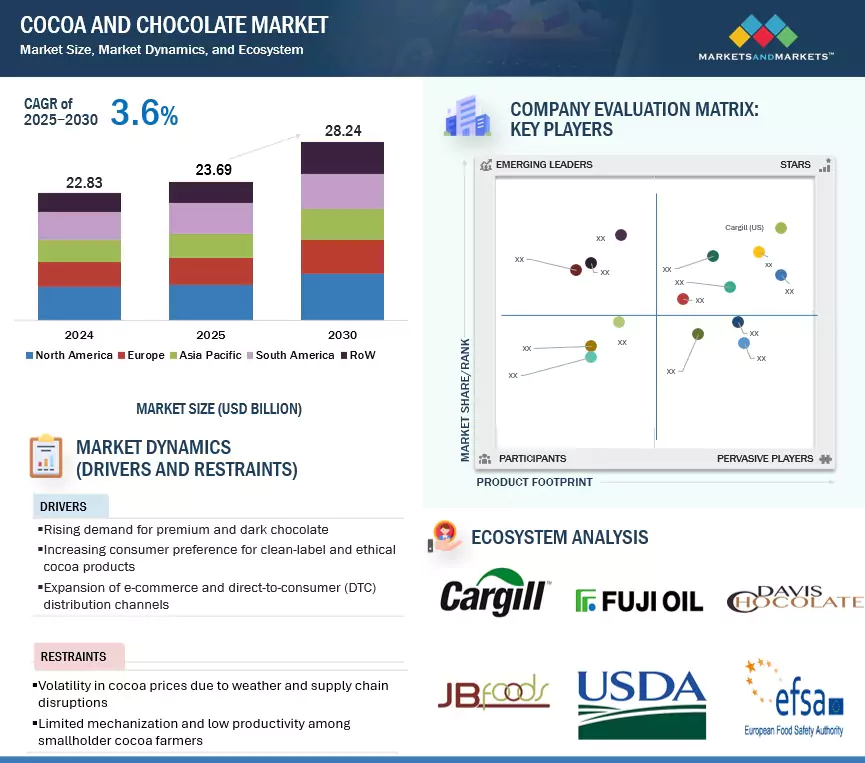
The global cocoa and chocolate market is expected to grow from USD 23.69 billion in 2025 to USD 28.24 billion by 2030, at a CAGR of 3.6%. This market includes a wide range of products such as confectionery, bakery fillings, spreads, and cocoa-based beverages. Growth is fueled by rising demand for indulgent yet functional foods, increasing disposable incomes, and the introduction of premium, sugar-free, and plant-based chocolate offerings. Greater accessibility through commercial availability and digital-first retail strategies also contributes to market expansion. Sustainability and ethical sourcing are becoming essential differentiators, as leading brands focus on traceability and certifications to meet consumer and regulatory expectations.

Cocoa and Chocolate Market

Download PDF Brochure: https://www.marketsandmarkets.com/pdfdownloadNew.asp?id=226179290

By Cocoa Type: Cocoa Powder Leads Market Share

Cocoa powder holds the largest share in the market due to its cost-effectiveness, versatility, and long shelf life. Widely used in bakeries, beverages, confectionery, and nutraceuticals, its intense flavor and low-fat content align well with health-conscious trends. Its dry, stable form makes it ideal for industrial use and mass production.

Demand is rising for high-quality cocoa powder in ready-to-drink beverages and protein-rich foods. For instance, Barry Callebaut launched a line of defatted cocoa powders in 2024 under its Bensdorp brand, aimed at the health and wellness sector. Manufacturers are also integrating cocoa powder into plant-based and clean-label formulations. Emerging markets in Asia-Pacific and Latin America are key growth areas, thanks to growing middle-class populations and rising demand for chocolate-flavored products.

By Distribution Channel: Offline Sales Dominate

Offline channels—including supermarkets, hypermarkets, convenience stores, and specialty retailers—continue to dominate distribution. These outlets offer product visibility, immediate availability, and in-person engagement, which are critical for premium chocolate purchases and seasonal promotions.

Retail partnerships, in-store sampling, and festive merchandising drive impulse buying. While e-commerce has grown post-pandemic, especially in developed markets like the U.S., Germany, and Japan, traditional offline shopping remains strong due to logistical challenges and the experiential nature of buying chocolate in-store.

Request Sample Pages: https://www.marketsandmarkets.com/requestsampleNew.asp?id=226179290

By Region: Asia Pacific Set to Grow Fastest

The Asia Pacific region is projected to witness the fastest growth during the forecast period. Rising incomes, urbanization, and changing dietary preferences in countries like India, China, Indonesia, and Vietnam are driving demand for premium and innovative chocolate products. Gifting chocolate during festivals and weddings is also becoming a mainstream cultural trend.

Rapid growth in modern retail and e-commerce is improving accessibility, while global players are investing in localized strategies. For example, in June 2024, Hershey expanded its manufacturing and R&D capabilities in Malaysia to cater specifically to the regional market. The demand for clean-label, fortified, and sugar-free chocolates is also rising in response to growing health awareness.

Government support for food processing infrastructure is further enhancing supply chain efficiency, positioning the Asia Pacific as a prime region for investment and innovation in the cocoa and chocolate space.

Leading Cocoa and Chocolate Companies:

The report profiles key players such as Cargill (US), Barry Callebaut (Switzerland), Olam Group (Singapore), Mars, Incorporated (US), Ferrero Group (Italy), Mondelez International (US), Guan Chong Berhad (Malaysia), Lindt & Sprüngli (Switzerland), and Fuji Oil (Japan).

Textured Vegetable Protein Market: Growth Drivers & Opportunities

marketsandmarkets logo

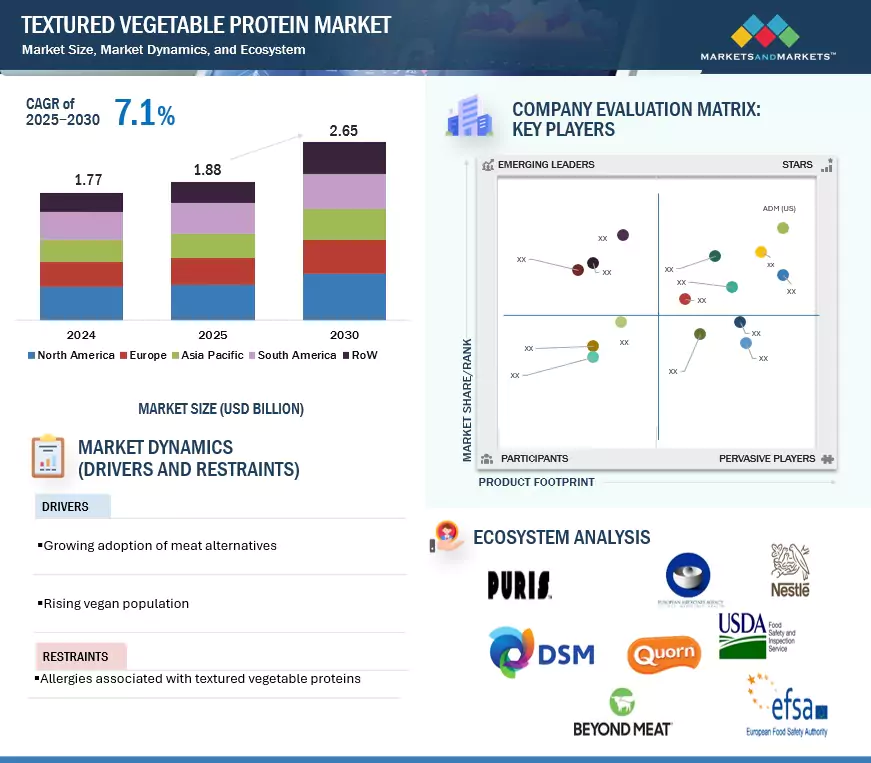
The global textured vegetable protein market will grow to USD 2.65 billion by 2030 from USD 1.88 billion in 2025, at a CAGR of 7.1% during the forecast period. The textured vegetable protein (TVP) market is one of the most dynamic food sectors growing globally, due to changes in consumer trends toward more plant-based diets as well as health consciousness and environmental sustainability. TVPs consist mainly of soybeans, peas, and wheat. These protein-rich, versatile ingredients are popular in meat analogs, snacks, bakery products, ready-to-eat meals, and other applications for deploying a meat substitute or extender within food applications. Its texture and mouthfeel mimic meat, making it a cost-effective, protein-rich, and nutritious alternative—a major contender in plant protein.

Textured Vegetable Protein Market

The market dynamics are shaped by various factors, including the rising adoption of vegan and vegetarian dietary patterns, advancements in food processing technologies, and a surging demand for sustainable, allergen-free alternative proteins. As the global population increasingly prioritizes health, ethical considerations, and environmental impact, the textured vegetable protein (TVP) market is poised for significant growth, particularly in emerging economies. This trajectory indicates a robust potential for market expansion in the coming years.

Download PDF Brochure: https://www.marketsandmarkets.com/pdfdownloadNew.asp?id=264440297

Organic nature segment will grow at significant rate during the forecast period.

The organic TVP sector is produced from plant-based sources, such as soy, pea, or wheat, grown without the application of synthetic pesticides and fertilizers or genetically modified organisms (GMOs). It targets health-conscious consumers, particularly those in developed regions, such as North America and Europe, with strong demand for clean-label, non-GMO, and sustainably sourced products. Organic TVP is used for premium applications for plant-based meat analogs, snacks, and ready-to-eat meals targeted at vegan, vegetarian, and flexitarian consumers who are conscious about ethical and environmental issues. Manufacturing of organic TVP follows stringent organic certification requirements, which contribute to transparency and traceability and thereby instill confidence among consumers.

Companies, such as Roquette and Archer Daniels Midland (ADM), are in the consolidation phase of organic TVP by promoting products, including NUTRALYS® organic pea protein and non-GMO soy-based TVP. The segment is benefiting from the organic food boom rooted in health, pesticide residue, and environmental concerns. Nevertheless, organic TVP production is hindered by high costs incurred for paltry organic crop yields and strict farming policies. This could indicate a premium price that acts against its availability in price-sensitive markets. The segment would continue to show rapid growth, with strong sustainability policies and consumer awareness in Europe and an emerging demand for organic food from the affluent consumer class in the Asia Pacific.

Granules type segment will likely capture a significant share during the forecast period

TVP granules are tiny, ground particles that look similar to minced meat, thus being the most flexible and versatile form in the market for TVP. They have a fine texture that easily rehydrates and can be incorporated into pasta sauces, taco fillings, ground meat substitutes, and processed food meat extenders. Granules are cost-effective to produce and store, making them an appealing choice for manufacturers targeting budget-conscious markets such as Asia Pacific and Latin America. They are also in demand in institutional environments, including schools and hospitals, where budget-friendly, high-protein ingredients are desired. The ease with which granules can be incorporated into various recipes, ranging from burgers to casseroles, makes them appealing to broad consumer segments. Nonetheless, their smaller dimension could restrict their application where a clear meat-like structure is needed. As a result of their cost-effectiveness, scalability, and large-scale use, granules dominate the TVP market with the largest share.

Request Sample pages: https://www.marketsandmarkets.com/requestsampleNew.asp?id=264440297

Asia Pacific region will hold significant market share during the forecast period

Asia Pacific textured vegetable protein (TVP) market is witnessing strong growth based on the rising health awareness, cultural food habits, and surging demand for sustainable, plant-based protein sources. Divided by nature into organic and conventional TVP, the market is portraying diversified consumer demands, with organic TVP appealing to premium, health-oriented segments, and conventional TVP leading as it is more affordable and has broad applications. The area, including China, India, Japan, and South Korea, is one of the largest growth centers for TVP, supported by massive populations, urbanization, and cultural preference for plant foods such as soy.

Key players in this market include ADM (US), Roquette Frères (France), Ingredion (US), dsm-firmenich (Netherlands), The Scoular Company (US), Beneo (Germany), International Flavors & Fragrances, Inc. (US), Cargill, Incorporated (US), MGP (US), and PURIS (US).

Global Omega-3 Market Size, Share & Competitive Landscape

marketsandmarkets logo

The global omega-3 market is expected to grow from USD 3.9 billion in 2024 to USD 7.4 billion by 2029, registering a robust CAGR of 13.5% during the forecast period. This impressive growth is driven by a shift in consumer preferences towards proactive health management, ethical consumption, and functional nutrition.

Evolving Sources: Beyond Traditional Fish Oil

While fish oil has long dominated the omega-3 market, sustainable and plant-based alternatives such as algae, flaxseed, and chia seed oils are gaining traction. These options appeal to health-conscious consumers with dietary restrictions, ethical concerns, or environmental awareness. In addition, emerging product formats—like micro-emulsified supplements and omega-3-fortified foods—are making consumption more convenient and appealing across broader age and lifestyle demographics.

Omega-3 Market

Download PDF Brochure: https://www.marketsandmarkets.com/pdfdownloadNew.asp?id=227

DHA Leads the Way in Omega-3 Types

Among the omega-3 types, docosahexaenoic acid (DHA) is expected to hold the largest market share. Widely recognized for its vital role in brain development, heart health, and vision support, DHA is increasingly incorporated into targeted applications such as prenatal supplements, infant formula, and functional foods. Technological advancements have improved extraction and processing methods, making DHA more accessible and versatile. Although DHA dominates, other omega-3 forms like EPA and ALA are also witnessing steady growth, contributing to a diverse and inclusive market.

Plant-Based Omega-3s: A Green Growth Trajectory

The plant-sourced omega-3 segment is set to maintain strong growth, powered by rising demand for vegan, vegetarian, and allergen-free alternatives. Algae-derived omega-3s and chia seed extracts are especially popular for their sustainability and potential health benefits. Supportive government policies promoting eco-friendly practices and the growing affordability of these alternatives further reinforce their market potential. Overcoming challenges such as bioavailability and consumer education will be crucial in unlocking the segment’s full potential.

North America: A Leading Market for Omega-3

North America currently holds the largest share of the omega-3 market, driven by widespread adoption of dietary supplements and increased awareness of omega-3’s health benefits. With strong consumer interest in heart, brain, and overall wellness, omega-3 supplements have become a staple in health routines across the region. In addition, incorporation of omega-3 in medical guidelines and wellness trends is fueling sustained demand.

Leading Omega-3 Companies:

 BASF SE (Germany), Cargill, Incorporated (US), dsm-firmenich (Netherlands), ADM (US), Kerry Group Plc (Ireland), Croda International Plc (UK), Orkla (Norway), Corbion (Netherlands), Pelagia AS (US), KD Pharma Group SA (Switzerland), GC Rieber (Norway), Cooke Aquaculture (Canada), AlgiSys Biosciences, Inc. (US), Golden Omega (Chile), AKER BIOMARINE (Norway), Polaris (France), Nordic Naturals (US), BTSA (Spain), Farbest Brands (US), KinOmega Biopharm Inc (China), Pharma Marine AS (Norway), Rimfrost AS (Norway), Algarithm (Canada), Solutex (Spain), Cellana Inc (US), Sinomega Biotech Engineering Co., Ltd. (China), AlgaeCytes (UK).

Meal Replacement Market Size, Share, Trends, and Growth Opportunities

marketsandmarkets logo

The global meal replacement market size was valued at USD 11.9 billion in 2021 and is expected to grow at a CAGR of 5.4% from 2021 to 2026. The revenue forecast for 2026 is projected to reach $15.5 billion. The base year for estimation is 2021, and the historical data spans from 2021 to 2026. The global meal replacement market has been influenced by changing consumer lifestyles, people are inclined toward meals that are full of nutrition, vitamins, minerals, and other dietary supplements. The growth in the number of health-conscious consumers across the globe is proliferating the demand for meal replacement products.

Meal Replacement Market

Download PDF Brochure: https://www.marketsandmarkets.com/pdfdownloadNew.asp?id=740

Powder segment is the largest market for meal replacement market globally.

Powders are consumed in the form of shakes with the addition of water or low-calorie milk. The rapid adoption of meal replacement powder as a part of weight management will drive the market for meal replacements products. Meal replacement powder is mixed with water or milk of choice (low-calorie, plant-based, low-fat, toned milk, flavored milk, among others) for consumption. These are available in various flavors, the most popular being chocolate, vanilla, and strawberry. Various companies are into the manufacturing of powder form meal replacement products such as Nestle and Huel. Nestle offers meal replacement chocolate cacao powder and has presence in various regions such as Middle East, Africa, North America, Asia Pacific and Europe.

Online segment is witnessing a high growth rate for the meal replacement products during the forecast period.

Online segment is witnessing a high growth rate owing to the rising smartphone and internet penetration, which is increasing the sales of online meal replacement products. COVID-19 has changed the purchasing pattern of the consumers globally. Consumers are now purchasing products online and choosing the health safety and convenience over the offline purchasing experience globally. In addition to this, increasing internet penetration in under developed countries will also drive the online segment growth.

Request Sample Pages: https://www.marketsandmarkets.com/requestsampleNew.asp?id=740

North America holds the largest market share for meal replacements products in 2021

In 2021, North America accounted for a market share of 29.28% in the global meal replacement market. The market in the region is highly diversified, and manufacturers are strongly focusing on the development of new meal replacement products to cater to the demand from end users. Although North America holds the largest share, the meal replacement market is matured and is projected to grow at a steady CAGR of 4.6% during the forecast period.

The key players in this market include Abbott Laboratories (US), Amway (US), Glanbia PLC (Ireland), Herbalife Nutrition (US), and Nestle (Switzerland).

Plant-Based Protein Market: Regional Analysis and Future Growth Potential

marketsandmarkets logo

The global plant-based protein market is projected to be valued at USD 23.89 billion by 2025 and is expected to grow to USD 34.97 billion by 2030, registering a compound annual growth rate (CAGR) of 7.9% from 2025 to 2030. This growth is driven by a rising shift toward vegan and flexitarian diets, along with increasing consumer demand for plant-based meat and dairy alternatives.

Plant-based Protein Market

Plant-based proteins have gained substantial popularity in recent years due to their high nutritional value, including a complete amino acid profile, high digestibility, and the ability to meet daily caloric and nutrient needs. Among the various sources, pea protein and other emerging alternatives have seen rapid growth, a trend expected to continue as more consumers look for soy-free options due to allergies and intolerances.

Download PDF Brochure: https://www.marketsandmarkets.com/pdfdownloadNew.asp?id=14715651

Rising Demand for Milled Protein Flour

The milled protein flour segment is projected to witness notable growth during the forecast period. These flours, derived from sources such as soy, peas, lentils, and chickpeas, are finely ground to maximize protein content, making them ideal for use in bakery items, snacks, and meat substitutes. Their versatility and ability to enhance both texture and nutrition appeal strongly to health-conscious consumers and manufacturers alike.

Dominance of Conventional Plant-Based Proteins

The conventional plant-based protein segment is expected to maintain the largest market share throughout the forecast period. These proteins—sourced from ingredients like soy, wheat, peas, and chickpeas—are widely used in the food and beverage industry, particularly in baked goods, snack products, and meat analogs.

Manufacturers often prefer conventional plant-based proteins due to their scalability and ease of sourcing, without the regulatory constraints of organic certification. Additionally, conventional crops typically contain higher protein concentrations, owing to the use of fertilizers and other synthetic agricultural inputs, making them a practical solution for meeting growing global demand.

Request Sample Pages: https://www.marketsandmarkets.com/requestsampleNew.asp?id=14715651

Europe’s Significant Role in Market Growth

Europe is anticipated to hold a substantial share of the plant-based protein market during the forecast period. The region has seen a rapid increase in veganism, driven by rising sustainability concerns, health awareness, and changing consumer preferences.

This shift has not only influenced individual consumption patterns but also transformed industrial production strategies, prompting companies to innovate and expand their plant-based offerings. As the demand for meat alternatives grows, Europe remains a key region for investment and expansion in the plant-based protein sector.

Leading Plant-based Protein Companies:

The report profiles key players such as Cargill, Incorporated (US), ADM (US), Kerry Group PLC (Ireland), International Flavors & Fragrances Inc. (US), Ingredion Incorporated (US), Wilmar International Ltd. (Singapore), Roquette Frères (France), Glanbia PLC (Ireland), DSM-Firmenich (Switzerland), AGT Food and Ingredients (Canada), Tate & Lyle (UK), Burcon (Canada), Emsland Group (Germany), PURIS (US), and COSUCRA (Belgium).