The calcium propionate market is estimated at USD 277.1 million in 2018 and is projected to reach a value of USD 363.3 million by 2023, at a CAGR of 5.6%. The growth of the calcium propionate market is driven by factors such as growth in demand for bakery products with extended shelf life and cost advantages provided by calcium propionate over other preservatives, which contribute to increased demand and adoption rate.
Market Dynamics:
Increasing health concerns of consumers are driving the market for calcium propionates
The market for calcium propionate is driven by this rising demand for nutritional food and the increasing health consciousness among consumers. The preference of natural food additives over synthetic ones to eliminate health concerns also increases the demand for calcium propionate.
The food industry has begun using natural calcium propionate to make it as safe to consume as organic calcium salt of propionic acid, which is produced by fermentation with a selected strain of propionibacterium. The food industry also uses advanced technologies such as bacteriophages, MAP, and alternative preserving techniques combined with preservatives to maintain the quality and safety of food.
Stringent legislations and regulations with respect to food safety and shelf life have meant that processing industries are keen on getting the right formulation to present the best food product to the consumer, and preservatives play a pivotal role in this aspect. Local and regional regulations are required to be checked for allowed applications and dosage levels. The stringent regulations pertaining to quality and food safety are projected to restrain the global calcium propionate market growth. For instance, in the US, the usage level of propionic acid and propionates is 0.1% to 0.4%. According to federal regulations, the addition of calcium propionate to a food product raises the pH by approximately 0.1 to 0.5 pH units depending on the amount, pH, and type of product. Also, federal regulations limit the maximum level for flour, white bread, and rolls at 0.32% based on the weight of the flour; for whole wheat products at 0.38% based on the weight of the flour; and for cheese products at 0.3%. Such stringent monitoring and regulations restrain the market growth.
Untapped emerging markets are providing growth opportunities
The Middle Eastern & African countries are increasingly adopting calcium propionate due to changes in consumer lifestyles and increasing demand for fresh products. Asia Pacific is the second-largest market for calcium propionate after North America in 2023, owing to the increased awareness about calcium propionate and the benefits offered. It remains one of the important markets for calcium propionate manufacturers due to its size and its regulatory environment.
The bleaching agents market is estimated at USD 728.6 Million in 2018 and is projected to reach USD 953.8 Million by 2023, growing at a CAGR of 5.5% during the forecast period. This market is driven by factors such as the increase in the consumption of bread and related bakery products along with advancements in technology for flour evaluation.
Scope of the Report:
On the basis of Type, the market for bleaching agents has been segmented as follows:
Azodicarbonamide
Hydrogen peroxide
Ascorbic acid
Acetone peroxide
Chlorine dioxide
Others (chlorine, benzoyl peroxide, calcium peroxide, and sulfur dioxide)
On the basis of Form, the market for bleaching agents has been segmented as follows:
Powder
Liquid
On the basis of Application, the market for bleaching agents has been segmented as follows:
Bakery products
Flour
Cheese
Others (sugar, candies, and caramel)
On the basis of Region, the market for bleaching agents has been segmented as follows:
The flour segment, by application, accounted for the largest share of the market in 2017. Bleaching agents are used for whitening flour, as freshly milled flour has a slightly yellowish color as it contains carotenoids. Additionally, bleaching oxidizes the surface of the flour and promotes its gluten-producing potential. Bleaching of flour helps in the weakening of the proteins and maturation of the flour in a reduced amount of time and has thereby become a necessity for flour producers. Some of the most common flour bleaching agents include hydrogen peroxide, benzoyl peroxide, and chlorine dioxide.
Asia Pacific is projected to be the fastest-growing market for bleaching agents during the forecast period. The major countries with growth potential in this market include China, India, Japan, and Australia. India is estimated to account for a significant share of the Asia Pacific market through 2023. This is an emerging market and hence provides opportunities for the growth of the bleaching agents market.
The population growth, increase in demand for food, rising net farm income due to mechanization, along with a shift towards organic farming are some of the major driving factors for the soil aerators market. Factors such as increasing farm mechanization levels and rising profitability are also increasing the demand for the soil aerators, globally. R&D activities carried out by leading manufacturers, to develop low-cost production techniques are expected to further drive the growth rate of the soil aerators market.
Market Dynamics:
Drivers:
Shrinking Arable Land
Population Growth and Increase in Demand for Food
Increase in Net Farm Income Due to Mechanization
Shift Toward Organic Farming
Restraints:
Small and Fragmented Land Holding Restricting the Usage of Heavy Farm Equipment
Agriculture segment set to dominate the market by 2023
The soil aerators market, by application, is projected to be dominated by the agriculture segment during the forecast period. The dominance of agriculture in soil aerators is attributable to the increase in large-scale holdings of farmers in most developed countries and an increasing trend of farm mechanization in developing countries. The rapid increase in population growth and increasing demand for food, with shrinking arable land, are expected to drive the soil aerators market growth.
Mounted segment is projected to be the fastest-growing during the forecast period
The mounted segment is estimated to dominate the mode of operation segment for soil aerators in 2018 and is also projected to be the fastest-growing from 2018 to 2023. Low turnaround time, higher accuracy, availability of large land holdings for cultivation, specifically in North America and Europe are the factors driving the market for the mounted mode of operation.
Asia Pacific is projected to be the fastest-growing market during the forecast period
The Asia Pacific market is projected to grow at the highest CAGR from 2018 to 2023. Major growth drivers of the region include the adoption of smart, mechanized aerators owing to technological advancements in countries such as India, China, and Japan. In addition, factors such as an increase in footfall, overgrazing by livestock, the pressure exerted by heavy equipment, climatic conditions, strong government support through subsidies, and increased productivity requirements also drive the soil aerators market in the region.
This report includes a study of marketing and development strategies, along with the product portfolios of leading companies. It includes the profiles of leading service companies such as Deere & Company (US), Mahindra and Mahindra (India), Bucher Industries (Switzerland), CNH Industrial (UK), ALAMO (US), and AGCO Corporation (US).
The market for hydrocolloids is estimated at USD 8.8 billion in 2018 and is projected to grow at a CAGR of 5.3% from 2018 to 2023, to reach USD 11.4 billion by 2023. The growth of the hydrocolloids market is driven by the rising demand for convenience foods in the food industry. The key market drivers are the R&D activities and innovation, consumer preference for functional dairy products, and multifunctionality of hydrocolloids in food & beverage products.
Drivers
Rise in Consumption of Premium Food & Beverage Products
Multi-Functionality of Hydrocolloids Leads to Their Wide Range of Applications
Increase in Health-Consciousness Among Consumers Drives the Natural Hydrocolloids Market
Restraints
Stringent International Quality Standards and Regulations
Shortage of Resources has Created A Demand-Supply Imbalance
Opportunities
The Emerging Markets Illustrate Great Potential for Hydrocolloids
Increase in Investments in Research & Development
Challenges
Fluctuations in Prices of Raw Materials
Unclear Labeling Leading to Ambiguity and Uncertainty
The food & beverage segment, by application, is projected to be the largest revenue contributor in the hydrocolloids market during the forecast period.
The food & beverage segment is accounted to hold the largest share in the hydrocolloids market in 2018. Hydrocolloids are widely used in food products such as bakery, confectionery, meat & poultry, beverages, and dairy & frozen products. The growth of the hydrocolloids market is driven by the rising demand for convenience foods from the food industry.
The demand for thickeners segment, by function, is estimated to rise and dominate the hydrocolloids market during the forecast period.
In terms of function, thickeners and stabilizers were the most widely preferred functions for hydrocolloids. The market was dominated by the thickening segment and is used to maintain viscosity in the presence of electrolytes, high temperature, and wide pH ranges in food products such as soups & gravies, ketchup, instant beverages, desserts, toppings, and fillings. This thickening segment accounted for 40% of the market in 2017.
North America is projected to account for the largest market size during the forecast period.
North America is a dominant region in the global hydrocolloids market. Factors influencing its market dominance include the high demand for functional dairy products, convenience foods, higher per capita consumption of baked goods, and presence of major players.
This report includes a study of marketing and development strategies along with the product portfolios of leading companies in the hydrocolloids market. It includes profiles of leading companies such as Ingredion (US), Cargill (US), DowDuPont (US), Darling Ingredients (US), ADM (US), and Kerry (Ireland).
The hydroponics market is projected to reach USD 16.0 billion by 2025, from USD 8.1 billion in 2019, at a CAGR of 12.1% during the forecast period. The market is driven by factors such as the growing acceptance of controlled environment agriculture and increasing technological advancements in hydroponic systems.
According to the FAO, due to the increasing population, food production is expected to rise by 70% before 2050. On the other hand, natural prerequisites of agriculture, viz., arable land and water have been depleting, with rapid urbanization across the globe. To feed the increasing population, the productivity of food crops needs to be increased in the existing arable land, and also alternative farming techniques such as urban farming need to be encouraged.
Key Players:
• Signify Holdings (Netherlands) • Argus Control Systems (Canada) • Heliospectra AB (Sweden) • Scotts Miracle Gro (US) • American Hydroponics (US) • LumiGrow (US)
Higher yield as compared to conventional agriculture practices
Hydroponic systems or soil-less agriculture reduce the farmer’s consumption of resources, thereby enabling this farming technique to be adopted by a large number of stakeholders, ranging from home gardeners to professional growers, and supermarkets to restaurants. According to the UN reports on global population, plants grown in hydroponic systems have achieved 20%–25% higher yield than the traditional agriculture system, with its productivity being 2–5 times higher. Also, owing to controlled environmental conditions, the effect of climatic changes can be balanced with the help of these systems, thereby not affecting the annual crop production. CEH techniques directly affect the crop harvest cycle; hence, for hydroponic systems, crop harvest cycles are shorter in comparison to traditional farming techniques, thereby increasing the annual yield. Also, since climatic changes show a minimal effect on such systems, crops can be produced all year round, thereby again increasing the produce.
Lack of government policy and tax breaks in developing countries
Hydroponic farming is seen as a key factor in improving food security in developing regions; however, while government support through tax cuts is present in developed countries, the same cannot be said for developing countries. The availability of the best equipment is fairly limited and often needs to be imported, which attracts taxes adding to the costs for hydroponic growers. The lack of tax cuts and incentives is also a key factor that hinders the growth of hydroponics in developing regions as the high set-up costs and running costs can often render operations unfeasible. The need for basic training and technical knowledge is necessary for operating hydroponic farms, which although is present in developing countries, does not add significantly to the value of hydroponic farms. The high costs of production often result in high costs of the final product, which in itself can draw consumers away in price-sensitive markets.
Entrance of new players in the market
Due to increased popularity and adoption of hydroponics, many new players are entering the market. For instance, Larry Ellison, founder, chairman, and CTO of Oracle, launched a hydroponic farming start-up, named Sensei in Los Angeles. The company plans to build 10 greenhouses covering 200,000 square feet on the Hawaiian island of Lanai and instead of measuring output by volume, Sensei will measure nutrition per acre.
Various investors are also supporting hydroponics start-ups globally. For instance, in June 2017 a high-tech indoor, vertical farming start-up, Bowery Farming, announced it had raised USD 20 million in a Series A1 co-led by General Catalyst and GGV Capital, and including GV, First Round Capital, and other seed round investors. In July 2017, a San Francisco-based indoor vertical farming start-up, Plenty, raised the largest agtech funding round in history – a USD 200 million Series B led by SoftBank Vision Fund – the USD 93 billion all-stage tech fund headed by a Japanese investor, Masayoshi Son. Other participants in the round include affiliates of Louis M. Bacon, the founder of Moore Capital Management, and existing investors Eric Schmidt’s Innovation Endeavors, Finistere, DCM, Data Collective, and Bezos Expeditions. Plenty has plans to open 500 hydroponics farms in all the major cities of more than 1 million inhabitants, globally.
Many start-ups have also emerged in the Asia Pacific region, the fastest-growing region for the hydroponics market. For instance, Future Farms based in Chennai, India has developed effective and accessible farming kits to facilitate hydroponics. The company develops indigenous systems and solutions, made from premium, food-grade materials that are efficient and affordable for Indian growers. Junga FreshnGreen, an agri-tech start-up, is a joint venture with a leading Netherlands-based Agricultural technology company – Westlandse Project Combinatie BV (WPC). It is setting up high-technology farms in India. The company will create a hydroponics model that can cultivate farm fresh vegetables that have a predictable quality, having little or no pesticides, and unaffected by weather or soil conditions.
Europe is projected to account for the largest market size during the forecast period
The European hydroponics market is projected to be the largest between 2019 and 2025, while the Asia Pacific market is projected to grow at the highest CAGR. Europe was the largest producer of hydroponic crops in 2018. It is still the largest market for hydroponically produced crops. Europe has traditionally been at the forefront of implementing advanced techniques in hydroponic smart greenhouse horticulture. Countries such as the Netherlands, Spain, and France have large areas under greenhouse cultivation. However, in the Netherlands, growers mostly cultivate their plants in simple tunnel-like greenhouses without the use of climate control technologies. The advancement in greenhouse farming has supported the growth of hydroponics in Europe.
To define, segment, and project the global market size for omega-3
To understand the omega-3 market by identifying its various subsegments
To provide detailed information about the key factors influencing the growth of the market (drivers, restraints, opportunities, and industry-specific challenges)
To analyze the micromarkets, with respect to individual growth trends, prospects, and their contribution to the total market
To project the size of the market and its submarkets, in terms of value, with respect to the regions (along with their respective key countries)
To profile the key players and comprehensively analyze their core competencies
To understand the competitive landscape and identify the major growth strategies adopted by the players across the key regions
To analyze the competitive developments, such as expansions & investments, mergers & acquisitions, new product launches, partnerships, collaborations, and agreements
In October 2019, KD Pharma (Germany) introduced Kardio3, which is a blend of omega-3, vitamin K2, and phytosterols. It aids in maintaining healthy lipids and supports heart and bone health.
In September 2019, Epax (Norway) announced an investment of USD 35 million over the next two years for the innovation of its Omega-3 sector. This investment will allow Epax to have better capacity in the omega-3 industry at its main site of production in Norway. It will facilitate the extended concentration of EPA and DHA without prompting oxidation, which will ultimately avoid unwanted by-products.
In September 2019, Polaris (France) launched Omegavie DHA 700 algae Sensory QualitySilver, which would help the company in the field of algal omega-3. The product majorly contains DHA and also contains excellent organoleptic properties.
Factors Influencing Global Growth:
Drivers
Consumer Awareness Regarding the Health Benefits of Omega-3
Increase in Application Profiling and Existing Applications Finding New Markets
Innovative Production Technologies
Restraints
Lower Fish Oil Supply Due to Sustainability Issues Among Fisheries
Lack of Clarity Among Consumers About Daily Recommended Intake
Opportunities
Research for the Development of Alternative Sources to Obtain Omega-3
Emerging Economies of Asia Pacific and South America to Witness High Growth
Favorable Regulatory Environment
Microencapsulation
Awareness About Certified Food Ingredients
Challenges
High Cost Involved in R&D Activities
Highly Unstable Fish Oil Prices
Monetary Growth Expectations, Globally:
The omega-3 market size is estimated to account for a value of USD 4.1 billion in 2019 and is projected to grow at a CAGR of 13.1% from 2019, to reach a value of USD 8.5 billion by 2025. Consumer awareness regarding the health benefits of omega-3 and an increase in application profiling and existing applications finding new markets are projected to drive the growth of the omega-3 industry.
The omega-3 market in Asia Pacific is projected to witness high growth due to rising awareness about its health benefits and increasing disposable income of the population in the Asia Pacific countries. With the growing inclination toward healthy aging in the region, the adult population prefers consuming dietary supplements, including omega-3, as per the recommendations by the Global Organization for EPA & DHA Omega-3 (GOED). Moreover, in Asia Pacific countries, the governments are also focusing on and promoting fortified foods, and many big brands such as BASF (Germany) and Croda International (UK) have expanded their operations in these countries to cater to the growing demand for omega-3. Key manufacturers prefer expanding in the Asia Pacific region, as it provides cost-effective benefits during production and processing. The high demand for omega-3 and low cost of production are the major factors that are projected to encourage suppliers and manufacturers to invest in this market. In addition, Asia Pacific has the highest growth potential due to factors such as high economic growth and the increase in income of individuals in the region. The high population growth and increase in FDI are factors that are driving the growth of the omega-3 market.
Consumers are focusing on having healthy lifestyles through the consumption of various fermented products that impart better gut health. Consumers’ perception about fermented products is rapidly growing as a result of the increasing health benefits provided by these products. The psychological health benefits provided by fermented products are gaining high traction among consumers through health claims that include immunity, cardiovascular, digestive, and slimming aids. Consumers are expecting a variety of new categories in fermented products that help promote sleeping and decrease internal body heat. For instance, fermented food producers have started the usage of probiotics in kombucha, a fermented tea drink, due to the increased health benefits offered. Hence, the increasing consumer focus on the consumption of fermented food products for various health claims is another factor to drive the growth of the fermenters market.
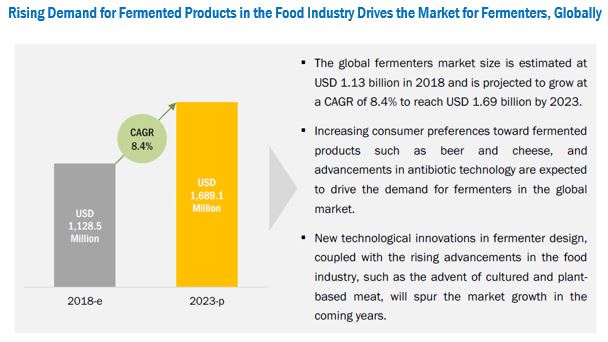
The global market for fermenters is projected to reach USD 1.68 billion by 2023, at a CAGR of 8.4%
The fermenters market is majorly driven by their application in food, beverages, and healthcare products & cosmetics. The market is driven by consumer awareness about the health benefits provided by fermenters; these include improved immunity, digestion, and weight management associated with fermented products. Fermenters are broadly used for producing microbial cultures that are used in the production of alcoholic fermentation of beverages, such as beers and wines. They are also used in food products such as yogurt, pickles, kombucha, tempeh, kimchi, bakery & related products, and antibiotics.
Rise in consumption of fermented beverages across the globe drives the growth prospects of fermenters
The rapidly growing fermented beverage industry is expected to dominate and drive the demand for fermenter systems and solutions during the forecast period, owing to the growing popularity of a variety of beers and wines in the emerging economies, worldwide. According to the Brewer’s Association, in 2017, the craft beer sales continued to grow at a rate of about 5%, by volume, which reached 12.7% of the US beer market. According to the TTB and US Commerce, 2018, the US domestically produced about 83% of the beer; and 17% of it was imported from more than 100 different countries. According to TTB preliminary reports, the US recorded about 5,648 brewery production facilities in the region in 2017. According to the Brewers of Europe Organization, in 2016, Germany, the UK, Poland, Spain, and the Netherlands recorded high growth in beer production. Thus, the growing popularity of beer among consumers is expected to lead to the exponential growth in demand for fermented beverages, thereby increasing the demand for fermenters used for alcoholic fermentation of these beverages. Hence, the beverages segment, by application, is projected to be the largest and fastest-growing market between 2018 and 2023.
Geographical Prominence
Asia Pacific is the fastest-growing region in the global economy. Fermentation advancements in the Asia Pacific food & beverage industry have resulted in more opportunities for the fermenters market. The region is expanding as a leading region in the production of a variety of probiotic-based foods, beverages, and dietary supplements. Innovations have also been reported in the dessert, confectionery, and fermented food sectors in the region. India is one of the fastest-growing markets for fermenters due to the increase in demand for fermented food, beverage, and healthcare products in the country.
Factors driving the growth of the Asia Pacific fermenter market are increase in awareness among consumers about fermented food products, rise in demand for cheese and related products among consumers, growing incidences of antibiotic-resistant infectious diseases—which has led to the demand for microorganisms or microbial strains using fermenters, growing health awareness, the rising demand for fortified fermented food products, and the increasing preference for natural products.
Factors driving the growth of the Asia Pacific fermenter market are increase in awareness among consumers about fermented food products, rise in demand for cheese and related products among consumers, growing incidences of antibiotic-resistant infectious diseases—which has led to the demand for microorganisms or microbial strains using fermenters, growing health awareness, the rising demand for fortified fermented food products, and the increasing preference for natural products.
Emerging economies such as India, Brazil, and Mexico have the favorable market potential for fermented food products, which has led food manufacturers in these countries to adopt strategies, such as expansions, to cater to the rising demand and use of fermenters to increase the production capacity of fermented products.
The major players in the fermenters market have adopted strategies, such as acquisitions, partnerships, investments, expansions, and agreements, to achieve growth. Companies are involved in major acquisitions and joint ventures that have strengthened their market positions in the fermenters market and expansion in their product portfolios and production capacity facilities.
Rise in demand and consumption for fermented food & beverages, such as cheese, beer, and wine, and the increasing awareness among the consumers relating to food preservation and benefits of the fermentation process are the major factors that are expected to fuel the growth of the fermenters market in the next coming years. The popularity of super premium beers and imported beers is increasing among the young population, given the increasing disposable income in developed economies. Furthermore, new technological innovations in fermenter design, coupled with the rising advancements in the food industry, such as the advent of cultured and plant-based meat, will spur the market growth in the coming years.
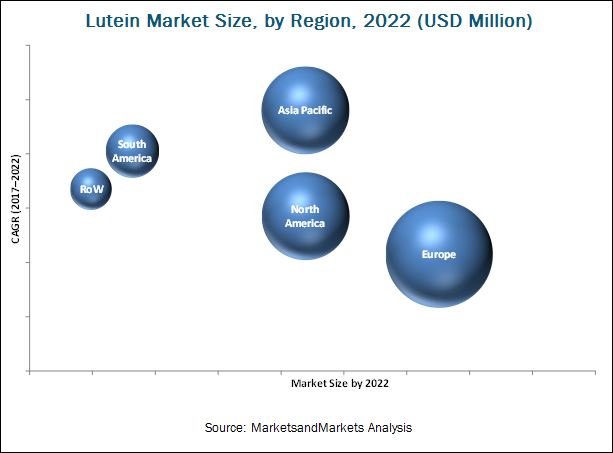
The report “Lutein Market by Form (Powder & Crystalline, Oil Suspension, Beadlet, Emulsion), Source (Natural, Synthetic), Application (Food, Beverages, Dietary Supplements, Animal Feed), Production Process, and Region – Global Forecast to 2022“, published by MarketsandMarkets™, The market for lutein, in terms of value, is estimated to be USD 263.8 Million in 2017, and is projected to reach USD 357.7 Million by 2022, at a CAGR of 6.3% from 2017.
The increase in demand for lutein as a natural colorant in food and beverage applications, rise in demand for eye health supplements, and the use of lutein in animal feed additives are expected to drive the demand for this ingredient in various consumer markets. Lutein plays a vital role in preventing age-related macular degeneration (AMD) disease. The Lutein Market, over the past few years, has been largely driven by the growing demand health supplements that contain lutein. Eye health supplements that contain lutein help preventing/curing eye diseases such as AMD and cataract. However, currently, the manufacturers are increasingly inclined to invest in other end-use applications and hence the market for dietary supplements application is growing at a lower rate when compared to applications such as food and beverages.
The dietary supplements segment expected to dominate the Lutein Market through 2022.
In 2016, the dietary supplements segment accounted for the largest share, by application, in the Lutein Market in terms of value and volume, as lutein is mainly associated with the eye health and is increasingly used as an ingredient in the eye health supplements.
Naturally sourced lutein is projected to be the faster-growing market during the forecast period.
The natural segment is projected to grow at a higher CAGR from 2017 to 2022. Growing awareness about the benefits of naturally obtained lutein and the increasing health conscious population leads to increased spending on high-quality lutein products, subsequently driving the market for naturally sourced lutein.
The emulsions segment is projected to be the fastest-growing segment in the Lutein Market from 2017 to 2022.
The demand for emulsion form of lutein is increasing around the globe, especially in developing countries such as China, India, and Brazil. Lutein emulsion is generally used in food and beverage applications and is currently used in cosmetics as well. Fortified food emulsion is widely used in the functional food segment wherein carotenoid-protein complex is used to prepare an emulsion. Leading players are gradually expanding their product range by developing lutein emulsion for the food industry. The emulsion segment is hence projected to be the fastest-growing segment in the Lutein Market from 2017 to 2022.
Asia Pacific is projected to be the fastest-growing regional market for lutein.
The Asia Pacific region is projected to be the fastest-growing market for lutein over the next five years, owing to increase in overall economic growth which has led to an increase in urbanization and rapid industrialization and subsequent growth in the consumer markets of China, India, Australia, and Japan.
In this region, countries such as India, China, and Japan hold a major share of more than 60% of the Asia Pacific Lutein Market. India is one of the fastest-growing markets for lutein in the Asia Pacific region. The changing lifestyle and preferences, increasing awareness regarding the benefits of lutein, the growth of the health-conscious population, higher disposable incomes, and growth of the middle-class population are some of the factors driving the growth of lutein the market in India.
“Potash” is a synonym term usually used for “fertilizer potassium”, in crop production techniques. It is a plant macronutrient that is available in the form of potassium chloride (KCl) or potassium sulphate (K₂SO₄) in the soil. Potassium is one such nutrient that is not stored by human body and needs to be continually supplemented for from dietary sources, which necessitates the presence of potassium in appropriate quantities in the food crops. One potassium form that is highly used in fertilizers in “Potassium oxide” (K2O), along with some other elements that enhance its solubility in the soil. The fertilizers are either in solid form which is powder, or liquid form. These are directly applicable via methods like broadcasting, foliar spraying, and fertigation.
The global potash fertilizers market is estimated to be valued at USD 21.60 billion in 2017, and is projected to reach USD 26.87 billion by 2022, at a CAGR of 4.47%. The potash fertilizers market is driven by the rise in need for higher productivity using limited land area and increase in applicability of potash fertilizers. There is rising trend toward the consumption of organic food & food products, those which are produced without any synthetic or chemical inputs or with only natural or biofertilizers. This has been considered as one of the restraining factors for the market.
According to the “Status of the World soil resources” report 2016 of “Food and Agricultural organisation” of U.N, soil erosion is estimated to wash off around 15-26 million tonnes of potassium (K), from the agricultural lands all over the world. These losses need to be curbed through external supply of the nutrient into the soil. A steady rise in the supply of potash fertilizers has been observed over the years 2015-2020.
The world fertilizer demand is projected for year 2020, by the “World Fertilizer trends and outlooks” report of “Food and Agricultural organisation” of U.N, the demand for the potash along with expected rise in CAGR.
Future Market Prospects and Challenges:
The fertilizers market is greatly driven by substantial natural factors such as, rising soil erosion levels, nutrient imbalances in the soils, land take or increasing urbanisation leading to lesser availability of agricultural lands, and soil acidification. Macro-economic factors driving the market include rising population in turn rising food demands globally, dependence on fertilizers for larger volumes of produce, and decreasing arable lands in different regions. The global potash fertilizers market was valued at USD 20,724.6 Million in 2016, and was projected to rise at a CAGR of 4.47% from 2017-2022. Over these the potential challenges that the fertilizer market faces today cannot be underestimated, such as rising awareness regarding organic soil management practices, rising consumption of organic foods, advancements of agricultural technologies and machineries.
Although the market for these fertilisers has its drivers and challenges in equity, demand of potash as an agricultural nutrient has still managed to experience constancy in the level of demand over the years, and is expected to keep steadily rising. Infact potash fertilizer prices have risen by approximately 10% in 2019, due to the rise of prices of potash as a raw materials, which denotes significant opportunities in the market.
The global gelatin market size is projected to grow from USD 2.6 billion in 2018 to USD 3.6 billion by 2023, at a CAGR of 6.6% during the forecast period. The gelatin market is driven by various factors such as the growing demand for functional and convenience food & beverage products, increasing application in the pharmaceutical industry, and rising demand for clean-label products. However, competition from gelatin alternatives and cultural restrictions are projected to hinder the growth of the market.
Abundant availability and health benefits of gelatin drive the bovine skin market growth
In terms of value, the bovine skin segment is projected to grow at the highest CAGR from 2018 to 2023. Bovine is one of the most widely used sources to manufacture gelatin because of its abundance and easy availability. Gelatin is also helpful in muscle mass building, metabolism boosting, and skin & hair improvement. Yet, some consumers demand an alternative gelatin source due to factors such as the growing demand for vegan food products, religious barriers, health concerns, and increased raw material prices. The rising demand for sports nutrition and fortified food & beverage products fuels the demand for bovine skin gelatin.
Key Players:
Darling Ingredients (US)
Gelita (Germany), Nitta Gelatin (Japan)
Tessenderlo Group (Belgium)
Weishardt (France)
Trobas Gelatine (Netherlands)
India Gelatine & Chemicals (India)
The food segment is projected to hold the largest market share during the forecast period
In terms of value, the food segment is estimated to hold the largest market share in 2018. Gelatin is considered as a non-allergic protein source to be incorporated in functional & nutritional food & beverage products. The rising demand for nutritional confectionery products as well as functional beverages such as nutritional bars and sports drinks has been stimulating the demand for gelatin. Moreover, gelatin is naturally derived from animal skin and bone, making them clean label ingredients.
Asia Pacific is projected to be the fastest-growing region in the gelatin market, in terms of value
The Asia Pacific market is projected to be the fastest-growing. According to the Population Reference Bureau in 2014, the fast-growing consumer markets of China, India, and other Asia Pacific countries have a combined population exceeding four billion people; this is projected to become an increasingly important driver for global consumption over the next two decades, led by rapidly rising household incomes and fast-growing middle-class population. As a result, the region is estimated to dominate the gelatin market in terms of value.
Research Coverage
The study covers the gelatin market across segments. It aims at estimating the market size and its growth potential across different segments such as source, application, and region. The study also includes an in-depth competitive analysis of key players in the market, along with company profiles, key observations related to product and business offerings, recent developments, and key market strategies.