GMO Testing Market worth 2.34 Billion USD by 2022

The report “GMO Testing Market by Trait (Stacked, Herbicide Tolerance, Insect Resistance), Technology (Polymerase Chain Reaction, Immunoassay), Crop Tested, Processed Food Tested, and Region – Global Forecast to 2022″, The GMO testing market is estimated to be valued at USD 1.58 Billion in 2017. It is projected to grow at a CAGR of 8.2% from 2017 to 2022, to reach 2.34 Billion by 2022. The base year considered for the study is 2016, and the forecast years are from 2017 to 2022. The market is driven by factors such as evolution in farming technologies, diverse genetically modified processed food production, labeling mandates in several countries, and proper nutrient sufficiency.

Download PDF Brochure:  https://www.marketsandmarkets.com/pdfdownloadNew.asp?id=101319111         

“Stacked trait segment projected to be the fastest-growing market during the period 2017–2022”

Stacked traits are a combination of more than one transgene in a single crop. Bio-fortified crops which are modified for the production of high nutritional content, HT with IR and disease-resistant traits are popular examples of stacked traits. The increased investments and growth in the R&D activities are responsible for the growth of this market.

“Soy, corn, and bakery & confectionery products are largely tested for GMOs in the food safety testing market”

Among the crops and processed foods tested for GMO, crops accounted for the largest market share in 2016, dominated by corn and soy. The bakery & confectionery items are largely tested for GMO testing, which include baking flours, breads, cakes, muffins, and other confectionery & baked goods. The market in breakfast cereals & snacks among processed foods is projected to grow at the highest CAGR due to the presence of a large amount of cereal grains and corn flakes. Food additives such as lecithin, vitamin E (tocopherol), and proteins from genetically modified soybean are also largely tested for GMOs.

Speak to Analyst: https://www.marketsandmarkets.com/speaktoanalystNew.asp?id=101319111

“North America and Europe to dominate the GMO testing market in 2017”

The European region is the largest market for GMO testing in 2016. Countries such as Germany, France, Italy, Spain, the U.K., and other EU countries are major importers of soy, corn, canola, and other crops and processed foods. The countries in the EU are stringent in GMO regulations, which in turn results in vigorous testing of GMO for safety. North America is the major exporter of soy, corn & canola to the world which requires the conduction of tests for GMO labeling according to the importing country mandates. Brazil and Argentina are also the active countries for genetically modified food testing for safety. Asia-Pacific countries are at the growth stage in this market. China is the major country followed by Japan, Korea, and Rest of Asia-Pacific.

This report includes a study of marketing and development strategies, along with the product portfolios of leading companies. It includes the profiles of leading companies such Thermo Fisher Scientific, Inc. (U.S.), SGS S.A. (Switzerland), Bureau Veritas SA (France), Intertek Group Plc. (U.K.), Eurofins Scientific SE (Luxembourg), TÜV SÜD AG (Germany), Bio-Rad Laboratories, Inc. (U.S.), ALS Limited (Australia), Mérieux NutriSciences Corporation (U.S.), AsureQuality (New Zealand), Romer Labs Diagnostic GmbH (Austria), and Microbac Laboratories, Inc. (U.S.).

In terms of insights, this research report has focused on various levels of analyses industry analysis, market share analysis of top players, and company profiles, which together comprise and discuss the basic views on the competitive landscape, emerging & high-growth segments of the global genetically modified food safety testing market, high-growth regions, countries, and their respective regulatory policies, government initiatives, drivers, restraints, and opportunities.

Pea Starch Market worth $192 million by 2025

The report “Pea Starch Market by Grade (Food, Feed, and Industrial), Application (Food & Beverages, Feed, Pet Food, and Industrial), Function (Binding & Thickening, Gelling, and Texturizing), Source (Organic and Inorganic), and Region – Global Forecast to 2025″ The pea starch market is projected to grow from USD 136 million in 2020 to USD 192 million by 2025, recording a compound annual growth rate (CAGR) of 7.0% during the forecast period. The major factors driving the growth of the pea starch market include the rise in the consumption of clean label convenience products, the increase in demand for gluten-free products among consumers, and the growth of economies that enable high acceptance of these products.

Download PDF Brochure: https://www.marketsandmarkets.com/pdfdownloadNew.asp?id=78961382

The food segment is projected to account for the largest share in the pea starch market, followed by the feed segment during the forecast period.

Pea starch provides a gluten-free, allergen-free, low-calorie, low-fat solution to food manufacturers. It also helps in enhancing the texture, consistency, and quality of food products. Moreover, the trends of clean label and gluten-free products are increasing. These trends are projected to favor the growth of pea starch market.

The inorganic segment is projected to account for a larger share in the pea starch market during the forecast period.

The inorganic segment is projected to dominate the market during the forecast period due to its low cost, easy processing, which are appealing for manufacturers of paper, textile, and biotechnological applications. They are also of the same quality as organic pea starch. However, the substitution by organic pea starch in food applications, owing to the increasing consumer awareness about the health benefits of organic products, may hinder the growth of the segment in the upcoming years as consumers are becoming increasingly health-conscious.

Request for Sample Report Pages: https://www.marketsandmarkets.com/requestsampleNew.asp?id=78961382

The Asia Pacific region is projected to be the fastest-growing market for pea starch during the forecast period.

The Asia Pacific region is projected to be the fastest-growing market for pea starch during the forecast period. Asia is among the largest pea processing regions in the world. The growing disposable incomes and appetites for convenience and comfort in a fast-paced, urbanized world have caused a serious growth in the consumption of processed food products. This will lead to the growth of the pea starch market in the region as pea starch helps in enhancing the quality of processed food products.

Key players in the global pea starch market include Emsland Group (Germany), Ingredion Incorporated (US), Cosucra Groupe Warconing (Belgium), Roquette Frères (France), Axiom Foods (US), and Yantai Shuangta Food (China). These players have broad industry coverage and high operational and financial strength.

About MarketsandMarkets™

MarketsandMarkets™ provides quantified B2B research on 30,000 high growth niche opportunities/threats which will impact 70% to 80% of worldwide companies’ revenues. Currently servicing 7500 customers worldwide including 80% of global Fortune 1000 companies as clients. Almost 75,000 top officers across eight industries worldwide approach MarketsandMarkets™ for their painpoints around revenues decisions.

Our 850 fulltime analyst and SMEs at MarketsandMarkets™ are tracking global high growth markets following the “Growth Engagement Model – GEM”. The GEM aims at proactive collaboration with the clients to identify new opportunities, identify most important customers, write “Attack, avoid and defend” strategies, identify sources of incremental revenues for both the company and its competitors. MarketsandMarkets™ now coming up with 1,500 MicroQuadrants (Positioning top players across leaders, emerging companies, innovators, strategic players) annually in high growth emerging segments. MarketsandMarkets™ is determined to benefit more than 10,000 companies this year for their revenue planning and help them take their innovations/disruptions early to the market by providing them research ahead of the curve.

MarketsandMarkets’s flagship competitive intelligence and market research platform, “Knowledgestore” connects over 200,000 markets and entire value chains for deeper understanding of the unmet insights along with market sizing and forecasts of niche markets.

Contact:
Mr. Aashish Mehra
MarketsandMarkets™ INC.
630 Dundee Road
Suite 430
Northbrook, IL 60062
USA : 1-888-600-6441
sales@marketsandmarkets.com

Rising Demand of Consumption of Premium Food & Beverage Products is Expected to Drive the Hydrocolloids Market

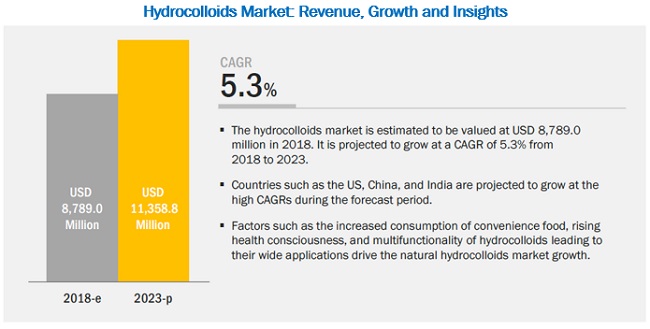
The hydrocolloids market is estimated to be valued at USD 8.4 billion in 2018 and is projected to reach USD 11.4 billion by 2023, at a CAGR of 5.3% during the forecast period. The growth of the hydrocolloids market is driven by factors such as the expansion of the processed food industry due to the increasing demand for convenience foods in regions such as the Asia Pacific, South America, and the Middle East & African. Apart from this, manufacturers are engaged in R&D to offer high-quality hydrocolloids due to its multi-functionality in the food industry.

Download PDF Brochure: https://www.marketsandmarkets.com/pdfdownloadNew.asp?id=1231

Key Players:

  • DowDupont (US)
  • Ingredion (US)
  • Cargill (US)
  • Kerry (Ireland)
  • Archer Daniels Midland Company (US)
  • Palsgaard (Denmark)
  • Darling Ingredients (US)
  • CP Kelco (US), Ashland (US)
  • BASF (Germany)
  • Tate & Lyle (UK)
  • Glanbia (Ireland)

By source, the botanical segment is projected to be one of the fastest growing segments for the hydrocolloids market due to the increased demand for natural products and ingredients. Some of the popular hydrocolloids of botanical origin used by manufacturers of the food & beverage industry include gum arabic, gum tragacanth, gum karaya, and gum ghatti.

By type, guar gum is projected to be the fastest growing segment in the hydrocolloids market. Derived from the guar plant, it finds applications in the food, pharmaceutical, and cosmetics industries. In the food industry, it is used as a thickening and binding agent. It is used in a wide variety of food products such as ice cream, baked goods, cheese, soups, gravies, noodles, and meat. In addition, it is used in cosmetics products such as lotions, creams, and shampoos. In the pharmaceutical industry, it is used as a binder in tablets. Expansion of the food processing industry in the developing countries is projected to boost the sales of guar gum in the coming years.

Inquiry Before Buying: https://www.marketsandmarkets.com/Enquiry_Before_BuyingNew.asp?id=1231

By function, the stabilizers segment is considered to be one of the fastest-growing segment in the hydrocolloids market. Hydrocolloids used as stabilizers include locust bean gum, guar gum, carboxymethyl cellulose (CMC), xanthan gum, alginate, and carrageenan. The increasing demand for convenience foods in emerging countries is projected to drive the demand for hydrocolloids in the coming years.

Geographical Prominence:

North America is the fastest-growing market for hydrocolloids and is projected to record the highest CAGR during the forecast period. The North American market is completely driven by the US, which accounted for nearly 84.0% of the market share in 2017. The US has a large market for bakery, confectionery, convenience food, and packaged food products; hence, it constitutes a major share in the market. Consumers in the US are calorie-conscious, due to which low-calorie and low-fat foods are popular in the country. The increasing prevalence of obesity and cardiac diseases have led to an increasing demand for natural and low-calorie food products among consumers. Food manufacturers are therefore concentrating on the application of natural hydrocolloids and their functions as fat replacers.

Specialty Enzymes Market worth $6.6 billion by 2025

According to MarketsandMarkets, the specialty enzymes market is estimated to be valued at USD 4.4 billion in 2019 and is projected to reach USD 6.6 billion by 2025, recording a CAGR of 6.9% in terms of value. Due to the rise in demand for non-harmful biological catalysts in pharmaceuticals & diagnostics and advancement tools to optimize pharmaceutical production, specialty enzymes market has been boosting. These factors are projected to drive the growth for the specialty enzymesmarket during the forecast period.

Enzymes play an important role as a biological catalyst in the processing for several applications such as pharmaceutical, research &biotechnology, and diagnostics. In addition, enzymes are increasingly used as a substitute for chemical catalysts, which is significantly contributing to the growth of the specialty enzymesmarket.Developments such as protein engineering and genetic engineering provide scope for research & development in enzymes. The research and development activities help the industry to innovate products and meet the demand of industries by increasing production.In addition, biotechnology will help in increasing the efficiency of enzyme production and enhance its properties.Along with this, the increase in demand for diagnostics for the treatment of various chronic diseases is also contributing to the growth of the specialty enzymes market. Enzymes, such as polymerases & nucleases and carbohydrases, are used for the production of pharmaceuticals.

Download PDF Brochure: https://www.marketsandmarkets.com/pdfdownloadNew.asp?id=21682828

In terms of type, the polymerases & nucleases segmenthas shown significant growth in the market due to its wide range of usesacross various applications.The core structure and properties of polymerases are highly conserved through evolutions, as they function in coordination with several other proteins in order to synthesize nucleic acids in an accurate, efficient, and well-regulated manner. The ability of specialty enzymes to catalyze chemical reactions and increase its applications hascontributed to the growth of the specialty enzymes market.In addition, enzymes have several other benefits,such as lower production costs, higher product quality, reduced power energy consumption, and less wastage. These factors also drive the growth of the specialty enzymes market, while the use of specialty enzymes in pharmaceuticals is increasing for the production of drugs.

Asia Pacific is projected to witness the fastest growth in the specialty enzymes market during the forecast period due to the globalization of business and technological innovations. The Rest of the World (RoW) enzymes market has been growing due to advancements in various specialty applications and a rise in demand in developed countries. Novozymes (Denmark) expands its research &development facilities in Brazil that would focus on biotechnology-based innovations and developments in new enzyme product offerings. In addition, enzymes are being used increasingly to optimize the pharmaceutical industry. One of the major factors contributing to the growth of the enzymes market in the Asia Pacific and Rest of the World (RoW)regions is the increase in population in this region, which is driving the growth of the pharmaceutical and diagnostics industries.These factors are the major factors driving the market growth for enzymes in the Asia Pacific and Rest of the World (RoW) region for specialty applications.

GrainCorp (Australia) , Groupe Soufflet (France) and Boortmalt (Belgium) are the Major Player in the Malt Extracts and Ingredients Market

The malt extracts and ingredients market size is estimated to be valued at USD 17.6 billion in 2020 and is projected to reach USD 20.4 billion by 2025, recording a CAGR of 3.0% during the forecast period. The increase in the demand for beer has majorly been driving the market for malt extracts and ingredients. Factors such as their use as a sweetening agent and their ability to raise and soften the dough have propelled their use in various applications in the food & beverage industry.

The key players in this market include GrainCorp (Australia), Malteurop (France), Rahr Corporation (US), Boortmalt (Belgium), and Groupe Soufflet (France). New product launches, expansions & investments, and partnerships were some of the core strengths of the leading players in the malt extracts and ingredients market. These strategies were adopted by the key players to increase their market presence. It also helped them diversify their businesses geographically, strengthen their distribution networks, and enhance their product portfolios. Some of the other players in the malt extracts and ingredients market are Maltproducts (US), Maltexco (Chile), Holland Malt (Netherlands), Barmalt (India), IREKS (Germany), Muntons PLC (US), Simpsons (UK), Viking Malt (Finland), Agraria (Argentina), Puremalt (Scotland), Cerex (The Netherlands), EDME Ltd. (England) Imperial Malt(India), Diastatische Producten (The Netherland), and Laihian Mallas (Finland).

To know about the assumptions considered for the study download the pdf brochure

GrainCorp (Australia) is one of the major players in the global malt extracts and ingredients market. It is one of the leading manufacturers of malt extracts and ingredients globally. It operates in almost all the major markets through various agreements and subsidiaries. With the increase in the craft brewery, the demand for specialty malt has increased. GrainCorp provides a variety of specialty malt extracts and ingredients of premium quality to cater to the needs of craft brewers and microbreweries.

Groupe Soufflet (France) is another major player in the malt extracts and ingredients market. It is primarily engaged in the production and distribution of malt extracts and ingredients globally. It is based out of France, having eight maltries in the country. The organization is constantly working on expanding its capacity and on meeting the increased demand from all across the globe. To expand its production capacity and capture the market in East Africa, Soufflet established a malthouse in Ethiopia. Through this strategy, the company aimed at developing the regional industry.

Boortmalt (Belgium), a subsidiary of Axereal, is one of the leading players in the market. They mainly produce and distribute malt-based products in Europe as well as all across other geographies, as well.  It is continuously working on expanding its capacity and market share via different strategies such as expansions, acquisitions, and investments. Axereal, on behalf of Boortmalt, recently acquired the malt business of Cargill (US). Apart from this, they have established a malting tower in Belgium, which provides an important global presence to Boortmalt.

Related Reports:

Malt Extracts and Ingredients Market by Product (Extracts and Ingredients), Source (Soy, Wheat, and Rye), Grade (Standard malt and Specialty malt), Application (Beverages, Food, and Pharmaceuticals), Form (Dry and Liquid), Region – Global Forecast to 2025

Aquaculture Market worth $42.6 billion by 2023

The report “Aquaculture Market by Rearing Product Type (Equipment, Chemicals, Pharmaceuticals, Fertilizers), Culture (Freshwater, Marine, Brackish Water), Species (Aquatic Animals, Aquatic Plants), Production Type, and Region – Global Forecast to 2023″The aquaculture market is projected to grow from USD 30.1 billion in 2018 to USD 42.6 billion by 2023, recording a compound annual growth rate (CAGR) of 7.2% during the forecast period. The major factors driving the growth of the aquaculture market include a decline in the amount of captured fish, rise in consumption of fish and other products due to their nutritional value, and growth in adoption of advanced technology and aquafarming methods.

Download PDF Brochure: https://www.marketsandmarkets.com/pdfdownloadNew.asp?id=2224024

The brackish water segment is projected to be the fastest-growing segment in the aquaculture market during the forecast period.

The aquaculture market is segmented, on the basis of culture, into freshwater, marine, and brackish water. The brackish water segment is projected to be the fastest-growing segment in the aquaculture market during the forecast period. This is attributed to its high adoption in underdeveloped countries such as those in Africa. Further, brackish water aquafarming involves culturing of fin and shell fishes that are found in the coastal environment; it has the capacity to supply required food fish on a regular basis, thereby contributing to food security through supplemented feeding and aquafarming methods.

The aquatic animals segment is projected to grow at a higher rate during the forecast period.

The aquatic animals segment is further divided into crustaceans, mollusks, finfishes, and others. The growing demand for protein-rich food in developing countries such as India, Bangladesh, Indonesia, and Vietnam is driving the demand for aquatic animals. Additionally, the government support for aquafarming, specifically in Asia Pacific and Africa, is growing to mitigate poverty levels, as aquaculture is an important source of employment in the coastal regions of these countries; this has prompted several aquaproduct manufacturers to invest in this segment in these two regions.

The equipment segment is projected to account for the largest market share in the aquaculture market during the forecast period.

The aquaculture market is segmented, on the basis of rearing product type, into equipment, chemicals, fertilizers, and pharmaceuticals. The equipment segment is projected to be a leading segment in the aquaculture market. This is attributed to the rising adoption of advanced feeding systems to meet the rising demand for the inclusion of nutrients at an optimum level in the diets of aquatic animals. Furthermore, the growth in demand for seafood and decline in the volume of captured fishes is prompting the farmers to use equipment for higher production.

Speak to Analyst: https://www.marketsandmarkets.com/speaktoanalystNew.asp?id=2224024

Asia Pacific is projected to be the fastest-growing region in the aquaculture market during the forecast period.

Asia Pacific is projected to be the fastest-growing region in the aquaculture market during the forecast period due to the rapid development of aquaculture in most of the countries in the region in terms of improving the food supply. The demand for aquaculture products is rising, as the farmers in this region are investing in new technologies and innovations in order to meet the increasing food supply and nutrient food. The consumption of fish and shrimp is witnessing an upward trend in the region, which aids the aquafarming industry.

Major vendors in the aquaculture market include Pentair Plc, (US), AKVA Group (Norway), Xylem Inc (US), Aquaculture Equipment Ltd (UK), Aquaculture System Technologies (US), Luxsol (Belgium), Pioneer Group (Taiwan), CPI Equipment Inc (US), Asakua (Turkey), FREA Aquaculture Solutions (Denmark), Lifegard Aquatics (US), Tan International Ltd (UK), Reef Industries Inc (US), Aquafarm Equipment AS (Norway), and Aquaculture of Texas, Inc (US).

Cargill (US) and ADM (US) are the Key Players in the Lecithin & Phospholipids Market

The global lecithin market was valued at USD 1.15 billion in 2018 and is projected to reach USD 1.59 billion by 2023, at a CAGR of 6.7% during the forecast period. The global phospholipids market was valued at USD 3.23 billion in 2018 and is projected to reach USD 4.36 billion by 2023, at a CAGR of 6.2% during the forecast period. The lecithin market is driven by the growing feed industry and increasing demand from the confectionery products, bakery products, and convenience food industry due to its multifunctional and natural origin. The phospholipids market is driven by the growing trend of natural ingredient consumption in the emerging economies of Asia Pacific and South America, owing to the growing sale of dietary supplements and cosmetic products in these regions.

The key players in the lecithin & phospholipids market include Cargill (US), ADM (US), Stern Wywiol Gruppe (Germany), DowDuPont (US), and Bunge (US). Other players include Lipoid (Germany), Wilmar International (Singapore), Sonic Biochem Extractions (India), Avanti Lipids Polar (US), Lecico (Germany), VAV Life Sciences (India), Sodrugestvo (Luxembourg), Kewpie Corporation (Japan), Sojaprotein (Serbia), American Lecithin Company (US), Sime Darby Unimills, Lecital (Austria), and Lasenor Emul (Spain).

To know about the assumptions considered for the study download the pdf brochure

The key market players adopted growth strategies such as new product launches, expansions, mergers, and acquisitions to cater to the increasing demand for lecithin & phospholipids. For instance, companies such as Cargill and Stern-Wywiol Gruppe are focusing on expanding their product portfolios to strengthen their presence in the lecithin market. Some key companies also adopted acquisitions as a strategy to increase their consumer base in various geographies. For instance, in 2014, ADM acquired WILD Flavors GmbH and expanded its product portfolio in the lecithin space.

Cargill, one of the global leaders in the lecithin & phospholipids market, offers lecithin for various applications such as bakery products, confectionary products, convenience foods, dairy products, and meat & fish. The company is also active in the de-oiled, fluid, and modified lecithin. Furthermore, the company provides phospholipids under its brand, Epikuron, used in the pharmaceuticals and nutrition & supplements sectors. Apart from this, the company is one of the few players that provide industrial lecithin for the paints, inks, paper coatings, and leather & textile industries. The company adopted new product launches as one of its key strategies to increase its market presence in the lecithin area. For instance, in 2018, the company launched de-oiled non-GMO lecithin for consumers in Europe, amidst increasing demand for natural ingredients among consumers here.

ADM is also a key manufacturer of lecithin & phospholipids for the food, feed, and human nutrition applications. The company’s lecithin products are used in a wide variety of food applications such as bakery products, confectionery products, and convenience foods. The company also offers phospholipids under the brands, Ultralec and Capsulec. The company has a strong presence in the US market. It has adopted the expansion strategy to gain a share in the lecithin market space. In 2014, the company expanded the production capacity of non-GMO lecithin in Latur (India) and added rapeseed processing capabilities to its existing facility in Hamburg (Germany), owing to increased demand for non-GMO lecithin among consumers at a global level.

Omega-3 Market worth $8.5 billion by 2025

The global omega-3 market size is estimated to be valued at USD 4.1 billion in 2019 and is projected to be worth USD 8.5 billion by 2025, recording a CAGR of 13.1% during the forecast period. The growing demand for food fortification, increase in application profiling, and innovative product technologies shall drive the growth of the global omega-3 market over the next few years. Due to the increasing trend of mother and infant nutrition products, consumption of omega-3 fatty acids improve the performance. The omega-3 market is projected to record significant growth during the forecast period. In addition, due to the rise in health awareness among consumers, omega-3-based dietary supplement products are projected to witness high demand in the market.

The key players in this market include Cargill (US), BASF (Germany), DSM (Netherlands), Croda International (UK), and Epax (Norway). New product and technology launches, expansions & investments, agreements, and partnerships were some of the core strengths of the leading players in the omega-3 market. These strategies were adopted by the key players to increase their market presence. It also helped them diversify their businesses geographically, strengthen their distribution networks, and enhance their product portfolios. Some of the other players in the omega-3 market include Lonza (Switzerland), Orkla Health (Norway), Corbion (Netherlands), KD Pharma (Germany), GC Rieber (Norway), Guangdong Runke Bioengineering (China), Nordic Naturals (US), Golden Omega (Chile), Biosearch Life (Spain), Pharma Marine (Norway), Polaris (France), Sinomega (China), Kinomega (China), and Huatai Biopharm (China).

To know about the assumptions considered for the study download the pdf brochure

DSM (Netherlands) is one of the major players in the global omega-3 market. DSM is a Dutch company that is involved in the manufacture of nutritional products, pharmaceutical ingredients, and industrial chemicals. The company is actively providing solutions in the fields of nutrition and health. To expand its business, the primary strategy opted by the company is to launch new products, partnerships, investments, and joint ventures. DSM launched Life’s Omega is an algae-based vegetarian capsule that offers both EPA and DHA and is a natural source for omega-3. This product aided in sustaining the marine ecosystems.

Epax (Norway) is one of the major players in the omega-3 market. It is one of the global leaders in providing omega-3 concentrates, which are highly purified and of high quality. The company’s line of business includes omega-3 concentrates in different concentrations and EPA: DHA ratios. Epax announced to invest USD 35 million over the next two years for the innovation of its omega-3 sector. This investment will allow Epax to have better capacity in the omega-3 industry, at its main site of production in Norway. It will facilitate the extended concentration of EPA and DHA without prompting oxidation, which will ultimately avoid unwanted by-products.

The omega-3 market in Asia Pacific is projected to witness high growth due to rising awareness about its health benefits and increasing disposable income of the population in the Asia Pacific countries. With the growing inclination toward healthy aging in the region, the adult population prefers consuming dietary supplements, including omega-3, as per the recommendations by the Global Organization for EPA & DHA Omega-3 (GOED). Moreover, in Asia Pacific countries, the governments are also focusing on and promoting fortified foods, and many big brands such as BASF (Germany) and Croda International (UK) have expanded their operations in these countries to cater to the growing demand for omega-3. Key manufacturers prefer expanding in the Asia Pacific region, as it provides cost-effective benefits during production and processing. The high demand for omega-3 and low cost of production are the major factors that are projected to encourage suppliers and manufacturers to invest in this market. In addition, Asia Pacific has the highest growth potential due to factors such as high economic growth and the increase in income of individuals in the region. The high population growth and increase in FDI are factors that are driving the growth of the omega-3 market.

This report includes a study on the marketing and development strategies, as well as the product portfolios of the leading companies operating in the omega-3 market. It includes the profiles of leading companies such as Epax (Norway), Croda International (UK), Golden Omega (Chile), GC Rieber (Norway), Cargill (US), DSM (Netherlands), BASF (Germany), Lonza (Switzerland), KD Pharma (Germany), and Pharma Marine (Norway).

Soil Testing Equipment Market worth $6.2 billion by 2025

The report “Soil Testing Equipment Market by End-user Industry (Agriculture, Construction, Environment), Type of Tests (Physical, Residual, Chemical), Site (Lab, On-Site), Degree of Automation (Automatic, Manual), and Region – Global Forecast to 2025″ The global soil testing equipment market size is estimated to be valued at USD 3.3 billion in 2019 and is projected to reach USD 6.2 billion by 2025, at a CAGR of 10.8% from 2019 to 2025. The growing frequency of soil testing for cost reduction in fertigation & productivity and the need for soil conservation for human welfare have been driving soil testing equipment industry growth.

The construction segment is estimated to account for the larger share of soil testing equipment market, in 2019

The soil testing equipment, by end-user industry, is segmented into construction, agriculture, and others. Soil testing is widely used in the construction industry to check the physical and chemical properties of the soil and thereby understand the soil’s bearing capacity. Geotechnical properties, such as specific gravity, density, consistency, shear strength, and particle size, influence the stability of the engineering structures. The use of various equipment, such as augers, penetrometers, leachability equipment, permeameter, compactor, and soil sensors, among others, contribute to a significant share of the construction segment in the global soil testing equipment industry.

Request for Sample: https://www.marketsandmarkets.com/requestsampleNew.asp?id=246855452

The residual testing equipment, by type of tests, is projected to be the fastest-growing segment from 2019 to 2025

The growing consumer awareness regarding the presence of chemical residues in fruits & vegetables and processed foods has been driving the need for soil testing before and after cultivation. This has led to high demand for GC-MS and ICP-MS test kits. The increasing consumption of fruits & vegetables, as well as processed foods, is expected to play a vital role in driving the demand for various soil testing equipment during the forecast period.

North America dominated the global soil testing equipment market in 2018

The presence of key soil testing equipment industry players, such as Agilent Technologies, Thermo Fisher Scientific, Merck Group, and PerkinElmer, in the US coupled with the high adoption of modern agriculture practices, has resulted in North America dominating the global soil testing equipment market. Several environmental organizations have been actively contributing to market development and have enforced various environment protection policies. The North American soil testing equipment industry addresses multiple environmental issues, such as climate change, acid rain reduction, industrialization, soil erosion, and construction. The growing funds for soil pollution control for ecological safety and R&D investments for new product developments are also responsible for the growth of the market.

This report includes a study on the marketing and development strategies, along with a study on the product portfolios of the leading companies operating in the soil testing equipment market. It consists of the profiles of leading companies such as Agilent Technologies (US), Thermo Fisher Scientific Inc. (US), Merck Group (Germany), PerkinElmer Inc. (US), Controls S.p.A (Italy), LaMotte Company (US), Geotechnical Testing Equipment UK Ltd (UK), Sun Labtek Equipments (I) Pvt. Ltd (India), Martin Lishman Ltd (UK), S.W. Cole (UK), Ele International (UK), Gilson Company Inc. (US), Humboldt Mfg. Co. (US), EIE Instruments Pvt. Ltd (India), Eurofins Scientific (Luxemburg), Alfa Testing Equipment (US), Matest (Italy), M&L Testing Equipments (Canada), and Shambhavi Impex (India), among others. Manufacturers broadly adopted new product developments and acquisitions as their major strategies for the market.

Tetrakis(Hydroxymethyl)Phosphonium Sulfate Market worth $279 million by 2025

The report “Tetrakis(Hydroxymethyl)Phosphonium Sulfate Market by Application (Oil & Gas, Water Treatment, Leather, Textile), by Function (Biocide, Iron Sulfide Scavenger, Flame Retardant, Tanning Agent) and Region – Global Forecast 2025″ The global tetrakis(hydroxymethyl)phosphonium sulfate market, in terms of value, is estimated to account for nearly USD 202 million in 2019 and projected to grow at a CAGR of 5.5%, to reach approximately USD 279 million by 2025. The growth of the oil & gas, leather, water treatment, and textile industries are driving the THPS market growth as the demand and frequency of use have increased.  Download PDF Brochure: https://www.marketsandmarkets.com/pdfdownloadNew.asp?id=64575638

The oil & gas segment is estimated to account the largest market share, in terms of value, in 2019

The oil & gas segment dominated the market for tetrakis(hydroxymethyl)phosphonium sulfate as THPS has become the most widely used biocide in oilfields, where sulfate-reducing bacteria create major problems. THPS also has preservative properties and provides high-temperature stability and prolonged downhole protection in oilfields, thereby making it a preferred choice in the oil & gas industry. Due to these factors, the market is projected to witness significant growth.   

The biocide segment is estimated to witness the fastest growth in the tetrakis(hydroxymethyl)phosphonium sulfate market, in terms of value from 2019 to 2025

THPS as a biocide is an important chemical used in hydraulic fracturing as well as water treatment systems. Biocides are used primarily for killing and controlling bacteria, as they can cause instability in viscosity and pose high threats. THPS was used initially as an industrial biocide in cooling systems. However, it is used more frequently in the petroleum, oil, and gas industries, as a biocide over the past two decades. The benefits associated with biocides are the major factors contributing to the fastest growth of this market, globally.   

Speak to Analyst: https://www.marketsandmarkets.com/speaktoanalystNew.asp?id=64575638

Asia Pacific is projected to grow at the highest CAGR of 5.8% in terms of value during the forecast period

As Asia Pacific is the largest as well as the most populated continent, the consumption of THPS, especially in terms of flame retardants and microbiocides, is high in the region. China, India, Australia, and Japan are the key markets for THPS in the region. China is the largest market in Asia Pacific and one of the leading countries in terms of production as well as consumption of flame retardants. The growing industrial activity in the textile industry has resulted in the rising demand for flame retardant chemicals such as THPS. Due to these factors, the market in the Asia Pacific region is projected to record the highest growth from 2019 to 2025.

This report includes a study on the marketing and development strategies, along with a study on the product portfolios of the leading companies operating in the tetrakis(hydroxymethyl)phosphonium sulfate market. It includes the profiles of leading companies such as Arkema S.A. (France), Solvay (Belgium), Sigma-Aldrich (Merck KGaA) (Germany), DowDuPont (US), Hubei Xingfa Chemicals Group Co., Ltd (China), Changshu New-Tech Chemicals Co., Ltd. (China), Jiangxi Fuerxin Medicine Chemical Co., Ltd. (China), Jiangsu Kangxiang Industrial Group Co., Ltd. (China), Prasol Chemicals Pvt. Ltd. (India), Hubei Lianxing Chemical Co., Ltd. (China), Jiangsu Danai Chemical Co., Ltd.(China), Finoric LLC (US), Compass Chemical (US).