The Global Frozen Bakery Products Market: A Rising Industry with Sweet Prospects

The frozen bakery products market is experiencing remarkable growth, with its estimated value reaching USD 22.3 billion in 2021. Projections indicate a promising future, as it is expected to surge at a Compound Annual Growth Rate (CAGR) of 5.8%, ultimately reaching USD 29.5 billion by 2026. Europe stands as a key player in this industry, claiming the largest share during the forecast period, largely attributed to its vast consumer base in the region.

Europe’s food processing industry, as reported by FoodDrinkEurope, stands as one of the largest and most critical manufacturing sectors on the continent, contributing a substantial 14.6% to the total turnover in 2019. The robust growth in the European food processing industry has significantly propelled the baking sector, fostering growth in the market for frozen bakery products and, in turn, spurring expansion within the parent bakery industry.

Download PDF brochure: https://www.marketsandmarkets.com/pdfdownloadNew.asp?id=789

Among frozen bakery products, cakes and pastries emerge as the fastest-growing segment type during the forecast period. Changing consumer preferences, with a heightened inclination towards convenience and ready-to-eat options, have fueled the demand for single-serving frozen pastries globally. The cakes and pastries market is marked by continuous product innovations, frequent new product launches, and a growing preference for premium-quality offerings. Many pastry producers are now marketing single-serving frozen pastry products, aligning with the overarching trend of enhanced convenience and shorter preparation times.

In the global market for frozen bakery products, conventional stores, including grocery stores, mass merchandisers, and online retailers, take the lead. This is largely due to consumers’ persistent preference for conventional stores as a fundamental part of their shopping routines, owing to their easy accessibility and availability.

The ready-to-bake segment is poised to claim the largest market share. These products, partially baked and frozen, have gained popularity for their shorter baking time. Ready-to-bake options provide consumers with the convenience of preparing fresh bakery products, which are often perceived as fresher and more appealing compared to longer-shelf-life alternatives found on store shelves.

The Asia Pacific market is expected to exhibit the highest CAGR during the forecast period. The region’s young population’s growing inclination towards convenience and ready-to-eat foods is a significant driver for the frozen bakery products market. With economic growth in developing markets and increasing disposable incomes, the frozen bakery products market in the Asia Pacific region is set for substantial expansion.

Make an Inquiry: https://www.marketsandmarkets.com/Enquiry_Before_BuyingNew.asp?id=789

Key players in this market include Associated British Foods plc (UK), Aryzta AG (Switzerland), Lantmannen Unibake International (Denmark), Europastry, S.A. (Spain), General Mills, Inc. (US), and Kellogg Company (US). Other notable players include Premier Foods plc (UK), Vandemoortele NV (Belgium), Conagra Brands, Inc. (US), and Grupo Bimbo S.A.B. de C.V. (Mexico).

Leading manufacturers of frozen bakery products are pursuing mergers and acquisitions to gain a competitive edge in the market. Additionally, investments are being channeled into expanding production plants, providing product-based solutions to customers. This strategic approach has significantly contributed to the industry’s growth, particularly in emerging markets like China and India. As the frozen bakery products market continues to evolve, it promises a sweet and prosperous future for both consumers and industry players alike.

Unlocking the Potential: The Industrial Hemp Market

The global industrial hemp market is on an impressive trajectory, with its estimated value reaching USD 6.8 billion in 2022 and projected to soar to USD 18.1 billion by 2027, marking a remarkable CAGR of 21.6% in terms of value. What’s driving this growth? Let’s dive in!

Hemp in the Food & Beverage Industry

One of the prime catalysts for this surge is the surging usage of hemp seeds in a wide array of food and beverage products. From cereals to yogurts, protein powders to hemp milk, the versatility of hemp as a nutrient-rich ingredient is turning heads in the F&B sector.

Download PDF brochure: https://www.marketsandmarkets.com/pdfdownloadNew.asp?id=84188417

Key Features of the Industrial Hemp Market

Behind this flourishing market lie several key features:

  • Legalization and Deregulation: Many countries are easing restrictions on hemp cultivation, ensuring a steady supply of raw materials.
  • Demand for Hemp-based Products: Textiles, paper, and building materials crafted from hemp are experiencing a high demand.
  • Technological Advancements: Innovations in cultivation and processing are reducing costs and boosting efficiency.
  • Sustainability: Hemp’s minimal water and pesticide requirements make it an eco-friendly alternative to traditional crops.
  • Food & Beverage Marvel: Hemp’s journey into the F&B industry, particularly through hemp seeds and hemp oil, is reshaping menus worldwide.

Hemp in Food & Beverage: A Versatile Player

Within this sector, hemp is taking the lead in food and beverage applications. Here’s why:

  • Nutrient Powerhouse: Hemp packs essential fatty acids, vitamins, and minerals, making it a valuable addition to various food products.
  • Plant-based Protein: The global rise of veganism is boosting demand for hemp-based processed foods like bars, snacks, and cheese.
  • Digestive Health: Hemp’s digestible fiber content is enhancing its role in food products, promoting better digestion.
  • Hemp Snacking: Popular products like hemp tortilla chips, corn chips, and hemp hearts are making waves in the snacking world.
  • Breakfast of Champions: Nutrient-rich hemp cereal is gaining traction, offering a wholesome start to the day.
  • Post-exercise Fuel: Hemp snacks, with their high protein content, are becoming favored post-workout options.

Make an Inquiry: https://www.marketsandmarkets.com/Enquiry_Before_BuyingNew.asp?id=84188417

Europe Leads the Way

When it comes to growth in the industrial hemp market, Europe takes the spotlight. Here’s why:

  • Hemp in F&B: Hemp seed and hemp seed oil are making their mark in European food, beverages, dietary supplements, and personal care products.
  • Diverse Applications: Hemp fiber finds applications in automotive and construction materials for insulation and soundproofing.
  • Popular Food Choice: The consumption of hemp seeds in food products such as smoothies, yogurt, cereals, and bars is thriving.
  • Regional Demand: Countries like Germany and the Netherlands are witnessing soaring demand for hemp-based products.
  • The industrial hemp market is not just a rising star; it’s a transformative force shaping industries and menus. Stay tuned as this journey unfolds, offering sustainable and innovative solutions to the world!

Unlocking the Potential of Beta-Glucans: A Growing Global Market

The beta-glucan market is a thriving global industry, encompassing the production, distribution, and sale of beta-glucans. These remarkable compounds are a type of soluble fiber found naturally in sources such as oats, barley, mushrooms, and yeast. Notably, they are celebrated for their promising health benefits and have found applications in an array of products, spanning from food and dietary supplements to pharmaceuticals and cosmetics.

Download PDF brochure: https://www.marketsandmarkets.com/pdfdownloadNew.asp?id=5191796

Market Expansion in Numbers

As we dive into the realm of beta-glucans, it’s fascinating to note that the market is not just thriving; it’s also growing at a notable pace. Recent estimates put the beta-glucan market at an impressive USD 501 million in 2023, with projections pointing toward reaching USD 734 million by 2028. This growth is expected to occur at a compound annual growth rate (CAGR) of 7.9% during the period from 2023 to 2028.

Several factors contribute to this substantial growth. One key driver is the increasing demand for natural food additives in the food and beverage industry. Additionally, beta-glucans have found a valuable place in pharmaceuticals, notably in tablet and capsule formulations. Moreover, the rising trend of incorporating beta-glucans into cosmetic products, enhancing emulsification, further propels market expansion.

Addressing Modern Lifestyles and Wellness

Modern lifestyles have ushered in a range of challenges, including stress, poor dietary habits, sedentary behavior, and exposure to environmental factors. These factors can significantly impact immune health and overall well-being. In response, people are actively seeking ways to bolster their immune systems and maintain good health. This quest for wellness has led to a surge in demand for dietary supplements, with many consumers turning to products that include beta-glucans.

Furthermore, as the global population ages, there’s a growing interest in health and wellness products that support healthy aging. Beta-glucans have garnered recognition as a potential ingredient for these products, given their potential health-promoting properties.

Yeast: A Key Player in Beta-Glucan Production

Yeast, a versatile microorganism, plays a pivotal role in industrial fermentation processes. It is used to produce an array of products, ranging from bread and beer to biofuels. Large-scale yeast cultivation for industrial purposes demands efficient and rapid growth to meet production needs. To achieve high yields, yeast strains are often optimized for growth rate, which includes the production of beta-glucans. This optimization enhances yeast’s potential as a fast-growing source of beta-glucan.

Request Sample Pages: https://www.marketsandmarkets.com/requestsampleNew.asp?id=5191796

A Global Perspective

The beta-glucan market has a global footprint, with active players and consumers on nearly every continent. It has been studied and analyzed in regions including North America, Europe, Asia-Pacific, Latin America, and the Rest of the World.

In particular, the Asia-Pacific beta-glucan market is witnessing significant growth. This can be attributed to advancements and innovations in beta-glucan-based food, beverages, industrial, and healthcare products. Local Asian companies are expanding their product portfolios, leveraging de-oiled lecithin to generate substantial revenues. Furthermore, the cultivation of beta-glucan sources in countries like China and India is on the rise, further fueling regional market growth.

In conclusion, the beta-glucan market is a dynamic and rapidly growing sector with a promising future. As consumer awareness of its health benefits continues to rise, and with ongoing research and innovation, the market is poised to evolve and meet the demands of health-conscious consumers worldwide.

Beverage Packaging: A Key Player in Preserving and Marketing Your Drinks

Introduction

Beverage packaging plays a crucial role in safeguarding the quality of beverages while also serving as a powerful marketing tool to attract consumers. In 2021, the global beverage packaging market was valued at a staggering USD 148.1 billion, and it is poised for significant growth, with a projected compound annual growth rate (CAGR) of 5.0%. By 2026, it is expected to reach a remarkable USD 189.0 billion. This robust growth can be attributed to several factors, including the rising consumption of non-alcoholic and dairy beverages, ongoing innovations in packaging designs and technology, and the increasing demand for eco-friendly materials. Additionally, emerging economies are contributing to the market’s expansion as their populations continue to embrace these products.

Download PDF brochure: https://www.marketsandmarkets.com/pdfdownloadNew.asp?id=1222

Regional Dynamics

The global beverage packaging market is segmented into North America, Europe, Asia Pacific, South America, and Rest of World (RoW). Among these regions, Asia Pacific stands out as the frontrunner, poised to capture the largest market share during the review period. The region’s population growth and increasing disposable income have fueled demand for beverages, creating substantial opportunities for market growth. Global industry giants like Ball Corporation and Crown Holdings Inc. are capitalizing on this trend by establishing new manufacturing plants in the Asia Pacific region. Factors such as rapid industrialization, urbanization, heightened environmental concerns, the expanding middle class with higher disposable incomes, and reduced production of fresh food and beverage products are driving the consumption of processed food and beverage products, thereby boosting demand for beverage packaging in this dynamic sector.

Leading Players and Strategies

This comprehensive report delves into the marketing and development strategies employed by key players in the beverage packaging market. It also provides a survey of their product portfolios. Some of the industry leaders featured in the report include Amcor Group GmbH (Switzerland), O-I Glass, Inc. (US), Crown Holdings, Inc (US), Ardagh Group S.A. (Ireland), Verallia SA (France), Tetra Pak Group (Switzerland), Ball Corporation (US), Vidrala S.A. (Spain), Toyo Seikan Group Holdings, Ltd. (Japan), and CPMC Holdings Limited (China), among others. These companies play a pivotal role in shaping the beverage packaging landscape through innovation and market strategies.

Diverse Materials and Packaging Types

The beverage packaging market offers a wide array of material options, including metal, plastic, glass, paper & paperboard, and others. Beverage containers can be categorized as rigid or flexible. Rigid containers, encompassing glass and plastic bottles, metal cans, wood boxes, and drums, provide physical protection to the product inside. On the other hand, flexible packaging includes materials like plastic films and papers, which offer versatility and convenience. Beverage packaging manufacturers often combine different material types to create multi-featured solutions that are cost-effective, safe, and recyclable. Among these materials, the metal segment currently dominates the market due to its resilience and recyclability.

Request Sample Pages: https://www.marketsandmarkets.com/requestsampleNew.asp?id=1222

Packaging Types and Trends

The beverage packaging market features five major packaging types: bottles, cans, pouches, cartons, and others. The “others” category includes bulk and draught containers designed for larger volumes of packaging. The choice of packaging largely depends on the type of beverage being served. Alcoholic beverages are typically packaged in bottles, while non-alcoholic drinks are commonly found in bottles as well. PET and HDPE bottles are favored by manufacturers for their cost-effectiveness and the extended shelf life they offer when storing products at chilled or ambient temperatures. In 2020, the bottle segment emerged as the dominant force in the global beverage packaging market, closely followed by the can segment, which also claimed a significant share of the market’s revenue.

Conclusion

The global beverage packaging market is on an upward trajectory, driven by factors such as increased consumption, innovations in packaging technology, and the demand for sustainable materials. As Asia Pacific emerges as a dominant player, global companies are strategically positioning themselves to tap into this lucrative market. With a focus on preserving product quality and attracting consumers, beverage packaging continues to be a dynamic and vital component of the beverage industry, ensuring that your favorite drinks reach you in the best possible condition.

The Booming Market of Food Blenders and Mixers: A 6.0% CAGR Expected by 2027

The global food blenders and mixers market are poised for substantial growth, with an anticipated Compound Annual Growth Rate (CAGR) of 6.0% during the forecast period. This surge in market value is projected to elevate it from its 2022 worth of US$ 8.0 billion to a staggering US$ 10.8 billion by the year 2027. The driving force behind this remarkable expansion is the burgeoning food processing industry, coupled with an escalating demand for bread and dairy products in developing nations.

Download PDF brochure: https://www.marketsandmarkets.com/pdfdownloadNew.asp?id=154311361

Embracing Innovation in Food Processing

Food manufacturers are increasingly turning to advanced food processing machinery to streamline operations. These cutting-edge technologies not only reduce processing time but also enhance manufacturing efficiency. The food processing sector is undergoing a significant automation transformation, opening up new avenues for food blender and mixer manufacturers. This sector’s exponential growth presents lucrative opportunities for businesses operating in the food blender and mixer market.

Global Market Players and Expansion Strategies

Leading the charge in the global food blenders and mixers market are industry giants like GEA Group (Germany), Tetra Laval (Switzerland), SPX Flow (US), Alfa Laval (Sweden), and others. These key players are expanding their production facilities and launching innovative products to bolster their market presence. Furthermore, they are investing heavily in Research and Development (R&D) initiatives, embarking on geographical expansions, and making strategic acquisitions to solidify their positions within the extensive supply chain of the market.

Continuous Blenders and Mixers: The Preferred Choice

In the dairy and beverages industries, continuous blenders and mixers reign supreme due to the nature of their production lines, which typically operate continuously. Continuous technology offers unparalleled efficiency and ease of control throughout the manufacturing process. As a result, the continuous technology segment is expected to experience the highest CAGR in the food blenders and mixers market.

Transforming the Food & Beverage Processing Landscape

Food and beverage processing involve the conversion of raw materials and various ingredients into consumable products through physical or chemical means. In the past, manufacturers relied on traditional techniques and extensive human labor for these processes. However, these methods had their limitations, such as high labor costs, wastage, and lengthy production times. Mixing is a fundamental operation in the transformation of raw ingredients into food products.

To overcome these challenges, the food and beverage processing industry has witnessed significant advancements, including the widespread adoption of food blenders and mixers. These equipment have revolutionized the processing of bakery, dairy, confectionery, and other food and beverage products, providing manufacturers with greater efficiency, reduced costs, and faster production times.

Request Sample Pages: https://www.marketsandmarkets.com/requestsampleNew.asp?id=154311361

Conclusion

The food blenders and mixers market are on an upward trajectory, driven by factors such as the growth of the food processing industry, increased consumption of dairy and bakery products, and the adoption of advanced technologies. Market leaders are aggressively expanding their operations and investing in innovation to meet the growing demand in this lucrative industry. As we look ahead to 2027, the global food blenders and mixers market seem poised to continue its remarkable growth journey.

The Growing Cannabis Market: A Path to Billions

Introduction

In recent years, the global cannabis industry has witnessed a remarkable transformation, evolving from the shadows of illegality into a thriving, legitimate market with substantial growth potential. In 2022, the global cannabis market was estimated to be valued at a staggering USD 27.7 billion, and experts project it to skyrocket to USD 82.3 billion by 2027. This rapid expansion represents a remarkable Compound Annual Growth Rate (CAGR) of 24.3% in terms of market value. A significant contributor to this upward trajectory is the medical segment, with cannabis finding its place in treating a variety of medical conditions, including anxiety, gastrointestinal disorders, seizures, and epilepsy. The proliferation of cannabis dispensaries worldwide is expanding the reach of cannabis products, promising a bright future for the industry.

Download PDF brochure: https://www.marketsandmarkets.com/pdfdownloadNew.asp?id=201768301

Driving Factors for Growth

Several key factors are fueling the growth of the cannabis industry on a global scale. The first of these is the surging demand for cannabis products, driven by shifting societal trends. People across the world, facing increasing stress and burnout from work and other pressures, are prioritizing self-care and mental wellness. In this context, Cannabidiol (CBD) has emerged as a beacon of hope. CBD, a non-psychoactive compound derived from cannabis, aligns perfectly with the rising focus on well-being. Consequently, the CBD market has experienced rapid growth, thanks to the proliferation of CBD products and its integration into various sectors, such as edibles, skincare, and online distribution channels.

Moreover, progressive policy reforms are playing a pivotal role in shaping the cannabis industry’s future. As governments recognize the economic and medical potential of cannabis, many are revising their regulations to accommodate its responsible use. These policy changes are removing barriers to entry for businesses, creating opportunities for innovation, and boosting market growth.

Regional Growth and Legalization

Regionally, the cannabis market is experiencing dynamic growth, with South America emerging as a notable hotspot. The legalization of medical cannabis in countries like Uruguay and Colombia served as a catalyst for the industry’s development, later followed by Argentina, Brazil, Chile, and other South American nations. While personal cultivation for recreational use is legal in several countries, commercial sales are restricted to Uruguay. Many South American countries have also decriminalized the possession of small amounts for personal use, contributing to the industry’s steady ascent. Additionally, South America’s cannabis market benefits from factors such as favorable climates, low-cost labor, and minimal construction expenses compared to North America.

Make an Inquiry: https://www.marketsandmarkets.com/Enquiry_Before_BuyingNew.asp?id=201768301

Conclusion

The global cannabis market’s phenomenal growth, driven by medical applications, changing consumer preferences, and supportive policy reforms, paints a promising picture for the industry’s future. With an estimated worth projected to reach USD 82.3 billion by 2027, the cannabis market is not only a lucrative venture for businesses but also a source of potential relief and wellness for millions of individuals worldwide. As the industry continues to mature, it is essential for companies to adapt to emerging trends and maintain their commitment to product quality and consumer satisfaction, ensuring their lasting success in this dynamic sector.

The Global Collagen Market: Trends, Growth, and Projections

Introduction

The global collagen market is poised for significant growth in the coming years, with estimations indicating that it was valued at USD 4.7 billion in 2022 and is projected to reach USD 7.2 billion by 2030. This forecasted growth is underpinned by a robust Compound Annual Growth Rate (CAGR) of 5.3% during the forecast period. Several key factors are contributing to the expansion of the worldwide collagen market, including increased utilization of collagen in the food industry, growing interest in protein consumption and nutricosmetics, expanding applications in healthcare, and the rising adoption of collagen-based biomaterials. Furthermore, the surge in per capita income and the burgeoning food processing sector are presenting collagen producers with ample growth opportunities.

Nutritional Products Lead the Way

Among the various application segments within the global market, nutritional products emerge as the frontrunner. Nutritional diets play a pivotal role in enhancing the performance of athletes, with proteins being particularly critical in boosting stamina and energy levels. Collagen, in particular, plays a significant role in these products by safeguarding athletes’ joints and connective tissues, facilitating muscle recovery, supporting muscular contraction, and aiding in weight management. Additionally, collagen contributes to injury risk reduction, making it an indispensable component of nutritional products.

Marine Collagen on the Rise

The segment exhibiting the highest projected CAGR from 2022 to 2030 is marine collagen. The demand for marine-derived collagen has experienced a noteworthy upswing, especially in the cosmetics sector. Marine collagen offers an array of cosmetic and beauty benefits, making it an attractive choice for consumers. It serves as an effective anti-aging formula, reducing wrinkles and promoting skin cell rejuvenation, thus enhancing skin elasticity. Furthermore, marine collagen, particularly type I, has demonstrated its effectiveness in promoting hair, nail, and teeth growth and maintenance.

Request Sample Pages: https://www.marketsandmarkets.com/requestsampleNew.asp?id=220005202

Europe Takes the Lead

In the forecast period, Europe emerges as the largest region in the global collagen market. The presence of major collagen manufacturers, including Tessenderlo Group (Belgium), GELITA AG (Germany), Lapi Gelatine S.p.a. (Italy), and Weishardt Holding SA (France), among others, further propels market growth in the region.

Key Players in the Collagen Market

Leading companies are actively shaping the collagen market through strategic marketing and development efforts, along with diversified product portfolios. Notable players include Tessenderlo Group (Belgium), GELITA AG (Germany), Holista Colltech (Australia), Darling Ingredients (US), Nitta Gelatin NA Inc. (Japan), Gelnex (Brazil), Lapi Gelatine S.p.a. (Italy), Weishardt Holding SA (France), Royal DSM N.V (The Netherlands), and Collagen Solutions LLC (UK).

Conclusion

The global collagen market is poised for substantial growth, fueled by an array of factors such as its increasing use in diverse industries, expanding applications in health and beauty, and a growing demand for collagen-based products. As the market continues to evolve, collaboration and innovation among key industry players are likely to define its trajectory, ultimately shaping the future landscape of the collagen market. With Europe leading the way, the global collagen market is on a transformative journey, offering promising prospects for both manufacturers and consumers alike.

Feeding the Future: The Growing Compound Feed Market and Its Impact on Global Food Production

In 2023, the compound feed market is set to hit a staggering value of USD 541.2 billion, and projections suggest it will surge to USD 668.3 billion by 2028, maintaining a steady Compound Annual Growth Rate (CAGR) of 4.3% over this period. This remarkable growth can be attributed to a variety of factors, most notably the world’s ever-increasing population, which fuels the demand for essential food products like meat, dairy, and poultry. At the heart of this demand lies compound feed – a powerful tool for supplying vital nutrients to livestock, enhancing their growth, and boosting productivity. As living standards improve across many developing nations, meat consumption rises, and animals such as poultry, pigs, and cattle rely on compound feed for optimal development and production.

Download PDF brochure: https://www.marketsandmarkets.com/pdfdownloadNew.asp?id=12564156

Cereals: The Cornerstone of Compound Feed

Cereals, rich in carbohydrates and featuring varying levels of protein, fiber, and essential minerals, play a pivotal role in compound feed formulations. Staples like corn and wheat, widely cultivated and readily accessible across the globe, make for cost-effective choices when it comes to compound feed ingredients. Consequently, cereals dominate this segment by virtue of their nutritional composition and wide availability.

Poultry: The Global Protein Powerhouse

Poultry, particularly chicken, stands as one of the most popular and widely consumed meats worldwide. Its consistent high demand stems from factors such as affordability, versatility, and nutritional value. This burgeoning appetite for poultry products, encompassing both meat and eggs, drives the need for poultry compound feed. According to the OECD, poultry meat consumption per capita reached a substantial 32 kg in 2022, far surpassing figures for other meats like sheep, beef, and pork.

Plant-Based Feed: A Sustainable Shift

In recent years, there has been a growing preference for plant-based animal feed due to its perceived sustainability and environmental friendliness. Traditional compound feed often incorporates animal by-products and contributes to issues like deforestation and greenhouse gas emissions. In contrast, plant-based feed relies on crops such as soybeans, corn, and wheat, which can be cultivated in a more controlled and sustainable manner. It’s considered healthier for animals, providing a balanced mix of essential nutrients while reducing the risk of diseases associated with animal-based feed.

Asia Pacific: The Epicenter of Demand

The Asia Pacific region, boasting countries like China and India, houses a whopping 60% of the global population, totaling around 4.3 billion people. This densely populated region has experienced continuous population growth, leading to a surging demand for animal-derived products, including meat, milk, and eggs. Consequently, there’s an escalated need for compound feed to meet the growing demands of livestock and poultry production. As incomes rise and dietary preferences evolve, there’s a noticeable shift towards increased consumption of animal protein. This, in turn, fuels the expansion of the livestock and poultry sectors, further boosting the demand for compound feed.

Request Sample Pages: https://www.marketsandmarkets.com/requestsampleNew.asp?id=12564156

Key Players in the Compound Feed Market

Several major players operate in the compound feed market, each contributing to its growth and innovation. These industry leaders include Cargill, Inc. (US), ADM (US), Charoen Pokphand Foods (Thailand), New Hope Group (China), Land O’Lakes (US), Nutreco N.V (Netherlands), Alltech, Inc. (US), Guangdong Haid Group Co., Ltd (China), Weston Milling Group (Australia), and Feed One Co. (Japan).

In conclusion, the compound feed market is on an impressive trajectory, driven by the world’s increasing population, the surging demand for animal-derived products, and a growing preference for sustainable, plant-based feed options. With key players at the forefront of innovation, this market is poised to play a crucial role in shaping the future of global food production.

Breaking It Down: The Growing Food Anti-Caking Agents Market

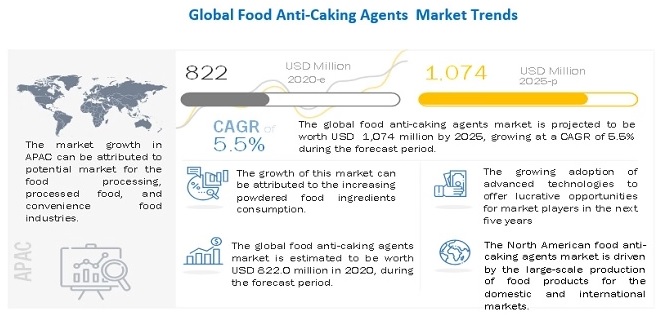
The food industry is a dynamic and ever-evolving landscape, and one segment that’s been making significant strides is the food anti-caking agents market. It’s not just growing; it’s projected to grow at an impressive Compound Annual Growth Rate (CAGR) of 5.5% between 2020 and 2025. By 2025, it’s expected to reach a substantial value of $1,074 million, a significant leap from the projected $822 million in 2020.

What’s Driving the Growth?

Several factors are fueling the expansion of this market. First and foremost, food anti-caking agents find applications in a wide range of food products. Whether it’s preventing clumping in seasoning and condiments or maintaining the quality and texture of bakery and dairy products, these agents play a vital role.

Moreover, there’s a growing concern for food safety and hygiene in manufacturing practices, which is leading to increased use of anti-caking agents. Consumers are becoming more discerning, demanding better quality and longer shelf life for their food products. This demand for enhanced product quality and safety is pushing manufacturers to explore innovative solutions, further boosting the market.

North America Leads the Way

When we talk about the global food anti-caking agents market, North America takes the spotlight. This region is estimated to hold the largest market share, and its growth can be attributed to the high consumption of a diverse range of food ingredients, many of which have hygroscopic properties. Additionally, the demand for premixes in various food applications continues to rise, contributing to the market’s growth.

Request Sample Pages: https://www.marketsandmarkets.com/requestsampleNew.asp?id=3259107

Key Players in the Game

Behind the scenes, major players are shaping the food anti-caking agents market. Names like Evonik Industries AG (US), PPG Industries, Inc. (US), Brenntag AG (Germany), Univar Solutions Inc. (US), and Solvay SA (Belgium) are at the forefront of this evolving industry. Their innovations and contributions are instrumental in driving the market forward.

Seasonings & Condiments: The Fastest-Growing Segment

Among the various applications, the market for seasonings and condiments is taking the lead in terms of growth. These products rely heavily on anti-caking agents to maintain their granular consistency and prevent clumping. As consumers worldwide seek flavor and convenience in their meals, the demand for seasonings and condiments is on the rise, further boosting the market.

The Growing Appetite for Soy Protein: A Market on the Rise

In the ever-evolving landscape of the global food industry, one market that’s been gaining considerable momentum is the global soy protein ingredients market. With an estimated value of USD 7.7 billion in 2022, this market is poised for impressive growth, projected to reach USD 10.8 billion by 2027, sporting a robust compound annual growth rate (CAGR) of 7.0% during this forecast period.

Download PDF brochure: https://www.marketsandmarkets.com/pdfdownloadNew.asp?id=857

What’s Driving the Growth?

A multitude of factors is contributing to the soaring demand for soy protein ingredients. These include a rising awareness among consumers about health and nutrition, a surge in demand for soy-based meat alternatives, shifting lifestyles, and evolving consumption patterns. In essence, the market is being reshaped by changing consumer preferences and the pursuit of healthier dietary choices.

The Asian Influence

Asia Pacific stands out as a key player in the soy protein ingredients market, boasting a significant market share. This region’s high consumer awareness and demand make it particularly enticing for businesses looking to enter the market. Factors such as rapid urbanization, increasing per capita incomes, population growth, and robust economies with attractive investment opportunities are drawing investments from global players. Among them, Singapore-based Wilmar International Ltd holds a dominant position, thanks to its deep understanding of consumer perception within this fast-growing region, giving it a competitive edge.

A Growing Niche: Soy Protein in Animal Feed

While soy protein-based food products for human consumption have been widely commercialized, the animal feed segment is relatively less explored. This is due to the strong demand for soy-based products among humans. However, the animal feed market is beginning to gain momentum as consumer awareness grows. This shift is encouraging industry players to develop products tailored to the budding market, balancing the dominance of food applications such as bakery, confectionery, meat alternatives, dairy alternatives, and infant nutrition.

The Rise of Veganism and Flexitarian Diets

Ethical considerations and heightened awareness of personal and environmental health have led to a significant shift towards veganism and flexitarian diets. In March 2022, the Plant-Based Foods Association (PBFA) reported that plant-based food retail sales in the US reached a staggering USD 7.4 billion. This outpaced total food retail sales, showcasing a growth rate of 6.1% in 2021 despite supply chain disruptions and pandemic restrictions. The demand for plant-based foods is expected to continue its upward trajectory, presenting substantial business opportunities for soy protein ingredient manufacturers.

Make an Inquiry: https://www.marketsandmarkets.com/Enquiry_Before_BuyingNew.asp?id=857

North America: A Hub for Plant-Based Proteins

North America, especially the United States and Mexico, plays a crucial role in plant-based protein production. The US is a key producer of soybeans and wheat, contributing significantly to the region’s plant-based protein offerings. In Mexico, the diverse and multicultural population has a high demand for protein-rich food and beverages, further driving growth in this sector. Key players in this market include ADM (US), Cargill, Incorporated (Sweden), International Flavors & Fragrances Inc. (US), and Devansoy (US).

In conclusion, the global soy protein ingredients market is undergoing remarkable growth, fueled by shifting consumer preferences, heightened health consciousness, and the rise of plant-based diets. As the market continues to evolve, it presents exciting opportunities for both established players and newcomers eager to explore this flourishing landscape. Stay tuned for further developments in this dynamic industry!