Unveiling the Potential: Pea Starch Market on the Rise

The global pea starch market is projected to reach USD 211 million by 2027 and 156 million by 2022, growing at a CAGR of 6.2% from 2022 to 2027. Pea starches have various applications in food & beverages, cosmetics, paper, textile, and animal feed industries, among others. The demand for pea starch in the bakery industry is witnessing a strong demand followed by meat and poultry food applications. The growing popularity of healthy eating among consumers is proliferating the demand for gluten-free, vegan-friendly, and non-GMO products. Pea starch is an excellent food additive that fulfills all these parameters. Pea starch, being a rich source of amylose, offers excellent thickening and gelling properties when compared to other starches commonly used in the food industry.

Download PDF brochure: https://www.marketsandmarkets.com/pdfdownloadNew.asp?id=78961382

Asia Pacific held the largest market share in the pea starch market

Asia Pacific has a huge demand for pea starch from countries such as China, India, Japan, and other Southeast Asian countries. The production of pea starch becomes more economical in these countries due to the availability of ample resources and manpower. Food and beverage are the major application segment where pea starch is being used. Food manufacturers are increasingly using pea starch as a substitute for regular starches owing to their cost-effectiveness to minimize the cost of final products. This also comes up with the presence of price-sensitive consumers across the region. Additionally, the people across the countries in these regions are witnessing changing lifestyles such as growing urban and working populations leading to a shift towards convenience food thereby accelerating the use of pea starch in the market.

Key players in this market include Emsland Group (Germany), Ingredion Incorporated (US), Roquette Freres (France), Vestkorn (Norway), Axiom Foods (US), COSUCRA (Belgium), AGT Food & Ingredients (Canada), Puris Foods (US), NutriPea (Canada), and Organicway (China), among others.

Threat of substitute starches

Pea starch has numerous substitutes in the market, such as potato starch, corn starch, cassava starch, and others. These starches also come under the category of resistant starch. They help in resisting digestion in the gut. This results in numerous health benefits, such as improved absorption of nutrients, which acts as a prebiotic for supporting gut health. This helps in increasing metabolism with improving weight loss. Due to these numerous benefits, the pea starch market could face challenges in the coming years. Furthermore, cassava starch is witnessing high demand due to its easy availability and numerous applications in the food and non-food industries, such as adhesive, pharmaceutical, paper, and textile. Cassava is a good source of resistant starch, which helps manage blood sugar levels and gut health. It also contains vitamin C, a crucial component that can improve immune function and collagen production. The rise in demand for cassava starch can be a major challenge for the pea starch market.

Speak to Analyst: https://www.marketsandmarkets.com/speaktoanalystNew.asp?id=78961382

Growing vegan population and the popularity of plant-based food products

There has been a global change in the diet preferences of consumers. The consumers now prefer non-meat and non-animal origin products, including milk or even milk-based products, thereby leading to a growth in demand for pea-oriented ingredients, such as pea protein and pea starch. Key factors that have led to this shift include health conditions, such as lactose intolerance, meat allergies, and the increase in meat allergies, and increased health consciousness among consumers. These conditions have encouraged consumers to choose plant-based protein and starch with non-allergen ingredients. The use of plant-based proteins has become a trend, with the UN report dated August 2019 backing the claim that plant-based diets can benefit humans to combat climatic changes. It estimates that a quarter of global emissions come from food products, constituting over 26%, including more than half of the emissions from animal products (58%), particularly from beef and lamb. According to the World population review, in 2019, the UK had the highest population of vegans, followed by Australia, Israel, New Zealand, Switzerland, Austria & Germany, and Sweden.

Taste Modulators: Revolutionizing the Food and Beverage Industry

The taste modulators market is projected to reach USD 2.0 billion by 2028 from USD 1.4 billion by 2023, at a CAGR of 7.4% during the forecast period in terms of value. The taste modulators market is growing due to rising health consciousness, addressing the demand for healthier options by reducing sugar, salt, and fat. The surge in obesity and diabetes cases fuels the need for sugar-free and reduced-calorie products, often utilizing taste modulators. Ongoing innovation and the versatility of taste modulators contribute to their widespread application in diverse food and beverage products.

Download PDF brochure: https://www.marketsandmarkets.com/pdfdownloadNew.asp?id=169998886

North America dominated the Taste Modulators market during the study period

The presence of key players such as Ingredion (US), Sensient Technologies Corporation(US), Cargill, Incorporated (US), ADM (US), International Flavors & Fragrances Inc. (US), Icon Foods (US), and Carmi Flavor & Fragrance Co., Inc. (US) underscores North America’s dominance in the Taste Modulators market. These industry leaders strategically align with the region’s dynamic trends, where the surge in demand for clean-label and plant-based products has become increasingly evident. The region benefits from advanced taste modulation technologies, responding to the rising consumer demand for healthier food options. Heightened awareness of health-conscious choices among North American consumers propels the market’s growth. Additionally, the region’s food industry exhibits a proactive approach to aligning products with evolving preferences, emphasizing reduced sugar, salt, and fat. The strategic response to these trends, coupled with an established infrastructure supporting innovation, positions North America as a leader in the taste modulators market.

Key players in this market include DSM (Netherlands), International Flavors & Fragrances Inc. (US), Givaudan (Switzerland), Kerry Group PLC (Ireland), Ingredion (US), Symrise (Germany), Sensient Technologies Corporation (US), Tate & Lyle (UK), Corbion (Netherlands), Takasago International Corporation (Japan), Icon Foods (US), Carmi Flavor & Fragrance Co., Inc. (US), Cargill Incorporated (US), MANE (France), and ADM (US).

The taste modulator market is expanding, propelled by global culinary exploration and technological advancements

The taste modulator market is poised for significant future growth, propelled by a convergence of factors. A primary driver is the escalating consumer interest in global cuisines and exotic flavors, fostering a heightened demand for taste modulators. Consumers increasingly seek diverse and adventurous culinary experiences, prompting the food industry to explore innovative solutions for flavor enhancement. Concurrently, continuous advancements in taste modulation technologies stand as a cornerstone for market expansion. These technological strides inspire product innovation, facilitating a broader spectrum of applications across various food and beverage categories. This evolution aligns with the rising consumer preference for healthier choices, as taste modulators contribute to reducing sugar, salt, and fat content while enhancing flavors. The harmonious interplay between evolving consumer tastes and cutting-edge technology positions the taste modulator market at the forefront of catering to dynamic industry demands, ensuring a future characterized by versatile, health-conscious, and captivating culinary offerings.

Make an Inquiry: https://www.marketsandmarkets.com/Enquiry_Before_BuyingNew.asp?id=169998886

In Taste Modulators, the surge in sugar substitutes is driven by health-conscious consumers and industry innovation

The dominance of sweet modulators in the taste modulators market is underscored by an escalating imperative for reduced sugar formulations driven by heightened health-conscious consumer preferences. This trend signifies a strategic response to global health concerns, particularly obesity and diabetes, with sweet modulators serving as key enablers for the development of low-calorie and reduced-sugar products while maintaining an optimal taste profile. Within this landscape, the food industry’s unwavering commitment to meet evolving consumer expectations further solidifies the pivotal role of sweet modulators. Their prominence is not merely a reflection of current trends but a strategic imperative in product reformulations and driving innovation across a spectrum of applications.

The Growing Demand for Algae Products: Future Projections

The algae products market is estimated at USD 5.3 billion in 2023 and is projected to reach USD 7.3 billion by 2028, at a CAGR of 6.4% from 2023 to 2028. Algae products have diverse applications across various industries, including food and beverages, pharmaceuticals, cosmetics, animal feed, biofuels, and wastewater treatment. The versatility of algae and their ability to be processed into different forms, such as powders, extracts, and oils, make them attractive ingredients for a wide range of products, driving market growth.

Download PDF brochure: https://www.marketsandmarkets.com/pdfdownloadNew.asp?id=250538721

North America is expected to account for the largest market share

The algae products market industry has been studied in North America, Europe, Asia Pacific, South America and Rest of the World. North America is home to several key market players in the algae products industry, including algae cultivators, processors, and product manufacturers. These companies have significant expertise, infrastructure, and distribution networks to meet the growing demand for algae-based products in the region. Their market presence and strong market strategies contribute to the overall market growth and drive the adoption of algae products across various sectors.

Major players operating in the algae products market includes DSM (Netherlands), BASF SE (Germany), Corbion (Netherlands), E.I.D Parry (India), International Flavors & Fragrances Inc (US), Cynotech Corporation (US), Earthrise Nutritionals LLC (US),  CP Kelco U.S., Inc (US), Cargill, Incorporated (US), and Algea (Norway).

Carotenoids segment, by type is projected to account for the Second highest CAGR during the forecast period

The growing consumer awareness of the importance of antioxidants and their potential health benefits has increased the demand for algae products rich in carotenoids. These compounds are sought after for their role in maintaining overall health and well-being. The use of algae-derived carotenoids as natural food colorants in the food and beverage industry further drives their market growth.

Speak to Analyst: https://www.marketsandmarkets.com/speaktoanalystNew.asp?id=250538721

Blue green algae segment, by source is projected to witness the highest CAGR during the forecast period

Blue-green algae are widely distributed in various aquatic environments, including freshwater lakes, rivers, and oceans. They are naturally abundant and can be easily cultivated, making them a reliable and sustainable source for algae-based products. The availability of blue-green algae in large quantities ensures a consistent supply for commercial production.

Blue-green algae contain various pigments, such as chlorophyll and phycocyanin, which give them their distinctive blue-green color. These natural pigments are used as food colorants in the food and beverage industry, replacing synthetic dyes. The demand for natural and plant-based food colorants has driven the use of blue-green algae as a sustainable alternative.

Hydrocolloids in Food and Beverage Industry: A Market Analysis

The global hydrocolloids market size was valued at USD 11.2 billion in 2023 and is poised to reach USD 14.5 billion by 2028, growing at a CAGR of 5.4% from 2023–2028. One of the most often utilized additives in the food sector is hydrocolloid. In addition to serving as gelling agent, thickener, emulsifier, fat substitute, and stabilizer, it is also used as flocculating agent, clarifying agent, whipping agent, and clouding agent. Moreover, hydrocolloids are used to create edible films, encapsulate flavors, and inhibit crystallization. Also, it is now known that hydrocolloids have a wide range of functions in the field of health, including the provision of dietary fiber with less calories.

Download PDF brochure: https://www.marketsandmarkets.com/pdfdownloadNew.asp?id=1231

North America is estimated to be the fastest region during the forecast period

The North American hydrocolloids market is also driven by its application in premium food products. The leading manufacturers of hydrocolloids in North America include Ashland Inc. (US), CP Kelco (US), Cargill, Incorporated (US), Ingredion Incorporated (US), and Darling Ingredients Inc. (US). The North American market is completely driven by the US. The US has a large market for bakery, confectionery, convenience food, and packaged food products; hence, it constitutes a major share in the market. Consumers in the US are calorie-conscious due to which low-calorie and low-fat food products are popular in the country. The increasing prevalence of obesity and cardiac diseases has led consumers to demand natural and low-calorie food products. Food manufacturers are therefore concentrating on the application of natural hydrocolloids and their function as fat replacers.

Key players in this market include International Flavors & Fragrances Inc. (US), Ingredion (US), Cargill, Incorporated (US), Kerry Group plc (Ireland), Associated Archer Daniels Midland Company (US), Palsgaard A/S (Denmark), Darling Ingredients Inc. (US), DSM (Netherlands), Ashland (US), Tate & Lyle (UK), CP Kelco U.S., Inc. (US), Nexira (France), Deosen Biochemical (Ordos) Ltd. (China), Fufeng Group (China), and BASF SE (Germany).

Stabilizers, by function, is estimated to be the fastest-growing function of hydrocolloids during the forecast period

Stabilizers add viscosity to enhance overall flavor and give body to beverages while also preventing sedimentation and keeping ingredients suspended within the finished product. Stabilizers are additives used to help maintain emulsions or prevent degeneration in beverages. The most common stabilizers are hydrocolloids (such as xanthan, gum Arabic, and gum acacia), modified starches, pectin, carrageenan, casein, and inulin. The purpose of stabilizers is to add viscosity to enhance flavor and give body to a beverage. They also maintain emulsification, which prevents sedimentation by keeping additional ingredients suspended in the product.

Speak to Analyst: https://www.marketsandmarkets.com/speaktoanalystNew.asp?id=1231

The Cosmetics & personal care products segment is projected to be the second-largest market in the forecasted period

Recently, hydrocolloids have found a fit in the personal care industry, often replacing synthetic chemicals with similar properties. Driven by consumers’ thirst for “all-natural” products, many manufacturers are trying to leverage the long history of hydrocolloids in the food industry for personal care applications. Therefore, with wide consumer interest in natural cosmetics, the number and demand for natural texturizers have grown strongly in recent years.

Omega-3 Supplements: The Rising Demand and Future Projections

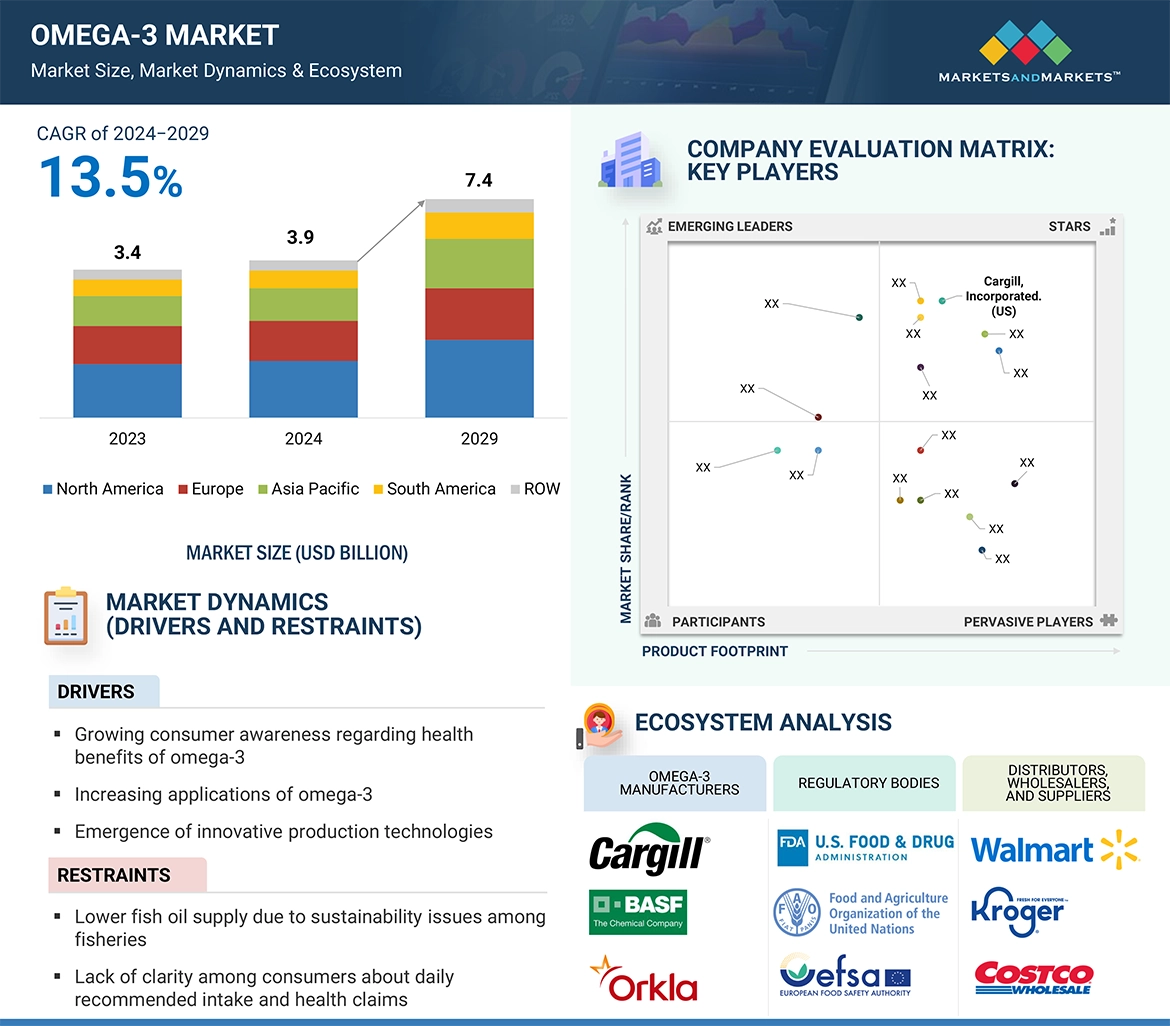
The omega-3 market is projected to reach USD 7.4 billion by 2029 from USD 3.9 billion by 2024, at a CAGR of 13.5% during the forecast period in terms of value.  Conventional fish oil sources are no longer the sole choice. Sustainable and plant-based substitutes such as algae, flaxseed, and chia seed oil are becoming increasingly popular, addressing dietary limitations and ethical considerations. Furthermore, novel formats like micro-emulsified supplements and fortified food items are enhancing convenience and attractiveness, appealing to a broader demographic.

Download PDF brochure: https://www.marketsandmarkets.com/pdfdownloadNew.asp?id=227

Plant source segment is expected to maintain consistent growth in omega-3 market during the forecast period

Plant-powered Omega-3s are surging, fueled by ethically-conscious consumers seeking sustainable alternatives. Vegan, vegetarian, and allergy-friendly, these innovative options like algae oil and chia seed extracts boast potential unique health benefits and wider accessibility. Affordability and government initiatives promoting sustainable practices add further momentum. While ensuring potency and educating consumers remain key hurdles, the future of Omega-3 looks green, with this segment poised to shape a more responsible and inclusive market landscape.

North America to dominate the omega-3 market during the forecast period

In North America, the demand for Omega-3 is increasing, particularly in dietary supplement applications, driven by the recognition of Omega-3’s benefits health. Omega-3 fatty acids are among the most popular dietary supplements, known for their potential benefits for heart health, brain function, and overall well-being. The demand for omega-3 supplements in North America has been steadily increasing due to rising awareness about their health benefits and the inclusion of omega-3 in various health recommendations.

Key Market Players

The key players in this market include BASF SE (Germany), Cargill, Incorporated. (US), dsm-firmenich (Netherlands), ADM (US), Kerry Group Plc (Ireland), Croda International Plc (UK), Orkla.  (Norway), Corbion (Netherlands), GC Rieber (Norway), Pelagia AS (Norway), KD Pharma Group SA (Switzerland), Cooke Aquaculture Inc. (Canada), AlgiSys Biosciences, Inc. (US), Golden Omega (Chile), AKER BIOMARINE (Norway), and Polaris (France). These market participants are emphasizing the expansion of their footprint via agreements and partnerships. They maintain a robust presence in North America, Asia Pacific, South America, RoW, and Europe, supported by manufacturing facilities and well-established distribution networks spanning across these regions.

Speak to Analyst: https://www.marketsandmarkets.com/speaktoanalystNew.asp?id=227

Soy Protein Ingredients Market: Trends, Opportunities & Forecast

The global soy protein ingredients market is estimated to be valued at USD 7.7 billion in 2022. It is projected to reach USD 10.8 billion by 2027, recording a CAGR of 7.0% during the forecast period. Some macroeconomic and microeconomic elements that have been prevalent in some important countries have had an impact on the global soy protein ingredients market. In terms of value sales, this would be strong enough to significantly influence the market during the predicted period. The rise in consumer awareness, health consciousness, demand for soy-based meat alternatives, changing lifestyles, and consumption patterns drive the demand in the soy protein ingredients market.

Download PDF brochure: https://www.marketsandmarkets.com/pdfdownloadNew.asp?id=857

North America is estimated to dominate the soy protein ingredients market with a value of USD 2,932.1 Million

The ethical limitations and consumer awareness regarding personal and environmental health have contributed greatly to the mass shifting of people toward adopting veganism and flexitarian diets. According to a recent report published in March 2022 by the Plant-Based Foods Association (PBFA), the US plant-based food retail sales reached USD 7.4 billion, outpacing total food retail sales and showing a growth rate of 6.1% in 2021 from the previous year, despite supply chain interruptions and pandemic restrictions. This growth and increase in the demand for and consumption of plant-based foods are likely to continue during the forecast period and present significant business opportunities for soy protein ingredients.

North America is a significant production base for plant-based protein manufacturers, and the US is a key producer of soybean and wheat in the region.

Similarly, in Mexico, the demand for protein-rich food and beverage products is high due to the highly diversified and multicultural population, which is among the key contributors to the growth of plant-based protein offerings in the region.

The key players in this market include ADM (US), Cargill, Incorporated (Sweden), International Flavors & Fragrances Inc. (US) and Devansoy (US).

A wide variety of soy-protein ingredients are available in the Asia Pacific market offered by Wilmar International Ltd

Asia Pacific has a significant market share in the soy protein ingredients market which implies that the demand and consumer awareness is high in the region, making it the most lucrative region for soy protein ingredients market players to enter. Other factors such as rapidly rising urbanization, per capita incomes, population, and fast-growing economies with attractive investment opportunities are pulling investments in the industry from various players around the globe. Singapore-based Wilmar International Ltd is a leading and well-established player in the market. It has a dominant share in the region and globally. The knowledge of consumer perception gives it a competitive edge over other players that are not from the fast-growing region.

The feed segment by application in soy protein ingredients market is relatively small in comparison to the food segment by application

Soy protein ingredient-based feed is relatively less commercialized than soy protein ingredient-based food in the market. This is because the demand for soy-based products for human consumption is high. The animal end-user market is at a very nascent stage, and the importance of soy-protein ingredients-based feed has just started gaining momentum in the market, which already has a big dominant presence of food products in applications such as bakery & confectionery, meat alternatives, dairy alternatives, infant nutrition etc. However, as the awareness in the animal feed segment is on the rise, the demand for the segment is gradually rising, further pushing the players to manufacture products to cater to the interests of the gradually rising market.

Speak to Analyst: https://www.marketsandmarkets.com/speaktoanalystNew.asp?id=857

During the forecast period, the soy flour segment by type is expected to grow at a significant CAGR of 5.1%

A wide range of dairy alternatives, meat substitutes, and baked goods use soy flour in various forms. Soy flour either has soybean’s naturally occurring oil content retained to make them full-fat flour, or it can be used as de-fatted flour by solvent-extraction of the oil. Full fat and de-fatted flour products are available in toasted or enzyme-active forms. Soy flour has been gaining considerable significance for processing bakery products, such as bread and cakes, due to its high protein content compared to other plant proteins. Bread made from soy flour is dense, as it is gluten-free. As per a recent article published in Mintel in November 2021, there is a rise in demand for gluten-free foods and drinks. Thus, manufacturers are exploring various gluten alternatives, including flour derived from soybeans, nuts, fruits, and vegetables. This is further driving the market for soy flour which is projected to grow at a significant CAGR during the forecast period.

Key Players and Competitive Landscape in the Bakery Premixes Market

The global bakery premixes market, valued at USD 406 million in 2023, showcases a remarkable growth projection, anticipated to escalate to USD 544 million by 2028, indicating a robust compound annual growth rate (CAGR) of 6.0% during the forecast period. According to the Food and Agriculture Organization of the United Nations (FAO) report of 2019, bread and bakery products play a crucial role in improving nutrition or obtaining food security. Bread, often referred to as a “staple food,” is a primary source of dietary energy while bakery products are rich in essential nutrients such as vitamins, minerals, and fiber, contributing to a well-balanced diet. Thus, premixes serve as a key ingredient, enabling the fortification of bread and other baked goods with vitamins and minerals, making them more nutritious.

Request Sample Pages of Report: https://www.marketsandmarkets.com/requestsampleNew.asp?id=126304017

Key Players in the Market

  • Puratos (Belgium)
  • ADM (US)
  • Cargill, Incorporated (US)
  • Nestle (Switzerland)
  • DSM (Netherlands)
  • Oy Karl Fazer Ab. (Finland)
  • Bakels Worldwide (Switzerland)
  • Corbion (Netherlands)

Bakery Premixes Market Dynamics

Drivers

  • Increase in demand for customized bakery products
  • Availability of multiple ingredients from single source to encourage investments by key players
  • Multifunctional features of bakery premixes in key applications, such as bread, cakes, and pastries

Restraints

  • High R&D investments for bakery premixes
  • Increase in number of health-conscious consumers, particularly in developed countries

Opportunities

  • E-commerce and direct-to-consumer sales to help manufacturers reach wider audience

Challenges

  • Production of bakery premixes at economical prices
  • Consumer health and wellness concerns

Bread Products Is One of the Fastest Growing Application Segments During the Forecast Period

Bread is becoming more and more popular in developed markets as a convenient and inexpensive food alternative, bread is becoming even more popular in emerging nations as specialized and premium breads. The popularity of bread products around the world has been further boosted by the globalization of culinary preferences, which is encouraged by greater travel and exposure to other cuisines.

The tastes of modern customers are changing, and bakers are adapting rapidly. Breads that were before regarded as specialized or traditional are becoming more and more well-liked. A move towards a more complex and experimental culinary experience is reflected in the demand for unusual flavors, textures, and ingredients. Bakers and manufacturers have been inspired to be more creative by this trend, which has led to a wide range of creative bread items. This segment’s dominance is poised to persist as it harmonizes with the changing dynamics of consumer lifestyles and preferences, solidifying its position in the global bakery premixes market.

Speak to Analyst: https://www.marketsandmarkets.com/speaktoanalystNew.asp?id=126304017

Germany Is One of the Largest Growing Markets for Bakery Premixes in Europe

Germany has emerged as a prominent player in the European bakery premixes market, showcasing substantial growth and influencing the dynamics of the industry. The fast-paced modern lifestyle has led to an increased preference for convenient and time-saving food solutions. Bakery premixes offer a convenient alternative for consumers who seek bakery products without compromising on quality. The ease of use and consistent results provided by premixes have resonated well with the German consumer base.

Innovations Driving the Growth of the Collagen Peptides Market

The collagen peptides market is projected to reach USD 922 million by 2028 from USD 699 million by 2023, at a CAGR of 5.7% during the forecast period in terms of value. The market for collagen peptides is experiencing growth due to growing consumer health awareness and varied applications of collagen peptides.

Asia Pacific to boost market growth during the forecast period

The Asia Pacific region is expected to play a significant role in boosting the market growth of the collagen peptides industry during the forecast period. Asia Pacific has a rapidly growing livestock industry driven by population growth, urbanization, and increasing demand for animal meat and related products such as collagen. Countries in Asia such as China are among the top collagen exporters globally.

Download PDF brochure: https://www.marketsandmarkets.com/pdfdownloadNew.asp?id=248590980

Key Players in the Market

The key players in this region include Nitta Gelatin Inc. (Japan), Tessenderlo Group (Belgium), Holista Colltech (Australia), Darling Ingredients (US),  Foodmate Co., Ltd. (China), Amicogen Inc (South Korea), among others. The study includes an in-depth competitive analysis of these key players in the collagen peptides market with their company profiles, recent developments, and key market strategies.

Increase in demand for collagen peptides for medical applications to drive the market growth

Collagen peptides have various versatile applications that give rise to their demand in medical, dental, and pharmacological fields. They are used as adequate support for drug and is a natural biomaterial with astringent and wound-healing properties. It is considered an ingredient used in different forms. For instance, it is used as a hemostatic and dressing treatment for various types of injuries. Collagen-based biomaterials are of utmost importance for tissue engineering and regenerative medicine. They can be extracted from various tissue sources and assembled in combination with other molecules. Features of collagen, such as biocompatibility and biodegradability, well-defined structure, biological characteristics, and the way collagen interacts with tissues, make it one of the most used biomaterials. This high potential possessed by collagen has revolutionized the pharmaceutical industry. Recent advancements in biotechnology have discovered the incorporation and utilization of marine collagen as a functional biomaterial in the pharmaceutical industry.

By source, bovine holds a significant market share during the forecast period

The bovine segment dominated the collagen peptides market by source. This is because the segment has been studied and researched up on since a long time. Bovine as a source for collagen peptides are largely commercialized in the market.  Moreover, factors such as ease of availability and biocompatibility of bovine sourced collagen is fueling the segment’s growth. Bovine collagen peptides are relatively less costly and easily available in the market. It is the best option for consumers who are health- and beauty-conscious. Some of the benefits associated with bovine collagen are that it hydrates the skin, supports digestion and heals the gut, supports muscle strength, and supports hair growth and nail health. All the stated factors are fueling the growth of the bovine segment in the collagen peptides market.

Speak to Analyst: https://www.marketsandmarkets.com/speaktoanalystNew.asp?id=248590980

Exploring the Growth Potential of the Global Taste Modulators Market

The taste modulators market is projected to reach USD 2.0 billion by 2028 from USD 1.4 billion by 2023, at a CAGR of 7.4% during the forecast period in terms of value. The taste modulators market is growing due to rising health consciousness, addressing the demand for healthier options by reducing sugar, salt, and fat. The surge in obesity and diabetes cases fuels the need for sugar-free and reduced-calorie products, often utilizing taste modulators. Ongoing innovation and the versatility of taste modulators contribute to their widespread application in diverse food and beverage products.

Download PDF brochure: https://www.marketsandmarkets.com/pdfdownloadNew.asp?id=169998886

Asia Pacific is poised to experience the highest CAGR in the Taste modulators market during the forecast period

The region’s remarkable economic growth has led to increased consumer purchasing power, which, in turn, has boosted demand for processed foods and beverages. The escalating urbanization and evolving dietary preferences in the region play a pivotal role in propelling the adoption of taste modulators. Consumers’ heightened preference for healthier food options, coupled with the proactive response from regional food manufacturers, propels the demand for taste modulation technologies. The robust food processing industry and the emergence of innovative culinary concepts further fuel the widespread incorporation of taste modulators across diverse food and beverage categories. As Asia Pacific aligns with global health trends, emphasizing reduced sugar, salt, and fat content, the demand for taste modulators is set to witness a substantial upswing. These factors collectively position Asia Pacific as a pivotal driver for the anticipated robust growth in the taste modulators market during the forecast period.

Key Players in the Market

Key players in this market include DSM (Netherlands), International Flavors & Fragrances Inc. (US), Givaudan (Switzerland), Kerry Group PLC (Ireland), Ingredion (US), Symrise (Germany), Sensient Technologies Corporation (US), Tate & Lyle (UK), Corbion (Netherlands), Takasago International Corporation (Japan), Icon Foods (US), Carmi Flavor & Fragrance Co., Inc. (US), Cargill Incorporated (US), MANE (France), and ADM (US).

The taste modulator market is expanding, propelled by global culinary exploration and technological advancements

The taste modulator market is poised for significant future growth, propelled by a convergence of factors. A primary driver is the escalating consumer interest in global cuisines and exotic flavors, fostering a heightened demand for taste modulators. Consumers increasingly seek diverse and adventurous culinary experiences, prompting the food industry to explore innovative solutions for flavor enhancement. Concurrently, continuous advancements in taste modulation technologies stand as a cornerstone for market expansion. These technological strides inspire product innovation, facilitating a broader spectrum of applications across various food and beverage categories. This evolution aligns with the rising consumer preference for healthier choices, as taste modulators contribute to reducing sugar, salt, and fat content while enhancing flavors. The harmonious interplay between evolving consumer tastes and cutting-edge technology positions the taste modulator market at the forefront of catering to dynamic industry demands, ensuring a future characterized by versatile, health-conscious, and captivating culinary offerings.

Make an Inquiry: https://www.marketsandmarkets.com/Enquiry_Before_BuyingNew.asp?id=169998886

In Taste Modulators, the surge in sugar substitutes is driven by health-conscious consumers and industry innovation

The dominance of sweet modulators in the taste modulators market is underscored by an escalating imperative for reduced sugar formulations driven by heightened health-conscious consumer preferences. This trend signifies a strategic response to global health concerns, particularly obesity and diabetes, with sweet modulators serving as key enablers for the development of low-calorie and reduced-sugar products while maintaining an optimal taste profile. Within this landscape, the food industry’s unwavering commitment to meet evolving consumer expectations further solidifies the pivotal role of sweet modulators. Their prominence is not merely a reflection of current trends but a strategic imperative in product reformulations and driving innovation across a spectrum of applications.

Precision Food Safety: The Next Frontier for Food Diagnostics

The global food diagnostics market is estimated at USD 16.2 billion in 2023 and is projected to reach USD 23.5 billion by 2028, at a CAGR of 7.7% from 2023 to 2028. Food diagnostics involves a range of techniques and technologies used to detect contaminants, pathogens, allergens, and adulterants in food products. The market is primarily driven by the growing concerns regarding food safety, increasing consumer awareness, and stringent regulations imposed by governments worldwide. With the globalization of the food supply chain, the need for accurate and rapid testing methods has surged, fostering innovation in this sector.

Download PDF brochure: https://www.marketsandmarkets.com/pdfdownloadNew.asp?id=225194671

Key Players in the Market

  • Bio-Rad Laboratories Inc. (US)
  • Thermo Fisher Scientific Inc. (US)
  • Shimadzu Corporation (Japan)
  • Neogen Corporation (US)
  • BioMerieux (France)
  • Agilent Technologies Inc. (US)
  • Merck KGaA (Germany)
  • Danaher (US)

North America is estimated to have a significant market share in the global food diagnostics market

The stringent food safety regulations and their unwavering enforcement in the North American region have been instrumental in driving the demand for advanced food diagnostics technologies. Regulatory bodies such as the FDA in the United States and CFIA in Canada continually advocate for more rigorous monitoring and testing protocols, effectively compelling the adoption of cutting-edge food diagnostics solutions. The steadfast commitment to ensuring the safety and quality of food products places North America at the forefront of this burgeoning industry.

Additionally, North American consumers have become increasingly conscious of food safety issues and are placing a growing emphasis on healthy eating. This awareness has created a pressing need for greater transparency in the food supply chain. Consumers are scrutinizing the origin, quality, and safety of their food like never before. Consequently, the market for food diagnostics services has witnessed substantial growth as it offers consumers the assurance and peace of mind they seek when making food choices.

Inhouse, by site segment, is anticipated to grow at a significant CAGR in the global food diagnostics market

In-house facilities for food quality and safety testing are essentially dedicated laboratories or testing units established within food manufacturing plants, enabling real-time analysis and monitoring of the production process. They empower food manufacturers with rapid decision-making capabilities, ensuring immediate corrective actions in the event of contamination or quality deviations. This results in enhanced product quality, reduced production downtime, and ultimately, increased consumer confidence. Moreover, in-house testing provides manufacturers with greater control over their supply chain, reducing the risk of product recalls and regulatory non-compliance. Furthermore, consumers are increasingly demanding transparency and traceability in the food products they purchase, prompting manufacturers to invest in in-house facilities to meet these expectations.

Speak to Analyst: https://www.marketsandmarkets.com/speaktoanalystNew.asp?id=225194671

By food tested, the fruits & vegetables segment is anticipated to grow at a significant rate in the food diagnostics market

The consumption of fruits and vegetables is increasing globally, and consumers are becoming more conscious of the quality and safety of the produce they consume. In response to this, food safety regulations have become stricter, necessitating rigorous testing procedures for contaminants such as pesticides, pathogens, and heavy metals. The growing awareness of health and wellness further fuels the demand for safe and high-quality produce, prompting the need for advanced diagnostics. Additionally, there is a rising concern about foodborne illnesses linked to fruits and vegetables. Outbreaks and recalls are not only costly for producers but can also have serious health implications for consumers. Food diagnostics can help detect pathogens like E. coli, Salmonella, and Listeria in these products, preventing outbreaks and ensuring public safety.