3M Company (US) and Merck KGAA (Germany) are the Key Players in the Food Diagnostics Market

The global food diagnostics market size is projected to grow from USD 12.1 billion in 2018 to USD 17.1 billion by 2023, at a CAGR of 7.1% during the forecast period. Increase in the outbreak of foodborne illnesses, globalization in food trade, adoption of advanced technologies to maintain food quality and safety, and a rise in consumer awareness about food safety are factors projected to drive the market for food diagnostics.

The major food diagnostics vendors include 3M Company (US), Merck KGAA (Germany), Thermo Fisher Scientific Inc. (US), Biomerieux SA (France), Danaher Corporation (US), Bio-Rad Laboratories Inc. (US), Neogen Corporation (US), Biorex Food Diagnostics (UK), Randox Food Diagnostics (UK), FOSS (Denmark), Hygiena LLC (US), Agilent Technologies Inc. (US), Qiagen (Germany), GEN-IAL GmbH (Denmark), and Envirlogix Inc. (US). These players have adopted various growth strategies, such as expansions & investments, new service launches, acquisitions, and agreements & joint ventures, to further expand their presence in the global food diagnostics market. Acquisitions and new product launches were the most dominating strategies adopted by major players. This has further helped them strengthen their position and expand client base in the food diagnostics market.

To know about the assumptions considered for the study download the pdf brochure

The 3M Company is a diversified global manufacturer, technology innovator, and marketer of a wide variety of products and services. The company primarily offers personal hygiene products, automotive components, safety products, medical & surgical supplies, electronics, and consumable products. It has five different business segments-industrial, safety and graphics, health care, electronics and energy, and consumer. It offers food diagnostic products through its healthcare segment.

The company sells its products through numerous distribution channels, including wholesalers, retailers, distributors, and dealers in various countries around the world. It operates across 70 countries, worldwide, and has 80 manufacturing facilities in 29 states in the US. The 3M company introduced a new molecular method for campylobacter with 3M campylobacter enrichment broth, providing more efficient testing for a key pathogen associated with poultry production. This product launch is further projected to consolidate the market position of 3M, by aiding its venture into a niche product category.

Merck KGaA is a science and technology company that operates through three business segments—healthcare, life science, and performance material. Merck holds the global rights to the “Merck” name and brand. The only exceptions are the US and Canada, where the business sectors operate as EMD Serono in healthcare, MilliporeSigma in life science, and EMD Performance Materials. It offers food diagnostic systems through the life science segment. The company offers food testing services under it’s the food & feed testing division. Merck acquired BioControl Systems, Inc. (US), a global provider of food safety diagnostics systems. The acquisition helped the company to strengthen its life science segment by allowing it to reinforce its food safety market, with a complete workflow solution for food pathogen testing.

Feed Acidulants Market to See Massive Growth by 2023

The global feed acidulants market size is projected to grow from USD 2.7 billion in 2018 to USD 3.5 billion by 2023, at a CAGR of 5.1% during the forecast period. The market is driven by the ban on antibiotics in the European Union and growth in government funding to promote the feed industry.

Download PDF Brochure: https://www.marketsandmarkets.com/pdfdownloadNew.asp?id=268013619

Key Players:

  • BASF SE (Germany)
  • Yara International ASA (Norway)
  • Kemin Industries Inc. (US)
  • Kemira OYJ (Finland)
  • Biomin Holding GmbH (Austria)
  • Impextraco NV (Belgium)
  • Pancosma (Switzerland)
  • Nutrex NV (Belgium)

BASF SE continues to focus on maintaining its position in the global animal nutrition market through geographic expansion in high-growth markets. The company focuses on the manufacturing of performance products along with an R&D program to develop new solutions for the feed acidulants market for different types of acids such as propionic acid, formic acid, and fumaric acid. It focuses on expanding its product portfolio through expansions and collaborations that will help fulfill the demand from the feed industry in the coming years. For instance, in 2018, BASF and arc-net entered into a collaboration to support the animal production value chain in meeting the demand for feed products. BASF’s calculation tool, AgBalance Livestock, considers the life cycle impact of all inputs and outputs of animal protein production—from feedstuffs and feed production, to animal farming and manure management, to slaughter. Earlier in 2018, BASF launched a low-corrosive organic acid, Lupro-Cid NA in Japan. Lupro-Cid NA enables high-quality silage preparation under challenging conditions. Thus, it would help dairy farmers protect feed quality and improve safety during silage making.

Furthermore, Kemin Industries is engaged in developing products sourced from natural raw materials, owing to consumer preferences. This is due to the fact that there is an increasing demand for naturally sourced ingredients over synthetic ones, owing to the added nutritional benefits that they offer. The key strategy adopted by Kemin is expansion. It adopts new and advanced technologies to diversify its product portfolio. In 2016, the company focused on expanding its manufacturing facilities in Russia and Belgium to capitalize on the strong demand for feed ingredients. The company has been accredited with various certifications from authorities such as Food Safety System Certification 22000 and Global Food Safety Initiative. The company focuses on using the best technical expertise in the industry to serve its customers and manufacture its products. It is also focusing on R&D, owing to which it is increasing its investments in R&D.

Request for Sample Report Pages: https://www.marketsandmarkets.com/requestsampleNew.asp?id=268013619

Biomin Holding GmbH is a manufacturer of feed additives & premixes and provides services that help in enhancing livestock performance in a cost-effective manner. The company is one of the largest players in the feed nutrition sector, especially feed acidulants. Biomin is focused on expanding its business and product portfolio by launching new products. Expansion is one of the top strategies for Biomin. The company opened a new plant in Panama, with its headquarters in Austria, which allows the company to meet the growing customer demand.

Geographical Prominence:

The market in South America is estimated to grow at the highest CAGR in the market during the forecast period. This growth is attributable to the development of the animal husbandry sector in the region that has promoted an increase in the consumption of feed additives such as acidulants; rising income levels in emerging economies such as Brazil and Argentina, which is supporting consumer inclination to better quality meat and other livestock products; rising demand for meat from this region.

Hydrocolloids Market : Growth Opportunities in Emerging Markets

The hydrocolloids market is estimated to be valued at USD 8.4 billion in 2018 and is projected to reach USD 11.4 billion by 2023, at a CAGR of 5.3% during the forecast period. The growth of the hydrocolloids market is driven by factors such as the expansion of the processed food industry due to the increasing demand for convenience foods in regions such as the Asia Pacific, South America, and the Middle East & African. Apart from this, manufacturers are engaged in R&D to offer high-quality hydrocolloids due to its multi-functionality in the food industry.

By source, the botanical segment is projected to be one of the fastest growing segments for the hydrocolloids market due to the increased demand for natural products and ingredients. Some of the popular hydrocolloids of botanical origin used by manufacturers of the food & beverage industry include gum arabic, gum tragacanth, gum karaya, and gum ghatti.

Key Players:

  • DowDupont (US)
  • Ingredion (US)
  • Cargill (US)
  • Kerry (Ireland)
  • Archer Daniels Midland Company (US)
  • Palsgaard (Denmark)
  • Darling Ingredients (US)
  • CP Kelco (US)

Download PDF Brochure:  https://www.marketsandmarkets.com/pdfdownloadNew.asp?id=1231

Market Drivers:

  • Rise in Consumption of Premium Food & Beverage Products
  • Multi-Functionality of Hydrocolloids Leads to Their Wide Range of Applications
  • Increase in Health-Consciousness Among Consumers Drives the Natural Hydrocolloids Market          

Market Opportunities:

  • The Emerging Markets Illustrate Great Potential for Hydrocolloids
  • Increase in Investments in Research & Development

By type, guar gum is projected to be the fastest growing segment in the hydrocolloids market. Derived from the guar plant, it finds applications in the food, pharmaceutical, and cosmetics industries. In the food industry, it is used as a thickening and binding agent. It is used in a wide variety of food products such as ice cream, baked goods, cheese, soups, gravies, noodles, and meat. In addition, it is used in cosmetics products such as lotions, creams, and shampoos. In the pharmaceutical industry, it is used as a binder in tablets. Expansion of the food processing industry in the developing countries is projected to boost the sales of guar gum in the coming years.

By function, the stabilizers segment is considered to be one of the fastest-growing segment in the hydrocolloids market. Hydrocolloids used as stabilizers include locust bean gum, guar gum, carboxymethyl cellulose (CMC), xanthan gum, alginate, and carrageenan. The increasing demand for convenience foods in emerging countries is projected to drive the demand for hydrocolloids in the coming years.

Geographical Prominence:

North America is the fastest-growing market for hydrocolloids and is projected to record the highest CAGR during the forecast period. The North American market is completely driven by the US, which accounted for nearly 84.0% of the market share in 2017. The US has a large market for bakery, confectionery, convenience food, and packaged food products; hence, it constitutes a major share in the market. Consumers in the US are calorie-conscious, due to which low-calorie and low-fat foods are popular in the country. The increasing prevalence of obesity and cardiac diseases have led to an increasing demand for natural and low-calorie food products among consumers. Food manufacturers are therefore concentrating on the application of natural hydrocolloids and their functions as fat replacers.

Increase in Demand and Consumption of Livestock-Based Products and Seafood is Driving Food & Agriculture Technology and Products Market

The global food & agriculture technology and products market size is projected to grow from USD 494.9 billion in 2018 to USD 729.5 billion by 2023, at a CAGR of 8.1% during the forecast period. The increase in demand and consumption of livestock-based products and seafood, rise in consumer awareness about food safety, governments’ support to adopt modern agricultural techniques, and demand for agricultural production due to the increasing population are some of the major drivers for the growth of the food & agriculture technology and products market.

The food & agriculture technology and products vendors include ADM (US), Evonik (Germany), DSM (Netherlands), United Technologies (US), Deere & Company (US), Daikin (Japan), Signify Holdings (Netherlands), SGS SA (Switzerland), Zoetis (UK), GEA (Germany), Pentair (UK), Intertek (UK), Genus (UK), Neogen (US), AKVA Group (Norway), Eurofins (Luxembourg), Canopy Growth Corporation (Canada), Americold Logistics (US), Groupe Grimaud (France), and MosaMeat (Netherlands). Acquisitions were the most dominating strategy adopted by major players, followed by new product launches. This has helped them to increase their presence in different regions and expand their product portfolio.

Download PDF Brochure: https://www.marketsandmarkets.com/pdfdownloadNew.asp?id=62389054

In the food & agriculture technology and products market, the animal industry has been segmented, on the basis of subindustry, into animal health, aquaculture products, and animal genetics. The animal health segment is projected to account for the largest share of the market by 2023. This is attributed to the high global demand from farmers for animal health products to improve the performance and prevent diseases in their livestock from obtaining quality products. Further, the rising awareness about the importance of animal health for sustainable output and increasing consumption of animal-derived protein are also projected to drive the market.

Europe is estimated to account for the largest share of the market in 2018. It is highly professional and technologically advanced for smart agriculture. This region has one of the strongest economies and widespread industries, which create high capital investment capabilities. In Europe, large farm owners had started adopting smart agriculture technologies to increase their farm profits, while small farm owners were hesitant due to less investment capacity. Farmers are already using smart agriculture technologies for enhanced yield. These factors drive the segment in the European region.

Deere & Company is engaged in the development, manufacture, and distribution of its diverse range of agricultural and other machinery. The company operates primarily through three business segments – agricultural & turf, construction & forestry, and financial services. It offers tractors, pre-harvesting equipment, planting equipment, and precision farming equipment and technology under the agricultural & turf segment.  The construction and forestry segment primarily manufactures and distributes a broad range of machines and service parts used in construction, earthmoving, road building, material handling, and timber harvesting. The financial services segment primarily finances sales and leases by John Deere dealers of new and used agriculture & turf equipment and construction & forestry equipment. In September 2018, Deere & Company acquired PLA (Argentina), to enhance its product portfolio of sprayers, planters, and specialty products for agriculture.

DSM is a global science-based company operating in the health, nutrition, and materials business. The company operates through five segments—nutrition, materials, innovation center, corporate activities, and partnerships. Its nutrition segment includes DSM Nutritional Products and DSM Food Specialties. The nutrition and food specialty segment of the company caters to different end-use application industries, such as food, feed, nutraceutical, infant nutrition, personal care, and pharmaceutical. The company offers nutritional supplements such as vitamins, carotenoids, nutritional lipids, omega acids, premixes, and astaxanthin for both human and animal nutrition. These products are developed under its DSM Nutritional Products business. The company offers its feed additives through its animal nutrition & health division, which falls under the DSM Nutrition Products business. It offers a wide range of products that include carotenoids, eubiotics, vitamins, and feed enzymes for various animal species, such as aquaculture, poultry, ruminants, swine, and companion animals. DSM operates in more than 40 countries with over 100 commercial production facilities.

Inquiry Before Buying: https://www.marketsandmarkets.com/Enquiry_Before_BuyingNew.asp?id=62389054

Emerging Markets for Food Safety Testing Driving Market for Top 10 Food Safety Testing and Technologies Trends

The key players identified have a strong presence in the top 10 trends in food safety testing and technologies industry including SGS S.A. (Switzerland), Bureau Veritas S.A. (France), Intertek Group plc (U.K.), Eurofins Scientific SE (Luxembourg), ALS Limited (Australia), Thermo Fisher Scientific Inc. (U.S.), Mérieux NutriSciences Corporation (U.S.), AsureQuality Ltd. (New Zealand), Microbac Laboratories Inc (U.S.), and Romer Labs Diagnostic GmbH (Austria).

The key market players adopted various growth strategies such as expansions, acquisitions, agreements, in order to cater to the increasing demand for food safety and testing technologies. The companies increased their research and development expenditure to expand their manufacturing capacities and offer diversified food safety testing technologies.

The core strengths of the key players that have driven the top 10 trends in food safety testing and technologies industry are strategic expansions and acquisitions, in order to enhance their market presence. Market players such as SGS S.A. (Switzerland), Bureau Veritas S.A. (France), and Intertek Group plc (U.K.) successfully tapped the potential markets through expansions, acquisitions, and new service launches. Moreover, these companies also focused on offering a diverse range of testing services such as food pathogen testing, GMO Testing, pesticide residue testing, and others to cater the changing requirements of the food safety testing and technologies industry.

Download PDF Brochure: https://www.marketsandmarkets.com/pdfdownloadNew.asp?id=19285603

SGS S.A. (Switzerland) has been one of the major players in the global food safety testing and technologies industry; it adopted strategies such as acquisitions, expansions, partnerships, and new technology & service launches in the recent years. The company acquired Laboratoire LCA (Morocco), to expand its business in the Moroccan agriculture market, it also expanded its food testing laboratory in South Korea, to offer food chemical testing, food contaminant testing, and microbiological and DNA testing.

Bureau Veritas S.A. (France) adopted acquisitions as its strategy to expand its presence in the food safety testing and technologies industry. Bureau Veritas S.A. is a global leader in providing testing, inspection, and certification services to meet the growing challenges of quality, safety, environmental protection, and social responsibility. The company offers innovative solutions for regulations & standards, reducing risks, improving performance, and promoting sustainable development.

Intertek Group plc (U.K.) adopted strategies such as expansions and acquisitions in order to efficiently expand its geographic presence in recent years. Intertek set up its AgriTech laboratory at Hyderabad (India) to perform DNA-based testing of various agricultural products. The company introduced its advanced ScanBi DNA testing technology in India with this expansion. The company also acquired the Italian company Food International Trust (FIT-Italia), which provided a wide range of assurance, testing, and certification services.

The food safety testing and technologies market encompasses a variety of testing technologies. The markets covered under food safety testing include food safety testing market, GM food safety testing market, food pathogen testing market, meat speciation testing market, food authenticity testing market, pesticide residue testing market, mycotoxin testing market, and food allergen testing market. The markets covered under water safety testing & technologies include water testing and analysis and bottled water testing.

Speak to Analyst: https://www.marketsandmarkets.com/speaktoanalystNew.asp?id=19285603

The food safety testing market is estimated to be valued at USD 12.01 billion in 2016. The various factors that drive the food safety testing market include worldwide increase in foodborne illness outbreaks, implementation of stringent food safety regulations by the government, and availability of advanced technologies capable of rapid testing. Globalization of food supply that has resulted in an increased export and import of food products and agricultural commodities worldwide is another driver influencing this market.

Increased mechanization and adoption of smart technologies for agricultural activities Drives Irrigation Automation Market

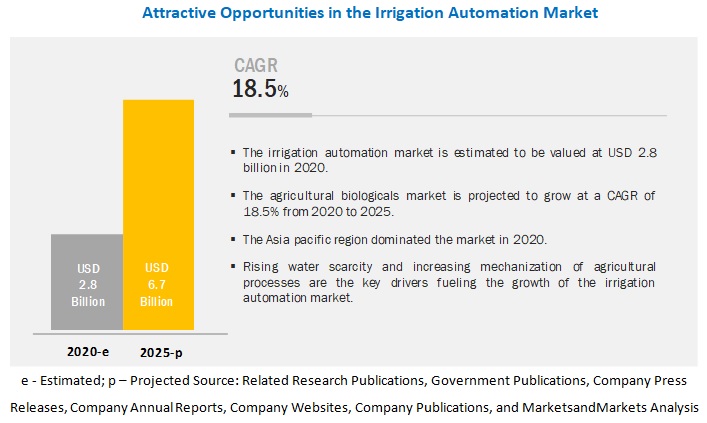
The irrigation automation market isprojected to grow at a CAGR of18.5% from 2020 to 2025.

The global irrigation automation market size is estimated to account for a value of USD 2.8billion in 2020 and is projected to grow at a CAGR of 18.5% from 2020 to reach a value of USD 6.7billion by 2025. The demand for irrigation automation is increasing due to the shifting trend towards mechanization of agricultural processes and increased instances of water scarcity globally. The cost factor is one of the key factors that hamper its adoption among small land-holding farmers in the Asia-pacific region.

The automatic segment, by the system, is projected to be the fastest-growing segment in the irrigation automation market during the forecast period

The less availability of labor and continuous change of weather patterns are some of the major factors for the adoption of fully automatic irrigation systems. Farmers rely on fully automatic systems and change the irrigation pattern on the basis of real-time weather. Even for residential watering, owners are adopting fully automatic irrigation systems to control the watering remotely.

By irrigation type, the drip irrigation segment is projected to be the fastest-growing segment in the irrigation automation market during the forecast period

Across regions, the most common type of irrigation systems to be used is drip irrigation systems, except in some parts of Asia Pacific like Japan and Chinaswhere high water demanding crops like rice is sown. The life span for drip irrigation systems is almost ten years which makes it a durable system for watering the crops. Also, drip irrigation systems do not account for water wastage in terms of evaporation and field run-off, therefore, it is considered as the most efficient means of irrigation.

Request for Sample Report Pages:
https://www.marketsandmarkets.com/requestsampleNew.asp?id=60266313

 By automation type, the time-based automation system is projected to dominate the irrigation automation market during the forecast period

One of the major advantages associated with the adoption of a time-based system is that farmers can reduce the labor cost associated with the irrigation process. Conventional irrigation systems made use of manual labor and a high amount of fuel at unequal intervals of time, which led to crop losses; hence, time-based irrigation automation systems are a convenient option.

Leading players profiled in this report

  • The Toro Company (US)
  • Hunter Industries (US)
  • Valmont Industries Inc. (US)
  • Rain Bird (US)
  • Jain Irrigation Systems (India)
  • Lindsay Corporation (US)
  • Netafim (Israel)
  • Galcon (Israel)
  • Rubicon Water (Australia)
  • Weathermatic (US)
  • Nelson Irrigation (US)
  • Mottech Water Solution Ltd (Israel)
  • Avanijal Agri Automation Pvt Ltd. (India)
  • Calsense (US)
  • Water Bit (US)
  • Hydropoint Data Systems (US)
  • Ranch Systems (US)
  • Grow Link (US)
  • Irritec S.P.A (Italy)
  • Blurain (India)
  • Growgreen Irrigation Systems (India)
  • Novagric (Spain)
  • Hortau (US)
  • Tevatronic (Italy)
  • Dorset Group B.V (Netherlands)

Research Coverage

This report segmentstheirrigation automation marketonthe basis ofsystem, irrigation type, automation type, components, end-use,and region. In terms of insights, this research report focuses on various levels of analyses—competitive landscape, end-use analysis, and company profiles—which together comprise and discuss the basic views on the emerging & high-growth segments of the irrigation automationindustry,the high-growth regions, countries, government initiatives, market disruption, drivers, restraints, opportunities, and challenges.

Emerging Economies of Asia Pacific and South America to Witness High Growth in Omega-3 Market

The global omega-3 market size is estimated to be valued at USD 4.1 billion in 2019 and is projected to be worth USD 8.5 billion by 2025, recording a CAGR of 13.1% during the forecast period. The global market is projected to witness significant growth due to factors such as the increase in the dietary supplement consumption and that of functional food & beverage, which encourages the production process and rise in the awareness of consumers associated with preventive healthcare across the globe.This has promoted the growth ofthe omega-3 market in China, India, Japan, and Australia.

Download PDF Brochure: https://www.marketsandmarkets.com/pdfdownloadNew.asp?id=227

Significant developments that can change the business landscape as well as market forecasts

The share of the source segmentation was calculated based on the share of the type segmentation. ALA is mainly found in plant oils; however, some part of it comes from the marine sources. Whereas, EPA and DHA are obtained from marine sources only.

The growing number of omega-3 manufacturers in the US and the largest number of existing companies in the country are factors considered for the higher CAGR of the country in the market.

The falling supply of fish stocks and lack of aquaculture management due to sustainability issues have made manufacturers shift to plant alternatives. Due to this reason, the plant source segment is growing at a relatively higher rate.

A majority of the infant and mother nutrition products in the US are now DHA-fortified. Due to this reason, the market for infant formula and DHA are growing at a higher rate in the country.

The rising number of health concerns among the various age groups across the world has resulted in an increasing demand for omega-3 supplements that target specific ailments, which, in turn, drive the market. Recent launches and research in infant and mother nutrition products for infant brain development have resulted in high usage of DHA in these products, which has significantly affected market growth.

Addition to/Refinement in segmentation – Increase in depth or width of segmentation

Type(with more scope): In the previous edition of the report, theomega-3market, on the basis of type, was segmented as follows:

  • Marine sources
    • Fish oil
    • Algal oil
    • Krill oil
    • Other marine oils
  • Plant sources
    • Flaxseed oil
    • Chia seed oil
    • Other plant sources

In the latest edition, market sizing and forecasting are provided for the following segmentation:

  • Marine sources
    • Fish oil
    • Algal oil
    • Krill oil
    • Other marine oils
  • Plant sources
    • Nuts & seeds
    • Vegetable oils

Coverage of new market players, change in the market ranking of existing players

Company Profiles: Company profiles offer a glimpse of the key players in the market with respect to business overview, financials, product offerings, and recent developments. In the new edition of the report, a few additional players have been profiled—Epax (Norway), Golden Omega (Chile), Kinomega (China), Sinomega (China), BASF (Germany), Lonza (Switzerland), Huatai Biopharm (China), KD Pharma (Germany), Runke Bioengineering (China), Nordic Naturals (US), Algisys (US), Biosearch Life (Spain), and Corbion (Netherlands).

These players have emerged as key players in recent years, due to various strategic investments, acquisitions, and product launches in emerging markets of omega-3. These strategic developments have challenged the status quo of the industry leaders, and it was prudent to analyze the changing business landscape.

Speak to Analyst: https://www.marketsandmarkets.com/speaktoanalystNew.asp?id=227

Case Studies/Commercialization of Concepts/New Use Cases

  • Use of spray drying technology is cost-effective over emulsion-based technologies for microencapsulation of omega-3 fatty acids. Several market players are expanding their portfolios into microencapsulated omega-3 products to achieve future revenue mix. Here are a few instances:
    • Skuny Bioscience (China) has launched microencapsulated powder of omega-3 under the brand name, Megafullife,which is produced from plant-based sources.
    • Functional Mikron (Brazil) has launched microencapsulated powder of omega-3 in order to achieve higher bioavailability in the products.
  • In 2016, the Marine Ingredients Organization published a report stating that the fishing of anchovy is reduced due to the feed and fish stock management. Due to this, fish oil production is reducing at the rate of 900/800,000 metric tons per year.

These studies are considered as new use cases, which are influencing the growth rate of theomega-3market significantly.

New data points/analysis(frameworks) that were not present in the previous version of the report

  • During the production cycle of the report, in-depth interviews were conducted with various primary respondents, which include key opinion leaders, subject matter experts, directors, and C-level executives of the demand-side and supply-side stakeholders of the omega-3 market, to obtain and verify critical qualitative and quantitative information. This primary data was collected mainly through questionnaires, emails, and telephonic interviews.
  • The recent developments of the top 39 players offering omega-3were mapped in the new edition of the report, to understand and forecast future growth trends.
  • Comprehensive analysis of market dynamics such as drivers, restraints, opportunities, and challenges was also added to this report.
  • Regulatory data is provided in this version of report.
  • Fish oil production data for various countries is also provided in the current version of the report.

Growth in Vegetarian Population Drives the Plant-Based Protein Market

The plant-based protein market is estimated at USD 18.5billion in 2019 and is projected to reach USD 40.6billion by 2025, at a CAGR of 14.0% during the forecast period. Consumers are focused toward a better understanding of the provenance of their food and avoid products deemed unnatural or unhealthy. These “clean” eating trends, driven primarily by millennials, favor foods that are healthy, ethically and naturally sourced, and less processed. Increased plant-based protein product consumption is a direct consequence of this shift.

By source, the pea segment is projected to be the fastest-growing segment within the global plant-based protein industry during the forecast period. The pea segment is driven by the rising demand for plant-based meat and healthy food products. A significant increase in the usage of pea as a key ingredient is being noticed in the plant-based meat industry. It is gradually becoming the primary choice for plant-based meat consumers due to its high nutritional profile and rich protein content. Leading players in the global plant-based meat industry are now shifting their interest toward pea and have also started developing pea-based meat products such as patties, sausages, and slides, which are high in protein content.

Based on type, isolates accounted for the highest demand in 2018, followed by concentrates and protein flour. Protein isolates contain a larger amount of protein along with higher digestibility. Isolates are demanded widely in protein and nutrition-oriented applications such as sports nutrition, protein beverages, and nutrition supplements. In recent years, they have been required more from athletes, bodybuilders, vegetarians, and have gained wide application in various beverages and dairy products, due to their different functional properties. Market players such as ADM (US), DuPont Danisco (US), Ingredion Inc. (US), BurconNutraScience Corp. (Canada), Axiom Foods (US), and The Scoular Company (US) offer protein isolates for various food applications such as protein bars, meat alternatives, protein beverages, dairy alternatives, nutrition bars, and bakery products.

Request for Sample Report Pages: https://www.marketsandmarkets.com/requestsampleNew.asp?id=14715651

On the basis of application, the demand for protein beverages was the highest in 2019; as a result, the protein beverages segment is estimated to account for the largest market share, followed by dairy alternatives, meat alternatives, protein bars, nutrition supplements, processed meat, poultry, and seafood, bakery products, sports nutrition, and convenience food. The perception of consumers about beverage products has changed as beverages are no longer just thirst-quenching drinks. Considering these requirements, beverage manufacturers across the world are actively developing and introducing plant-based beverage products. Moreover, in response to this trend, leading plant protein producers are introducing new and high-protein sources in the global market. For instance, DuPont Nutrition & Health expanded its plant-based protein product range with a new pea protein for beverages called TRUPRO 2000 Pea Protein in 2018.

North Americais the fastest-growing market for plant-based protein; it is projected to record the highest CAGR during the forecast period. The presence of leading plant-based protein companies in this region, along with the availability of a variety of plant-based protein products that are manufactured using different sources such as soy, wheat, pea, canola, and rice, is a key factor driving the North American plant-based protein market. Consumers in the region are incorporating plant-based protein products in their daily routine diets, owing to the health concerns related to the consumption of animal protein products.

Plant-based protein manufacturers are focusing on product launches to expand their consumer base in the market. Leading players operating in the plant-based protein market include Cargill Inc. (US), ADM (US), DuPont Danisco (US), Glanbia (Ireland), Kerry Group (Ireland), Tate & Lyle (UK), Ingredion Inc. (US), BurconNutraScience Corporation (Canada), Royal DSM N.V. (Netherlands), Sotexpro S.A (France), Axiom Foods (US), and The Scoular Company (US).

Increasing Number Of Product Launches By Key Giants To Drive The Bakery Premixes Market

According to MarketsandMarkets, the global bakery premixes market size is estimated to be valued at USD 298 millionin 2019 and is projected to reach USD 413 millionby 2025, recording a CAGR of 5.6% from 2019to 2025. Theincreasing number of product launches from major companies and the rising demand for quick and convenient baking solutionsare some of the factors driving the growth of the bakery premixes market. 

Thebakery premixesmarket isprojected to witness high growth due to the increasing global population in developing countries and the rising bakery consumption across the globe. The busy lifestyles and increasing consumer inclination toward convenience food products are factors that have also led to a risein demand for bakery products.

Currently, the key players in the market are focusing on launching new types of bakery premixes,such as Oy Karl Fazer AB(Finland),Archer Daniels Midland Company(US),Cargill(US),Corbion(Netherlands),and Bakels Group(Switzerland).These companies provide high-quality bakery mixes across the globe.The primary focus of these companies is to launch new products, which helps it integrate and diversify its product portfolio.

Request for Customization of the Report: https://www.marketsandmarkets.com/requestCustomizationNew.asp?id=126304017

Complete mix is one of the major categories in the bakery premixes market, which is projected to witness significant growth during the forecast period, due to the high convenience associated with usage of the complete mix. The major advantage associated with complete mix is convenience, as only water is added to the product. Complete mixes are the type of bakery premixes that are used as readymade mixtures based on rye flour, wheat for making bread, and other bakery products such as pastry, mixes, and pancakes.

The bakery products segment is projected to dominate the bakery premixes market share during the forecast period. This is due to the increasing application of premixes in bakery products, such as pastries, cakes, muffins, donuts, and pancakes. In addition, the bread products segment is projected to record high growth in the coming years. This is due to the increasing trend of consuming bread products, which drives the demand for bread premixes.Thecakes subsegment is projected to account for the largest share in the market, as cake mixes are convenient to use and provide a moist texture and consistent flavor to the final products. These products are available in different flavors, such as chocolate, vanilla, and fruits, which is projected to drive the growth of the bakery premixesmarket over the forecast period.

The South Americanbakery premixes market is projected to offer high growth potential in the coming years. The region includes countries such as Brazil, Argentina, Peru, Chile, Colombia, Uruguay, Ecuador, and Venezuela. These countries are witnessing a significant increase in consumption of on-the-go food products due to the adoption of urbanized lifestyles among consumers. This has encouraged consumers to opt for on-the-go food options, which has led to high demand for bakery products among consumers in the region. The expansion of supermarket chains and convenient stores has further led to a rise in sales of bakery products in the region, as theyare fast occupying supermarket shelves.

Soil Aerators Market Emerging Trends, Growth and Opportunities to 2023

The soil aerators market is estimated to be valued at USD 24.03 billion in 2018 and is projected to reach 33.01 billion by 2023, at a CAGR of 6.6% from 2018. The market is driven by the shrinking arable land, population growth &increase in demand for food, increase in net farm income due to mechanization, and a shift toward organic farming. Small and fragmented land holding restricting the usage of heavy farm equipmentis the major restraint for the growth of this market.

Secondary tillage segment projected to grow at the highest CAGR

The secondary tillage segment is estimated to dominate the market for soil aerators in 2018.It is also projected to grow at the highest CAGR during the forecast period. Improving the seedbed by finer crushing of the soil, conserving moisture &reducing evaporation, cutting crop residues &destroying weeds, and breaking soil lumps, and firming the top soil so that the seedbed is in a better condition for seeding and germinationhas been propelling the importance of soil aerators;this,in turn, is driving the market for soil aerators.

Asia Pacificset to lead thesoil aerators market with the largest share

The Asia Pacific market is estimated to be the largest in 2018, owing to the rising urbanization and standard of living, an increase in footfall, overgrazing by livestock, the pressure exerted by heavy equipment, climatic conditions, strong government support through subsidies, and increased productivity requirements. The major factors driving the Asia Pacific market for soil aerators are the growth in farm mechanization levels, for both, the agricultural and non-agricultural sector, and reduced cost of production.The Asia Pacific market is projected to grow atthe highestCAGR from 2018 to 2023 and is driven by China, Japan, India,and Australia.

Download PDF Brochure: https://www.marketsandmarkets.com/pdfdownloadNew.asp?id=116962473

Key soil aerating service providing players include the following:

  • Deere & Company (US)
  • Alamo (US)
  • AGCO Corporation (US)
  • CNH Industrial (UK)
  • Mahindra & Mahindra (India)
  • Bucher Industry (Switzerland)
  • Buhler Group (India)
  • Evers Agro (Netherlands)

The key players in the soil aerators market adopted acquisitions as their key growth strategy to increase their market share and profits. Expansions and investmentswasthe second most important growth strategy to be adopted by market players.

Research Coverage

The report analyzes the soil aerators market across different types of equipment and regions. It aims at estimating the market size and future growth potential of this market across different segments such as mechanism, mode of operation, application,and region. Furthermore, the report also includes an in-depth competitive analysis of the key players in the market, along with their company profiles, recent developments, and key market strategies.

Reasons to buy this report:

  • To get a comprehensive overview of the global soil aerators market
  • To gain wide-ranging information about the top players in this industry, their service portfolios, and key strategies adopted by them
  • To gain insights of the major countries/regions in which the soil aerators market is flourishing