
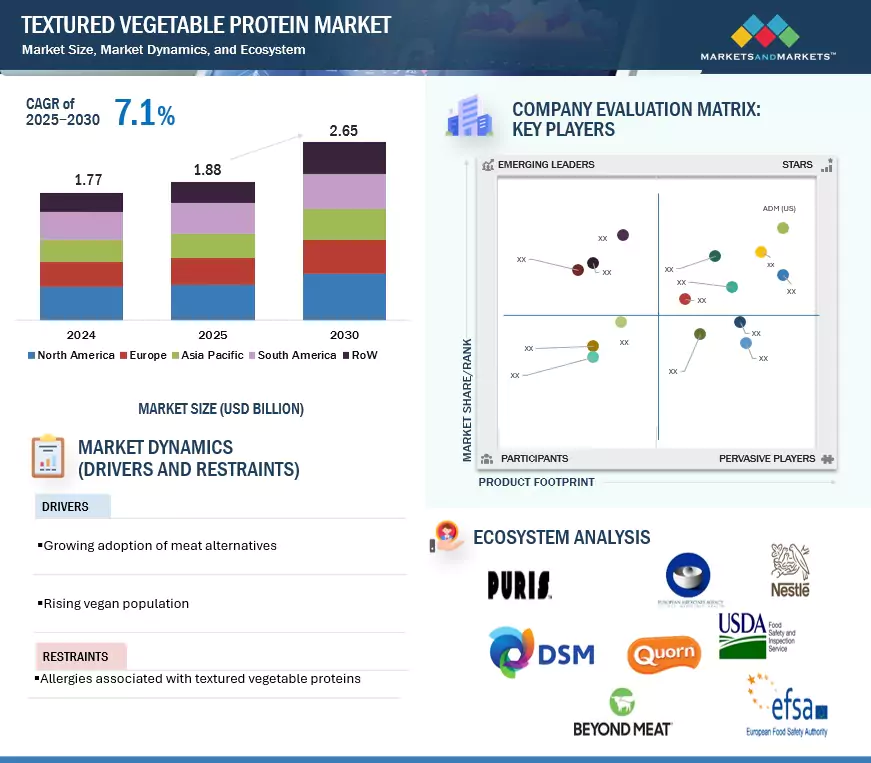
The global textured vegetable protein market is projected to grow from USD 2.00 billion in 2026 to USD 2.79 billion by 2031, registering a CAGR of 6.9% during the forecast period, according to a new market research report. The textured vegetable protein market is witnessing sustained growth as consumers increasingly adopt plant-based diets and seek protein-rich alternatives to conventional meat products. Rising awareness of health, sustainability, and environmental concerns, coupled with continuous innovation in food processing technologies, is accelerating the adoption of textured vegetable proteins across a wide range of food applications.
Advancements in extrusion and protein texturization technologies have significantly improved the texture, hydration, cooking performance, and formulation flexibility of textured vegetable proteins. These innovations have enabled manufacturers to develop high-quality ingredients for meat alternatives, meat extenders, bakery products, snacks, convenience foods, and ready-to-eat meals. At the same time, ingredient manufacturers are expanding the use of soy, pea, wheat, and other plant-based protein sources to deliver enhanced functionality and meet evolving consumer preferences.
Download PDF Brochure: https://www.marketsandmarkets.com/pdfdownloadNew.asp?id=264440297
Food Applications Account for the Largest Market Share
Based on application, the food applications segment holds the largest share of the textured vegetable protein market. The segment’s leadership is driven by the rapid commercialization of plant-based food products and the increasing incorporation of textured vegetable proteins into processed food formulations.
Beyond serving as the primary protein ingredient in meat substitutes, textured vegetable proteins are increasingly utilized in hybrid meat products, prepared meals, snacks, and convenience foods to enhance texture, improve protein content, optimize production costs, and increase product yield. Their compatibility with existing food processing systems and ability to deliver consistent product performance have further strengthened their adoption across retail and foodservice channels. As manufacturers continue expanding plant-based and protein-enriched product portfolios, food applications are expected to remain the dominant market segment throughout the forecast period.
Organic Segment to Register the Fastest Growth
By nature, the organic segment is expected to record the highest growth rate during the forecast period. Increasing consumer demand for organic, clean-label, and non-GMO food products, particularly across North America and Europe, continues to support this trend.
Organic textured vegetable proteins are produced from organically cultivated soy, pea, wheat, and other plant sources without the use of synthetic pesticides, chemical fertilizers, or genetically modified organisms (GMOs). These ingredients are gaining widespread acceptance in premium plant-based meat alternatives, ready meals, and processed foods targeted toward health-conscious and environmentally aware consumers. Additionally, growing emphasis on certified organic ingredients, product traceability, and sustainable sourcing practices is expected to further strengthen demand for organic textured vegetable proteins.
Request Sample Pages: https://www.marketsandmarkets.com/requestsampleNew.asp?id=264440297
North America Leads the Global Market
North America is expected to maintain the largest share of the textured vegetable protein market throughout the forecast period. The region benefits from a well-established plant-based food industry supported by leading manufacturers of meat alternatives that extensively utilize textured vegetable proteins in burgers, sausages, nuggets, ready meals, and other plant-based products.
The availability of a mature supply chain for soy and pea proteins, combined with advanced food processing and extrusion technologies, enables manufacturers to produce high-quality textured proteins with superior functionality and consistent performance. Furthermore, the widespread availability of plant-based products through supermarkets, specialty retailers, e-commerce platforms, and foodservice channels has enhanced market accessibility.
The global textured vegetable protein market is projected to grow from USD 2.00 billion in 2026 to USD 2.79 billion by 2031, registering a CAGR of 6.9% during the forecast period, according to a new market research report. The textured vegetable protein market is witnessing sustained growth as consumers increasingly adopt plant-based diets and seek protein-rich alternatives to conventional meat products. Rising awareness of health, sustainability, and environmental concerns, coupled with continuous innovation in food processing technologies, is accelerating the adoption of textured vegetable proteins across a wide range of food applications.
Advancements in extrusion and protein texturization technologies have significantly improved the texture, hydration, cooking performance, and formulation flexibility of textured vegetable proteins. These innovations have enabled manufacturers to develop high-quality ingredients for meat alternatives, meat extenders, bakery products, snacks, convenience foods, and ready-to-eat meals. At the same time, ingredient manufacturers are expanding the use of soy, pea, wheat, and other plant-based protein sources to deliver enhanced functionality and meet evolving consumer preferences.
Download PDF Brochure: https://www.marketsandmarkets.com/pdfdownloadNew.asp?id=264440297
Food Applications Account for the Largest Market Share
Based on application, the food applications segment holds the largest share of the textured vegetable protein market. The segment’s leadership is driven by the rapid commercialization of plant-based food products and the increasing incorporation of textured vegetable proteins into processed food formulations.
Beyond serving as the primary protein ingredient in meat substitutes, textured vegetable proteins are increasingly utilized in hybrid meat products, prepared meals, snacks, and convenience foods to enhance texture, improve protein content, optimize production costs, and increase product yield. Their compatibility with existing food processing systems and ability to deliver consistent product performance have further strengthened their adoption across retail and foodservice channels. As manufacturers continue expanding plant-based and protein-enriched product portfolios, food applications are expected to remain the dominant market segment throughout the forecast period.
Organic Segment to Register the Fastest Growth
By nature, the organic segment is expected to record the highest growth rate during the forecast period. Increasing consumer demand for organic, clean-label, and non-GMO food products, particularly across North America and Europe, continues to support this trend.
Organic textured vegetable proteins are produced from organically cultivated soy, pea, wheat, and other plant sources without the use of synthetic pesticides, chemical fertilizers, or genetically modified organisms (GMOs). These ingredients are gaining widespread acceptance in premium plant-based meat alternatives, ready meals, and processed foods targeted toward health-conscious and environmentally aware consumers. Additionally, growing emphasis on certified organic ingredients, product traceability, and sustainable sourcing practices is expected to further strengthen demand for organic textured vegetable proteins.
Request Sample Pages: https://www.marketsandmarkets.com/requestsampleNew.asp?id=264440297
North America Leads the Global Market
North America is expected to maintain the largest share of the textured vegetable protein market throughout the forecast period. The region benefits from a well-established plant-based food industry supported by leading manufacturers of meat alternatives that extensively utilize textured vegetable proteins in burgers, sausages, nuggets, ready meals, and other plant-based products.
The availability of a mature supply chain for soy and pea proteins, combined with advanced food processing and extrusion technologies, enables manufacturers to produce high-quality textured proteins with superior functionality and consistent performance. Furthermore, the widespread availability of plant-based products through supermarkets, specialty retailers, e-commerce platforms, and foodservice channels has enhanced market accessibility.
Growing consumer awareness regarding plant-based nutrition, sustainability, and healthier dietary choices continues to boost regional demand. Ongoing product innovation and continued investments by ingredient suppliers and food manufacturers further reinforce North America’s leadership position in the global textured vegetable protein market.
Leading Textured Vegetable Protein Companies
The report profiles several prominent companies operating in the textured vegetable protein market, including ADM (US), Cargill, Incorporated (US), Roquette Frères (France), International Flavors & Fragrances Inc. (US), Ingredion Incorporated (US), PURIS (US), BENEO GmbH (Germany), Axiom Foods, Inc. (US), The Scoular Company (US), and Dacsa Group (Spain), among others. These companies continue to invest in product innovation, production capacity expansion, and strategic partnerships to strengthen their market presence and meet the growing global demand for plant-based protein ingredients.
Leading Textured Vegetable Protein Companies
The report profiles several prominent companies operating in the textured vegetable protein market, including ADM (US), Cargill, Incorporated (US), Roquette Frères (France), International Flavors & Fragrances Inc. (US), Ingredion Incorporated (US), PURIS (US), BENEO GmbH (Germany), Axiom Foods, Inc. (US), The Scoular Company (US), and Dacsa Group (Spain), among others. These companies continue to invest in product innovation, production capacity expansion, and strategic partnerships to strengthen their market presence and meet the growing global demand for plant-based protein ingredients.

 Trends & Forecast on Agricultural and Food Industry