Agriculture Utility Adjuvants Market Trends, Growth Factors, and Future Opportunities

marketsandmarkets logo

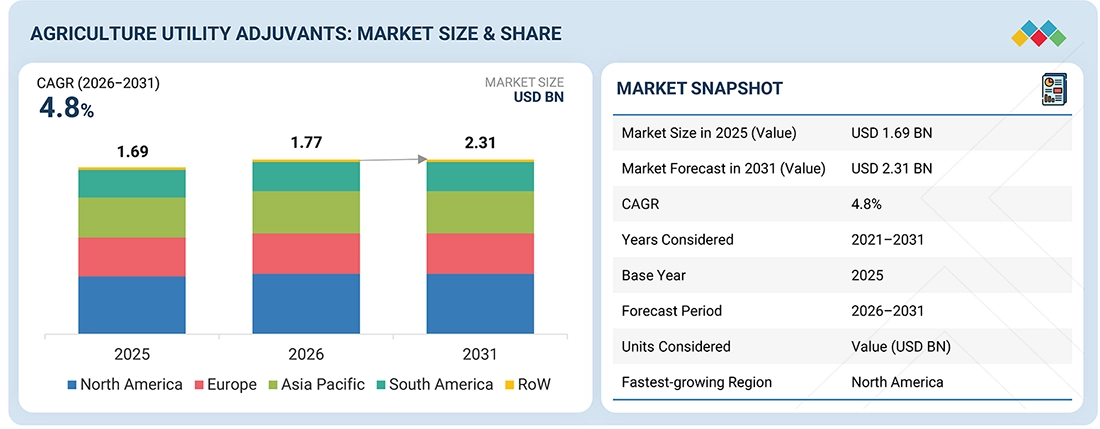
The agriculture utility adjuvants market is projected to reach USD 2.31 billion by 2031 from USD 1.77 billion in 2026, at a CAGR of 4.8% from 2026 to 2031. The global utility adjuvants market is experiencing rising demand due to increased attention from farmers on optimizing the quality of spray water, tank mixes, and the effectiveness of crop protection agents. Stricter government regulations concerning environmental safety, spray precision, and pesticide use have further supported market growth. The adoption of precision farming techniques has also created a need for more reliable spray solutions. Additionally, manufacturers are increasingly emphasizing the use of water conditioners, buffering agents, anti-foaming agents, and compatibility enhancers to improve the physical and chemical stability of spray mixtures. Utility adjuvants play a vital role in neutralizing hard water minerals, maintaining pH levels, controlling foam formation, and ensuring the compatibility of multiple agrochemicals in the same spray tank. Rising farmer interest in effective application methods and reducing chemical wastage is also driving the development of advanced utility adjuvants to boost operational efficiency and preserve active ingredients. As modern agriculture continues to evolve toward higher productivity and sustainability through precision practices, the utility adjuvants market is expected to remain a key part of the global crop protection industry.

Download PDF Brochure: https://www.marketsandmarkets.com/pdfdownloadNew.asp?id=131568926

The emulsifiable concentrates segment holds a significant market share in the formulation segment.

Emulsifiable concentrates (EC) also hold a significant market share in the formulation segment of the utility adjuvants market because of their excellent compatibility and ability to blend with crop protection products. This formulation type allows for the emulsification of oil-soluble functional ingredients to mix with water in the spray tank, ensuring an even distribution of active and performance-enhancing ingredients. The capacity to maintain solution stability across varying water qualities and conditions makes this formulation type suitable for large-scale agricultural spraying activities.

Furthermore, using emulsifiable concentrates improves the functional efficiency of utility modifiers, which in turn enhances mix qualities, prevents separation, and makes product application easier through spraying. Additionally, the product’s versatility, including herbicides, fungicides, and insecticides, boosts its market viability. Moreover, the growing demand for versatile, ready-to-mix liquid formulations that work in diverse climates increases the dominance of the emulsifiable concentrates segment in the formulation market.

In the application segment, herbicides is the fastest-growing segment in the global agricultural adjuvants market.

The global agricultural utility adjuvants market is growing fastest in the herbicide application segment. The increased adoption of herbicides to combat rising weed resistance issues, along with the expanding use of conservation tillage methods, drives this growth. Spraying adjuvants improve herbicide effectiveness by enhancing spray coverage, droplet retention, cuticle penetration, and rainfastness, leading to better active ingredient performance. The agriculture industry needs utility adjuvants to meet the growing demand driven by precision spraying technology and tank-mix applications for herbicides. Dual pressures from regulations demanding better pesticide practices and environmental protection motivate farmers to use adjuvants for effective weed control at lower chemical application levels.

Request Sample Pages: https://www.marketsandmarkets.com/requestsampleNew.asp?id=131568926

Based on region, Europe holds a significant share in the global agricultural utility adjuvants market.

Based on the region-wise segmentation, Europe has emerged as a prominent player in the global utility adjuvants market due to its strong regulatory environment and focus on sustainable agriculture. The region has implemented strict policies regarding pesticide use, drift prevention, water conservation, and environmental safety. These regulations have increased the demand for high-quality water conditioners, buffering agents, compatibility agents, and anti-foaming agents to ensure the responsible use of agrochemicals. Additionally, the adoption of precision agriculture tools, such as variable-rate sprayers and digital spray-monitoring devices, is very high in Europe. These tools require well-conditioned and stable spray solutions to perform optimally, which also drives demand for utility adjuvants. Furthermore, Europe’s well-established agrochemical industry, ongoing R&D efforts in formulation sciences, and the growing preference for bio-based and eco-friendly products further reinforce its position in the global market. Lastly, government initiatives supporting the utility adjuvant market amid current market conditions are expected to continue boosting the industry.

The extensive agricultural landscapes of countries such as France, Germany, Spain, and Italy have created opportunities for farmers to use more crop protection products and tank mix adjuvants. The widespread adoption of precision farming and crop management practices has greatly increased the demand for tank mix adjuvants. Additionally, the growing preference for bio-based, environmentally friendly products has supported the sustainable use of pesticides and crop protection solutions. The rapid innovation in specialty chemicals and agrochemicals has positioned Europe as a leading region in the tank mix adjuvants market.

Leading Agriculture Utility Adjuvants Companies:

The report profiles key players such as BASF SE, Corteva Agriscience, Croda International Plc, Evonik Industries AG, Solvay SA, Nufarm Ltd., Dow Inc., Clariant AG, Huntsman Corporation, Helena Agri-Enterprises LLC, Wilbur-Ellis Company LLC, Stepan Company, Brandt Consolidated Inc., Akzo Nobel N.V., and Adjuvant Plus Inc.

Microirrigation Systems Market: Growth Drivers and Competitive Landscape

marketsandmarkets logo

The microirrigation systems market is projected to grow from USD 13.50 billion in 2025 to reach USD 21.56 billion by 2030, at a compound annual growth rate (CAGR) of 9.8% during the forecast period. The microirrigation systems market is expanding due to ongoing improvements in irrigation hardware, software, and services. Modern microirrigation systems now often include automation and smart control technologies. This allows for precise scheduling, real-time flow regulation, and consistent water distribution. These features enable farmers to optimize when and how much they irrigate, significantly reducing water waste, energy use, and reliance on labor while boosting efficiency. At the same time, advances in sensor technology, remote monitoring, and data analysis are changing irrigation from a reactive task into a proactive, data-driven process. Monitoring soil moisture, weather conditions, evaporation rates, and crop-specific water needs in real time enables growers to adjust irrigation strategies based on current field conditions. This can improve crop health, ensure more consistent yields, and increase resilience to climate change and water shortages.

Furthermore, combining fertigation systems with digital irrigation platforms enables precise nutrient delivery with water. This improves the effectiveness of fertilizers and reduces runoff, benefiting the environment. Cloud-based platforms, mobile apps, and IoT connections make these systems easier to use by providing valuable insights, alerts, and performance tracking. Together, these innovations are enhancing returns for farmers and speeding up the adoption of microirrigation systems, particularly in high-value crops, greenhouses, and areas facing water scarcity. This trend supports long-term market growth.

Download PDF Brochure: https://www.marketsandmarkets.com/pdfdownloadNew.asp?id=566

By type, the sprinkler irrigation segment is projected to be fastest growing segment.

The micro sprinkler segment is expected to be the fastest-growing within the microirrigation systems market during the forecast period, driven by its ability to balance precision, coverage, and operational efficiency. Micro sprinklers deliver uniform water distribution across fields, orchards, and gardens, and can be strategically positioned to irrigate specific zones or individual plants. This targeted coverage ensures that each plant receives adequate moisture, reducing both under- and over-irrigation and supporting healthier plant growth.

Compared with conventional sprinkler systems, micro sprinklers operate at lower pressures and flow rates, which significantly reduces energy consumption for pumping and lowers overall operating costs. They are particularly well-suited for orchards, vineyards, nurseries, and plantation crops, where wider root zones and canopy coverage are required. In addition, micro sprinklers perform well on uneven terrain and in soils with lower infiltration rates, offering greater flexibility across varied agronomic conditions. These advantages, combined with rising emphasis on water efficiency and energy savings, are accelerating the adoption of micro sprinkler systems and positioning the segment for strong growth over the forecast period.

By end user, industrial user is estimated to be the fastest-growing segment during the review period.

The industrial user segment is expected to be the fastest-growing part of the microirrigation systems market during this review period. This growth is driven by a growing focus on environmental sustainability, operational efficiency, and regulatory requirements. Industrial users, which include commercial agribusinesses, plantations, food processors with their own farms, and large institutional growers, are increasingly adopting microirrigation technologies to practice eco-friendly water management. These systems help reduce water waste, reduce fertilizer and pesticide runoff, and improve resource use. This makes them an attractive option for organizations looking to lower their environmental impact while keeping up productivity.

Technological progress is also boosting adoption among industrial users. Modern microirrigation systems can be monitored and controlled remotely through IoT-enabled platforms, mobile apps, and computer dashboards. This allows for real-time changes to irrigation schedules, flow rates, and fertigation settings. Remote access is especially useful for businesses managing large or spread-out operations. It adds convenience, improves decision-making, and lowers the need for on-site labor. As sustainability goals, cost-cutting, and digital transformation become vital to industrial operations, demand for new microirrigation solutions is likely to accelerate further.

Request Sample Pages: https://www.marketsandmarkets.com/requestsampleNew.asp?id=566

Asia Pacific is estimated to be the fastest-growing region during the study period.

The Asia Pacific region is increasingly affected by irregular rainfall patterns, prolonged droughts, and frequent heat waves, all of which are intensifying pressure on agricultural water management. Under these volatile climatic conditions, microirrigation systems play a critical role in delivering regulated and efficient water distribution, helping farms maintain productivity despite reduced or unpredictable water availability. By supplying water directly to the root zone in controlled quantities, microirrigation reduces water stress on crops and enhances their resilience to extreme weather events.

Microirrigation systems also allow farmers to fine-tune irrigation schedules and application volumes based on specific crop requirements, soil conditions, and growth stages. This level of precision enables crops to better endure and adapt to changing climatic conditions, improving survival rates and yield stability. In addition, irrigation water in some regions may contain high levels of salts, heavy metals, or other contaminants, which can negatively affect soil health and crop productivity. To address this, microirrigation systems can be equipped with filtration and purification units that remove impurities before water reaches the plants. As a result, crops receive cleaner water, leading to improved plant health, higher yields, and reduced long-term damage to soil and crop systems caused by poor water quality.

Leading Microirrigation Systems Companies:

Eminent players operating in the microirrigation systems market are Jain Irrigation Systems Ltd. (India), The Toro Company (US), Netafim (Israel), Nelson Irrigation (US), Rain Bird Corporation (US), Finolex Plasson (India), Mahindra EPC Irrigation Limited (India), T-L Irrigation (US), Hunter Industries (US), Rivulis (Israel), Chinadrip irrigation Equipment co., Ltd. (China), Elgo Irrigation Ltd. (Israel), Antelco (Australia), Microjet (South Africa), and Irritec S.p.A. (Italy), among others.

Water-Soluble Fertilizers Market Growth: Drivers, Restraints, and Opportunities

marketsandmarkets logo

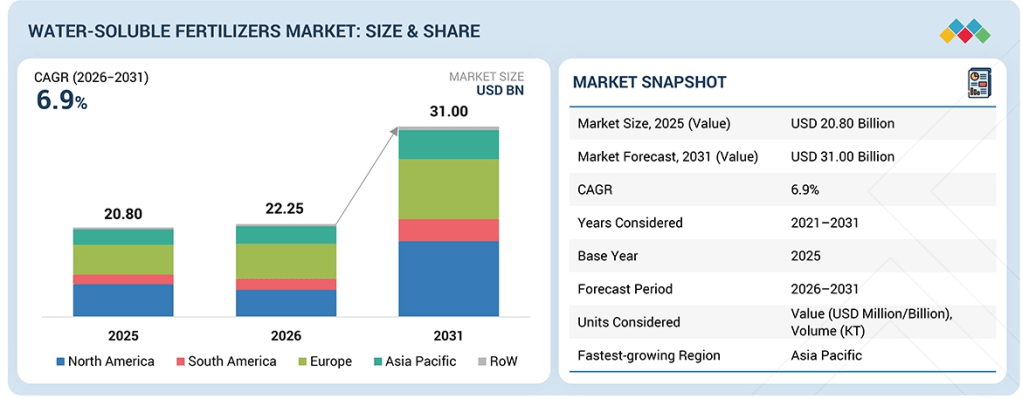
The water-soluble fertilizers market is projected to grow from USD 22.25 billion in 2026 to reach USD 31.00 billion by 2031, at a compound annual growth rate (CAGR) of 6.9% during the forecast period. The market for global water-soluble fertilizers (WSF) shows strong growth because farms are replacing their old nutrient management methods with more efficient systems, and farmers need better crop production results. The market is expanding because more growers are using fertigation and foliar application methods, which are especially common in horticulture and high-value crop production. The government initiatives that promote balanced fertilization, together with micronutrient application, serve to boost demand because they promote better soil health and increased agricultural productivity. Farmers have started to use WSF with precision agriculture technology because it helps them improve their crop nutrient intake while improving their crop quality and reducing their fertilizer losses. The new formulation technology advances, which produce completely soluble nutrient formulas that do not contain chloride and provide crop-specific nutrient combinations, lead to better agricultural practices. The water-soluble fertilizer market shows rapid growth because farmers want to adopt sustainable farming practices while increasing their field productivity to meet their growing agricultural needs.

Download PDF Brochure: https://www.marketsandmarkets.com/pdfdownloadNew.asp?id=1055

The field crops segment is estimated to account for a significant market share in the crop type segment.

The field crops segment holds a significant share within the crop type segment of the water-soluble fertilizer (WSF) market because farmers grow staple crops, which include cereals and pulses, oilseeds, and cotton, across extensive farmland. Farmers need to apply essential nutrients in proper quantities and at suitable times to attain maximum crop production and produce high-quality results under intense agricultural practices. The rising use of fertigation and precision nutrient management methods in corn, wheat, rice, and soybean cultivation has resulted in increasing WSF requirements for this crop category. Farmers are switching from traditional fertilizers to water-soluble grades because they need to increase their per-hectare productivity to meet the world’s growing food demands. The government support programs, which promote micronutrient application and balanced fertilization practices, help to strengthen the field crops segment, which controls the entire WSF market.

In the mode of application segment, foliar is expected to be the fastest-growing segment in the water-soluble fertilizers market.

The water-soluble fertilizers market will experience its fastest expansion through foliar application, which stands as the most rapidly growing segment within its application mode. The method achieves rapid nutrient uptake because it supplies nutrients directly to plant leaves. The method enables plants to absorb nutrients more effectively while maintaining their nutritional requirements during essential growth periods through flowering and fruit development. The method becomes widely used in horticulture and high-value crops because it effectively enhances crop quality while boosting yields and improving plants’ ability to withstand non-living environmental stresses. The growing adoption of micronutrient formulations and their ability to work with precision farming methods leads to increased adoption of these products. Farmers who need effective yet economical nutrient management options will find that foliar application becomes more popular in both developed and emerging agricultural markets.

Request Sample Pages: https://www.marketsandmarkets.com/requestsampleNew.asp?id=1055

Based on region, Europe is estimated to account for a significant share of the water-soluble fertilizer market.

Europe maintains a substantial water-soluble fertilizer market share because its agricultural methods have advanced, farmers have widely adopted precision farming techniques, and the region has implemented strong regulatory systems. The horticulture and greenhouse industries flourish in countries such as Spain, Italy, France, and the Netherlands, which use fertigation and foliar application techniques to achieve maximum crop yield and quality. The region’s strict environmental regulations for nutrient runoff control and soil health management practices require farmers to use high-efficiency fertilizers, which include fully soluble and specialty nutrient blends. WSF consumption increases because of the rising demand for high-value fruits, vegetables, and ornamental crops. Europe operates as a developed market for water-soluble fertilizers, which experiences ongoing growth through its investments in sustainable agriculture and irrigation technology improvements.

Leading Water-soluble Fertilizers Companies:

The report profiles key players such as Nutrien (Canada), Yara International (Norway), The Mosaic Company (US), ICL Group (Israel), PhosAgro (Russia), Incitec Pivot Limited (Australia), SQM (Chile), K+S Aktiengesellschaft (Germany), Grupa Azoty (Poland), Coromandel International Limited (India), Gujarat State Fertilizers & Chemicals Limited (India), Deepak Fertilisers and Petrochemicals Corporation Limited (India), Katyayani Organics (India), Zuari FarmHub Limited (India), and Aeries Agro Limited (India).

North America Microirrigation Systems Industry Trends, Opportunities & Outlook

marketsandmarkets logo

The North America Microirrigation Systems Market is estimated to be valued at USD 2.15 billion in 2025 and is projected to reach USD 3.50 billion by 2030, registering a compound annual growth rate (CAGR) of 10.3% during the forecast period.

The microirrigation systems market in North America has transitioned from being a niche water-conservation solution to becoming a critical component of modern agricultural infrastructure. This transformation is largely driven by the increasing emphasis on efficient water, labor, and nutrient management across contemporary farming operations. Farmers are increasingly prioritizing predictability, consistent crop performance, and risk mitigation in irrigation practices.

With growing water scarcity linked to climate change, agricultural producers are facing higher levels of uncertainty in water availability. Microirrigation systems address these challenges by enabling targeted water delivery at the plant level. These systems offer customizable solutions tailored to crop growth cycles, soil characteristics, and weather patterns. They are particularly beneficial in regions with strict groundwater regulations, severe drought conditions, or compliance requirements related to water conservation. As a result, growers are actively replacing traditional flood and sprinkler irrigation systems with advanced microirrigation technologies, driving market expansion.

Download PDF Brochure: https://www.marketsandmarkets.com/pdfdownloadNew.asp?id=63889674

Micro-Sprinkler Segment to Register the Fastest Growth

By type, the micro-sprinkler segment is projected to record the fastest growth during the forecast period, surpassing traditional drip irrigation systems. The segment’s rapid growth is attributed to its operational flexibility, wider wetting coverage, and adaptability across various crop types.

Micro-sprinklers are widely utilized in orchards, vineyards, nurseries, and plantation crops where partial canopy coverage and frost protection are essential. These systems provide a balanced combination of water efficiency and uniform soil moisture distribution, making them particularly effective in sandy or uneven soil conditions prevalent in key agricultural regions.

Additionally, micro-sprinkler systems support fertigation, chemigation, and climate control applications such as crop cooling and frost protection. Technological advancements including pressure-regulated emitters, clog-resistant nozzles, low-flow designs, and compatibility with automated irrigation systems have enhanced system reliability, simplified maintenance, and improved cost efficiency. Expanding dealer networks, increased availability of system components, and declining installation costs are further accelerating adoption in both new installations and retrofit projects. Although drip irrigation continues to dominate in terms of total installed acreage, micro-sprinklers are expected to witness the highest growth rate due to expanding high-value crop cultivation, increasing climate variability, and rising demand for adaptable irrigation solutions.

Farmers Segment to Dominate Market Demand

By end user, the farmers segment is expected to account for the largest market share during the forecast period. The demand from farmers is closely linked to improving on-farm productivity, enhancing water-use efficiency, and managing operational risks. Adoption rates are highest among growers cultivating permanent and high-value crops, where precision irrigation is critical for maintaining yield consistency, crop quality, and profitability.

Farmers benefit from strong dealer and installer networks that provide system design, financing solutions, installation services, and ongoing technical support. These services facilitate widespread adoption and encourage reinvestment through system upgrades, acreage expansion, and replacement of outdated irrigation technologies.

While non-agricultural applications, including commercial landscaping, industrial projects, and municipal irrigation, are experiencing steady growth, they remain smaller in overall market size and value compared to agricultural applications. Given the extensive irrigated farmland managed by farmers, combined with increasing water-use regulations and continuous maintenance and upgrade requirements, the farmers segment is expected to remain the primary driver of market demand in North America.

Request Sample pages: https://www.marketsandmarkets.com/requestsampleNew.asp?id=63889674

United States to Hold the Largest Market Share

The United States is projected to dominate the North American microirrigation systems market throughout the forecast period. The country’s agricultural sector is increasingly impacted by recurring droughts and water shortages, which have complicated irrigation operations. According to the Congressional Research Service, between 2008 and 2015, more than 470,000 acres of farmland in the United States were forced to suspend irrigation due to insufficient surface and groundwater supplies.

In response to growing water constraints and increasing regulatory pressure to reduce water consumption, farmers across the country are adopting efficient irrigation technologies and advanced water management practices to sustain productivity and profitability.

California leads the US microirrigation market due to its extensive irrigated farmland, concentration of high-value crops such as almonds, pistachios, grapes, and vegetables, and strict water-use regulations. Other states including Arizona, Nevada, Texas, and Washington are also contributing significantly to market growth due to their arid climatic conditions and the need to maximize irrigation efficiency. The continued shift toward specialty crop cultivation and improvements in irrigation technologies are expected to further accelerate market expansion.

Technological advancements such as automated irrigation management systems, IoT-based irrigation monitoring, and the integration of drip fertigation are further supporting market growth. Additionally, strong federal and state government initiatives focused on water conservation, cost-sharing programs, and sustainability goals are strengthening the adoption of microirrigation systems across North America. Consequently, the region is expected to maintain its leadership position in the global microirrigation market over the coming years.

Key Market Players:

The report profiles leading companies operating in the market, including Yakult Honsha Co., Ltd. (Japan), Danone (France), Nestlé (Switzerland), Morinaga Milk Industry Co., Ltd. (Japan), By-Health Co., Ltd. (China), H&H Group (Hong Kong), Sanzyme Biologics Pvt. Ltd. (India), and Inner Mongolia Yili Industrial Group (China).

Asia Pacific Microirrigation Systems Market Report: Growth Insights and Strategic Developments

marketsandmarkets logo

The Asia Pacific microirrigation systems market is poised for robust growth, projected to expand from USD 6.76 billion in 2025 to USD 11.43 billion by 2030, registering a strong compound annual growth rate (CAGR) of 11.1% during the forecast period. Microirrigation is rapidly evolving from a productivity-enhancing option into an essential component of modern agricultural infrastructure across the Asia Pacific region. This shift is particularly pronounced in areas affected by water scarcity, climate variability, and tightening groundwater regulations. As rainfall patterns become increasingly unpredictable, farmers are under growing pressure to optimize water use while sustaining crop yields. Consequently, irrigation strategies are now viewed not only as efficiency measures but also as critical tools for long-term risk management, cost control, and farm sustainability.

Download PDF Brochure: https://www.marketsandmarkets.com/pdfdownloadNew.asp?id=40679376

High-Value Crop Producers Drive Adoption

Orchard, plantation, and high-intensity crop producers are at the forefront of this transition, increasingly adopting drip and microsprinkler systems that allow precise, plant-level irrigation control. These systems are especially valuable in Asia Pacific agriculture, which is characterized by diverse soil conditions and fragmented landholdings. The ongoing shift away from flood and conventional sprinkler irrigation methods has accelerated, particularly in regions where water and energy costs have a direct impact on farm profitability.

At the same time, microirrigation suppliers are reshaping their business models to better align with regional market dynamics. Beyond equipment sales, companies are focusing on dealer-led agronomic support, modular system designs, flexible financing options, and service-based engagement models. This approach supports technology adoption among small-scale farmers while enabling large commercial farms to expand and modernize operations.

Microsprinklers to Be the Fastest-Growing Segment

By type, microsprinklers are expected to be the fastest-growing segment from 2025 to 2030. Their rapid adoption is driven by advantages such as wider wetting patterns, adaptability to varied terrains, and compatibility with diverse soil types commonly found across the region. Microsprinklers are particularly well suited for orchards, plantations, nurseries, and horticulture, where uniform soil moisture, partial canopy coverage, and microclimate control are essential.

Growers are increasingly favoring microsprinkler systems for their ability to balance water-use efficiency with consistent moisture distribution, while also supporting fertigation, chemigation, crop cooling, and stress mitigation. Technological advancements—including pressure-compensated emitters, clog-resistant nozzles, and low-flow designs—are enhancing system reliability and performance. Expanding dealer networks and retrofitting initiatives are further accelerating adoption, especially as cultivation of high-value perennial crops increases across the region.

Request Sample Pages: https://www.marketsandmarkets.com/requestsampleNew.asp?id=40679376

China Leads the Regional Market

By country, China captured a prominent share of the Asia Pacific microirrigation systems market in 2024. The country’s leadership is underpinned by its heavy reliance on irrigation to sustain agricultural production amid worsening water scarcity. Declining groundwater levels, frequent droughts in northern and western provinces, and stricter water-use regulations have made efficient irrigation systems a strategic necessity rather than an optional upgrade.

China’s extensive irrigated land area and large-scale production of high-value, water-intensive crops—including fruits, vegetables, cotton, grapes, and greenhouse produce—continue to drive demand. Regions such as Xinjiang, Inner Mongolia, Hebei, Shandong, Henan, and Gansu are increasingly adopting drip and microsprinkler systems to address arid conditions, soil salinization, and uneven rainfall. Government support through water conservation policies, irrigation modernization programs, and adoption subsidies further strengthens market growth. The rising use of fertigation, automation, pressure-compensated technologies, and digital monitoring solutions is accelerating adoption, particularly among commercial farms and greenhouse operations.

As China continues to prioritize food security, resource efficiency, and climate resilience, microirrigation systems are increasingly recognized as critical agricultural infrastructure, reinforcing the country’s position as the largest market in the Asia Pacific region.

Key Market Players:

The Asia Pacific microirrigation systems market features a mix of global leaders and regional players. Key companies profiled include Netafim, The Toro Company, Rivulis, Rain Bird Corporation, and Mahindra EPC. The market also includes several prominent small and medium-sized enterprises, such as Drip Irrigation Technology Solutions (DRTS), Kothari Agritech Private Limited, Harvel Agua India Private Limited, Hubei Plefentrain Irrigation Equipment Ltd (China), Ripple Aquaplast Ltd, and Metro Irrigation, all contributing to innovation, localization, and market expansion across the region.

Europe Biostimulants Market Report: Industry Insights and Strategic Developments

marketsandmarkets logo

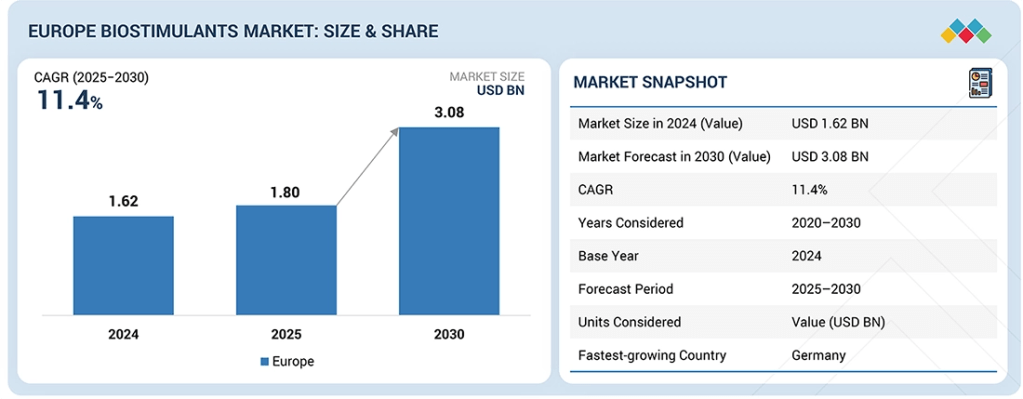
The Europe biostimulants market is projected to reach USD 3.08 billion by 2030, growing at a Compound Annual Growth Rate (CAGR) of 11.4% from 2025 to 2030. The market is witnessing steady expansion, driven by increasing adoption among farmers, agribusinesses, and commercial growers seeking sustainable and eco-friendly crop enhancement solutions.

Adoption of biostimulants is particularly strong across major European agricultural economies, including Germany, France, Italy, Spain, and the Netherlands. These products are widely applied in cereals, oilseeds, fruits, vegetables, and high-value specialty crops to improve nutrient use efficiency, enhance stress tolerance, and ensure yield stability. Rising awareness regarding soil health, climate variability, and the advantages of microbial, seaweed-based, and amino-acid-based biostimulants is further accelerating market growth. Additionally, the integration of digital agronomy platforms, precision agriculture technologies, and strong distribution networks is supporting efficient application and faster adoption across both large-scale farms and specialty crop producers throughout the region.

Download PDF Brochure: https://www.marketsandmarkets.com/pdfdownloadNew.asp?id=16226008

Liquid Segment Dominates the Form Category

Within the form segment, liquid biostimulants account for a significant market share due to their ease of application, rapid plant absorption, and compatibility with modern crop management practices. Liquid formulations enable precise dosing through foliar spraying, fertigation, and seed treatment methods, making them suitable for a diverse range of crops, including cereals, fruits, vegetables, and specialty crops. Their formulation flexibility and ability to ensure uniform nutrient distribution support improved crop performance, stress resilience, and enhanced nutrient uptake. Continuous product innovation, particularly in stabilized and concentrated liquid formulations, is further strengthening the segment’s dominant position.

Cereals & Grains Segment Expected to Witness Significant Growth

By crop type, the cereals & grains segment is projected to grow at a significant rate during the forecast period. Europe’s extensive cultivation of staple crops such as wheat, barley, and maize, combined with tightening regulatory restrictions on synthetic chemical pesticides, is encouraging farmers to adopt sustainable biological solutions. Biostimulants, including microbial, botanical, and biochemical formulations, help manage pests and diseases while promoting soil health and environmental sustainability. Furthermore, the growing integration of precision agriculture technologies and advanced crop management practices is accelerating adoption within the cereals and grains segment, positioning it as a key growth driver in Europe’s biostimulants market.

UK Emerges as a Key Market Contributor

The United Kingdom holds a significant share of the Europe biostimulants market, supported by its technologically advanced agricultural infrastructure, strong sustainability initiatives, and well-established regulatory framework for environmentally friendly agricultural inputs. UK farmers and agribusinesses are increasingly adopting microbial, seaweed-based, and amino-acid biostimulants to enhance nutrient efficiency, improve resistance to abiotic stress, and stabilize crop yields across cereals, horticultural crops, and high-value specialty crops. The widespread use of digital farming platforms and precision agriculture tools in the country further optimizes product application and input efficiency. Additionally, robust distribution channels, growing awareness of soil health, and government support for sustainable farming practices are reinforcing the UK’s leadership position in the European market.

Request Sample Pages: https://www.marketsandmarkets.com/requestsampleNew.asp?id=16226008

Key Market Players

Major companies operating in the Europe biostimulants market include Syngenta Group (Switzerland), BASF SE (Germany), Bayer AG (Germany), Isagro S.P.A. (Italy), Corteva Agriscience (US), Biostadt India Limited (India), Biolchim S.p.A. (Italy), Koppert Biological Systems B.V. (Netherlands), Stoller Europe (France), Seipasa S.A. (Spain), Valagro S.P.A. (Italy), Novonesis A/S (Denmark), UPL Limited (India), Italpollina S.P.A. (Italy), and Tradecorp International S.A. (Spain).

Europe Microirrigation System Market Analysis: Drivers, Restraints & Emerging Trends

marketsandmarkets logo

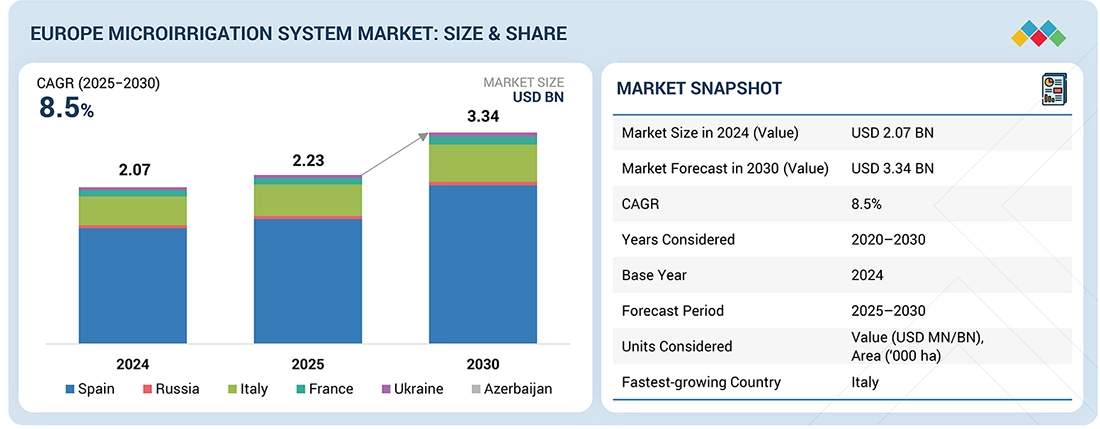
The Europe Microirrigation System Market is projected to grow from USD 2.23 billion in 2025 to USD 3.34 billion by 2030, registering a Compound Annual Growth Rate (CAGR) of 8.5% during the forecast period. The increasing emphasis on efficient water management, regulatory compliance, and sustainable agricultural practices is significantly contributing to the market’s growth across the region.

Europe Microirrigation System Market

Microirrigation systems are rapidly becoming a core component of agricultural infrastructure in Europe, as farmers and agribusinesses adopt advanced irrigation technologies to comply with stringent government regulations related to water usage. With evolving water management policies, farmers are upgrading traditional irrigation systems to more precise, timely, and efficient methods. This transition enables improved farm profitability, enhanced technical reliability, and optimized water utilization while maintaining consistent crop yields.

Download PDF Brochure: https://www.marketsandmarkets.com/pdfdownloadNew.asp?id=222332152

Microsprinklers Segment Expected to Witness Fastest Growth

Based on system type, the microsprinklers segment is projected to record the fastest growth between 2025 and 2030. The increasing demand is driven by their operational flexibility, wider wetting coverage, and suitability for diverse agricultural applications such as orchards, vineyards, nurseries, and plantation crops. Microsprinklers offer efficient water distribution while supporting fertigation, chemigation, cooling, and frost protection.

Technological advancements, including pressure-compensated, clog-resistant, and low-flow system designs, are further driving adoption. While drip irrigation continues to dominate in terms of installed base, microsprinklers are gaining momentum due to expanding high-value crop cultivation, climate variability, and the growing need for versatile irrigation solutions.

Farmers Segment to Hold Largest Market Share

By end user, the farmers segment is expected to account for the largest share of the Europe microirrigation system market in 2025. Microirrigation systems play a crucial role in improving farm productivity, water efficiency, and regulatory compliance. Adoption rates are particularly high among growers of permanent and high-value crops such as orchards, vineyards, olives, and greenhouse horticulture, where irrigation precision directly influences yield stability, crop quality, and profitability.

Established dealer-installer and agronomic support networks across Europe provide farmers with system design, installation, financing solutions, and technical services, reducing adoption barriers and encouraging the replacement of traditional irrigation technologies. Although adoption is expanding in non-agricultural sectors such as landscaping, municipal infrastructure, and industrial applications, farmers are expected to remain the primary demand drivers due to increasing water scarcity, regulatory pressures, and climate risks.

Request Sample Pages: https://www.marketsandmarkets.com/requestsampleNew.asp?id=222332152

Spain to Lead Regional Market Growth

Spain is projected to capture the largest share of the Europe microirrigation system market in 2025. The country’s heavy dependence on irrigation for agricultural productivity, combined with increasing water scarcity across major farming regions, is fueling strong demand for efficient irrigation solutions. Agriculture accounts for a significant portion of Spain’s water withdrawals, and frequent droughts, declining reservoir levels, and stricter groundwater regulations are accelerating the adoption of microirrigation systems.

Key agricultural regions including Andalusia, Murcia, Valencia, Castilla-La Mancha, and Aragon are witnessing increased demand for drip and microsprinkler irrigation systems. These technologies help farmers manage dry climatic conditions, saline soils, and irregular rainfall patterns while maintaining crop quality and productivity. The country’s historical reliance on irrigation and increasing water challenges position Spain as a major hub for microirrigation system adoption in Europe.

Key Market Players

The report profiles leading companies operating in the Europe microirrigation system market, including Netafim (Israel), The Toro Company (US), Rivulis (Singapore), Rain Bird Corporation (US), Irritec S.p.A. (Italy), AZUD (Spain), and Novagric (Spain). These companies are focusing on technological innovations, strategic partnerships, and service-based offerings to strengthen their market positions and meet the evolving demands of European agriculture.

North America Biostimulant Industry: Key Companies and Market Insights

marketsandmarkets logo

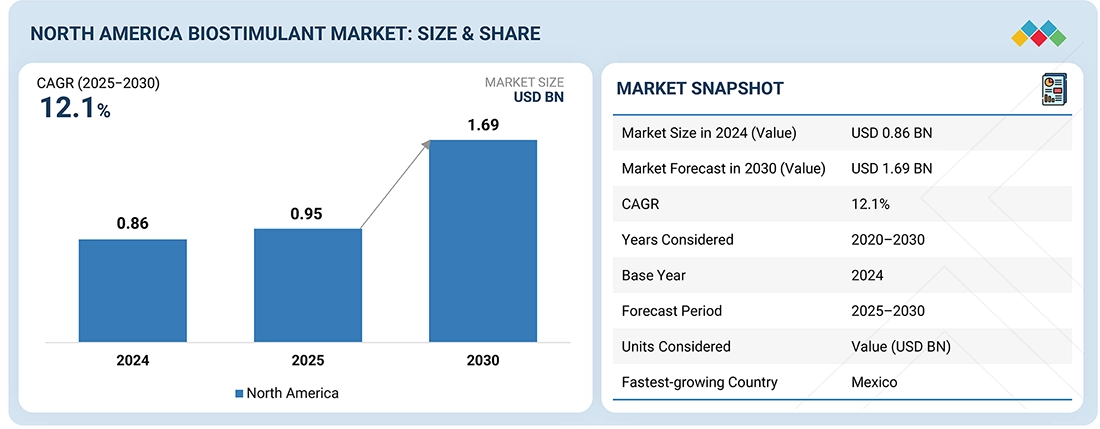
According to MarketsandMarkets™, the North America biostimulant market is poised for substantial growth, projected to increase from USD 0.95 billion in 2025 to USD 1.69 billion by 2030, registering a Compound Annual Growth Rate (CAGR) of 12.1% during the forecast period. The market expansion is primarily driven by increasing acceptance of sustainable and eco-friendly agricultural inputs among farmers, agribusinesses, and large-scale commercial farming operations across the region.

North America Biostimulants Market

The adoption of biostimulants is gaining strong momentum across the United States, Canada, and Mexico, where these solutions are widely utilized in cereals, vegetables, fruits, and specialty crops. Biostimulants play a vital role in improving nutrient-use efficiency, enhancing plant stress tolerance, and ensuring yield consistency. Rising awareness regarding soil health and climate variability, coupled with the proven effectiveness of microbial, seaweed, and amino acid-based products, is broadening the application scope of biostimulants. Additionally, technological advancements such as precision agriculture, agritech platforms, and strengthened distribution networks are accelerating product deployment and supporting adoption across both smallholder and large commercial farms.

Download PDF Brochure: https://www.marketsandmarkets.com/pdfdownloadNew.asp?id=14377455

Liquid Segment Holds Significant Share by Form

By form, the liquid segment accounts for a significant share of the North America biostimulant market. The strong adoption of liquid biostimulants is attributed to their ease of application, faster absorption rate, and compatibility with modern crop management systems. These formulations allow for precise and uniform application through foliar spraying, fertigation, and seed treatment methods, ensuring efficient delivery of nutrients and bioactive compounds to plants.

The versatility of liquid biostimulants across multiple crop categories, including cereals, vegetables, fruits, and specialty crops, further strengthens their market position. Continuous advancements in formulation technologies that improve product stability and effectiveness, along with the ability to integrate liquid biostimulants with crop protection solutions, are contributing to their widespread adoption among farmers and agribusiness operators.

Cereals & Grains Segment Registers Strong Growth by Crop Type

The cereals and grains segment represents a major share within the crop type category in the North America biostimulant market. Extensive cultivation of staple crops such as corn, wheat, and barley across the region is a key factor driving segment growth. Biostimulants significantly improve nutrient absorption, stimulate root development, enhance stress tolerance, and increase overall crop yield, helping farmers address challenges associated with climate variability and intensive agricultural practices.

Large-scale cereal and grain production continues to benefit from targeted biostimulant formulations that demonstrate measurable improvements in productivity and crop quality. As a result, commercial farmers are increasingly adopting these solutions to optimize agricultural output and maintain crop performance under changing environmental conditions.

Canada Emerges as a Key Contributor to Regional Market Growth

Canada holds a significant share of the North America biostimulant market, supported by its well-established agricultural sector and growing emphasis on sustainable farming practices. Canadian farmers are increasingly integrating biostimulants into their crop management strategies to improve soil health, enhance nutrient efficiency, and strengthen crop resilience against environmental stresses such as drought, low temperatures, and salinity.

Major crops, including cereals, oilseeds, and horticultural produce, are benefiting from various types of biostimulants derived from microorganisms, seaweed extracts, and amino acids. Favorable government initiatives promoting eco-friendly agricultural inputs, increasing farmer awareness, and the strong presence of leading biostimulant manufacturers and distributors are further strengthening Canada’s position as a key growth driver within the regional market.

Request Sample Pages: https://www.marketsandmarkets.com/requestsampleNew.asp?id=14377455

Key Market Players

Leading companies operating in the North America biostimulant market include BASF SE (Germany), Syngenta AG (Switzerland), Bayer AG (Germany), FMC Corporation (US), Nutrien Ltd. (Canada), Lallemand Plant Care (Canada), Acadian Seaplants Limited (Canada), Koppert Biological Systems B.V. (Netherlands), Corteva Agriscience (US), Seipasa S.A. (Spain), Valagro S.p.A. (Italy), Novozymes A/S (Denmark), Agricen, Inc. (US), Tradecorp International S.A. (Spain), and Brandt Consolidated, Inc. (US).

These companies are actively focusing on product innovation, strategic partnerships, and expansion of distribution networks to strengthen their market presence and cater to the rising demand for sustainable agricultural inputs across North America.

Europe Crop Protection Chemicals Market Landscape: Key Players & Market Share

marketsandmarkets logo

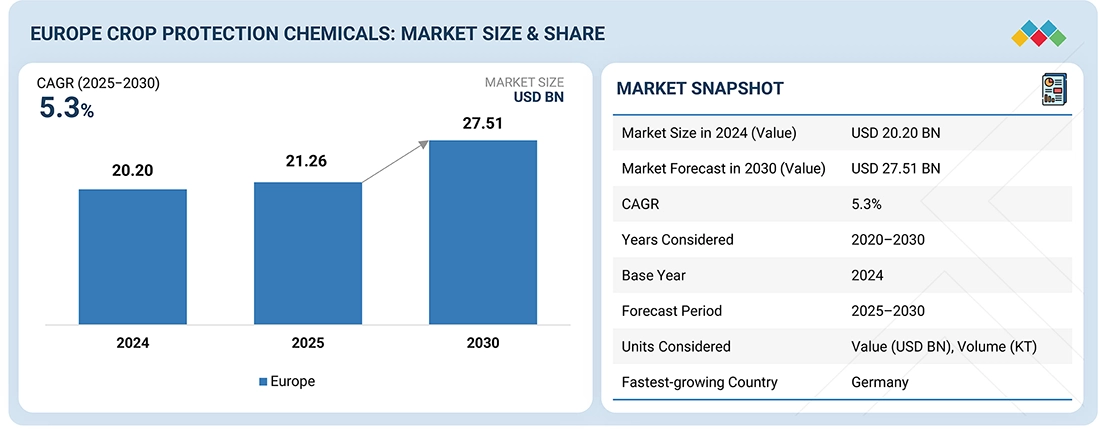
According to MarketsandMarkets™, the Europe crop protection chemicals market is projected to grow from USD 21.26 billion in 2025 to USD 27.51 billion by 2030, registering a Compound Annual Growth Rate (CAGR) of 5.3% during the forecast period. Market expansion is being driven by rapid technological innovation, rising demand for high-quality agricultural produce, and the increasing adoption of sustainable farming practices across the region.

Europe Crop Protection Chemicals Market

Growth is strongly aligned with the European Union’s Green Deal objectives, with integrated pest management (IPM) programs, bio-based formulations, and residue-free crop protection solutions gaining momentum. Government initiatives supporting agricultural modernization, combined with the rising use of liquid formulations and microbial-based products, are accelerating market development. Increased investment in research and development—particularly in environmentally responsible crop protection technologies—is creating new opportunities for innovation, competitiveness, and long-term sustainability across Europe’s agricultural landscape.

Download PDF Brochure: https://www.marketsandmarkets.com/pdfdownloadNew.asp?id=190542011

Herbicides Dominate the Type Segment

Herbicides are expected to account for a significant share of the European crop protection chemicals market. Their critical role in weed management for major crops such as cereals, oilseeds, and pulses continues to make them indispensable to both conventional and conservation tillage systems. Ongoing innovation in selective and broad-spectrum herbicide formulations, low-dose combination products, and precision agriculture integration is enhancing efficiency while reducing environmental impact. The continued adoption of integrated weed management practices further reinforces herbicides’ dominance, driven by their reliability, performance consistency, and compatibility with advanced application technologies.

Soil Treatment Gains Strong Momentum

The soil treatment segment is projected to hold a substantial share among application modes during the forecast period. Soil-applied fungicides, insecticides, fumigants, and bio-based solutions are increasingly adopted to improve soil health, control soil-borne diseases and nematodes, and enhance nutrient availability and root development. With growing demand for high-value crops and precision agriculture practices, controlled-release formulations and integrated soil management approaches are strengthening soil treatment’s role as a cornerstone of sustainable productivity in European farming systems.

Germany Emerges as a Strategic Market Leader

Germany is estimated to account for a significant share of the European crop protection chemicals market. The country’s large cultivation areas of cereals, oilseeds, and sugar beets, combined with a strong commitment to sustainable agriculture, are driving the adoption of environmentally responsible crop protection solutions. Increasing use of IPM systems, digital monitoring platforms, precision agriculture technologies, and bio-based formulations is positioning Germany as an innovation hub for the region. Strong regulatory alignment with EU environmental standards and continuous investment in sustainable technologies further reinforce its leadership role in the European market.

Leading Europe Crop Protection Chemicals Companies:

The report profiles key players such as BASF SE (Germany), Bayer AG (Germany), FMC Corporation (US), Syngenta Group (Switzerland), Corteva (US), UPL (India), Nufarm (Australia), Sumitomo Chemical Co., Ltd (Japan), Albaugh LLC (US), Koppert (Netherlands), Gowan Company (US), American Vanguard Corporation (US), Kumiai Chemical Industry Co., Ltd (Japan), PI Industries (India), and BioFirst Group (Belgium).

North America Crop Protection Chemicals Market Competitive Landscape and Key Players

marketsandmarkets logo

According to MarketsandMarkets™, The North America crop protection chemicals market is estimated to be valued at USD 16.90 billion in 2025 and is projected to reach USD 22.26 billion by 2030, growing at a compound annual growth rate (CAGR) of 5.7% during the forecast period. The market is witnessing steady growth as farmers across North America face increasing pressure from weeds, insects, and crop diseases across major agricultural regions. Climate change, longer growing seasons, and the rapid spread of resistant weed and insect populations are significantly increasing demand for herbicides, insecticides, and fungicides. The extensive cultivation of high-yielding crops such as corn, soybean, wheat, and specialty fruits and vegetables further underscores the need for reliable and effective crop protection solutions to maintain productivity and quality.

North America Crop Protection Chemicals Market

Market growth is also supported by intensive farming practices, rising emphasis on yield stability and food security, and the growing integration of crop protection chemicals with precision agriculture, seed treatment technologies, and data-driven farming systems.

Download PDF Brochure: https://www.marketsandmarkets.com/pdfdownloadNew.asp?id=38387771

Fruits & Vegetables Segment Holds a Significant Market Share

Within the crop type segment, fruits and vegetables are estimated to account for a significant share of the North America crop protection chemicals market. This segment represents a high-value component due to intensive cultivation aimed at both domestic consumption and export markets. Fruits and vegetables require frequent and targeted pest, weed, and disease management to preserve yield, appearance, shelf life, and overall quality.

Strict regulatory frameworks, residue tolerance limits, and retailer-driven quality standards are shaping product selection and application practices in this segment. As a result, growers are increasingly adopting selective chemistries, advanced formulations, and precision application methods to ensure compliance while maintaining optimal crop performance.

Seed Treatment Emerges as the Fastest-Growing Application Mode

By mode of application, seed treatment is expected to register the highest growth rate during the forecast period. The increasing use of microbial and biochemical crop protection chemicals applied directly to seeds is driving this trend, as seed treatments provide early-stage protection against pests, diseases, and nematodes.

Seed-applied solutions offer targeted efficacy, reduced chemical usage, and strong compatibility with integrated pest management (IPM) programs. Ongoing innovations in formulation and coating technologies are improving product stability and consistency across varying field conditions. Additionally, the growing focus on sustainable agriculture and precision farming is positioning seed treatments as a key growth contributor in the North American market.

Request Sample Pages: https://www.marketsandmarkets.com/requestsampleNew.asp?id=38387771

Canada Accounts for a Notable Share of the Regional Market

From a regional perspective, Canada is estimated to account for a notable share of the North America crop protection chemicals market. The country’s agricultural sector is characterized by large-scale commercial farming, advanced mechanization, and increasing adoption of data-driven farming practices.

Strong demand for crop protection chemicals in cereals, oilseeds, and pulses—particularly wheat, canola, barley, corn, and soybeans—is driving market growth. A well-established agrochemical supply chain, robust distribution networks, and continuous investments in research and formulation development further support the market. In addition, the gradual adoption of precision agriculture, integrated pest management, and a regulatory environment favoring reduced-risk and sustainable chemistries continues to strengthen Canada’s market position.

Leading North America Crop Protection Chemicals Companies:

Leading companies operating in the North America crop protection chemicals market include Corteva Agriscience (US), FMC Corporation (US), Albaugh LLC (US), Gowan Company (US), American Vanguard Corporation (US), Bayer AG (Germany), BASF SE (Germany), Syngenta Group (Switzerland), UPL Limited (India), ADAMA Agricultural Solutions Ltd. (Israel), Nufarm Limited (Australia), Sumitomo Chemical Co., Ltd. (Japan), Marrone Bio Innovations, Inc. (US), Helena Agri-Enterprises, LLC (US), and AMVAC Chemical Corporation (US).