Probiotics for a Healthier You: Food and Cosmetic Applications

The term Probiotics Food & Cosmetics refers to a growing market sector that encompasses products containing probiotics – live microorganisms that offer health benefits when consumed or applied.

Probiotic Food & Beverages:

These include various food and beverage items that are enriched with live probiotics. Examples include yogurt, fermented dairy products (like kefir and kombucha), sauerkraut, kimchi, and certain types of pickles. Probiotics in food are believed to support digestive health, boost the immune system, and may even aid in weight management.

Probiotic Cosmetics:

This category encompasses skincare and cosmetic products that incorporate probiotics. Probiotics in cosmetics are thought to promote skin health and balance the skin microbiome, which is the community of microorganisms that live on the skin’s surface. Probiotic-infused creams, lotions, cleansers, and other skincare products are becoming increasingly popular.

Connect with Our Expert for to Discuss Business Need: https://www.marketsandmarkets.com/speaktoanalystNew.asp?id=22485898

There are a couple of key factors fueling the rapid rise of both Probiotics Food and Probiotics Cosmetics industries:

  • Growing Awareness of Probiotics’ Benefits: Consumers are becoming increasingly informed about the role of gut health in overall well-being.  This has led to a greater interest in probiotics, which are seen to improve digestion, boost the immune system, and potentially even aid in weight management.  Similarly, there’s growing recognition of the skin microbiome’s importance for healthy skin, and probiotics in cosmetics are seen to maintain a balanced skin environment.
  • Demand for Natural & Preventive Healthcare Solutions: People are looking for more natural and preventive approaches to healthcare. Probiotics fit this trend well, as they are live bacteria that occur naturally in the body and can be obtained through food and dietary supplements.  Probiotic cosmetics are also viewed as a natural way to achieve healthy skin.
  • Rise in Chronic Conditions: The prevalence of chronic conditions like obesity, high blood pressure, and certain skin conditions is on the rise. Probiotics are being explored for their potential role in managing these conditions, which is driving interest and investment in the probiotics market.
  • Innovation in Probiotic Products: The market is constantly evolving with new and innovative probiotic products being launched.  Food manufacturers are incorporating probiotics into a wider variety of food and beverages, making them more appealing to a broader consumer base.  The cosmetics industry is also developing new and improved probiotic-based skincare products with targeted benefits.
  • Increased Disposable Income: As disposable incomes rise in some parts of the world, consumers are willing to spend more on premium and functional foods and cosmetics. Probiotic products often fall into this category, further fueling market growth.

The Asia Pacific region currently holds the top spot for the Probiotics Food & Cosmetics market, boasting the largest market share. Here’s why it’s thriving in this region:

  • Historical Familiarity with Probiotics:  Traditionally, many cultures in Asia Pacific have consumed fermented foods rich in probiotics, like kimchi and kombucha. This existing awareness creates a receptive consumer base for new probiotic products.
  • Rising Disposable Income & Health Focus:  As disposable incomes increase, people in this region are prioritizing health and wellness. Probiotics align with this trend, offering potential benefits for gut and skin health.
  • Growing Population:  The large and growing population in Asia Pacific creates a vast market for probiotic products.

However, the fastest growth for the Probiotics Food & Cosmetics industries is expected to be in the Asia Pacific region itself. This is due to the factors mentioned above, along with:

  • Increasing urbanization and busy lifestyles: Consumers are turning to convenient and healthy options like probiotic-fortified foods and beverages.
  • Growing internet penetration and social media influence:  These factors raise awareness about probiotics and influence purchasing decisions.

While Asia Pacific dominates currently, other regions like North America and Europe also have established markets for Probiotics Food & Cosmetics and are expected to see continued growth.

Download PDF brochure: https://www.marketsandmarkets.com/pdfdownloadNew.asp?id=22485898
Probiotics Food & Cosmetics Market to Hit $84.5 billion by 2026

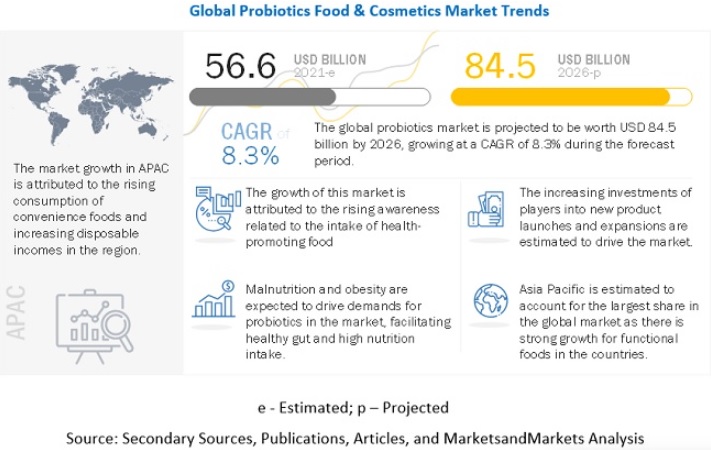
The global probiotics food & cosmetics market is estimated to reach $84.5 billion by 2026, growing at a 8.3% compound annual growth rate (CAGR). The global market size was valued $56.6 billion in 2021.

The global perception toward daily food products is shifting from products providing basic nutrition to those offering several health benefits, such as functional foods. Today, a wide range of functional foods have been developed, including probiotics, prebiotics, and symbiotic foods. These products have changed the approach of various food processors from considering food only as a source of energy and nutrition to biologically active food components that confer benefits on human health.

Download PDF brochure: https://www.marketsandmarkets.com/pdfdownloadNew.asp?id=22485898

Surviving the Gauntlet: Probiotics’ Journey through the Gastric Environment

Probiotics, touted for their health benefits, face a formidable challenge as they navigate through the acidic terrain of the stomach and the small intestine. Despite undergoing rigorous manufacturing processes, many probiotic strains succumb to the harsh conditions prevalent in the digestive system. According to UK food microbiologists, only select resilient bacteria such as lactobacillus and bifidobacteria stand a chance against stomach acids, with an intolerance level to acidity typically below pH 2. While stomach acid serves to eliminate harmful bacteria, it also poses a threat to beneficial probiotics. However, the human stomach’s mucous lining offers some protection against acid degradation, aiding in the survival of probiotic strains.

The Rise of Specialty Stores: A Haven for Probiotic Enthusiasts

Specialty stores have emerged as havens for consumers seeking probiotic dietary supplements. These stores cater to a diverse range of health-conscious individuals, including athletes, seniors, children, and women, who prioritize products that enhance immunity and vitality. Brands like Nutrilite Digestive Probiotic by Amway (US) have capitalized on this trend, with a global presence spanning over 100 countries. Notable probiotic and health supplement specialty stores like General Nutrition Centers, Inc. (US) and the Vitamin Shoppe (US) offer an array of probiotic options, featuring different ingredients, flavors, and formulations.

Fueling Growth: The Quest for Digestive Health and Immunity

The quest to improve digestive health and bolster immunity has propelled the growth of probiotics in the United States. According to a survey conducted by Dupont Nutrition & Biosciences, probiotic supplement consumption in the US surged by 66% in mid-2020, with daily usage on the rise. Consumers are increasingly cognizant of probiotics’ immune-supporting properties, with digestive health emerging as a primary focus. The COVID-19 pandemic has accelerated this trend, drawing more individuals towards probiotic products. Additionally, factors such as the prevalence of osteoporosis, obesity, cardiovascular ailments, and other conditions stemming from micronutrient deficiencies contribute to the demand for probiotics in US food and beverage products.

Speak to Analyst: https://www.marketsandmarkets.com/speaktoanalystNew.asp?id=22485898

Key Players Shaping the Probiotics Market

Leading the charge in the probiotics market are key players such as Probi AB (Sweden), Nestlé (Switzerland), ADM (US), Danone (France), DuPont (US), Yakult Honsha (Japan), Kerry (Ireland), BioGaia (Sweden), Esse Skincare (South Africa), and L’Oréal (France). These companies play a pivotal role in innovating and diversifying probiotic offerings, catering to evolving consumer preferences and health needs.

In conclusion, the journey of probiotics from manufacturing to consumption involves overcoming significant hurdles, including the acidic environment of the digestive system. Nonetheless, the burgeoning demand for probiotic products underscores their perceived benefits for digestive health and immunity, driving growth and innovation in the market.

Cultivating Wellness: Exploring the Probiotics Food & Cosmetics Market

The global probiotics food & cosmetics market is estimated to be valued at USD 56.6 billion in 2021. It is projected to reach USD 84.5 billion by 2026, recording a CAGR of 8.3% during the forecast period. The best probiotics skin care products promote a healthier, stronger, and calmer skin barrier, which consists of a layer of natural bacteria, making them great for combating dryness, irritation, inflammation, and damage caused by free radical exposure. 

Download PDF brochure: https://www.marketsandmarkets.com/pdfdownloadNew.asp?id=22485898

Unlocking the Power of Functional Foods: The Rise of Probiotics

In recent years, there has been a significant shift in global perception regarding daily food products. No longer seen solely as sources of basic nutrition, today’s consumers are increasingly seeking out foods that offer a multitude of health benefits. This has given rise to the popularity of functional foods, which are enriched with biologically active components known to promote human health. Among these functional foods, probiotics, prebiotics, and symbiotic foods have emerged as frontrunners, captivating the attention of health-conscious individuals worldwide.

Challenges Faced by Probiotics: Surviving the Gauntlet of Stomach Acids

Despite their potential health benefits, probiotics encounter a formidable challenge in the form of stomach acids and bile. The harsh conditions prevailing in the stomach and small intestine pose a threat to the survival of these beneficial bacteria, particularly those less resistant to acidity. Research suggests that only a select few strains, such as lactobacillus and bifidobacteria, can withstand the acidic environment of the stomach. This intolerance to stomach acids, typically below pH 2, presents a hurdle for many probiotic strains. However, the human stomach’s protective mucous lining offers some respite, aiding in the survival of these beneficial microorganisms.

Rise of Probiotic Dietary Supplements: Meeting the Demand for Digestive Health

Recognizing the growing demand for products promoting digestive health and immunity, specialty stores have stepped up to offer a diverse range of probiotic dietary supplements. These stores cater to a wide spectrum of consumers, including athletes, senior citizens, children, and women, who prioritize their health and well-being. One such example is the Nutrilite Digestive Probiotic by Amway, available in over 100 countries worldwide. Additionally, retailers like General Nutrition Centers, Inc. and the Vitamin Shoppe provide a plethora of probiotic options, varying in ingredients, flavors, and forms, to meet the diverse needs of consumers.

Fueling Growth in the US Market: Probiotics as a Path to Improved Health

In the United States, the consumption of probiotic supplements has witnessed a remarkable surge, fueled by a growing awareness of their potential health benefits. According to a survey by Dupont Nutrition & Biosciences, probiotic supplement consumption in the US surged by 66% in mid-2020, with daily usage continuing to rise. Consumers are increasingly turning to probiotics to support immune function and promote digestive health, particularly considering the COVID-19 pandemic. Furthermore, factors such as the rising prevalence of conditions like osteoporosis, obesity, and cardiovascular diseases, attributed to micronutrient deficiencies, are driving the incorporation of probiotics into food and beverage products.

Inquiry before Buying: https://www.marketsandmarkets.com/Enquiry_Before_BuyingNew.asp?id=22485898

Key Players Shaping the Probiotics Market

In the dynamic landscape of the probiotics market, several key players are driving innovation and shaping consumer preferences. Companies such as Probi AB, Nestlé, ADM, Danone, DuPont, Yakult Honsha, Kerry, BioGaia, Esse Skincare, and L’Oréal are at the forefront, offering a diverse array of probiotic products tailored to meet the evolving needs of consumers worldwide.

In conclusion, the rise of probiotics underscores a fundamental shift in the way we perceive and consume food. As consumers increasingly prioritize health and wellness, functional foods like probiotics are poised to play an integral role in promoting overall well-being and vitality.