
Plant-Based Protein Market: Regional Analysis and Future Growth Potential

marketsandmarkets logo

The global plant-based protein market is projected to be valued at USD 23.89 billion by 2025 and is expected to grow to USD 34.97 billion by 2030, registering a compound annual growth rate (CAGR) of 7.9% from 2025 to 2030. This growth is driven by a rising shift toward vegan and flexitarian diets, along with increasing consumer demand for plant-based meat and dairy alternatives.

Plant-based Protein Market

Plant-based proteins have gained substantial popularity in recent years due to their high nutritional value, including a complete amino acid profile, high digestibility, and the ability to meet daily caloric and nutrient needs. Among the various sources, pea protein and other emerging alternatives have seen rapid growth, a trend expected to continue as more consumers look for soy-free options due to allergies and intolerances.

Download PDF Brochure: https://www.marketsandmarkets.com/pdfdownloadNew.asp?id=14715651

Rising Demand for Milled Protein Flour

The milled protein flour segment is projected to witness notable growth during the forecast period. These flours, derived from sources such as soy, peas, lentils, and chickpeas, are finely ground to maximize protein content, making them ideal for use in bakery items, snacks, and meat substitutes. Their versatility and ability to enhance both texture and nutrition appeal strongly to health-conscious consumers and manufacturers alike.

Dominance of Conventional Plant-Based Proteins

The conventional plant-based protein segment is expected to maintain the largest market share throughout the forecast period. These proteins—sourced from ingredients like soy, wheat, peas, and chickpeas—are widely used in the food and beverage industry, particularly in baked goods, snack products, and meat analogs.

Manufacturers often prefer conventional plant-based proteins due to their scalability and ease of sourcing, without the regulatory constraints of organic certification. Additionally, conventional crops typically contain higher protein concentrations, owing to the use of fertilizers and other synthetic agricultural inputs, making them a practical solution for meeting growing global demand.

Request Sample Pages: https://www.marketsandmarkets.com/requestsampleNew.asp?id=14715651

Europe’s Significant Role in Market Growth

Europe is anticipated to hold a substantial share of the plant-based protein market during the forecast period. The region has seen a rapid increase in veganism, driven by rising sustainability concerns, health awareness, and changing consumer preferences.

This shift has not only influenced individual consumption patterns but also transformed industrial production strategies, prompting companies to innovate and expand their plant-based offerings. As the demand for meat alternatives grows, Europe remains a key region for investment and expansion in the plant-based protein sector.

Leading Plant-based Protein Companies:

The report profiles key players such as Cargill, Incorporated (US), ADM (US), Kerry Group PLC (Ireland), International Flavors & Fragrances Inc. (US), Ingredion Incorporated (US), Wilmar International Ltd. (Singapore), Roquette Frères (France), Glanbia PLC (Ireland), DSM-Firmenich (Switzerland), AGT Food and Ingredients (Canada), Tate & Lyle (UK), Burcon (Canada), Emsland Group (Germany), PURIS (US), and COSUCRA (Belgium).
Exploring the Growing Trend: Plant-Based Protein Market Analysis

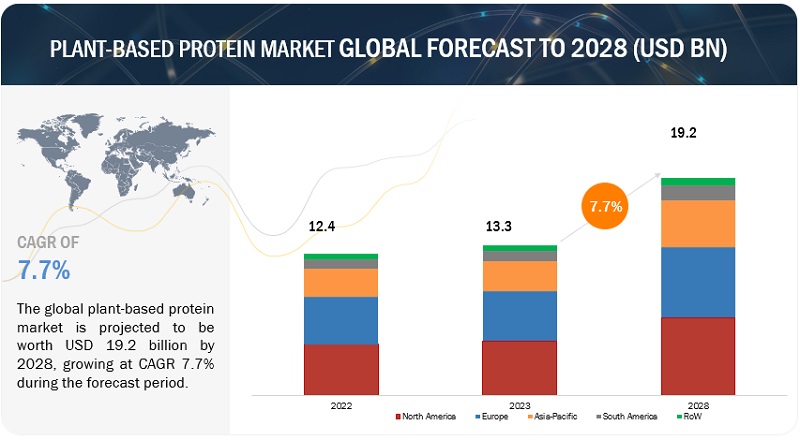
The plant-based protein market size is estimated at USD 13.3 billion in 2023 and is projected to reach USD 19.2 billion by 2028, at a CAGR of 7.7% from 2023 to 2028. Plant-based proteins have surged in popularity thanks to their diverse range of nutritional benefits, attracting individuals in search of a healthier and more sustainable protein source. These advantages encompass reduced saturated fat content, enhanced cardiovascular well-being, and improved weight management, which have all contributed to the increasing consumption of plant-based proteins. Many plant-based protein sources, including soy, peas, lentils, and beans, deliver ample protein without the accompanying cholesterol and excess calories often found in animal-based protein.

Download PDF brochure: https://www.marketsandmarkets.com/pdfdownloadNew.asp?id=14715651

The traditional method for obtaining plant protein ingredients from legumes involves a liquid-based process that requires a significant amount of water and energy due to hydration. Legumes high in starch, like peas and beans, are separated by dissolving the protein and suspending the starch granules in water, while oil-rich sources, like soy and lupine, undergo solvent extraction to isolate the oil content. These ingredients are used in animal feed and can be further processed to obtain protein isolates, primarily finding applications in nutritional supplements and beverages, driven by the increasing global demand for plant-based protein as more people transition from conventional dairy and whey-based options. The convenience of liquid plant-based proteins, requiring minimal preparation compared to powdered alternatives, resonates with busy individuals looking for quick and nutritious meal options. Additionally, the versatility of liquid plant-based proteins in culinary applications, from enhancing smoothies and shakes to enriching soups, sauces, and dressings, further contributes to their popularity in the kitchen.

Soy protein is a highly popular plant-based protein source, with soybeans being processed into three main types: soy isolates, soy concentrates, and textured soy protein, all of which are rich in essential amino acids crucial for human nutrition. Additionally, soy protein offers various proven health benefits, such as reducing the risk of heart and cardiovascular diseases. The Food and Drug Administration (FDA) has indicated that consuming 25 grams of soy protein per day, as part of a low-saturated fat and low-cholesterol diet, can help lower the risk of heart disease.

As the demand for soy-based protein continues to rise, there has been a significant increase in soybean exports. In 2020, the value of US soybean exports to the global market reached a historic high of $25.7 billion, representing a 40% increase in value and a 23% increase in volume compared to the previous year. This surge is attributed to the growing popularity of soybeans and soy-based protein.

Given the global demand for soy proteins, companies in the plant-based protein industry are actively working to strengthen their market presence through product development and the launch of new soy protein-based products. An example of this is Benson Hill Inc (US), which introduced TruVail, a range of soy protein ingredients suitable for use in bakery products, meat alternatives, and snacks, aiming to tap into the expanding market for alternative plant-based proteins.

Make an Inquiry: https://www.marketsandmarkets.com/Enquiry_Before_BuyingNew.asp?id=14715651

The demand for fortified nutritional food and beverage products is on the rise in the Asia Pacific region due to busy lifestyles and increased disposable incomes. The use of dairy alternatives is expected to grow rapidly in response to consumer preferences. With greater economic power among consumers in the region, there is an increased consumption of affordable and abundant products like soymilk. Food manufacturers are introducing various forms of soymilk to meet the growing demand for healthy beverages, including pasteurized soymilk, as dairy alternatives, and unique flavored soy drinks.

This report focuses on major countries in the region, including Japan, Australia, China, and India. Key market players in this area include Sanitarium Health & Wellbeing Company and Freedom Foods Group Ltd. in Australia, Vitasoy International Holdings Limited in Hong Kong, and Purcharest in Australia. The dairy alternatives industry in the Asia Pacific region is experiencing significant growth, driven by changes in consumer lifestyles. The market is evolving rapidly due to urbanization, dietary diversification, and increased foreign direct investment in the food sector. Additionally, rising incomes, greater purchasing power, a growing middle-class population, heightened consumer awareness of health and fitness, and increased demand for nutritional and healthy products are creating promising opportunities for growth and diversification in the region’s food sector.

The Growing Popularity of Plant-Based Proteins: A Global Perspective

The plant-based protein market size is estimated at USD 13.3 billion in 2023 and is projected to reach USD 19.2 billion by 2028, at a CAGR of 7.7% from 2023 to 2028. Plant-based proteins have surged in popularity thanks to their diverse range of nutritional benefits, attracting individuals in search of a healthier and more sustainable protein source.

Download PDF brochure: https://www.marketsandmarkets.com/pdfdownloadNew.asp?id=14715651

Here are some Plant-based Protein Market Trends:

  • Rising Consumer Demand: Increasing awareness of health and environmental concerns has led to a growing demand for plant-based protein alternatives. Consumers are seeking plant-based options as part of a healthier and more sustainable lifestyle.
  • Product Innovation: The market has seen continuous innovation in product development, with companies creating a wide range of plant-based protein products. This includes plant-based burgers, sausages, dairy alternatives, and protein supplements.
  • Expansion of Product Offerings: Many companies are expanding their plant-based product lines to cater to diverse consumer preferences. This includes the use of various plant protein sources such as peas, soy, hemp, rice, and more.
  • Retail Penetration: Plant-based protein products are increasingly available in mainstream grocery stores and supermarkets, indicating a shift from niche markets to mainstream acceptance. This increased accessibility has contributed to the market’s growth.
  • Investment and Acquisitions: Large food companies are investing in or acquiring plant-based protein startups, reflecting the industry’s potential. This has also led to increased research and development in the sector.

Plant-Based Protein Market Forecast:

  • Continued Growth: Many industry analysts predicted that the plant-based protein market would continue to experience significant growth in the coming years. This was driven by increasing consumer awareness of health, sustainability, and ethical concerns related to traditional animal-based protein sources.
  • Expanding Product Range: The plant-based protein market was expected to witness a diversification of product offerings, including innovative plant-based alternatives to traditional animal-based products. This includes burgers, sausages, dairy substitutes, and more.
  • Investment and M&A Activity: The trend of major food companies investing in or acquiring plant-based protein startups was anticipated to continue. This influx of capital was expected to drive further innovation and expansion in the industry.
  • Market Penetration: Plant-based protein products were anticipated to become more widely available in mainstream grocery stores and restaurants, indicating a shift from a niche market to broader consumer acceptance.
  • Technological Advancements: Ongoing advancements in food technology and processing methods were expected to improve the taste and texture of plant-based protein products, making them more appealing to a wider audience.

Request Sample Pages: https://www.marketsandmarkets.com/requestsampleNew.asp?id=14715651

The Asia Pacific is estimated to grow at the fastest CAGR in the plant-based protein market.

The demand for fortified nutritional food and beverage products is on the rise in the Asia Pacific region due to busy lifestyles and increased disposable incomes. The use of dairy alternatives is expected to grow rapidly in response to consumer preferences. With greater economic power among consumers in the region, there is an increased consumption of affordable and abundant products like soymilk. Food manufacturers are introducing various forms of soymilk to meet the growing demand for healthy beverages, including pasteurized soymilk, as dairy alternatives, and unique flavored soy drinks.

This report focuses on major countries in the region, including Japan, Australia, China, and India. Key market players in this area include Sanitarium Health & Wellbeing Company and Freedom Foods Group Ltd. in Australia, Vitasoy International Holdings Limited in Hong Kong, and Purcharest in Australia. The dairy alternatives industry in the Asia Pacific region is experiencing significant growth, driven by changes in consumer lifestyles. The market is evolving rapidly due to urbanization, dietary diversification, and increased foreign direct investment in the food sector. Additionally, rising incomes, greater purchasing power, a growing middle-class population, heightened consumer awareness of health and fitness, and increased demand for nutritional and healthy products are creating promising opportunities for growth and diversification in the region’s food sector.

Therefore, major players in the region, such as ADM (US), Cargill, Incorporated (US), International Flavors & Fragrances Inc. (US), Ingredion (US), Roquette Frères (France), are trying their best to tap the region’s potential by expanding and diversifying plant-based protein portfolios to meet the consumer’s demand.

The Surging Growth of the Plant-Based Protein Market: A Paradigm Shift in Consumer Preferences

Introduction:

In the ever-evolving landscape of the global food industry, a notable transformation has occurred in recent years, marked by a substantial surge in consumer demand for plant-based protein market trends. Valued at USD 13.3 billion in 2023, this market is projected to reach USD 19.2 billion by 2028, demonstrating a remarkable Compound Annual Growth Rate (CAGR) of 7.7% from 2023 to 2028. This shift is underpinned by changing consumer attitudes towards health, sustainability, and ethical considerations.

Download PDF brochure: https://www.marketsandmarkets.com/pdfdownloadNew.asp?id=14715651

Health-Conscious Choices:

The increasing number of health-conscious consumers seeking dietary options aligning with their preferences and restrictions has fueled the popularity of plant-based protein sources. Tofu, legumes, and pea protein are hailed for their lower saturated fat content and absence of cholesterol, making them perceived as healthier choices.

Ethical Considerations:

Concerns about animal welfare and the ethical treatment of animals in the food industry have prompted a significant portion of consumers to turn to plant-based protein sources. These alternatives provide an ethical choice for those aiming to reduce or eliminate their consumption of animal products, as they do not involve animal exploitation.

Culinary Innovation:

Advancements in food technology and culinary innovation have given rise to a diverse range of plant-based protein products. From plant-based burgers and sausages to meatless chicken and fish alternatives, consumers now have access to a variety of innovative plant-based protein options.

Drivers of Growth:

A key driver of the plant-based protein market is the growing consumer preference for a vegan diet. Developed nations, particularly the United States and the United Kingdom, have witnessed a notable uptick in the acceptance of plant-based protein options. Consumers in these regions appreciate the benefits of plant-based proteins in delivering essential nutrients, improving overall health, facilitating weight management, and enhancing meal palatability.

Opportunities in Aquatic Plants:

As the market continues to expand, focus on aquatic plants as new and emerging sources of protein presents exciting opportunities. While plant-based foods offer various health benefits and essential minerals, challenges such as allergies associated with certain sources, like soy, need to be addressed for sustained market growth.

Application Dominance:

In terms of applications, the food and beverages sub-segment is anticipated to dominate the plant-based protein market. The increased adoption of plant-based meat and dairy products, driven by concerns about meat sourcing practices and their ecological impact, has fueled this growth.

Regional Dynamics:

The Asia Pacific region is poised to exhibit the fastest CAGR in the plant-based protein market. The rising demand for fortified nutritional food and beverage products, coupled with increased disposable incomes and busy lifestyles, has fueled this growth. Dairy alternatives, particularly soymilk, are gaining popularity, with food manufacturers introducing various forms to meet the growing demand for healthy beverages.

Request Sample Pages: https://www.marketsandmarkets.com/requestsampleNew.asp?id=14715651

Conclusion:

The plant-based protein market’s remarkable growth reflects a paradigm shift in consumer preferences towards healthier, more sustainable, and ethically sound dietary choices. As the industry continues to innovate and address challenges, the trajectory points towards a future where plant-based proteins become an integral part of global dietary habits.