Unveiling the Potential: Pea Starch Market on the Rise

The global pea starch market is projected to reach USD 211 million by 2027 and 156 million by 2022, growing at a CAGR of 6.2% from 2022 to 2027. Pea starches have various applications in food & beverages, cosmetics, paper, textile, and animal feed industries, among others. The demand for pea starch in the bakery industry is witnessing a strong demand followed by meat and poultry food applications. The growing popularity of healthy eating among consumers is proliferating the demand for gluten-free, vegan-friendly, and non-GMO products. Pea starch is an excellent food additive that fulfills all these parameters. Pea starch, being a rich source of amylose, offers excellent thickening and gelling properties when compared to other starches commonly used in the food industry.

Download PDF brochure: https://www.marketsandmarkets.com/pdfdownloadNew.asp?id=78961382

Asia Pacific held the largest market share in the pea starch market

Asia Pacific has a huge demand for pea starch from countries such as China, India, Japan, and other Southeast Asian countries. The production of pea starch becomes more economical in these countries due to the availability of ample resources and manpower. Food and beverage are the major application segment where pea starch is being used. Food manufacturers are increasingly using pea starch as a substitute for regular starches owing to their cost-effectiveness to minimize the cost of final products. This also comes up with the presence of price-sensitive consumers across the region. Additionally, the people across the countries in these regions are witnessing changing lifestyles such as growing urban and working populations leading to a shift towards convenience food thereby accelerating the use of pea starch in the market.

Key players in this market include Emsland Group (Germany), Ingredion Incorporated (US), Roquette Freres (France), Vestkorn (Norway), Axiom Foods (US), COSUCRA (Belgium), AGT Food & Ingredients (Canada), Puris Foods (US), NutriPea (Canada), and Organicway (China), among others.

Threat of substitute starches

Pea starch has numerous substitutes in the market, such as potato starch, corn starch, cassava starch, and others. These starches also come under the category of resistant starch. They help in resisting digestion in the gut. This results in numerous health benefits, such as improved absorption of nutrients, which acts as a prebiotic for supporting gut health. This helps in increasing metabolism with improving weight loss. Due to these numerous benefits, the pea starch market could face challenges in the coming years. Furthermore, cassava starch is witnessing high demand due to its easy availability and numerous applications in the food and non-food industries, such as adhesive, pharmaceutical, paper, and textile. Cassava is a good source of resistant starch, which helps manage blood sugar levels and gut health. It also contains vitamin C, a crucial component that can improve immune function and collagen production. The rise in demand for cassava starch can be a major challenge for the pea starch market.

Speak to Analyst: https://www.marketsandmarkets.com/speaktoanalystNew.asp?id=78961382

Growing vegan population and the popularity of plant-based food products

There has been a global change in the diet preferences of consumers. The consumers now prefer non-meat and non-animal origin products, including milk or even milk-based products, thereby leading to a growth in demand for pea-oriented ingredients, such as pea protein and pea starch. Key factors that have led to this shift include health conditions, such as lactose intolerance, meat allergies, and the increase in meat allergies, and increased health consciousness among consumers. These conditions have encouraged consumers to choose plant-based protein and starch with non-allergen ingredients. The use of plant-based proteins has become a trend, with the UN report dated August 2019 backing the claim that plant-based diets can benefit humans to combat climatic changes. It estimates that a quarter of global emissions come from food products, constituting over 26%, including more than half of the emissions from animal products (58%), particularly from beef and lamb. According to the World population review, in 2019, the UK had the highest population of vegans, followed by Australia, Israel, New Zealand, Switzerland, Austria & Germany, and Sweden.
Pea Starch Market Trends: A Growing Industry with Nutritional and Sustainable Appeal

Introduction:

The global pea starch market is experiencing robust growth, projected to reach USD 211 million by 2027, with a CAGR of 6.2% from 2022 to 2027. This expansion is fueled by factors such as new product launches, distribution agreements, and increased investments by manufacturers. Noteworthy collaborations, like Puris Foods partnering with the Upcycled Food Association, highlight the industry’s commitment to sustainability and combating food waste.

Download PDF brochure: https://www.marketsandmarkets.com/pdfdownloadNew.asp?id=78961382

Nutritional Benefits Driving Consumer Demand:

Consumers are increasingly recognizing the nutritional benefits offered by peas and pea-based products. Green peas boast minerals beneficial for cardiovascular health, while yellow peas provide high fiber aiding digestion. The rich content of lysine, iron, and carbohydrates in dry yellow peas positions them as alternatives to traditional legumes like wheat and rice. Pea-based products are gaining popularity for their richness in vitamins C and E, zinc, and antioxidants that support the immune system. Additionally, pea starch, with 30%-60% dry weight, is becoming a sought-after food ingredient due to its unique properties such as high resistance to shear-thinning and high gelatinization temperature.

Expanding Market with Growing Veganism:

A significant shift in consumer diet preferences towards non-meat and plant-based options is driving the demand for pea-oriented ingredients like pea protein and pea starch. Factors contributing to this shift include health conditions like lactose intolerance and meat allergies, along with increased health consciousness. The UN report supporting plant-based diets as a means to combat climate change further fuels the trend. The rise in the vegan population globally is evident, with the UK leading in 2019, followed by Australia, Israel, New Zealand, Switzerland, Austria & Germany, and Sweden.
Challenges and Threats:

Despite its growth, the pea starch market faces challenges, primarily from substitutes like potato starch, corn starch, and cassava starch. These substitutes, also categorized as resistant starch, offer health benefits such as improved nutrient absorption and support for gut health. Cassava starch is gaining traction due to its easy availability and diverse applications in various industries. The rise in demand for cassava starch poses a potential threat to the pea starch market.

Regional Dynamics:

Asia Pacific holds the largest market share, driven by countries like China, India, and Japan. The economic production of pea starch in these countries is facilitated by ample resources and manpower. The food and beverage sector is a significant application segment, with manufacturers increasingly opting for pea starch as a cost-effective substitute for traditional starches. Changing lifestyles, especially in urban populations, contribute to the growing demand for convenience foods, further boosting the use of pea starch in the region.

Make an Inquiry: https://www.marketsandmarkets.com/Enquiry_Before_BuyingNew.asp?id=78961382

Key Players:

Prominent players in the pea starch market include Emsland Group, Ingredion Incorporated, Roquette Freres, Vestkorn, Axiom Foods, COSUCRA, AGT Food & Ingredients, Puris Foods, NutriPea, and Organicway, among others.

Conclusion:

The global pea starch market is on a trajectory of steady growth, driven by factors such as nutritional awareness, sustainability, and the rise of plant-based diets. As the industry navigates challenges posed by substitutes, market players continue to innovate, collaborate, and invest to capitalize on the expanding opportunities in this dynamic market.

Growth in demand for pea starch from various end-use industries drives the market

Pea starch is a by-product of pea protein extraction and a rich source of amylose. It is mainly available as a by-product of protein extraction; therefore, it is considered to be a relatively inexpensive source of starch as compared to corn, wheat, and potato starches. Nativepea starchis extracted from yellowpeas. Peastarchis a non-GMO, clean label ingredient providing gluten-free, allergen-free, low-calorie, low-fat solutions.

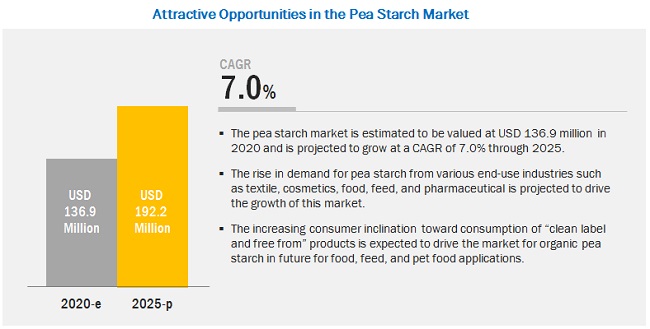
MarketsandMarkets projects that the pea starch market is projected to grow from USD136million in 2020 to USD192million by 2025, recording a compound annual growth rate (CAGR) of 7.0% during the forecast period.The rise inconsumption of clean label convenience, feed, and pet food products across regions and the increase in demand for gluten-free food productsare the key factors that are projected to drive the growth of the pea starch market. However, the decrease in the production of dry peas, resulting in fluctuation of raw material for the production of pea starch, is a major factorinhibiting the market growth.

The demand for clean label, high-quality pet food products among the pet owners globally is rising. The increasing pet humanization trend around the world is resulting in the growing demand of high-quality, nutritional food for pets among pet owners. This is projected to create growth opportunities for players in the pea starch market.

The organicsegment is projected to grow at a faster rate during the forecast period due to the increase in health-conscious consumers and the rise in awareness about the health benefits of organic products among consumers, which is further projected to encourage food manufacturing companies to use organicpea starch in their products.

Make an Inquiry: https://www.marketsandmarkets.com/Enquiry_Before_BuyingNew.asp?id=78961382

The food& beverages segment is projected to dominate the pea starch market during the forecast period. The demand for pea starch in convenience food products and an increase in the inclination of consumers toward gluten-free productsis projected to drive the usage of pea starch in food products as a gluten-free solution and to enhance the texture and quality of food products.

In terms ofgeographical coverage, the pea starchmarketis segmented into fiveregions, namely, North America, Europe, Asia Pacific,South America,and Rest of the World (RoW). Asia Pacific is projected to dominate the marketduring the forecast period, as Asia is among the largest pea processing regions in the world.The demand for natural ingredients and clean-label food is increasing considerably in this region. Also, the level of investment in the food & beverage industry in Asia and the Pacific regions has increased over the past quarter-century, especially in China, contributing to its rapid economic growth.

PEA STARCH: AN ECONOMICAL OPTION TO IMPROVE TEXTURE OF FOOD PRODUCTS

Pea starches are carbohydrates extracted from peas for application in the food and feed industries. In addition, due to their biodegradable and renewable nature, they are increasingly being used as an alternative to fossil fuel components in various chemical applications, including detergents, cosmetics, and pharmaceuticals. They are stable under high temperature, and various pH levels and have good resistance to shearing. In addition, they are mostly used for the aseptic processing of food products such as sauces, soups, and meat products.

Pea starch stability is also used for enhancing the crispness in food products along with improving volume in various extruded snacks. Along with various nutritional properties, it is also used in products such as gluten-free and lactose-free solutions, low-calorie formulations, and allergen solutions, due to which it is widely used in the pet food industry.  

According to MarketsandMarkets, the global pea starch market is projected to grow from USD 91.8 million in 2018 to USD 134.7 million by 2023. The market growth is attributed to the rise in demand for high-quality convenience food and beverage products.

What is driving the growth of the pea starch market?

  • The rising demand for pea starch in various food and industrial applications

Pea starch offers various functions such as gelling, texturizing, binding, coating, thickening, and film forming. Due to its multifunctionalities, pea starch is used in various food applications, such as pasta, noodles, bakery products, confectioneries, soups, sauces, meat products, and poultry. It is also widely used in vermicelli as a binding agent. Pea starch is also a potential replacement for other starches in food and beverage applications as it is an economical option and offers a wide range of functions. In the pharmaceutical and cosmetic industries, pea starch is used for its gelling, thickening, and texturizing properties. With the rapid growth and changing trends in the pharmaceutical industry, the demand for pea starch is projected to increase. Companies such as Meelunie B.V. (Netherlands) and Parrheim Foods (US) are the major producers of pea starch, which cater to the pharmaceutical and cosmetic industries.

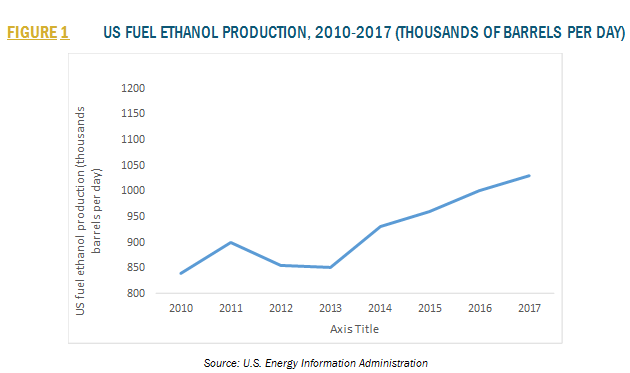
  • The rapid growth in the corn ethanol industry has contributed to a significant increase in the prices of corn and ethanol, due to which producers are focusing on shifting from corn to low-cost alternatives such as pea starch, which in turn, contributed to the growth of the pea starch market. The production of ethanol by pea starch improves the fermentation rates and allows ethanol producers to expand the annual production capacity and decrease capital costs by increasing the number of fermentations per year.
  • Starch granules, when heated in excess water above their gelatinization temperature, undergo irreversible swelling, resulting in amylose leaching into the solution. The changes that pea starch undergoes due to retrogradation are a major determinant to its functional properties for food and industrial applications and pose significant challenges to the food processing industry. For instance, it causes the staling of bakery products and the embrittlement of starch plastics, coatings, and adhesives. In non-food uses of pea starch such as in paper and adhesive applications or plastics, retrogradation affects the processing and final properties. Hence, it is one of the major restraints for the growth of the market globally.
  • The pea starch market is witnessing significant demand in developing countries such as China and India, due to the rising awareness of healthy and natural ingredients in food products, along with the increasing production of food and feed products in these countries. Localizing operations can help in reducing costs and improving access to local distribution networks, thereby optimizing profit margins. Resources and labor are readily available at a cheaper rate in these regions. The local governments in China and India are providing incentives for multinationals to set up Greenfield ventures. The Indian government has declared major tax breaks to attract multinational investors. China provides special tax incentives over the usual tax holidays to encourage foreign investors.

Speak to Analyst @ 
https://www.marketsandmarkets.com/speaktoanalystNew.asp?id=78961382

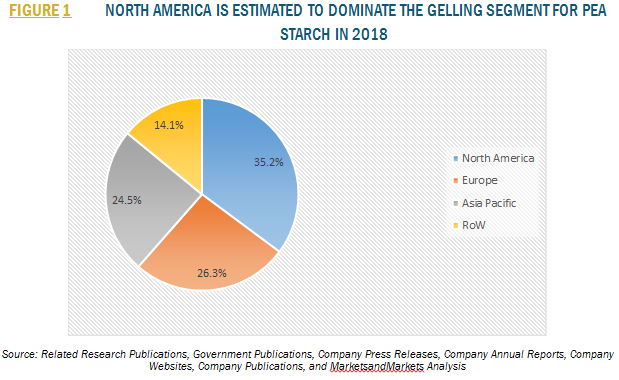
The gelling segment is estimated to dominate the global pea starch market

Pea starch is used to maintain the texture of food and also to create texture in water-based products. Gelling improves the availability of starch for amylase hydrolysis. Hence, the gelling process for starch is used constantly in the food & beverage industry to make starch digestible and to thicken or bind food products.  Pea starch as a gelling agent is used in various applications such as confectionery and feed due to the high availability of amylose. In addition, the gelling function helps to keep the nutrients in food and feed products intact. As pea starch has strong gelling capabilities, manufacturers are using it to produce various food products and meet consumer demands globally.

Based on region, the pea starch market is segmented into North America, Europe, Asia Pacific, and Rest of the World.

  • North America accounted for the largest share with a value of USD 29.5 million in 2017. This market is projected to grow at a CAGR of 8.4% during the forecast period. Emsland Group (Germany), Cosucra Groupe Warconing SA (Belgium), Parrish and Heimbeckar, Ltd. (Canada), Puris Foods (US), and Axiom Foods, Inc. (US) are a few key players that occupy a significant share in the global market for pea starch.
  • The major factors driving the demand for pea starch in North America are the growing awareness of animal nutrition and the presence of a large number of pea starch companies in the region.