Omega-3 Market Outlook 2025–2030: Trends, Opportunities, and Forecasts

The omega-3 market is estimated to be USD 4,362.2 million in 2025 and is projected to reach USD 7,756.4 million by 2030, at a CAGR of 12.2% from 2025 to 2030. Demand for omega-3 is projected to grow significantly as consumers become more aware of its role in supporting cardiovascular, cognitive, eye, and joint health. Unlike several other nutrients, omega-3 fatty acids, such as EPA and DHA, cannot be synthesized efficiently by the human body, resulting in increased reliance on dietary supplements, fortified foods, and pharmaceutical-grade formulations. Omega-3 oils are highly versatile and can be incorporated into capsules, powders, beverages, and functional foods while maintaining stability and efficacy. Fish oil, krill oil, and algal-based omega-3 are the most preferred sources, backed by scientific validation of their safety and effectiveness. The growing popularity among health-conscious consumers, coupled with increasing demand for clean-label and sustainable products, is expected to further strengthen the outlook for the omega-3 market in the coming years.

Download PDF Brochure: https://www.marketsandmarkets.com/pdfdownloadNew.asp?id=227

By type, DHA segment to exhibit fastest growth rate during forecast period.

Docosahexaenoic acid (DHA), a polyunsaturated omega-3 fatty acid (PUFA), is widely distributed throughout the body and has emerged as the leading type segment in the omega-3 market. It serves as a significant structural fat present in both the brain and eye, constituting as much as 97% of the total omega-3 fats in the brain and up to 93% in the retina. The main sources of DHA are fish, fish oils, dairy products, and specialty eggs, with marine sources such as salmon and tuna being particularly rich. Farmed salmon contains about 1.24 g of DHA, and wild salmon about 1.22 g of DHA.

Additionally, DHA is a crucial component of cardiac tissue and is also commonly referred to as 22:6(n-3). Direct consumption of DHA is necessary to effectively increase fatty acid levels in the body, and optimal intake is crucial for both infant brain development and normal adult brain function. Epidemiological research further associates healthy DHA intake with a reduced risk of Alzheimer’s disease, as DHA improves communication between nerve cells and membranes by enhancing fluidity. Its critical role in visual and neurological development in infants, coupled with widespread applications in infant nutrition, dietary supplements, and functional foods, has solidified DHA as the dominating segment within the omega-3 market. The growing demand from both developed and emerging economies ensures that DHA continues to hold a substantial market share compared to other omega-3 types, such as EPA and ALA.

By application, infant formulas segment to record highest CAGR during forecast period.

The infant formulas segment is anticipated to grow at a significant rate in the omega-3 market due to the rising recognition of DHA’s crucial role in infant brain and eye development. DHA, often referred to as the “brain-building” omega-3, is recommended by leading health authorities such as the World Health Organization (WHO) and the European Food Safety Authority (EFSA) for inclusion in infant nutrition. With an increasing number of working mothers and a higher reliance on formula feeding, demand for fortified infant formulas containing DHA and EPA has surged worldwide. Manufacturers are consistently innovating by introducing premium formulas that mimic the fatty acid composition of human breast milk, further boosting adoption.

Regulatory mandates in many regions, such as the EU’s requirement since 2020 for DHA inclusion in all infant formula and follow-on formula products, have led to the European Union (EU) implementing new regulations, effective February 22, 2021, regarding the recommended DHA supplementation in healthy diets. These regulations mandate that all infant formula and follow-on formula available for purchase within the EU must contain a minimum of 20 mg/100 kcal (or 4.8 mg/100 kJ) and a maximum of 50 mg/100 kcal (or 128 mg/100 kJ) of DHA, which is accelerating market growth. In addition, growing consumer preference for organic and clean-label formulas, along with strong demand in emerging economies driven by rising birth rates and improved purchasing power, is expected to fuel the segment’s expansion during the forecast period.

Request Sample Pages: https://www.marketsandmarkets.com/requestsampleNew.asp?id=227

Europe to account for significant share in global omega-3 market.

Europe is expected to hold a significant share of the omega-3 market, driven by a robust regulatory framework, high consumer awareness, and a growing preference for preventive healthcare. Additionally, European consumers show a higher inclination toward premium dietary supplements and clean-label products, fostering demand for sustainable fish oil and plant/algal-based omega-3 alternatives. The presence of major global players, continuous research and development initiatives, and widespread adoption of fortified foods and beverages further strengthen Europe’s dominance. Moreover, increasing vegetarian and flexitarian populations in countries such as Germany, the UK, and France are accelerating the demand for algal-derived omega-3, ensuring steady market growth across the region. According to the European Food Safety Authority (EFSA), micronutrients present in omega-3s even benefit eye and brain health, which has led to heavy focus and a surge in consumption among Europeans. Companies such as Pelagia AS (Norway), Corbion (Netherlands), and dsm-firmenich (Netherlands) are the key players that are highly focused on catering to the demand for omega-3-based products in the European region. In 2023, several recent advancements were observed in the omega-3 market within the European region. Corbion (Netherlands) launched a new product, AlgaVia, whereas Pelagia AS (Norway) invested in its production facility to increase the output of the omega-3 concentrates.

The European Society of Cardiology (ESC) has had a significant impact on the omega-3 market in the European region, as its studies emphasize that omega-3 consumption helps decrease the risk of cardiovascular diseases. European omega-3 manufacturers are investing in omega-3 applications, such as dietary supplements, functional food & beverages, and pharmaceuticals. BASF SE (Germany) offers microencapsulated omega-3 powder with a longer shelf life to cater to the European demand. Furthermore, the rise in consumer awareness has prompted manufacturers to follow and adhere to European regulations, which is projected to drive growth in Europe.

Leading Omega-3 Manufacturers:

The report profiles key players such as BASF SE (Germany), Cargill, Incorporated (US), dsm-firmenich (Netherlands), ADM (US), Kerry Group plc (Ireland), Aker BioMarine (Norway), Croda International plc (UK), Corbion (Netherlands), Pelagia AS (Norway), KD Pharma Group SA (Switzerland), GC Rieber (Norway), Cooke Aquaculture Inc. (Canada), GOLDEN OMEGA (Chile), Polaris (France), Btsa (Spain), KinOmega Biopharm Inc. (China), Rimfrost AS (Norway), Mara Renewables (Canada), Cellana Inc. (US), AlgaeCytes Limited (UK), and others.

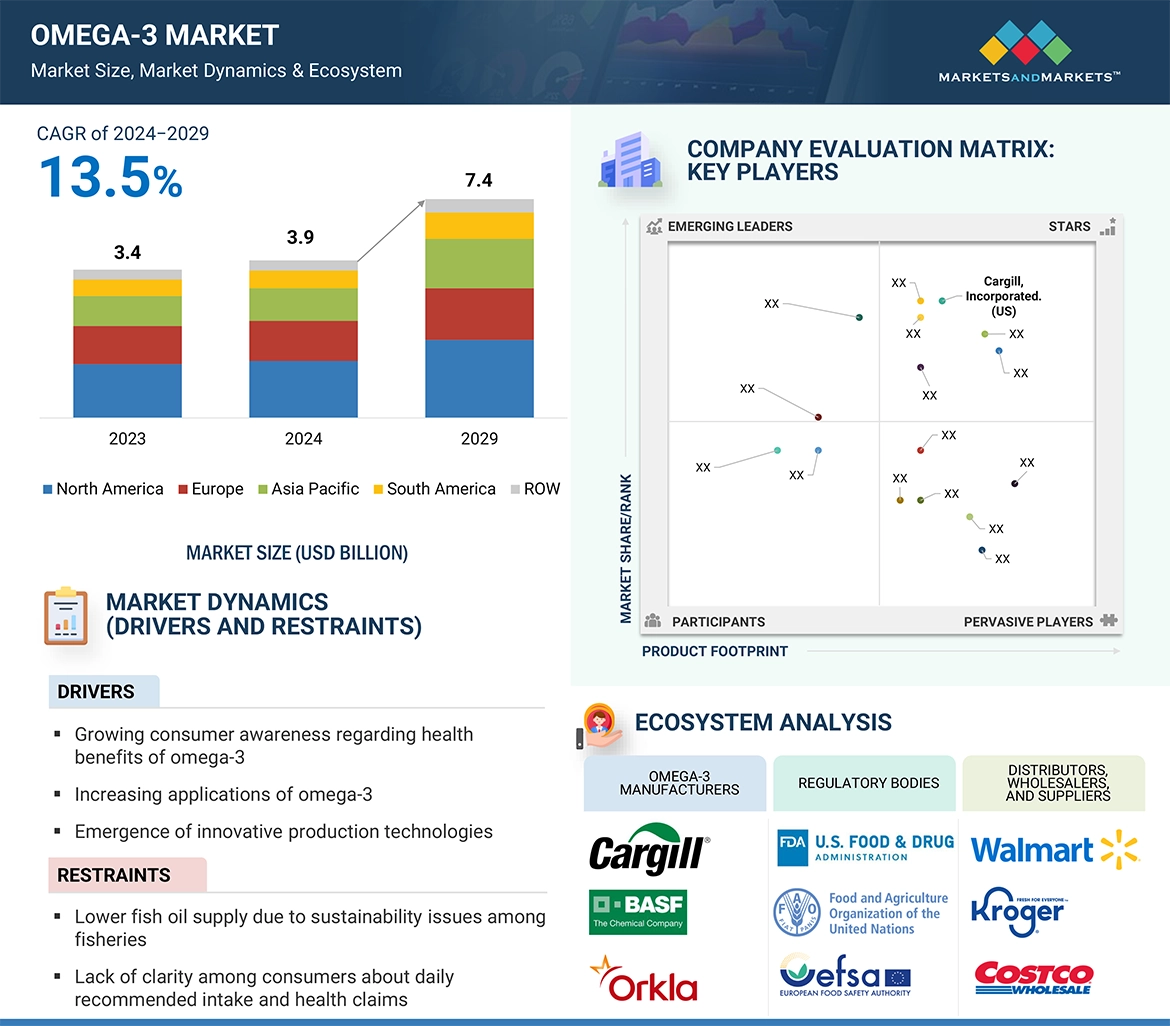
Global Omega-3 Market Size, Share & Competitive Landscape

marketsandmarkets logo

The global omega-3 market is expected to grow from USD 3.9 billion in 2024 to USD 7.4 billion by 2029, registering a robust CAGR of 13.5% during the forecast period. This impressive growth is driven by a shift in consumer preferences towards proactive health management, ethical consumption, and functional nutrition.

Evolving Sources: Beyond Traditional Fish Oil

While fish oil has long dominated the omega-3 market, sustainable and plant-based alternatives such as algae, flaxseed, and chia seed oils are gaining traction. These options appeal to health-conscious consumers with dietary restrictions, ethical concerns, or environmental awareness. In addition, emerging product formats—like micro-emulsified supplements and omega-3-fortified foods—are making consumption more convenient and appealing across broader age and lifestyle demographics.

Omega-3 Market

Download PDF Brochure: https://www.marketsandmarkets.com/pdfdownloadNew.asp?id=227

DHA Leads the Way in Omega-3 Types

Among the omega-3 types, docosahexaenoic acid (DHA) is expected to hold the largest market share. Widely recognized for its vital role in brain development, heart health, and vision support, DHA is increasingly incorporated into targeted applications such as prenatal supplements, infant formula, and functional foods. Technological advancements have improved extraction and processing methods, making DHA more accessible and versatile. Although DHA dominates, other omega-3 forms like EPA and ALA are also witnessing steady growth, contributing to a diverse and inclusive market.

Plant-Based Omega-3s: A Green Growth Trajectory

The plant-sourced omega-3 segment is set to maintain strong growth, powered by rising demand for vegan, vegetarian, and allergen-free alternatives. Algae-derived omega-3s and chia seed extracts are especially popular for their sustainability and potential health benefits. Supportive government policies promoting eco-friendly practices and the growing affordability of these alternatives further reinforce their market potential. Overcoming challenges such as bioavailability and consumer education will be crucial in unlocking the segment’s full potential.

North America: A Leading Market for Omega-3

North America currently holds the largest share of the omega-3 market, driven by widespread adoption of dietary supplements and increased awareness of omega-3’s health benefits. With strong consumer interest in heart, brain, and overall wellness, omega-3 supplements have become a staple in health routines across the region. In addition, incorporation of omega-3 in medical guidelines and wellness trends is fueling sustained demand.

Leading Omega-3 Companies:

 BASF SE (Germany), Cargill, Incorporated (US), dsm-firmenich (Netherlands), ADM (US), Kerry Group Plc (Ireland), Croda International Plc (UK), Orkla (Norway), Corbion (Netherlands), Pelagia AS (US), KD Pharma Group SA (Switzerland), GC Rieber (Norway), Cooke Aquaculture (Canada), AlgiSys Biosciences, Inc. (US), Golden Omega (Chile), AKER BIOMARINE (Norway), Polaris (France), Nordic Naturals (US), BTSA (Spain), Farbest Brands (US), KinOmega Biopharm Inc (China), Pharma Marine AS (Norway), Rimfrost AS (Norway), Algarithm (Canada), Solutex (Spain), Cellana Inc (US), Sinomega Biotech Engineering Co., Ltd. (China), AlgaeCytes (UK).

Omega-3 Market Size, Share, Growth Analysis Report

The omega-3 market size is expected to reach USD 7.4 billion in 2029 from USD 3.9 billion in 2024, at a CAGR of 13.5% during the forecast period. The major factors driving the growth of this market include the rising awareness of health benefits, increasing use of omega-3 fatty acids in food and feed products, and the growing adoption of innovative production technologies.

Download PDF brochure: https://www.marketsandmarkets.com/pdfdownloadNew.asp?id=227

Plant source segment is expected to maintain consistent growth in omega-3 market during the forecast period

Plant-powered Omega-3s are surging, fueled by ethically conscious consumers seeking sustainable alternatives. Vegan, vegetarian, and allergy-friendly, these innovative options like algae oil and chia seed extracts boast potential unique health benefits and wider accessibility. Affordability and government initiatives promoting sustainable practices add further momentum. While ensuring potency and educating consumers remain key hurdles, the future of Omega-3 looks green, with this segment poised to shape a more responsible and inclusive market landscape.

The DHA segment is expected to hold the largest market share in the type segment of omega-3 market

Research strongly supports the health benefits of DHA, from its crucial role in brain development to its potential for heart and eye health. Technology advancements have made DHA more accessible through refined extraction and processing methods. This increased accessibility has led to targeted applications, including pregnancy supplements and infant formula, promoting healthy development from early stages. DHA’s influence extends to functional foods like dairy products and beverages, providing convenient ways to incorporate it into daily diets. Effective marketing strategies have solidified DHA’s position by highlighting its unique benefits. While DHA leads the Omega-3 market, other players like EPA and ALA are also growing, offering diverse benefits and applications. This diversity ensures that the market can cater to various consumer needs, fostering a thriving landscape focused on individual well-being and holistic health.

North America to dominate the omega-3 market during the forecast period

In North America, the demand for Omega-3 is increasing, particularly in dietary supplement applications, driven by the recognition of Omega-3’s benefits health. Omega-3 fatty acids are among the most popular dietary supplements, known for their potential benefits for heart health, brain function, and overall well-being. The demand for omega-3 supplements in North America has been steadily increasing due to rising awareness about their health benefits and the inclusion of omega-3 in various health recommendations.

Speak to Analyst: https://www.marketsandmarkets.com/speaktoanalystNew.asp?id=227

Key Market Players

The key players in this market include BASF SE (Germany), Cargill, Incorporated. (US), dsm-firmenich (Netherlands), ADM (US), Kerry Group Plc (Ireland), Croda International Plc (UK), Orkla.  (Norway), Corbion (Netherlands), GC Rieber (Norway), Pelagia AS (Norway), KD Pharma Group SA (Switzerland), Cooke Aquaculture Inc. (Canada), AlgiSys Biosciences, Inc. (US), Golden Omega (Chile), AKER BIOMARINE (Norway), and Polaris (France). These market participants are emphasizing the expansion of their footprint via agreements and partnerships. They maintain a robust presence in North America, Asia Pacific, South America, RoW, and Europe, supported by manufacturing facilities and well-established distribution networks spanning across these regions.

Omega-3 Market: Size, Share, Trends and Growth

The omega-3 market size is expected to reach USD 7.4 billion in 2029 from USD 3.9 billion in 2024, at a CAGR of 13.5% during the forecast period. The major factors driving the growth of this market include the rising awareness of health benefits, increasing use of omega-3 fatty acids in food and feed products, and the growing adoption of innovative production technologies.

Omega-3 Market Share

BASF SE (Germany), Cargill, Incorporated. (US), dsm-firmenich (Netherlands), ADM (US), Kerry Group Plc (Ireland), Croda International Plc (UK), Orkla.  (Norway), Corbion (Netherlands), GC Rieber (Norway), Pelagia AS (Norway), KD Pharma Group SA (Switzerland), Cooke Aquaculture Inc. (Canada), AlgiSys Biosciences, Inc. (US), Golden Omega (Chile), AKER BIOMARINE (Norway), and Polaris (France).

Download PDF brochure: https://www.marketsandmarkets.com/pdfdownloadNew.asp?id=227

The Role of Dietary Supplements in Omega-3 Market Growth

A growing inclination towards proactive health management practices is fueling the demand for Omega-3 dietary supplements. Consumers are recognizing the potential health benefits associated with Omega-3, leading to increased consumption of supplements aimed at supporting heart health, cognitive function, and joint health. Regulatory endorsements of Omega-3 health claims further strengthen consumer trust, driving the integration of these supplements into daily routines.

EPA’s Therapeutic Potential and Market Expansion

Eicosapentaenoic Acid (EPA) stands out as a key player in the Omega-3 market, with its efficacy supported by numerous clinical trials and research studies. Its proven effectiveness in addressing cardiovascular disease, inflammation, and mood disorders like depression is bolstering consumer confidence and driving market growth. EPA’s broad spectrum of therapeutic applications, including cardiovascular and inflammatory conditions, as well as its potential neuroprotective properties, contribute to its increasing demand.

Marine-Derived Omega-3 Supplements: Preferred Choice for Consumers

The dominance of the marine segment in the Omega-3 market is attributed to the natural abundance of Omega-3 fatty acids in marine sources such as fish oil, krill oil, and algae. These sources offer high bioavailability, ensuring efficient absorption and utilization by the body. Additionally, the longstanding presence of marine-derived Omega-3 supplements, particularly fish oil supplements, has cultivated strong consumer trust, making them the preferred option for individuals seeking Omega-3 supplementation.

Speak to Analyst: https://www.marketsandmarkets.com/speaktoanalystNew.asp?id=227

Asia Pacific: A Key Market for Omega-3 Growth

The Asia Pacific region is poised for rapid growth in the Omega-3 market, driven by regulatory endorsements of health claims associated with Omega-3 fatty acids. Increasing awareness of chronic health conditions coupled with lifestyle changes like rapid urbanization and sedentary habits is prompting consumers in the region to seek out Omega-3 supplements to support their overall health and wellness.