
Cannabis Industry Growth Report: Investment, Regulation & Consumer Insights

marketsandmarkets logo

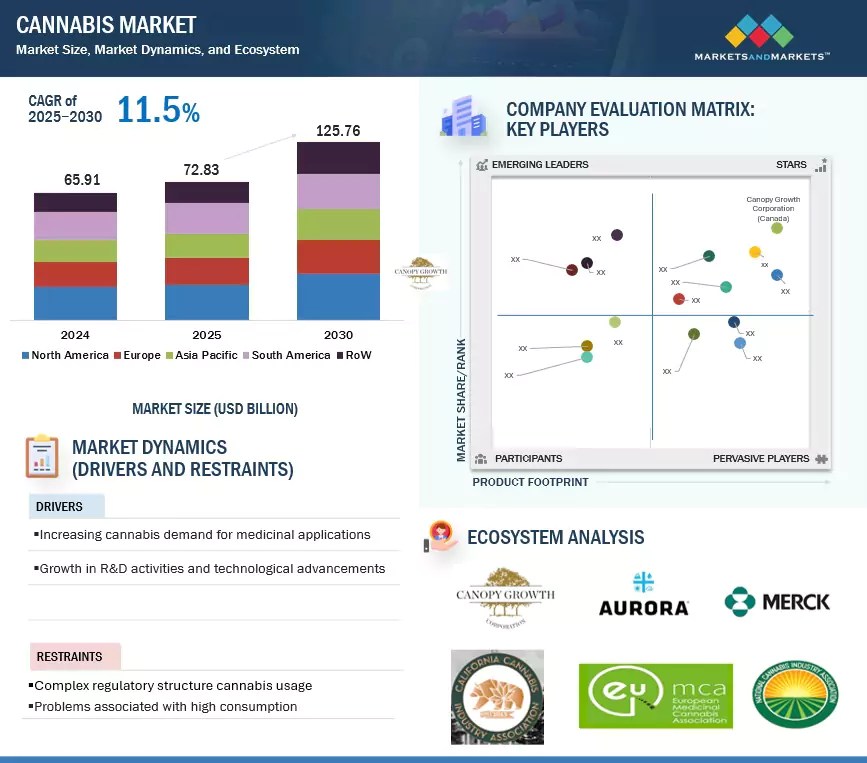
The cannabis market is estimated at USD 72.83 billion in 2025 and is projected to reach USD 125.76 billion by 2030, at a CAGR of 11.5% from 2025 to 2030. The cannabis market continues to grow due to increased legalization, higher therapeutic demand, growing consumer acceptance, and the combination of direct and indirect needs for medical and recreational products. Advances in edibles and vapes are also driving a stronger focus on quality control and safety testing. Rising health trends and related clinical research are refining regulations, while increased scrutiny on product contents and potency have raised awareness about safe use among consumers. Additionally, greater regulatory oversight, market expansion, and the public debate surrounding cannabis are boosting the demand for reliable, standardized cannabis testing and compliance solutions.
Download PDF Brochure: https://www.marketsandmarkets.com/pdfdownloadNew.asp?id=201768301

By application, nutraceutical & wellness form the fastest-growing segment in the global cannabis market.

Nutraceutical and wellness-use cannabis includes cannabis-based products designed to support health, nutrition, and overall wellness without producing highly potent psychoactive effects. These products are often made with cannabinoids like CBD and smaller amounts of THC, which have therapeutic benefits. They are used to help manage stress, anxiety, sleep issues, mild inflammatory conditions, chronic pain, and skin health. Nutraceutical and wellness cannabis products come in various formats, including CBD oil, capsules, gummies, topical balms, cannabis-infused beverages, skincare products, and functional edibles. The shift toward nutraceuticals and wellness cannabis products marks a move away from traditional recreational use, focusing instead on balance and prevention. This trend often appeals to health-conscious consumers seeking “natural”, plant-based alternatives to support their health and wellness, without the psychoactive effects typically associated with high-THC recreational cannabis.

By compound type, the CBD–dominant segment holds the second-largest market share in the cannabis market.

CBD is a non-psychoactive compound that helps balance sleep, pain, and stress, with additional properties against inflammation; it has received FDA approval for treating epilepsy, and other health benefits are rapidly expanding in wellness, skincare, and sports recovery. Edibles, especially gummies, are in demand because of their convenience and accuracy of dosing. Brightside, a line of micro-dose THC gummies combined with CBD, CBG, and CBC for targeted wellness, was launched by Charlotte’s Web in May 2025. Advances in supercritical CO2 extraction and the rising need for personal plant-based self-care products continue to drive CBD market growth.

Request Sample Pages: https://www.marketsandmarkets.com/requestsampleNew.asp?id=201768301

Based on region, North America holds the largest share in the cannabis market during the forecast period.

North America holds the largest share in the cannabis market during the forecast period, driven by growing legalization for medical and recreational purposes, clinical research that validates the therapeutic benefits of cannabis, consumer acceptance of cannabis products, and product innovation in edibles, topicals, and infused beverages. Demand for plant-based wellness and alternatives to treat chronic pain, anxiety, and sleeplessness is a further stimulant for market growth. The US Food and Drug Administration (FDA) oversees cannabis-derived medicines, the Drug Enforcement Administration (DEA) regulates controlled substances, Health Canada manages Canada’s cannabis framework, and state-level boards oversee local medical and recreational markets.

The report profiles key players such as Canopy Growth Corporation (Canada), Curaleaf (US), Cresco Labs (US), Green Thumb Industries (GTI) (US), Tilray Brands (US), Aurora Cannabis Inc. (Canada), Trulieve (US), Medmen (US), Blüm Holdings Inc. (US), Organigram Global (Canada), Terrascend (US), Village Farms International Inc. (US), Verano (US), The Cronos Group (Canada), and Medical Marijuana, Inc. (US).
Cannabis Market Report Size, Share and Forecast – 2027

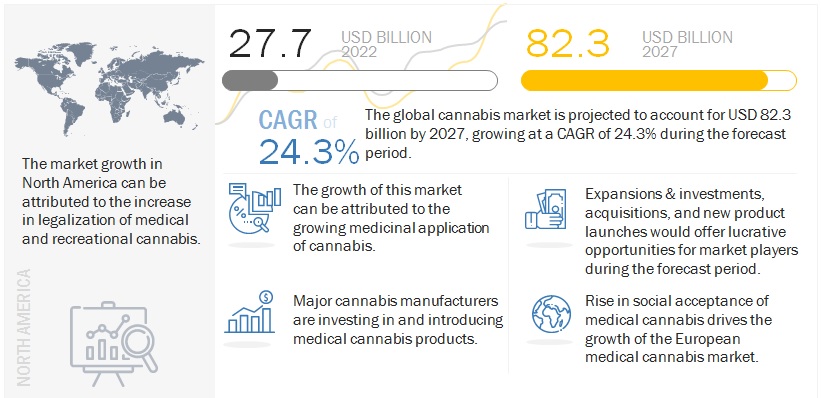
The global cannabis market size is estimated to be valued at USD 27.7 billion in 2022 and is projected to reach USD 82.3 billion by 2027, recording a CAGR of 24.3% in terms of value. Increased legalization has been extremely beneficial to the cannabis industry. Additionally, as more research studies in the field are carried out and show that cannabis has positive effects medically, has helped alter public perceptions of the drug. The industry is witnessing a lot of new product launches and acquisition and mergers between big players.

Request Sample Pages: https://www.marketsandmarkets.com/requestsampleNew.asp?id=201768301

The medical segment sees demand for treating anxiety and pain management

Medical segment also significantly contributes towards the total cannabis market. Cannabis is used in treating various medical situations like anxiety, gastrointestinal disorders, seizures, and epilepsy. Increased network of cannabis dispensaries will help increase the reach of the cannabis products to consumers thus, projecting a bright future for the market.

Despite increased knowledge of its medical benefits, existing manufacturing inefficiencies and manufacturers poor-quality control are hindering output. Many products fail to meet regulatory and content requirements. However, because of enhanced manufacturing procedures and quality standards, the pharmaceutical industry is now poised to supply more consistent products.

Cannabis Market Forecast

  • Legalization Trends: The trend toward legalization and decriminalization of cannabis for medical and/or recreational use in various jurisdictions continues to expand. Countries and states are reconsidering their cannabis policies, which could open up new markets and opportunities for industry growth.
  • Consumer Demand: There has been a growing acceptance and normalization of cannabis consumption, especially among younger demographics. As stigma decreases and awareness of potential health benefits increases, consumer demand for cannabis products is expected to rise.
  • Product Innovation: The cannabis industry is characterized by ongoing product innovation, with companies developing new and diverse cannabis-infused products to cater to different consumer preferences. This includes edibles, beverages, topicals, concentrates, and more.
  • Medical Applications: Research into the medicinal properties of cannabis compounds, such as CBD and THC, is expanding. As more evidence supporting the therapeutic benefits of cannabis emerges, the medical cannabis market is expected to grow, driven by demand for treatments for various conditions.
  • Investment and Consolidation: The cannabis industry has attracted significant investment from both traditional and institutional investors. Consolidation and strategic partnerships are common as companies aim to expand their market share and capabilities.
  • Regulatory Environment: Regulations play a crucial role in shaping the cannabis market. Changes in regulations, such as taxation, licensing, and packaging requirements, can impact market dynamics and profitability for businesses operating in the industry.
  • International Expansion: As more countries legalize or consider legalizing cannabis, there is potential for international expansion and trade opportunities. Companies are exploring partnerships and investments in emerging markets to capitalize on new growth opportunities.

Speak to Analyst: https://www.marketsandmarkets.com/speaktoanalystNew.asp?id=201768301

The demand for medical cannabis in South America is driven by the increased legalization of medical cannabis within various countries

The market in the region is driven by the legalization of medical cannabis. The legalization of cannabis originated from Uruguay and Colombia, which was later joined by Argentina, Brazil, Chile, and other South American countries. Although personal cultivation of recreational cannabis for personal consumption is legal in many countries in the region, the commercial sale is limited only to Uruguay. Several countries in South America have decriminalized possession of small amounts for personal use such as Chile, Colombia, Costa, Ecuador, and Peru. The South American cannabis market is also growing tremendously as many local companies are receiving EU-Good Manufacturing (GMP) certification, and countries are approving favorable legislation. This market also benefits from the favorable climate, low-cost labor, and construction costs, as they are very low as compared to North America.

Cannabis Market share

  • Canopy Growth Corporation (Canada)
  • Aurora Cannabis Inc. (Canada)
  • VIVO Cannabis Inc. (Canada)
  • Tilary Inc. (US)
  • Unrivaled Brand Inc. (US)
  • HEXO Corp. (Canada)
  • Medical Marijuana Inc. (US)
  • The Cronos Group (Canada)
  • Medmen Enterprise Inc. (US)
  • Cresco Labs (US)
  • Curaleaf Holdings Inc. (US)

Rapid Growth and Challenges: Navigating the Global Cannabis Market

The global cannabis industry is experiencing unprecedented growth, with an estimated value of USD 27.7 billion in 2022 and a projected surge to USD 82.3 billion by 2027, reflecting a remarkable compound annual growth rate (CAGR) of 24.3%. Within this dynamic landscape, the medical segment stands out, witnessing a surge in demand driven by its applications in anxiety and pain management.

Download PDF brochure:  https://www.marketsandmarkets.com/pdfdownloadNew.asp?id=201768301

The medical application of cannabis spans various conditions, including anxiety, gastrointestinal disorders, seizures, and epilepsy. The expansion of cannabis dispensaries worldwide is facilitating broader access to these products, promising a bright future for the market. Despite the recognized medical benefits, challenges such as manufacturing inefficiencies and poor-quality control have hindered output. However, advancements in manufacturing procedures and enhanced quality standards in the pharmaceutical industry are paving the way for more consistent products.

The CBD-dominant segment is anticipated to capture the second-largest share in the cannabis market during the forecast period. High demand and progressive policy reforms are driving the industry’s growth. As global stress levels rise, consumers are increasingly prioritizing self-care and mental wellness, aligning perfectly with the appeal of CBD products. The CBD market is flourishing, with increased availability in edibles, skincare, and expanding online distribution channels contributing to its positive trajectory.

In South America, the demand for medical cannabis is propelled by the increasing legalization across various countries. Uruguay and Colombia initiated the trend, followed by Argentina, Brazil, Chile, and others. While personal cultivation for recreational use is permitted in many countries, commercial sales are restricted, with Uruguay being the exception. South America’s cannabis market benefits from favorable legislation, local companies obtaining EU-Good Manufacturing Practice (GMP) certification, and advantageous factors like a favorable climate and low-cost labor and construction.

Speak to Analyst: https://www.marketsandmarkets.com/speaktoanalystNew.asp?id=201768301

Leading companies play a crucial role in shaping the cannabis market size. Notable entities such as Canopy Growth Corporation, Aurora Cannabis Inc., VIVO Cannabis Inc., and others are influencing the industry’s direction. The report delves into the marketing and development strategies, offering insights into the product portfolios of these influential players.

As the global cannabis market undergoes rapid expansion, the medical segment, CBD dominance, and South America’s rising influence emerge as key trends. Overcoming challenges in manufacturing and quality control, coupled with the strategic moves of industry leaders, will likely determine the market’s trajectory in the years ahead. The future appears promising, driven by a growing focus on wellness and evolving regulatory landscapes.