
Cannabis Industry Growth Report: Investment, Regulation & Consumer Insights

marketsandmarkets logo

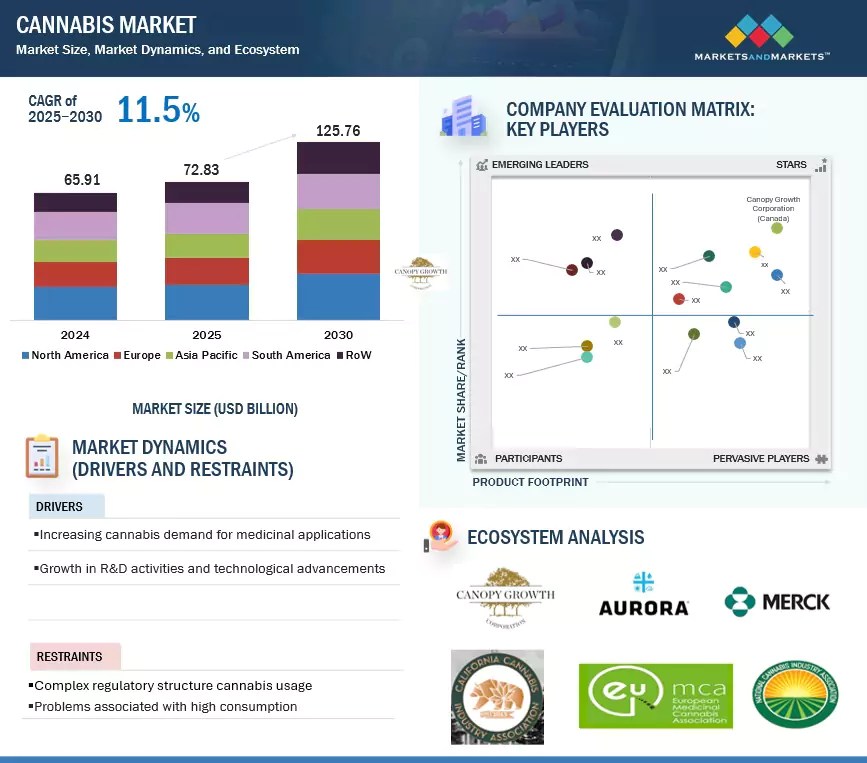
The cannabis market is estimated at USD 72.83 billion in 2025 and is projected to reach USD 125.76 billion by 2030, at a CAGR of 11.5% from 2025 to 2030. The cannabis market continues to grow due to increased legalization, higher therapeutic demand, growing consumer acceptance, and the combination of direct and indirect needs for medical and recreational products. Advances in edibles and vapes are also driving a stronger focus on quality control and safety testing. Rising health trends and related clinical research are refining regulations, while increased scrutiny on product contents and potency have raised awareness about safe use among consumers. Additionally, greater regulatory oversight, market expansion, and the public debate surrounding cannabis are boosting the demand for reliable, standardized cannabis testing and compliance solutions.
Download PDF Brochure: https://www.marketsandmarkets.com/pdfdownloadNew.asp?id=201768301

By application, nutraceutical & wellness form the fastest-growing segment in the global cannabis market.

Nutraceutical and wellness-use cannabis includes cannabis-based products designed to support health, nutrition, and overall wellness without producing highly potent psychoactive effects. These products are often made with cannabinoids like CBD and smaller amounts of THC, which have therapeutic benefits. They are used to help manage stress, anxiety, sleep issues, mild inflammatory conditions, chronic pain, and skin health. Nutraceutical and wellness cannabis products come in various formats, including CBD oil, capsules, gummies, topical balms, cannabis-infused beverages, skincare products, and functional edibles. The shift toward nutraceuticals and wellness cannabis products marks a move away from traditional recreational use, focusing instead on balance and prevention. This trend often appeals to health-conscious consumers seeking “natural”, plant-based alternatives to support their health and wellness, without the psychoactive effects typically associated with high-THC recreational cannabis.

By compound type, the CBD–dominant segment holds the second-largest market share in the cannabis market.

CBD is a non-psychoactive compound that helps balance sleep, pain, and stress, with additional properties against inflammation; it has received FDA approval for treating epilepsy, and other health benefits are rapidly expanding in wellness, skincare, and sports recovery. Edibles, especially gummies, are in demand because of their convenience and accuracy of dosing. Brightside, a line of micro-dose THC gummies combined with CBD, CBG, and CBC for targeted wellness, was launched by Charlotte’s Web in May 2025. Advances in supercritical CO2 extraction and the rising need for personal plant-based self-care products continue to drive CBD market growth.

Request Sample Pages: https://www.marketsandmarkets.com/requestsampleNew.asp?id=201768301

Based on region, North America holds the largest share in the cannabis market during the forecast period.

North America holds the largest share in the cannabis market during the forecast period, driven by growing legalization for medical and recreational purposes, clinical research that validates the therapeutic benefits of cannabis, consumer acceptance of cannabis products, and product innovation in edibles, topicals, and infused beverages. Demand for plant-based wellness and alternatives to treat chronic pain, anxiety, and sleeplessness is a further stimulant for market growth. The US Food and Drug Administration (FDA) oversees cannabis-derived medicines, the Drug Enforcement Administration (DEA) regulates controlled substances, Health Canada manages Canada’s cannabis framework, and state-level boards oversee local medical and recreational markets.

The report profiles key players such as Canopy Growth Corporation (Canada), Curaleaf (US), Cresco Labs (US), Green Thumb Industries (GTI) (US), Tilray Brands (US), Aurora Cannabis Inc. (Canada), Trulieve (US), Medmen (US), Blüm Holdings Inc. (US), Organigram Global (Canada), Terrascend (US), Village Farms International Inc. (US), Verano (US), The Cronos Group (Canada), and Medical Marijuana, Inc. (US).

Europe Leads the Charge: Industrial Hemp Market Sees Fastest Growth in EU

The industrial hemp market is on a steady rise, expected to reach a value of USD 18.1 billion by 2027. This significant growth is fueled by a surge in demand for eco-friendly products and a growing awareness of the health benefits associated with hemp.

Hemp Seeds: A Superfood Powerhouse

One of the key drivers of this market is the increasing usage of hemp seeds in various food and beverage products. Hemp seeds are packed with protein and antioxidants, making them a popular choice for health-conscious consumers. You can find them in everything from cereals and yogurts to protein powders and even hemp milk.

Request Sample Pages of Report: https://www.marketsandmarkets.com/requestsampleNew.asp?id=84188417

Hemp Hurds: From Waste to Wonder Material

Another exciting aspect of the industrial hemp market is the growing demand for hemp hurds. These short fibers, found in the hemp stalk, are being transformed into a variety of useful products. Hemp hurds boast excellent thermal and acoustic properties, making them ideal for construction materials like hempcrete. Additionally, they are used in animal bedding, furniture, and even car parts.

Plant-Based Protein Power: Hemp to the Rescue

The rise of veganism is another factor propelling the industrial hemp market forward. Hemp seeds offer a valuable source of plant-based protein, catering to the growing vegan population.

Hemp Beverages: A Refreshing Trend

The popularity of plant-based beverages has opened doors for hemp-infused drinks. From hemp juice and flavored water to hemp coffee and tea, these beverages are gaining traction due to their perceived health benefits and unique taste.

Hemp in Construction: Building a Sustainable Future

The industrial hemp market is also witnessing a rise in the use of hemp for construction materials. Hemp fibers, known for their strength and durability, are being used as a substitute for wood in building insulation panels and planks. Hemp bricks are another innovation, offering superior insulation and soundproofing properties compared to traditional bricks. Additionally, hemp is a renewable resource, making it an environmentally friendly choice for the construction industry.

Europe Leads the Charge

The European market is currently experiencing the fastest growth in the industrial hemp sector. This can be attributed to the widespread adoption of hemp seeds and hemp seed oil in food products, dietary supplements, and personal care items. Additionally, the use of hemp fibers in automobiles and construction materials is further propelling the European market.

Inquiry before Buying: https://www.marketsandmarkets.com/Enquiry_Before_BuyingNew.asp?id=84188417

Key Players in the Industrial Hemp Market

Several companies are at the forefront of this growing market, including Marijuana Company of America, Cronos Group, Ecofibre Limited, and Green Thumb Industries. These players are actively involved in developing and promoting innovative hemp-based products across various industries.

The industrial hemp market presents a promising future driven by sustainability, health consciousness, and innovative product development. As the market continues to evolve, we can expect to see even more exciting applications for this versatile and beneficial plant.

Explore the Jaw-Dropping Growth Potential in Industrial Hemp Market

According to the US Farm Bill 2014, industrial hemp is defined as, “the plant Cannabis sativa L. and any part of such plant, whether growing or not, with a delta-9 tetrahydrocannabinol (THC) concentration of not more than 0.3% on a dry weight basis.”

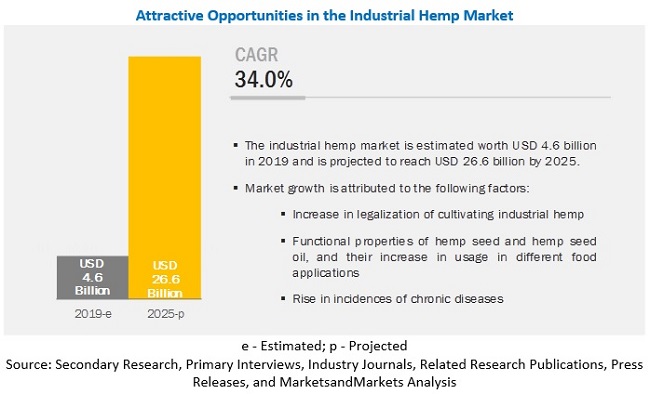
MarketsandMarkets projects that the global industrial hemp market is projected to grow from USD 4.6 billion in 2019 to USD 26.6 billion by 2025, recording a compound annual growth rate (CAGR) of 34.0% during the forecast period. The growing usage of hemp-derived seed as a superfood due to its rich nutritional profile and other health benefits is driving the market for industrial hemp. Furthermore, increasing legalization of hemp in different countries across the world is also driving the growth of industrial hemp.

Download PDF brochure: https://www.marketsandmarkets.com/pdfdownloadNew.asp?id=84188417

Hemp fiber is estimated to dominate the market for industrial hemp in 2019.  It is used primarily in the textile and pulp & paper industry, due to its long and robust fibers as compared to cotton. Furthermore, being a renewable source material, its application to obtain biofuels and bioplastics has been expected to increase its demand in the coming years.

Food is projected to be the dominating application segment of the industrial hemp market during the forecast period due to the wide application of hemp seeds and hemp seed oil in food products for their vitamins, proteins, and omega-3 fatty acid content. Hemp seeds are consumed raw or are used as a topping in cereals, smoothies, and yogurt. Rising consumer awareness about the benefits of consuming hemp-based products is driving the market for its application in food.

Scope of the Report:

This research report categorizes the industrial hemp market based on type, application, source, and region.

Based on type, the industrial hemp market has been segmented as follows:

  • Hemp seed
  • Hemp seed oil
  • CBD hemp oil
  • Hemp fiber

Based on application, the industrial hemp market has been segmented as follows:

  • Food
    • Snacks & cereals
    • Soup, sauces, and seasonings
    • Bakery
    • Diary & frozen desserts
    • Others (cold cereals, pasta, chocolate spreads, and pet food)
  • Beverages
    • Hot beverages
    • Sports & energy drinks
    • Ready to drink
    • Others (meal replacement drinks, beverage mixes, beverage concentrates, and juice drinks)
  • Personal care products
  • Textiles
  • Pharmaceuticals
  • Others (paper, automobiles, construction & materials, furniture, and pet food)

Based on the source, the industrial hemp market has been segmented as follows:

  • Organic
  • Conventional

Based on the region, the industrial hemp market has been segmented as follows:

  • North America
  • Europe
  • Asia Pacific
  • RoW (South America, Africa, and the Middle East)

Geographical Analysis

  • Further breakdown of the Rest of Europe industrial hemp market, by key country
  • Further breakdown of the industrial hemp market for food application by region

Speak to Analyst: https://www.marketsandmarkets.com/speaktoanalystNew.asp?id=84188417

The increasing legalization of the cultivation of hemp provides enormous opportunities to the manufacturers and research institutions to develop new products from industrial hemp. Bioplastic is one such product that can be manufactured from the leftover of hemp seeds and CBD oil. Furthermore, biofuel derived from the hemp plant provides opportunities for the companies to explore this application of hemp as a fuel for automobiles. The growing consumer demand for sustainable goods, along with initiatives and support from corporate and government, is expected to support the growth of hemp-based biofuel and bioplastics in the coming years.

Cannabis: Increasing medicinal use driving market growth

Cannabis is a drug derived from the cannabis sativacannabis indica, and hybrid strains. Although cannabis is composed of different cannabinoids, the two main cannabinoids that are considered to be the most active compounds are tetrahydrocannabinol (THC), the psychoactive compound, and cannabidiol (CBD), the non-psychoactive compound. The market definition for cannabis, in this study, takes into consideration both medical as well as recreational cannabis. 

The use of medical cannabis and the implementation of cannabis-derived compounds for treatment and therapy have been widely debated, globally. Furthermore, there are several opposing notions associated with the use of cannabis for medical purposes, owing to its societal and ethical implications. However, the adoption of cannabis has continued to evolve, with a growing gradual acceptance of its use by a number of states. The least contentious extract of cannabis is derived from its hemp plant and is known as CBD (cannabidiol). CBD is currently touted as the safest and most potent form of cannabis and is effective for medicinal use.

According to MarketsandMarkets, the global cannabis market is projected to grow from USD 10.30 billion in 2018 to USD 39.35 billion by 2023. The growth of this market is attributed to the growing number of medicinal applications and increasing legalization of cannabis. The complex regulatory structure for the use of cannabis is restraining market growth. The cannabis market is projected to grow at a CAGR of 30.7% from 2018 to 2023.

What is driving the growth of Cannabis?

  • Growing medicinal application of cannabis

CBD-dominant strains of cannabis have little or no amount of THC (tetrahydrocannabinol), the chemical that is responsible for psychological alterations. As a result, when the extract is used for treatment purposes, the benefits such as relief from insomnia, anxiety, spasticity, epilepsy, and pain, have been observed with little or no alteration in consciousness. Another important and extensive use of cannabis for medical purposes is observed for pain control. Although the use of cannabis is not strong enough for severe pain, its use remains potent for chronic pain. Cannabis remains especially effective in easing the pain caused by multiple sclerosis and nerve-related issues. It also acts as a muscle relaxant and could be used to lessen the tremors caused by Parkinson’s disease.

Therefore, CBD, being non-psychoactive in nature, has highly garnered favor for being used for the treatment of a number of ailments. There are various studies confirming the anti-inflammatory, anti-pain, and antipsychotic properties of CBD wherein its use has been proven effective. To further establish its effective use amongst consumers, the pharmaceuticalized form of CBD, Epidiolex, was approved by the US Food and Drug Administration in June 2018 as a treatment for seizures associated with two rare and severe forms of epilepsy. According to the data published in the New England Journal of Medicine, the use of the drug could help reduce seizures by about 40%. Additionally, GW Pharmaceutical’s drug, Sativex, which contains both CBD and THC, is available as a treatment for multiple sclerosis-related spasticities, in Canada, Australia, and a majority of the European and South American regions. Furthermore, the infusion of CBD in edible products has also been developing as an emerging wellness trend in many countries, which is further expected to impact the market for cannabis positively.

  • Increasing legalization of cannabis

Cannabis legalization is often viewed upon with dual perceptions wherein its legalization has been proven to be met with skepticism associated with possible abuse. While supporters of cannabis legalization have argued that its prohibition has not been successful at reducing access to and the use of cannabis, it has been presumed that legalization could, in turn, allow people to practice safe substance use while also reaping its medicinal benefits. As a result, there is an increase in the number of states that are gradually legalizing the use of cannabis across the globe. As of November 2018, it is legal to smoke marijuana for medical use in 33 states in the US, whereas nine states will still be requiring a doctor’s prescription to do so. The recreational use of cannabis is, in turn, legalized in 10 of these states. Similarly, Uruguay became the first country to legalize marijuana fully, outside the US, in 2013. Similarly, Canada too legalized the complete use of marijuana in 2018.

While most countries across the globe have still not legalized the use, the approach to the use and sales has been relaxed over the years. For example, the Netherlands allows citizens to store and cultivate some amount of marijuana while they are also permitted to be sold via coffee stores as long as they are not sold to minors. Additionally, Spain permits the use of marijuana in clubs while it still remains illegal to be traded. While marijuana legalization is still at a nascent stage, globally, its growing use for medicinal and therapeutic purposes has been gradually driving a number of countries toward its legalization. As more countries move toward its partial or complete legalization, the market for cannabis will be experiencing a positive trajectory.

Speak to Analyst @ https://www.marketsandmarkets.com/speaktoanalystNew.asp?id=201768301

Medical cannabis is expected to be the most widely used application of cannabis

The use of cannabis is being legalized across countries for medical purposes for the treatment of various illnesses and ailments. CBD or cannabidiol, which is a major component of cannabis, is not psychoactive in nature and provides various medicinal benefits associated. In addition, regulatory bodies in various countries are legalizing medical cannabis, as the compound is considered safe for use compared to other medications prescribed for the treatment of similar ailments. Over the past few years, countries such as Australia, Argentina, Mexico, and Germany have legalized the use of medical cannabis. Furthermore, with the use of medical CBD in the form of oils, topical pain relief treatment solutions and edibles could also dissuade its smoke intake among patients while being equally effective medically. Medical cannabis remains the most effective, as they are also used for various health conditions which include pain management, neurological health management, and mental health management.

Based on region, the cannabis market is segmented into North America, Europe, South America, and the Rest of the World.

  • North America accounted for the largest share, with a value of USD 6,122.7 million, in 2017. This market is projected to grow at a CAGR of 30.8% during the forecast period.  Canopy Growth Corporation (Canada), Aurora Cannabis Inc. (Canada), and Medical Marijuana Inc., (US) are a few key players who occupy a significant share in the global market for cannabis.
  • The growing legalization of cannabis for both medical and recreational purposes all over North America and the increasing awareness among consumers regarding the health benefits of cannabis have driven the cannabis market in the region.