Seed Technologies Market Forecast: Opportunities Across Global Regions

marketsandmarkets logo

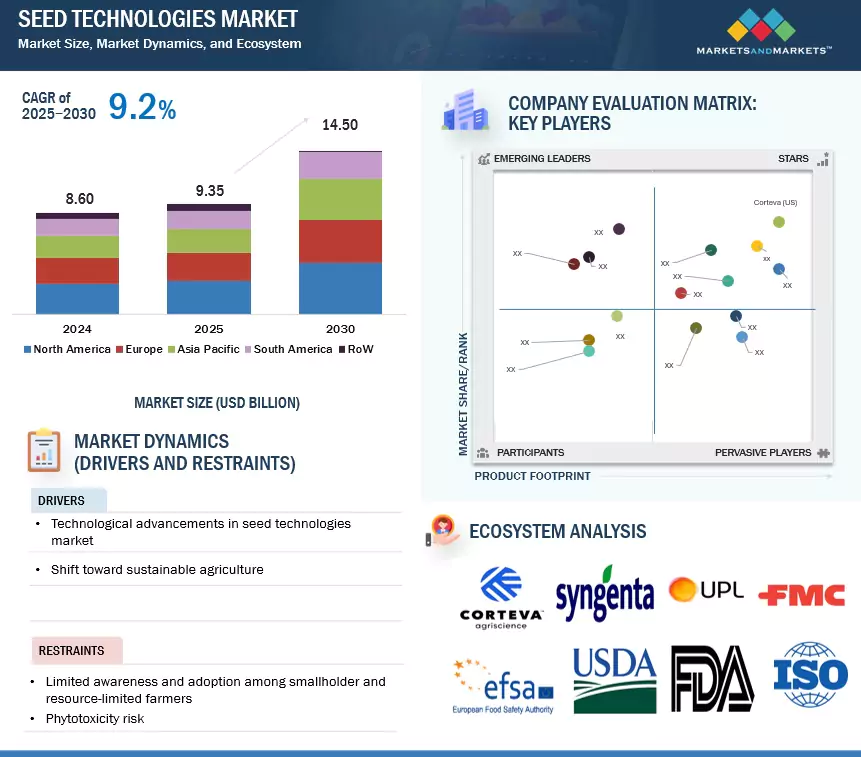
The global seed technologies market is projected to grow from USD 9.35 billion in 2025 to USD 14.50 billion by 2030, registering a CAGR of 9.2% during the forecast period. Growth is fueled by the rising adoption of high-value hybrid and genetically modified seeds and the increasing need for early-stage crop protection.

Seed Technologies Market

Shifts in agricultural practices—such as restrictions on foliar pesticide use and the global move toward sustainable farming systems—are accelerating the demand for seed-applied solutions. At the same time, advancements in treatment formulations and integration with precision farming technologies are improving efficiency and outcomes. Supportive government policies and rising farmer awareness, particularly in emerging markets, are further propelling market expansion.

Download PDF Brochure: 
https://www.marketsandmarkets.com/pdfdownloadNew.asp?id=25852111

Market Insights by Function

Biological seed protection represents a significant share of the seed technologies market. This segment is gaining momentum as farmers and seed companies embrace eco-friendly crop protection solutions. Beneficial microbes, fungi, and bacteria are being deployed to defend seeds against soil-borne pathogens and pests, while also enhancing plant health and resilience.

Adoption is supported by growing regulatory pressure to limit synthetic chemicals and reduce residue levels. These biological treatments offer multiple mechanisms—such as pathogen suppression, systemic resistance induction, and nutrient solubilization—making them versatile complements or alternatives to conventional chemicals. The increasing emphasis on regenerative agriculture, organic farming, and soil health has reinforced demand. With continuous innovation and wider regulatory approvals, biological seed protection is becoming a mainstream component of seed treatment portfolios.

Market Insights by Crop Type

The oilseeds segment holds a notable share of the global seed technologies market. Crops such as soybean, canola, and sunflower are highly valued but also vulnerable to early-stage pests and diseases, driving demand for effective seed protection.

The rising adoption of hybrid and genetically modified oilseed varieties has further strengthened the role of seed treatments. Both chemical and biological solutions are being applied to safeguard yield potential. In addition, the push toward sustainable agriculture and advancements in treatment formulations continue to expand the adoption of seed-applied technologies in oilseed farming.

Request Sample Pages: 
https://www.marketsandmarkets.com/requestsampleNew.asp?id=25852111

Market Insights by Region

North America leads the global seed technologies market, supported by the extensive use of genetically modified and hybrid seeds in crops like corn, soybean, and canola. Farmers in the region rely heavily on seed treatments to protect high-value seeds from pests and diseases at the earliest growth stages.

The market benefits from strong agricultural infrastructure, advanced crop protection practices, and regulatory shifts away from foliar pesticides in the US and Canada, which favor targeted seed treatments. The demand for biological solutions is also increasing, driven by soil health concerns and consumer preference for residue-free produce.

North America’s leadership is reinforced by:

  1. Strong presence of global seed technology companies
  2. Ongoing R&D in next-generation formulations
  3. Integration with precision farming and conservation tillage practices

This combination positions North America as both the largest market and a global innovation hub for seed technologies.

Leading Seed Technologies Companies:

The report profiles key players such as BASF SE (Germany), Bayer AG (Germany), UPL (India), Corteva (US), Croda (UK), FMC (US), Nufarm (Australia), Syngenta (US), Germains Seed (UK), and Sumitomo Chemicals (Japan).

Agriculture Adjuvants Industry Trends: Market Segmentation and Opportunity Analysis

marketsandmarkets logo

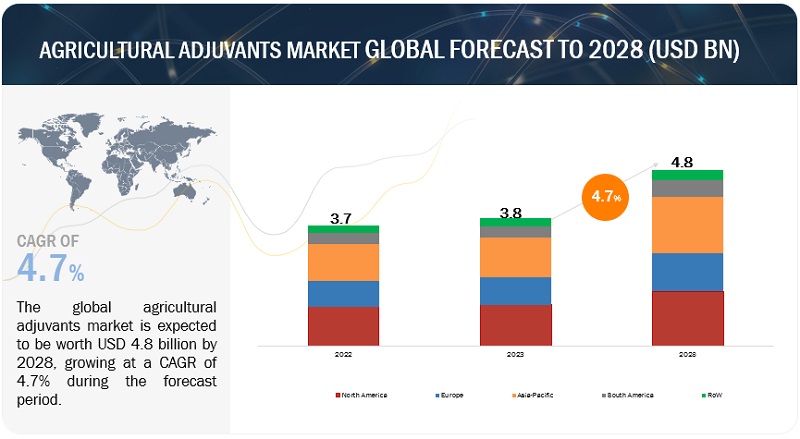
The global agriculture adjuvants market is projected to rise from USD 3.8 billion in 2023 to USD 4.8 billion by 2028, registering a CAGR of 4.7% during the forecast period. As farmers seek to enhance the efficiency of crop protection while minimizing environmental impact, the demand for adjuvants is on the rise. These substances improve the effectiveness, coverage, and retention of pesticides and fertilizers, enabling reduced chemical usage and promoting more sustainable farming practices. With the growing need for higher food production and eco-friendly crop protection methods, agricultural adjuvants are playing a vital role in advancing modern agriculture.

Agriculture Adjuvants Market

Download PDF Brochure: https://www.marketsandmarkets.com/pdfdownloadNew.asp?id=1240

The cereals & grains crop type segment held the largest market share in the agricultural adjuvants market in 2022

Agricultural adjuvants play an essential role in agriculture’s cereal and grain segment. According to FAO, in 2022/23, global cereal production stood at 2,786.6 million tons, with wheat contributing 800.9 million tons and rice 516.9 million tons of production. With the growing production and demand for cereals & grains, the utilization of agricultural adjuvants is growing. Celeral & grains are consumed as a staple food in most countries worldwide, and protecting these crops from weather, pests, and weeds requires agricultural adjuvants. This is increasing the demand for agricultural adjuvants in cereals & grains.

Tank-mix adjuvants are in the fastest-growing adoption stage in the agricultural adjuvants market.

Adjuvants are added separately into the spray tank, and pesticides or herbicides are known as tank-mix adjuvants. Tank-mix adjuvant ensures high performance, drift reduction, improved spray coverage, and increased absorption into the target crops. The farmers are increasingly using tank-mix agricultural adjuvants as they can customize and adjust on a case-to-case basis. Customization ensures desired performance characteristics while treating the targeted pest or weed; hence, the demand has been accelerating.

Request Sample Pages: https://www.marketsandmarkets.com/requestsampleNew.asp?id=1240

North America held the largest share of the agricultural adjuvants market in 2022

The demand for agriculture adjuvants in North America is witnessing significant growth due to several key factors. The cultivation of industrial crops such as corn and soybean has been gaining pace in North American countries, driving the agricultural adjuvants market growth. According to the United States Department of Agriculture (USDA) reports, in 2022, the US produced 13.7 billion bushels of corn and 4.28 billion bushels of soybean. Though the production of both these crops fell in 2021, the consumption of agricultural adjuvants is growing in the region at a significant pace.

Leading Agriculture Adjuvants Companies:

Major players operating in the agricultural adjuvants market include Corteva Agriscience (US), Evonik Industries AG (Germany), Croda International Plc (UK), Nufarm Limited (Australia), Solvay SA (Belgium), BASF SE (Germany), Huntsman International LLC. (US), Clariant AG (Switzerland), Helena Agri-Enterprises, LLC (US), WILBUR-ELLIS AGRIBUSINESS (US), Precision Laboratories, LLC (US), and CHS Inc. (US).

Global Feeding Systems Market Outlook: Trends, Growth, and Forecast to 2030

marketsandmarkets logo

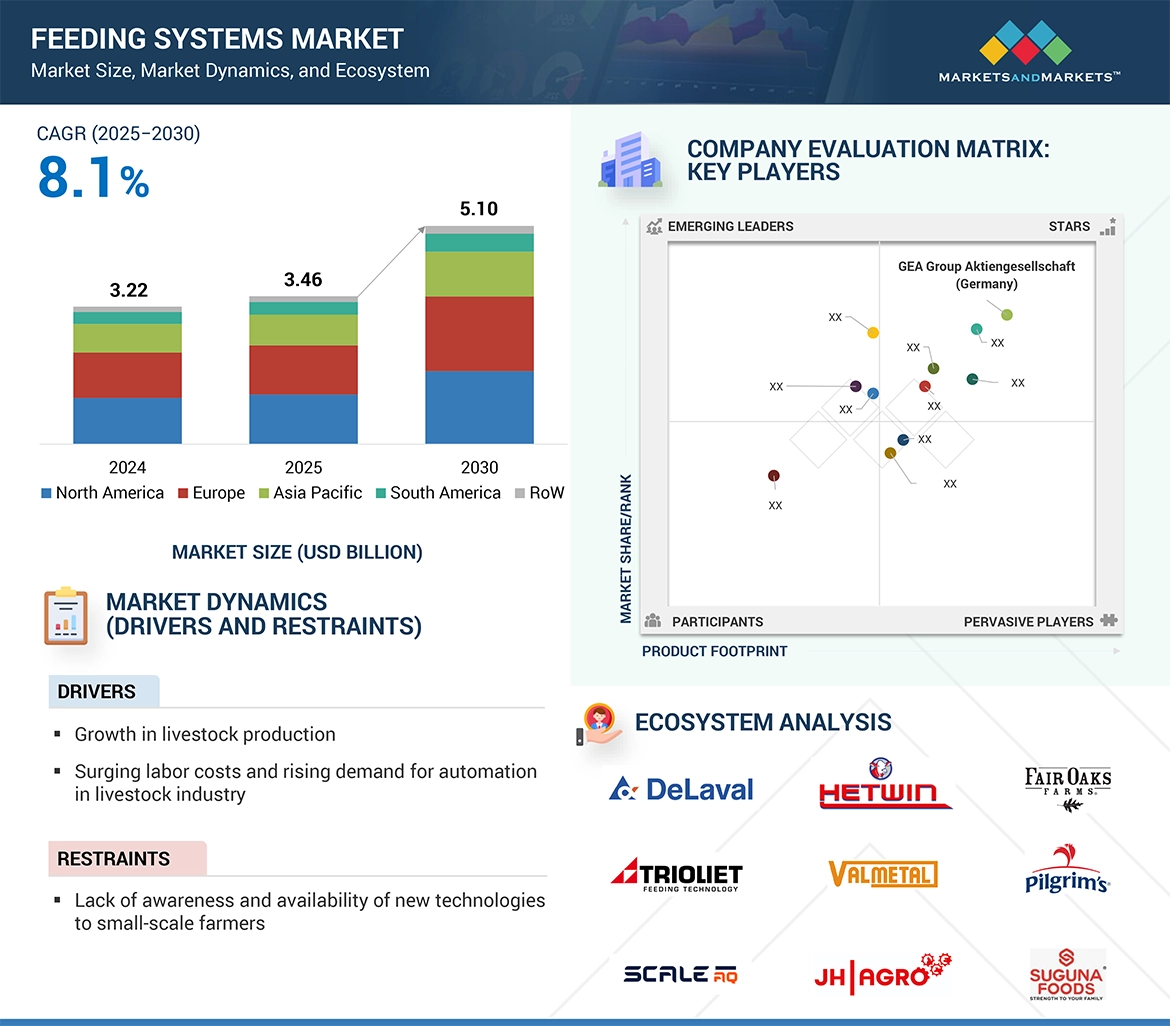
The global feeding systems market is expected to grow from USD 3.46 billion in 2025 to USD 5.10 billion by 2030, registering a compound annual growth rate (CAGR) of 8.1% during the forecast period. The increasing adoption of sustainable agricultural practices is a key driver of this growth. As the agriculture sector faces mounting pressure to minimize its environmental impact, feeding systems are emerging as a crucial solution for improving efficiency and reducing ecological footprints.

Feeding Systems Market

Feeding systems play a vital role in sustainability by minimizing feed waste, enhancing digestion to reduce methane emissions, and lowering the carbon footprint of animal production. Precision feeding—enabled by advanced feed formulation software—helps farmers provide balanced nutrition, avoiding overfeeding or nutrient runoff that can pollute soil and waterways.

Download PDF Brochure: https://www.marketsandmarkets.com/pdfdownloadNew.asp?id=102235948

Mixing Segment to Dominate by Function

Among various functions, the mixing segment is projected to hold a significant share of the market. Proper mixing ensures that essential nutrients like proteins, vitamins, and minerals are evenly distributed in the feed, aligning with the nutritional requirements of different livestock.

Mixing systems help maintain feed consistency and quality—particularly important for sensitive animals like goats. Automated mixing technologies such as self-propelled mixers, self-loading mixers, and stationary mixers with conveyor belt systems are gaining popularity. These systems not only automate loading, mixing, and dispensing processes but also incorporate weighing mechanisms to ensure precision feeding. As a result, farmers can prepare feed efficiently and save considerable time and labor.

Poultry Segment to Witness Highest Growth Among Livestock

The poultry segment is anticipated to register the highest CAGR during the forecast period. According to a 2021 FAO report, poultry meat is expected to account for 41% of global meat protein consumption by 2030. This surge in demand is fueling the need for efficient feeding systems in poultry farming.

Poultry production heavily relies on nutrient-rich feed for optimal growth, prompting manufacturers to invest in innovative feeding technologies. Common systems used in poultry farms now include automatic pan feeders, chain feeders, and round & hanging tube feeders, all designed to deliver feed uniformly and efficiently.

Request Sample pages: https://www.marketsandmarkets.com/requestsampleNew.asp?id=102235948

North America to Lead the Global Market by 2030

North America—comprising the U.S., Canada, and Mexico—is set to lead the feeding systems market by 2030. The region’s growth is fueled by increasing demand for high-quality dairy and meat products, along with a strong focus on animal welfare and performance-enhancing nutrition.

Over the last three decades, North American farms have steadily transitioned from manual feeding to automated systems, thanks to rapid technological progress and greater accessibility. The shift has encouraged the development of advanced solutions like individual and group feeders tailored to improve productivity and reduce labor dependency.

Leading Feeding Systems Companies:

The report profiles key players such as Tetra Laval (Sweden), GEA Group Aktiengesellschaft (Germany), Lely (Netherlands), Trioliet B.V. (Netherlands), VDL Agrotech (Netherlands), ScaleAQ (Norway), AGCO Corporation (US), BouMatic (US), Pellon Group Oy (Finland), Rovibec Agrisolutions (Canada), CTB, Inc. (US), AKVA Group (Norway), Dairymaster (US), Maskinfabrikken Cormall A/S (Denmark), and Schauer Agrotronic GmbH (Austria).

Biostimulants Market to Surge by 2030: Industry Report Highlights Trends and Forecasts

logo1

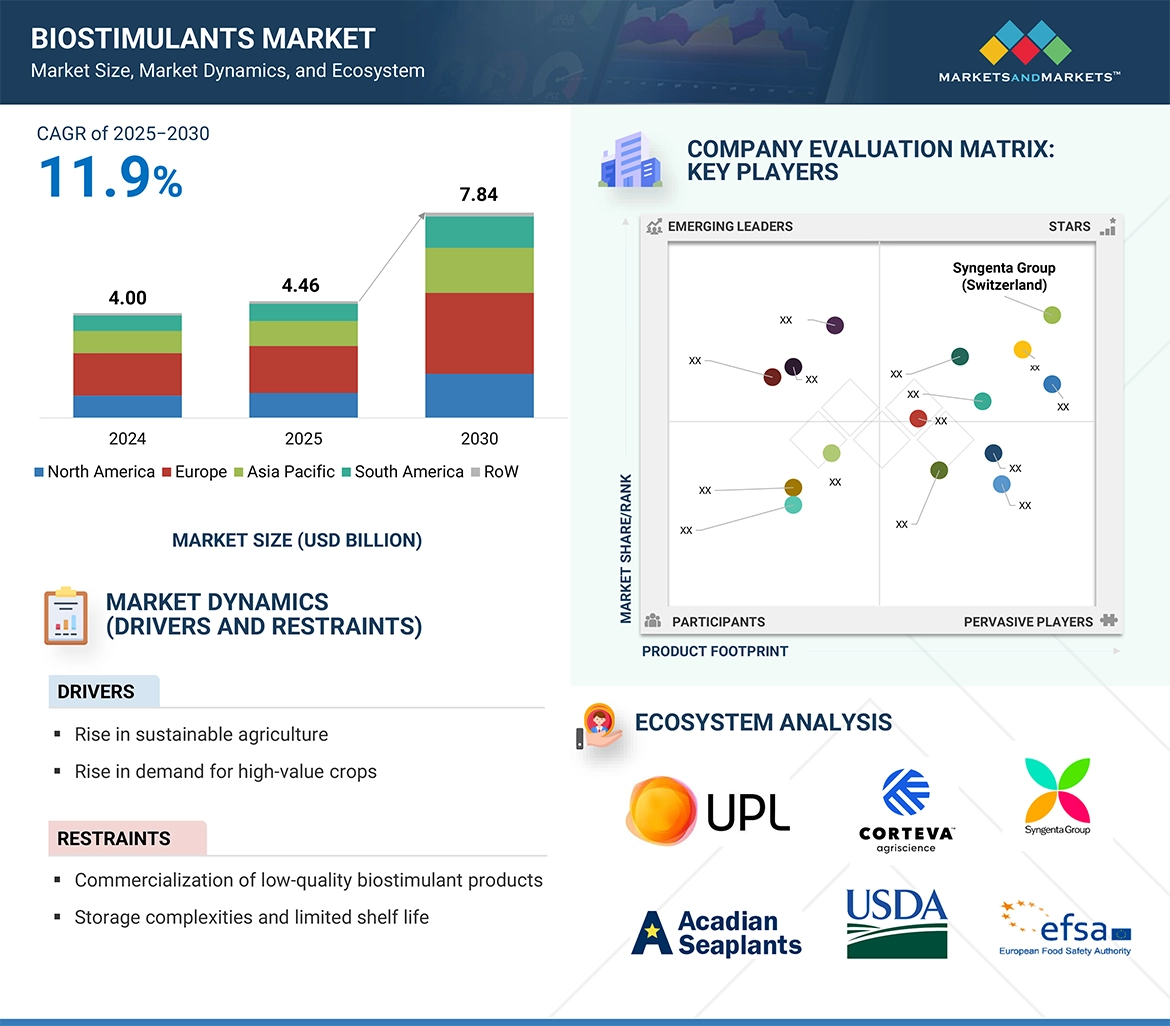
The global biostimulants market is projected to grow from USD 4.46 billion in 2025 to USD 7.84 billion by 2030, reflecting a CAGR of 11.9% during the forecast period. This robust growth is primarily fueled by the rising adoption of sustainable agricultural practices, the expanding use of organic farming, and heightened awareness about the benefits of biostimulants in enhancing crop yield, quality, and resilience to abiotic stress.

Supportive government initiatives—such as the European Union’s Farm to Fork strategy—are further accelerating market growth by promoting eco-friendly farming techniques. In parallel, advancements in biostimulant formulation and extraction technologies are improving product effectiveness and expanding their applicability across diverse crop types. Farmers are increasingly turning to biostimulants to boost nutrient efficiency, enhance soil health, and reduce dependency on chemical fertilizers. In addition, rising consumer demand for high-quality, residue-free produce is encouraging growers to incorporate biostimulants as part of their organic and sustainable farming toolkit.

By Active Ingredient: Amino Acids Lead the Market

The amino acids segment dominates the active ingredient category, owing to its critical role in supporting plant growth, enhancing nutrient uptake, and improving stress tolerance. Amino acids act as precursors to essential plant hormones, enzymes, and proteins that drive key physiological functions such as photosynthesis, nutrient assimilation, and root development. Their proven effectiveness in aiding plant recovery from abiotic stresses like drought, temperature fluctuations, and salinity makes them a preferred choice for farmers aiming to boost productivity and resilience.

One key player in this space is Aminocore (Germany), known for its natural amino acid-based fertilizers and biostimulants. Developed through mild enzymatic hydrolysis—a pharmaceutical-grade process—Aminocore’s products offer a superior free amino acid profile that is twice as effective as conventional solutions, without relying on synthetic components or toxic additives.

By Form: Liquid Biostimulants Dominate

In terms of form, the liquid biostimulants segment holds the largest market share, largely due to its ease of application, rapid absorption, and high efficacy in promoting plant growth and resistance to environmental stressors. Farmers widely favor liquid formulations as they are compatible with various application methods—including foliar sprays, fertigation, and soil drenching—ensuring uniform distribution and quick uptake by plants. Additionally, liquid biostimulants demonstrate strong compatibility with other agrochemicals and fertilizers, further enhancing nutrient absorption and crop response.

North America dominates the Biostimulants Market Share.

North America represents a substantial share of the global biostimulants market, underpinned by large-scale commercial farming, advanced agricultural technologies, and a strong focus on soil health and crop productivity. The United States and Canada lead the region with high-volume production of staple crops such as wheat, corn, and soybeans, which require consistent and efficient nutrient input.

Government support for organic and sustainable farming methods, coupled with growing awareness about the soil-enhancing and yield-boosting benefits of biostimulants, is further strengthening the market. Additionally, regional players are heavily investing in R&D to create next-generation biostimulant products with enhanced performance and wider crop applicability.

Leading Biostimulants Companies:

The report profiles key players such as UPL (India), FMC Corporation (US), Corteva (US), Syngenta Group (Switzerland), Sumitomo Chemical Co., Ltd. (Japan), Nufarm (Australia), Novonesis Group (Denmark), BASf SE (Germany), Bayer AG (Germany), PI Industries (India), T.Stanes and Company Limited (India), Gowan Company (US), J.M. Huber Corporation (US), Haifa Negev technologies LTD (Israel), and Koppert (Netherlands).

North American Crop Protection Chemicals Market Report – 2029

logo1

The North American crop protection chemicals market is poised for significant growth, projected to reach USD 21.0 billion by 2029, up from USD 15.98 billion in 2024. This growth is anticipated to occur at a compound annual growth rate (CAGR) of 5.6% in terms of value.

North America, particularly the U.S., Canada, and Mexico, stands as a key region for the export of agricultural products, making it one of the largest consumers of crop protection chemicals. The market is largely driven by large-scale agricultural operations focused on exports, supported by a well-organized distribution chain and advanced farming practices.

Key Drivers of Market Growth

Several factors contribute to the expansion of the North American crop protection chemicals market:

  • Fertile Soils and Land Resources: The region benefits from abundant land and fertile soils, enabling efficient agricultural operations.
  • Availability of Water: Access to sufficient water resources ensures consistent crop production and growth.
  • Entrepreneurial Farmers: North America boasts a high number of innovative and skilled farmers dedicated to adopting advanced agricultural practices.
  • Efficient Infrastructure: Robust infrastructure facilitates smooth distribution and application of crop protection chemicals across vast agricultural landscapes.

For a comprehensive overview, download the PDF copy

Challenges Facing the Market

Despite these advantages, challenges remain, such as:

  • Resource Optimization: There is a growing emphasis on managing and optimizing the use of natural resources like water and soil, which influences the demand for more sustainable crop protection solutions.
  • Labor Costs: Increasing labor costs necessitate the development of more cost-effective and efficient crop protection solutions to maintain productivity levels.

Herbicides Leading the Market Share

Herbicides are expected to dominate the North American crop protection chemicals market during the forecast period. Their widespread use is driven by their effectiveness in managing weeds, especially for staple crops such as corn, soybeans, and wheat.

The adoption of genetically modified herbicide-resistant crops has further enabled the use of broad-spectrum herbicides with minimal risk to the crops. These chemical solutions not only reduce the need for hand weeding but also offer significant cost savings for large-scale farming operations.

Furthermore, ongoing innovations in herbicide formulations enhance their environmental friendliness and overall efficiency, making them indispensable for modern agricultural practices.

US Market Dominance

The United States continues to be the leading player in the North American crop protection chemicals market.

With its vast agricultural landscape and high crop yields, the U.S.

requires significant inputs to manage weeds, pests, and diseases effectively. As a major producer of key crops like corn, soybeans, wheat, and cotton, the country places a strong emphasis on crop protection.

Major U.S.-based companies such as Corteva and FMC Corporation are actively developing a variety of crop protection solutions to boost agricultural productivity. For instance, in 2024, FMC launched its new crop protection product, Ethos Elite LFR, which combines the established pyrethroid insecticide bifenthrin with biological strains Bacillus velezensis strain RTI301 and Bacillus subtilis strain RTI477, providing broad-spectrum control against early-season diseases and soilborne pests.

Make an Inquiry to Address your Specific Business Needs

Recent Developments in North American Crop Protection Chemicals Market

Several recent advancements in crop protection chemicals highlight the region’s innovation:

  • FMC Corporation Research: In May 2024, FMC Corporation announced a partnership with AgroSpheres to accelerate the development of novel bioinsecticides.
  • Bayer-AlphaBio Agreement: In April 2024, Bayer secured exclusive rights to a novel biological insecticide developed by AlphaBio Control, targeting arable crops like oilseed rape and cereals. This groundbreaking product is slated for a potential launch in 2028 after extensive development and registration.
  • Certis Biologicals Launch: In January 2024, Certis Biologicals launched Convergence, a biofungicide tailored for crops such as corn, soybeans, and peanuts, offering a bio-based solution for effective disease control and plant health.
  • Albaugh Specialty Products: Also in January 2024, Albaugh introduced Prothioconazole 4L Select, a DMI fungicide providing both preventive and curative control against a variety of turf diseases.

These developments underscore the region’s commitment to innovation and sustainability in crop protection, ensuring a dynamic and resilient agricultural sector.