Rise in Demand for Improved Crop Varieties Drives Plant Genomics Market

The report Plant Genomics Market by Objective (Extraction, Sequencing, Genotyping, Gene Expression, MAS, and GMO-trait Purity Testing), Type (Molecular Engineering and Genetic Engineering), Trait, Application, and Region – Global Forecast 2025″, is estimated to be valued at USD 7.3 billion in 2019 and is projected to reach a value of USD 11.7 billion by 2025, growing at a CAGR of 8.3% during the forecast period. Factors such as the rising demand for improved crop varieties is driving the growth of the plant genomics market.

Download PDF brochure: https://www.marketsandmarkets.com/pdfdownloadNew.asp?id=239362357

The molecular engineering segment is estimated to witness the fastest growth in the plant genomics market, in terms of value, from 2019 to 2025

Molecular engineering is the process of improving the genotypic characteristics of plants through the application of molecular markers. Plant molecular engineering is the process of modification of plant material or plants for the production of novel compounds or to improve the efficiency of beneficial products. The benefits associated with molecular engineering technologies are the major factors contributing to the fastest growth of this market, globally.

The DNA/RNA sequencing segment, by objective, is estimated to account for the largest market share, by value, in 2019

Based on objective, the plant genomics market is segmented into DNA extraction & purification, DNA/RNA sequencing, genotyping, gene expression profiling, marker-assisted selection, GMO-trait purity testing, and other objectives. DNA sequencing is the process of determining the precise order of nucleotides within a DNA molecule. It includes any method or technology that is used to determine the order of the four bases—adenine, guanine, cytosine, and thymine—present in a strand of DNA. The DNA sequencing technologies used in plant genomics are Illumina HiSeq, next-generation sequencing, Pacific Biosciences long-read sequencing, 10x Genomics linked reads, Dovetail Hi-C, and BioNano Genomics optical maps. Thus, DNA/RNA sequencing is estimated to be the most popular service offering in the plant genomics market.

The demand for healthy cereals & grains has created opportunities for seed manufacturers to adopt modern plant sequencing techniques

The growth in the adoption of various molecular breeding types, such as molecular engineering and genetic engineering tools, would increase the performance of crops to gain better prices in the market. The focus of the plant breeders and plant sequencing companies is on cereals and grains because they are the staple diet of the population in almost all the regions, and as the population of the world is increasing, so is the demand for the staple food. Among cereals & grains, rice, wheat, and corn are majorly bred using plant breeding & sequencing techniques, to develop high-performing varieties. Rice, along with wheat and corn, underpins the global food supply.

Request for Sample: https://www.marketsandmarkets.com/requestsampleNew.asp?id=239362357

Asia Pacific is projected to grow at the highest CAGR of 8.9% during the forecast period

The key players in various countries of the Asia Pacific region are focusing on directing their investments toward biotechnology research on food crops and crops of high commercial value to cater to the increasing food requirements and to reduce poverty, particularly among resource-poor farming households. The expansion of biotech crop area in these countries has led to the increasing adoption of plant genomic techniques, such as genetic engineering and DNA sequencing. Due to these factors, the market in the Asia Pacific region is projected to record the highest growth from 2019 to 2025.

This report includes a study on the marketing and development strategies, along with a study on the product portfolios of the leading companies operating in the plant genomics market. It includes the profiles of leading companies such as Eurofins Scientific (Luxembourg), Illumina, Inc. (US), NRGene (Israel), Neogen Corporation (US), Qiagen (Germany), Agilent Technologies (US), KeyGene (Netherlands), LC Sciences (US), Traitgenetics GmbH (Germany), Novogene Corporation (China), Oxford Nanopore Technologies (UK), Genewiz (US), BGI Genomics (China), Genotypic Technologies (India), and Floragenex (US).

Herbicide Safeners Market: Growth Opportunities and Recent Developments

The herbicide safeners market is projected to reach USD 1,206.7 million by 2023, growing at a CAGR of 7.22% from 2018. The growing global food demand has led to an increased need for efficient herbicides. Herbicide safeners protect the main crops against the harsh chemicals of herbicides. Thus, with increased demand for herbicides, the demand for herbicide safeners is also estimated to increase during the forecast period.

Download PDF brochure: https://www.marketsandmarkets.com/pdfdownloadNew.asp?id=206068217

Market Dynamics

Drivers

  • Increasing Instances of Herbicide-Induced Crop Damage
  • Rising Trend of Post-Emergence Application of Herbicide Safeners

Restraints

  • Regulatory Ban on Herbicides

Opportunities

  • New Registrations of Herbicide Active Ingredients Can Support the Development of Formulations With Safeners
  • Development of Safener Combinations for Biologically Derived Herbicides
  • Herbicide Safeners as Potentially Better Solutions to Combat Herbicide-Resistant Weeds

Challenges

  • Lack of Awareness and Technical Expertise, and Low Adoption Rate
  • Rising Concerns About the Negative Effect of Pesticides on Human Health and Environment

Benoxacor is estimated to be the most widely used herbicide safeners during the forecast period.

Benoxacor is one of the major safeners used as herbicide adjuvants for crops such as corn, soybean, and rice. With increased production of these crops globally, the demand for herbicides and herbicide safeners for these crops is expected to witness high growth in the coming years.

The post-emergence segment is projected to be the fastest-growing segment during the forecast period.

The post-emergence segment is projected to register the highest growth rate from 2018 to 2023. Herbicide safeners which act as herbicide surfactants, are more effective in killing the weeds during the post-emergence stage, as compared to those used in the pre-emergent applications. Hence, the demand for herbicides for post-emergent herbicides is higher as compared to that of pre-emergent herbicides, and this is projected to increase further during the forecast period.  

Make an Inquiry: https://www.marketsandmarkets.com/Enquiry_Before_BuyingNew.asp?id=206068217

North America is projected to dominate the market by 2023, while Asia Pacific is projected to be the fastest-growing market for herbicide safeners.

The North American market accounted for the largest share in 2017, due to the availability of safeners in commonly used herbicide formulations such as S-metalochlor and acetochlor from players such as DowDuPont (US), Syngenta (Switzerland), and Bayer (Germany). Moreover, these companies have been able to develop and introduce safeners in these regions for herbicide applications in corn and soybean crops.

The market for herbicide safeners in the Asia Pacific region is projected to grow at the highest CAGR from 2018 to 2023, owing to the increasing demand for pesticides in the cultivation of crops such as rice, corn, and soybean in the region, which has been significant growth in the past five years. Thus, with increasing use of pesticides, including herbicides, the demand for products such as adjuvants and safeners, which can improve the efficiency of pesticides and reduce environmental risks, is expected to increase during the forecast period.

This report includes a study of marketing and development strategies, along with the product portfolios of leading companies. It also includes the profiles of leading companies such as DowDuPont (US), BASF (Germany), Bayer (Germany), Nufarm (Australia), ADAMA (Israel), Syngenta (Switzerland), Arysta LifeScience (US), Drexel Chemical Company (US), Land O’Lakes (US), Sipcam-Oxon (Italy), Helm AG (Germany), and Tenkoz (US).

Increase in sulfur deficiency in soils to drive the sulfur fertilizers market growth

The report Sulfur Fertilizers Market by Type (Sulfates, Elemental Sulfur, Liquid Sulfur Fertilizers), Crop Type (Oilseeds & Pulses, Cereals & Grains, Fruits & Vegetables, Others), Mode of Application, Form, Cultivation Type, and Region – Global Forecast to 2025″, is estimated to be valued at USD 4.6 billion in 2020 and is projected to reach a value of USD 5.1 billion by 2025, recording a CAGR of 2.2% during the forecast period. The increase in sulfur deficiency in the soil is a major factor that is projected to drive the growth of the sulfur fertilizers market. The causes of sulfur deficiency in the soil include reduced deposition of atmospheric sulfur due to stringent regulations imposed on the emission of sulfur dioxide from industries. In addition, intensive agricultural practices, the use of improved crop varieties, and the rise in area under irrigation are factors that are projected to drive the demand for sulfur fertilizers.

The sulfates segment is projected to be the largest segment in the sulfur fertilizers market during the forecast period.

Sulfate containing fertilizers offer advantages of providing sulfur in sulfate form, which is readily available for plant uptake. Sulfate-S is mobile in most soils, as it has a double negative charge and repels the negative charge of the soil, unlike nutrients, such as potassium, calcium, or magnesium. Sulfate form moves freely with soil moisture, particularly in the upper levels of the soil profile. The most readily available source of sulfate fertilizers is ammonium sulfate (AS), single superphosphate (SSP), potassium sulfate, and potassium and magnesium sulfate.

The soil segment is estimated to account for the largest share in 2019.

The soil application of sulfur fertilizers is the most commonly used mode of application due to the reduced cost of overall applications. Sulfur fertilizers can be applied in the soil through techniques, such as a broadcast, which helps in the uniform distribution of fertilizers on the soil surface. Widespread sulfur deficiencies in soils is a key factor that is projected to encourage the use of sulfur fertilizers through application in soils. Fertilizer manufacturers have introduced new products that can be broadcasted or banded to meet the increasing demand for sulfur.

Make an Inquiry: https://www.marketsandmarkets.com/Enquiry_Before_BuyingNew.asp?id=212686493

The dry segment is projected to witness the fastest growth, in terms of value, in the sulfur fertilizers market from 2019 to 2025.

The advantage of using dry fertilizers is that they have an extended shelf life and can provide nutrition to plants over an extended period of time. Thus, the increase in the consumption of granular or powdered sulfur fertilizers is a key factor that is projected to drive the growth of the dry segment in the sulfur fertilizers market. Furthermore, the launch of elemental sulfur enriched NPK fertilizers has also led to a high demand for the dry form of sulfur fertilizers.

RoW is projected to grow at the highest CAGR during the forecast period.

The Rest of the World is segmented into South Africa, Turkey, and others in RoW, which includes Egypt, Morocco, Saudi Arabia, Iran, Israel, and Kenya. The agricultural activities in the African and Middle Eastern countries are carried out majorly, along the river banks and streams. Most farmers in these countries are small-scale and produce grains and other products for their own consumption and sale. However, farmers in a few Middle Eastern countries are gradually becoming aware of the benefits of sulfur fertilizers with the help of non-profit and non-governmental organizations.

Additionally, the high growth of the RoW region is supported by the increase in sulfur deficiency in the Middle Eastern and African regions.

This report includes a study on the marketing and development strategies, along with a study on the product portfolios of the leading companies operating in the sulfur fertilizers market. It includes the profiles of leading companies, such as  Nutrien, Ltd. (Canada), Yara International ASA (Norway), The Mosaic Company (US), ICL (Israel), K+S Aktiengesellschaft (Germany), Balchem Inc. (US), Compass Minerals (US), Sapec S.A. (Belgium), Tessenderlo Kerley, Inc. (Belgium), EuroChem Group (Switzerland), SQM S.A. (Chile), Zuari Agro Chemicals (India), Koch Industries, Inc. (US), The Kugler Company (US), Sulphur Mills (India), Coromandel International Ltd (India), Deepak Fertilizers and Petrochemicals Ltd. (India), Tiger-Sul Products LLC (US), Nufarm Limited (Australia), and Shell Sulphur Solutions (Netherlands).

Rising Crop Demand for Animal Feed Production Drives NPK Fertilizers Market

Post COVID-19, the NPK fertilizers market size is estimated to grow from USD 87.2 billion in 2020 and projected to reach USD 88.7billion by 2021, at a CAGR of 1.8% from 2020 to 2021. The major factors driving the growth of the market include increasing reliance on fertilizers for crop productivity enhancement and rising crop demand for animal feed production. With the COVID-19 outbreak, NPK fertilizer manufacturing companies are becoming more aware of techniques and strategies to cope up with the situation. This, in turn, is projected to lead to an increase in demand for fertilizers, especially as the market growth starts stabilizing.

Download PDF brochure: https://www.marketsandmarkets.com/pdfdownloadNew.asp?id=143983369

On the other hand, factors such as disruptions in the supply chain and the lockdown imposed by several countriesare restraining the growth of the NPK fertilizers market. However, the challenging scenario creates opportunities for local players to operate within the national boundaries. They can opt for local or domestic sources of raw materials, as several countries have imposed trade restrictions, which, in turn, affect global logistics and transportation.

By nutrient type, the potassium fertilizers segment is projected to witness the highest CAGR during the forecast period. Potassium is an essential nutrient required for plant health. When the potassium supply is limited, plants have reduced yields and are susceptible to pest and disease damage. The most commonly used potash fertilizers include muriate of potash (potassium chloride) and sulfate of potash (potassium sulfate). The COVID-19 outbreak has weakened the prices of potash fertilizers due to subdued demand in China and Southeast Asia.

By crop type, the cereals & grains segment accounted forthelargest share of the NPK fertilizers market in 2019. Wheat and other cereal crops are consumed as astaple food across the world. According to the FAO, approximately 60% of the corn cultivated across the globe was used as feed in 2016.New rice export contracts have been suspended in Vietnam, while the lockdown in India, the world’s leading rice exporter, has severely curtailed shipments. Rice trade has also been impacted by the shortage of containers, the preferred method of shipping high-value grains, following a sharp fall in containerized exports from China.Furthermore, the heavy consumer purchasing seen at the outbreak of the pandemic is likely to have receded following a build-up of household stocks of cereals & grains, which could also ease localized demand pressures.

Make an Inquiry: https://www.marketsandmarkets.com/Enquiry_Before_BuyingNew.asp?id=143983369

Asia Pacific is estimated to account for the largest share of the NPK fertilizers market during the forecast period. This region comprises developing countries with vast agricultural lands. The per capita income of the region depends on agricultural activities. According to the FAO, in 2018, Asia Pacific was the largest consumer of fertilizers in the world. The share of Asia in world consumption of nitrogen is 62.1%, phosphate 57.6%, and potash 46.4%. Additionally, agricultural technologies are widely accepted and practiced in this region. According to the World Bank, about 56.2% and 60.4% of the entire land area were accounted for as agricultural land in China and India, respectively, in 2016. The major crops produced in this region include rice, sugarcane, sugar beet, fruits & vegetables, and other cereals & grains. 

Impact of COVID-19 on Food Safety Testing Market worth $12.3 billion by 2021

According to MarketsandMarkets, the Impact of COVID-19 on the global food safety testing market is estimated to be valued at USD 10.5 billion in 2020 and is projected to reach USD 12.3 billion by 2021, recording a CAGR of 16.6% from 2019 to 2021 in the realistic scenario. The increasing consumer awareness towards safe food products and the outbreak of foodborne diseases are the driving factors for the impact of COVID-19 on the food safety testing industry.

Browse 49 market data Tables and 27 Figures spread through 87 Pages and in-depth TOC on “Impact of COVID-19 on Food Safety Testing Market – Global Forecast to 2021 “

Request for Customization of Report: https://www.marketsandmarkets.com/requestCustomizationNew.asp?id=139341984

The DNA-based segment is projected to witness significant growth during the forecast period

Based on testing technologies, the food safety testing market is segmented into DNA-based, immunoassay-based, and chromatography- & spectroscopy-based. The DNA-based segment is projected to witness significant growth during the forecast period. DNA-based technology is a rapid testing technology used for the testing of GMOs in food products. It is a very advanced technology and provides accurate results in less duration of time as compared to other technologies, and therefore makes it ideal for testing of food products.

The pathogen segment to hold the majority share in the food safety testing market during the forecast period

Based on the targets tested, the food safety testing industry is segmented into pathogens, GMA, allergens, and mycotoxin. The pathogen segment is estimated to account for the larger share for the food safety testing market, as these are highly contagious agents liable for food contamination, resulting in a host of diseases. Moreover, new emerging foodborne pathogens and foodborne diseases are likely to be driven by factors such as pathogen evolution, changes in agricultural & food manufacturing practices, and changes in human host status.

Speak to Analyst: https://www.marketsandmarkets.com/speaktoanalystNew.asp?id=139341984

Asia Pacific is projected to witness the fastest growth during the forecast period

The Asia Pacific food safety testing market is expected to have higher growth potential as compared to other regions in the coming years, due to the outbreak of COVID-19. A large consumer market and increasing disposable income in India and China are driving the demand for high-quality, safe food products. Also, the growth of the market in this region is driven by various rules & regulations implemented in different countries, specifically post-COVID. Food security standards are increasingly becoming stringent to ensure a safer supply of food to individuals in local and foreign countries. Governments have put various regulations in place for consumers, producers, and regulators

This report includes a study on the marketing and development strategies, along with the product portfolios of the leading companies. It consists of the profiles of leading companies such as Eurofins (Luxembourg), SGS (Switzerland), Intertek (UK), Bureau Veritas (France), and TUV SUD (Germany)

Market Leaders in GMO Testing Market

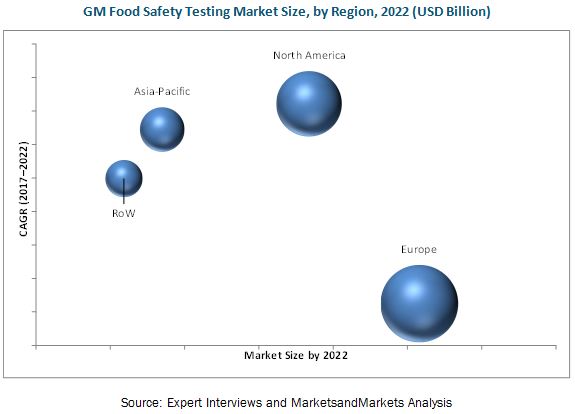
The GMO testing market is estimated to be valued at USD 1.58 Billion in 2017. It is projected to grow at a CAGR of 8.2% from 2017 to 2022, to reach 2.34 Billion by 2022. The base year considered for the study is 2016, and the forecast years are from 2017 to 2022. The market is driven by factors such as evolution in farming technologies, diverse genetically modified processed food production, labeling mandates in several countries, and proper nutrient sufficiency.

Download PDF brochure: https://www.marketsandmarkets.com/pdfdownloadNew.asp?id=101319111

The key market players adopted strategies such as expansions & investments, acquisitions, new product services & technology launches, and agreements, collaborations, and partnerships to meet the growing demand for safety testing for GM foods. Companies largely adopted strategies such as expansions and investments to expand their facilities and production capacities, to increase their capital, and to cater to the needs of the industry. Leading players have also been focusing on strengthening their strategic positions by implementing new technology and service development as a strategy to discover new advanced processes in the areas of food testing.

Key players identified in the GMO testing market include Thermo Fisher Scientific, Inc. (U.S.), SGS S.A. (Switzerland), Bureau Veritas SA (France), Intertek Group Plc. (U.K.), Eurofins Scientific SE (Luxembourg), TÜV SÜD AG (Germany), and Bio-Rad Laboratories, Inc. (U.S.). Other players such as ALS Limited (Australia), Mérieux NutriSciences Corporation (U.S.), AsureQuality (New Zealand), Romer Labs Diagnostic GmbH (Austria), and Microbac Laboratories, Inc. (U.S.) also have a strong presence in the global market.

Among the crops and processed foods tested for GMO, crops accounted for the largest market share in 2016, dominated by corn and soy. The bakery & confectionery items are largely tested for GMO testing, which include baking flours, breads, cakes, muffins, and other confectionery & baked goods. The market in breakfast cereals & snacks among processed foods is projected to grow at the highest CAGR due to the presence of a large amount of cereal grains and corn flakes. Food additives such as lecithin, vitamin E (tocopherol), and proteins from genetically modified soybean are also largely tested for GMOs.

Make an Inquiry: https://www.marketsandmarkets.com/Enquiry_Before_BuyingNew.asp?id=101319111

The European region is the largest market for GMO testing in 2016. Countries such as Germany, France, Italy, Spain, the U.K., and other EU countries are major importers of soy, corn, canola, and other crops and processed foods. The countries in the EU are stringent in GMO regulations, which in turn results in vigorous testing of GMO for safety. North America is the major exporter of soy, corn & canola to the world which requires the conduction of tests for GMO labeling according to the importing country mandates. Brazil and Argentina are also the active countries for genetically modified food testing for safety. Asia-Pacific countries are at the growth stage in this market. China is the major country followed by Japan, Korea, and Rest of Asia-Pacific.

Market Leaders in Grain Analysis Market

The grain analysis market is projected to reach 2,323.1 Million by 2022, at a CAGR of 5.8% from 2017 to 2022. The grain analysis market, by equipment, is projected to reach USD 761.7 Million in 2022 during the same period. The market is driven by an increase in the outbreak of foodborne illnesses, globalization in grain trade, and stringent safety and quality regulation for food & feed.

Key players in the grain analysis market include SGS SA (Switzerland), Bureau Veritas SA (France), Intertek Group plc (UK), Eurofins Scientific (Luxembourg), TÜV SÜD (Germany), TÜV Nord Group (Germany), and ALS Limited (Australia). Neogen Corporation (US) and Romer Labs Division Holding GmbH (Austria) are the key market players that provide both services as well as equipment for the grain testing market. Further, Thermo Fisher Scientific, Inc. (US), Shimadzu Corporation (Japan), Waters Corporation (US), and AB Sciex (US) are some key equipment providers in the grain analysis market.

SGS SA (Switzerland) is one of the active players in the grain analysis market; it is involved in inspection, verification, testing, certification, and quality assurance services.  The company offers testing services in the grain analysis market for various contaminants such as mycotoxins, pesticide residues, and pathogens. Moreover, the company has significant R&D centers and adopts techniques as per technology advancements. In addition, the company has strong testing services across the globe with strong presence in US, Germany, UK, France, and India among others; this has enabled it to strengthen its customer base and client base.

Download PDF brochure: https://www.marketsandmarkets.com/pdfdownloadNew.asp?id=40376219 

Eurofins Scientific is an international group of laboratories that provide testing and support services to the pharmaceutical, food, environmental, and consumer products industries, as well as to governments. The company adopts strategies such acquisition & expansion to increase its geographic presence. In March 2017, the company acquired a leading food testing lab in Istanbul named, Gözlem Gýda Kontrol ve Araþtýrma Laboratuvarlarý (Turkey) with a view of accelerating the rollout of its capabilities to serve the thriving food & beverage industry in the EMEA region. In 2016, it opened a new 557 square meters food testing facility in Paya Lebar (Singapore). This was expected to help the company to better serve the growing markets in growing markets in The Philippines, Thailand, and Indonesia.Thermo Fisher Scientific offers a complete and integrated portfolio of solutions and services for laboratory research and analysis, healthcare and clinical science, manufacturing, and other fields.  The company operates in over 150 countries across North America, Europe, Asia, and Latin America. It focuses on expansions as its key strategy to develop its networks. In 2015, the company opened a new center called Customer Experience Center (CEC) in Dubai. The center offers training facilities for researchers, educational institutions, healthcare providers, and food & beverage companies.

Market Leaders in Insecticide Seed Treatment Market

The insecticide seed treatment market is projected to grow at a CAGR of 11.3% from 2017, to reach a projected value of USD 5.04 billion by 2022. The increase in usage of seed treatment solutions on high-priced GM seeds, growth in the area under GM crops, increase in crop demand for biofuel and feed, and the use of insecticides as a low-cost crop protection solution are enhancing the market for insecticide seed treatment, globally. The growth in the insecticide seed treatment market is also driven by advanced farming technologies that ensure safe and reliable application of seed treatment formulas.

The key market players adopted strategies such as expansions, agreements, collaborations, partnerships, and acquisitions to increase their market presence and revenue generation. Leading players focused on strengthening their R&D proficiencies by capitalizing on advanced technologies and entering R&D agreements with other companies, to develop diversified product portfolios of insecticide seed treatment.

Download PDF brochure: https://www.marketsandmarkets.com/pdfdownloadNew.asp?id=202113976

Key Players:

• BASF SE (Germany)

• Monsanto Company (U.S.)

• Sumitomo Chemical Co., Ltd (Japan)

• Bayer CropScience AG (Germany)

• Syngenta AG (Switzerland)

Market Dynamics: 

Drivers

• Effective Solution to Minimize Crop Loss

• Additional Advantages of Seed Treatment Insecticides

• Increase in Area Under GM Crops

• Increase in Demand for Biofuel and Feed

Restraints

• Stringent Government Regulations

• Depressed Commodity Prices and Lower Farm Incomes

• Structural Weakness of the Seed Treatment Industry in Asia-Pacific and African Economies

Opportunities

• Issues Associated With GE Crop Varieties

• Technological Advancements in Seed Treatment

Challenges

• Existing Ban on Neonicotinoids

• Lack of Seed Treatment Awareness at Farmer Level

Insecticide seed treatment are used to control insect pests by specifically inhibiting or killing the insect causing the infection. The ease in application mode has made these insecticide seed treatment more convenient to use for the farmers. Neonicotinoids are projected to be the fastest-growing chemical sub-type between 2017 and 2022. The most promising advantage of neonicotinoid insecticides in pest control is their water solubility, which allows them to be applied to the seed and be absorbed by plants. Seed treatment applications reduce the risks of insecticide drift from the target site.

Make an Inquiry: https://www.marketsandmarkets.com/Enquiry_Before_BuyingNew.asp?id=202113976

South America is one of the largest contributors to the global insecticide seed treatment, due to the increase in use of insecticide seed treatment through advanced agricultural techniques and rise in need for food security in the South American countries. Brazil and Argentina were the largest country-level markets in the South American region in 2016. High market penetration by the leading insecticide seed treatment companies, for enhancing the agricultural growth and productivity, and the decrease in arable land are the main factors influencing the growth of the insecticide seed treatment market in South America.

Key Players in the Termite Bait Systems Market

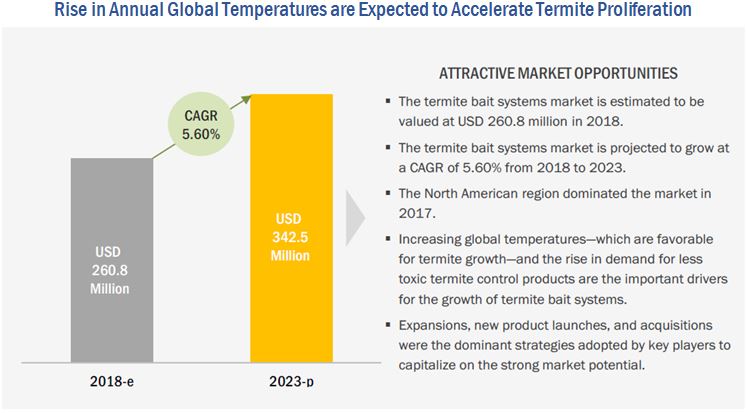
The termite bait systems market is estimated to be USD 260.8 million in 2018 and is projected to reach USD 342.5 million by 2023, growing at a CAGR of 5.60%. The growing demand for less toxic and target-specific termite control solutions is expected to boost the market for termite bait systems.

Key players in the termite bait systems market include DowDuPont (US), BASF (Germany), Bayer (Germany), Sumitomo Chemical (Japan), Syngenta (Switzerland), and Rentokil Initial (UK). Spectrum Brands (US), Ensystex (US), PCT International (Australia), Rollins (US), Terminix International (US), and Arrow Exterminators (US) are other key market players who also have a significant market presence.

Subterranean termites are the most common termites present globally and cause the most destructive damage to houses and other properties. Since subterranean termites are found below ground level, in-ground termite bait stations are used to control these termite infestations. The in-ground segment accounted for 72.5% of the global termite bait systems market in 2017, in terms of station type.

Download PDF brochure: https://www.marketsandmarkets.com/pdfdownloadNew.asp?id=211702476

The commercial & industrial segment is projected to register the highest growth rate from 2018 to 2023. The increasing commercial and industrial construction activities, especially in the developing regions, have led to an increased demand for termite control services. The commercial & industrial sector needs to adhere to certain hygiene standards. This can create a significant demand for pest and termite control services in and around commercial and industrial areas. Additionally, the need for less-toxic termite control methods, such as termite baits, is also expected to gain importance in the coming years from the commercial & industrial segment.

The North American region accounted for the largest share in 2017 due to the presence of players such as DowDuPont (US), BASF (Germany), and Rentokil (UK). Moreover, the presence of these companies in technologically advanced countries such as the US and Canada, and higher consumer awareness about and preference for pest control services have been key factors for the increasing adoption of bait systems for termite control.

The market for termite bait systems in the Asia Pacific region is projected to grow at the highest CAGR from 2018 to 2023, owing to the increasing investments in the commercial & industrial sectors.

Cargill (US) and BASF (Germany) are the Key Players in the Inoculants Market

The inoculants market is estimated at USD 808 million in 2019 and is projected to reach USD 1,207 million by 2025, at a CAGR of 6.9% during the forecast period. The global inoculants market is projected to grow in the coming years attributed to the growing trends of adopting organic and environment-friendly farming practices due to ill effects of fertilizers and chemicals, rise in feed grains, increase in compound feed prices, and expansion of the livestock industry, particularly in the South American and Asia Pacific regions.

The key players in the inoculants market include Corteva (US), BASF (Germany), Bayer (Germany), Novozymes (Denmark), Verdesian Life Sciences (US), Advanced Biological Marketing Inc. (US), BrettYoung (US), Precision Laboratories, LLC  (US), Queensland Agricultural Seeds Pty (Australia), and XiteBio Technologies Inc. (Canada). Apart from this, other key players include Chr. Hansen (Denmark), Lallemand Inc. (Canada), Kemin Industries, Inc (US), Provita Supplements GmbH (Germany), Cargill (US), Archer Daniels Midland Company (US), BIOMIN Holding GmbH (Austria), Terramax (US), BIO-CAT Microbials (US), and MBFi (South Africa).

To know about the assumptions considered for the study download the pdf brochure

Cargill (US) is among the leading players in the inoculants market. The company provides forage inoculants through its Promote brand. The Promote portfolio offers feed additives for the swine, poultry, dairy, and beef animal nutrition industries.  Its products are developed on the basis of Cargill Animal Nutrition’s global network of R&D centers, which is backed by over 500 researchers in 17 state-of-the-art facilities. Promote Forage-Mate product line is offered through Cargill, Provimi, and Citura. Cargill provides forage inoculants under its brand, Promote Forage-Mate, for alfalfa, corn, grass, small grain, and sorghum. Promote’s non-additive feed additive solutions are backed by Cargill Animal Nutrition’s innovative network of researchers and application scientists. It manufacturers forage inoculants in its Specialty Blending Facility, a state-of-the-art site, which was built in 2016. The company has 500 research professionals and has over 5 innovation centers, 13 technical application centres, and 19 global labs, which gives it a competitive edge over other players.

BASF (Germany) provides inoculants for soybeans, chickpeas, and peanuts under its brands, Vault and Nodulator. The products are formulated with rhizobia, and help in offering maximum nitrogen fixation and increasing yield potential of the crops. The growing demand for agricultural inoculants has encouraged the company to focus on effective strategies, such as expansions and new product launches, to attain a leading position in the market. In 2017, the company expanded its manufacturing facility to increase the production of its inoculant brand, Nodulator Duo, a granular inoculant for pea and lentil production in Canada. It made an investment of CAD 10 million (USD 8.0 million). In 2019, the company launched an agricultural inoculant, New Nodulaid, specifically designed for the Australian farmers.