Demand for Improved Crop Varieties to Drive the Growth of the Plant Genomics Market

The global plant genomics market is estimated to be valued at USD 7.3 billion in 2019 and is projected to reach USD 11.7 billion by 2025, recording a CAGR of 8.3%. The plant genomics market has high potential in emerging markets, such as Asia Pacific, due to the increasing awareness about the possible ill-effects of GM crops or food products in developing countries.

By trait, the plant genomics market is segmented into herbicide tolerance, disease resistance, yield improvement, and others. According to industry experts from prominent seed manufacturers, disease resistance and herbicide tolerance are the traits that have been on demand, owing to the increasing instances of early germination pest attacks and regulations against crop protection chemicals.

To know about the assumptions considered for the study download the pdf brochure

Based on application, the plant genomics market is segmented into cereals & grains, oilseeds & pulses, fruits & vegetables, and others. Among cereals & grains, rice, wheat, and corn are majorly bred using plant breeding & sequencing techniques, to develop high-performing varieties. Rice, along with wheat and corn, underpins the global food supply. Field crop science (including breeding, pathology, and economics) has contributed to a steady increase in crop productivity from decades through the availability of better varieties and hybrids with more effective pest and disease control and better production capacities. Molecular engineering technique development for genetic analysis has led to a great upsurge in the knowledge of cereal genetics and understanding of the structure and behavior of cereal genomes.

Based on objectives, the plant genomics market is segmented into DNA/RNA sequencing, genotyping, market-assisted selection, gene expression profiling, GMO-trait purity testing, DNA extraction & purification, and other objectives. DNA/RNA sequencing is estimated to be the most popular service required in the plant genomics market. The increasing number of samples tested per machine run due to efficient technological developments have encouraged companies to offer these services at cheaper costs. A common trend witnessed for basic information sequencing in the agricultural industry and among research professionals is to identify common markers such as plant height for breeding purposes. However, with the evolution of plant genomics research, the demand for genotyping tests is projected to surpass the demand for other objectives by 2025.

By type, the plant genomic market is divided into molecular engineering, genetic engineering, and others. The major plant breeders such as Bayer (Germany), Monsanto (US), DowDuPont (US), and BASF (Germany) have invested in plant breeding and been developing seed traits based on molecular breeding and genetic engineering techniques. Moreover, the favorable regulatory environment for GM crops in the US has encouraged plant breeders to adopt biotechnological methods at a larger scale in the country. The use of genetic engineering techniques for corn and soybean breeding is the highest in the US, while the adoption of molecular breeding techniques in Canada has been slowly rising.

The major players, such as Eurofins Scientific (Luxembourg), Agilent Technologies (US), and Illumina, Inc. (US) in the plant genomics market are focusing on new product launches, expansions & investments, acquisitions & mergers, agreements, joint ventures, collaborations, and partnerships to expand their global footprint.
Calcium Propionate Market – Anticipated To Witness High Growth In The Near Future

The calcium propionate market is estimated at USD 277.1 million in 2018 and is projected to reach a value of USD 363.3 million by 2023, at a CAGR of 5.6%. The growth of the calcium propionate market is driven by factors such as growth in demand for bakery products with extended shelf life and cost advantages provided by calcium propionate over other preservatives, which contribute to increased demand and adoption rate.

Market Dynamics:

Increasing health concerns of consumers are driving the market for calcium propionates

The market for calcium propionate is driven by this rising demand for nutritional food and the increasing health consciousness among consumers. The preference of natural food additives over synthetic ones to eliminate health concerns also increases the demand for calcium propionate.

The food industry has begun using natural calcium propionate to make it as safe to consume as organic calcium salt of propionic acid, which is produced by fermentation with a selected strain of propionibacterium. The food industry also uses advanced technologies such as bacteriophages, MAP, and alternative preserving techniques combined with preservatives to maintain the quality and safety of food.

Request for Sample Report Pages: https://www.marketsandmarkets.com/requestsampleNew.asp?id=1288

Stringent regulations are a major restraint

Stringent legislations and regulations with respect to food safety and shelf life have meant that processing industries are keen on getting the right formulation to present the best food product to the consumer, and preservatives play a pivotal role in this aspect. Local and regional regulations are required to be checked for allowed applications and dosage levels. The stringent regulations pertaining to quality and food safety are projected to restrain the global calcium propionate market growth. For instance, in the US, the usage level of propionic acid and propionates is 0.1% to 0.4%. According to federal regulations, the addition of calcium propionate to a food product raises the pH by approximately 0.1 to 0.5 pH units depending on the amount, pH, and type of product. Also, federal regulations limit the maximum level for flour, white bread, and rolls at 0.32% based on the weight of the flour; for whole wheat products at 0.38% based on the weight of the flour; and for cheese products at 0.3%. Such stringent monitoring and regulations restrain the market growth.

Untapped emerging markets are providing growth opportunities

The Middle Eastern & African countries are increasingly adopting calcium propionate due to changes in consumer lifestyles and increasing demand for fresh products. Asia Pacific is the second-largest market for calcium propionate after North America in 2023, owing to the increased awareness about calcium propionate and the benefits offered. It remains one of the important markets for calcium propionate manufacturers due to its size and its regulatory environment.

Growing Demand For Functional and Convenience Food Products and the Rising Trend of Clean Label Drive the Gelatin Market

The global gelatin market size is projected to grow from USD 2.6 billion in 2018 to USD 3.6 billion by 2023, at a CAGR of 6.6% during the forecast period. The gelatin market is driven by various factors such as the growing demand for functional and convenience food & beverage products, increasing application in the pharmaceutical industry, and rising demand for clean-label products. However, competition from gelatin alternatives and cultural restrictions are projected to hinder the growth of the market.

Download PDF Brochure: https://www.marketsandmarkets.com/pdfdownloadNew.asp?id=850

Abundant availability and health benefits of gelatin drive the bovine skin market growth

In terms of value, the bovine skin segment is projected to grow at the highest CAGR from 2018 to 2023. Bovine is one of the most widely used sources to manufacture gelatin because of its abundance and easy availability. Gelatin is also helpful in muscle mass building, metabolism boosting, and skin & hair improvement. Yet, some consumers demand an alternative gelatin source due to factors such as the growing demand for vegan food products, religious barriers, health concerns, and increased raw material prices. The rising demand for sports nutrition and fortified food & beverage products fuels the demand for bovine skin gelatin.

Key Players:

  • Darling Ingredients (US)
  • Gelita (Germany), Nitta Gelatin (Japan)
  • Tessenderlo Group (Belgium)
  • Weishardt (France)
  • Trobas Gelatine (Netherlands)
  • India Gelatine & Chemicals (India)

The food segment is projected to hold the largest market share during the forecast period

In terms of value, the food segment is estimated to hold the largest market share in 2018. Gelatin is considered as a non-allergic protein source to be incorporated in functional & nutritional food & beverage products. The rising demand for nutritional confectionery products as well as functional beverages such as nutritional bars and sports drinks has been stimulating the demand for gelatin. Moreover, gelatin is naturally derived from animal skin and bone, making them clean label ingredients.

Speak to Analyst: https://www.marketsandmarkets.com/speaktoanalystNew.asp?id=850

Asia Pacific is projected to be the fastest-growing region in the gelatin market, in terms of value

The Asia Pacific market is projected to be the fastest-growing. According to the Population Reference Bureau in 2014, the fast-growing consumer markets of China, India, and other Asia Pacific countries have a combined population exceeding four billion people; this is projected to become an increasingly important driver for global consumption over the next two decades, led by rapidly rising household incomes and fast-growing middle-class population. As a result, the region is estimated to dominate the gelatin market in terms of value.

Research Coverage

The study covers the gelatin market across segments. It aims at estimating the market size and its growth potential across different segments such as source, application, and region. The study also includes an in-depth competitive analysis of key players in the market, along with company profiles, key observations related to product and business offerings, recent developments, and key market strategies.

Specialty Food Ingredients Market : Increasing Demand for Convenience Foods Drives the Market

The specialty food ingredients market value was USD 66,466.2 million in 2014 and is projected to reach USD 91,241.8 million by 2020 at a CAGR of 5.5%. R&D and technological innovations, uproar for convenience foods, nutrition and taste convergence, and growing end-user applications are some of the major drivers of the specialty food ingredients market.

The specialty food ingredients market was dominated by the key players such as Archer Daniel Midland (U.S.), Royal DSM N.V. (The Netherlands), Kerry Groups (Irelands), Cargill Inc. (U.S.), and E. I. DuPont de Nemours and Company (U.S.) with respect to their developments in the past few years. These companies accounted for more than 50% of overall developments in the specialty food ingredients market. Other players include companies such as Givaudan Flavors (Switzerland), Sensient Technologies (U.S.), CHR. Hansen (Denmark), Ingredion Incorporated (U.S.), and Tate & Lyle PLC (U.K.).

Download PDF brochure @ https://www.marketsandmarkets.com/pdfdownloadNew.asp?id=252775011

The companies adopted various key strategies such as new product launches, expansions, acquisitions, partnerships & collaborations, among which the new product launches were implemented the most. The companies which are actively involved in the new product development and launches are Cargill Inc., Chr. Hansen, Dupont, Ingredion Inc., DSM, Sensient Technologies, and Tate & Lyle. In 2015, Chr. Hansen launched new cottage cheese culture, YoFlex Acidifix culture, and various other cultures to help the manufacturers to tap high protein trend in the starter cultures market. DSM launched customized Omega-3 solution for dietary supplements.

Cargill captures the topmost place in the specialty food ingredients market. It operates through its five business segments, such as food ingredients & applications, origination & processing, agriculture services, industrial and risk & financial management. The company offers specialty food ingredients, such as hydrocolloids, sugar substitutes, acidulants, functional food ingredients, emulsifiers, and specialty starches. It has its global presence covering North America, Latin America, Africa, Europe, and Asia-Pacific. Cargill adopted new product launch as its major strategy. In 2015, Cargill launched ‘EverSweet’ sweetener, instant starch, and IngreVita EPA/DHA omega-3 oil. Cargill acquired pectin operations of FMC (Italy) to expand its texturizing portfolio.

Royal DSM N.V. (The Netherlands) is primarily engaged in production of four division animal nutrition & health, food beverages & dietary supplements, flavours & fragrance, others (Energy, construction, Automotive, construction). The nutrition segment of the company comprises DSM Nutritional Products and DSM Food Specialties that offers various specialty food ingredients for the dairy and frozen food, bakery products, confectionery and condiments, meat, poultry, & seafood, beverages and oil & fats. The company operates globally through its subsidiaries such as DSM Nutritional Products Canada Inc. (Canada), DSM Desotech Inc. (U.S.), DSM Nutritional Products A/S (Denmark), DSM Nutritional Products AG (Switzerland), DSM Nutritional Products Asia-Pacific (Singapore), DSM Nutritional Products France (France), DSM Agro Deutschland GmbH (Germany), and others. In 2015, the company launched customized Omega-3 solution for dietary supplements and Tolerase G, an enzyme that effectively helps to digest residual gluten which helps to meet growing demand for gluten sensitive consumers. DSM acquired Aland (China), vitamin C producer. Due to this strategy DSM widen its vitamin portfolio and can cater emerging market for vitamins include China, India.

Market Leaders – Cattle Feed & Feed Additives Market

Key players in the cattle feed and feed additives market include Royal DSM N.V. (The Netherlands), Cargill, Incorporated (U.S.), Archer Daniels Midland Company (U.S.), New Hope Group (China) and Charoen Pokphand Group (Thailand). Other players which include Land O’ Lakes Inc. (U.S.), Nutreco B.V. (The Netherlands), BASF SE (Germany), and Country Bird Holdings Limited (South Africa) also attained strong position in the global cattle feed and feed additives market.

Key strategies such as expansions, agreements, and new product developments have been adopted by the key players in the cattle feed & feed additives industry. The leading players have been investing in R&D capabilities to offer diversified product portfolios to provide optimum nutritional products for the livestock and to strengthen their market position.

Browse in-depth TOC on Cattle Feed & Feed Additives Market

175 – Tables
67 – Figures
214 – Pages

These core strengths help the players to diversify their business geographically and strengthen distribution networks. Market leaders such as Cargill, Incorporated (U.S.), Archer Daniels Midland Company (U.S.), and CP Pokphand group (Thailand) have successfully tapped the potential markets through the adoptions of strategies such as expansions and acquisitions in Asia-Pacific and Latin America. Agro-commodity players such as Archer Daniels Midland Company (U.S.) and Cargill, Incorporated (U.S.) utilized their global presence to procure raw materials in the most efficient way possible to meet the feed demand in each regional market.

Expansions and investments were the key strategies adopted by industry players to achieve growth and expand their presence in the cattle feed and feed additives market. Cargill, Incorporated (U.S.) lived up to its reputation as a key global player by strengthening its feed additive capacities across developing markets such as in Mexico and Asia. In august 2015, the company expanded its feed premix plant to meet the demand in Mexico. With the help of research knowledge and extensive global operations, Cargill, Inc. has maintained its hold in the cattle feed and feed additives market.

Request for Customization @ https://www.marketsandmarkets.com/requestCustomizationNew.asp?id=5496670

Archer Daniels Midland Company (U.S.) has been keen to differentiate its product portfolio within the U.S. market by developing a protein-based diet portfolio for dairy cattle segments. In April 2013, ADM Co. had also shown immense interest in developing a feed additives market base in China with the opening of its third premix plant.

However, highly fragmented markets such as Asia-Pacific and Middle East are composed of a large number of regional players. Government-run companies such as Amul Milk Cooperative (India) and Chinese state-run feed companies provide cattle feeds at affordable rates, that acts as a significant barrier for many international feed manufacturers.

Attractive Opportunities in the Beta-Glucan Market

The beta-glucan market was valued at USD 307.8 million in 2016, and is expected to grow at a CAGR of 7.57%, to reach USD 476.5 million by 2022. The market is primarily driven by factors such as growing health consciousness among consumers and the increasing health expenditure. North America is projected to be the fastest-growing region as the consumers in are gradually becoming aware of the health benefits of oat beta-glucan and its significance in enhancing the body’s immunity. One of the major restraints in the growth of the beta-glucan market is the inconsistency in regulatory norms governing beta-glucan.

Pharmaceuticals segment is projected to be the fastest-growing application

The pharmaceuticals application of beta-glucan dominates the market due to its ability to cure problems such as obesity, blood pressure, and diabetes. With the increase in the quality and the arrival of clinically proven products in the market, the trust of consumers is growing for these products. The growing market for functional food & beverages is presenting opportunities for the application of beta-glucan in the food & beverage industry.

Download PDF Brochure @ https://www.marketsandmarkets.com/pdfdownloadNew.asp?id=5191796

North America: High growth is expected in the beta-glucan market

North America is projected to be the fastest-growing market for the period considered for this study as the beta-glucan market here is led by its broad applications in various products, along with their health benefits. The North American region is majorly driven by the U.S. market and the increasing incidences of diseases and widespread application of fibers & specialty ingredients in various food products, beverages, and dietary supplements.

Speak to Analyst @ https://www.marketsandmarkets.com/speaktoanalystNew.asp?id=5191796

Key Market Players

Beta-glucan market includes the profiles of leading companies such as Cargill (U.S.), Kerry Group plc (Israel), Tate & Lyle (U.K.), Royal DSM (Netherlands), Ohly (Germany), Frutarom (Israel), MilliporeSigma (U.S.), Super Beta Glucan (U.S.), and Lesaffre Human Care (France).

Hydroponics Market – Growth, Trends, and Forecast (2019-2025)

The report Hydroponics Market by Type (Aggregate Systems, Liquid Systems), Crop Type (Vegetables, Fruits, Flowers), Equipment (HVAC, Led Grow Light, Irrigation Systems, Material Handling, Control Systems), Input, and Region – Global Forecast to 2025″, published by MarketsandMarkets™. The hydroponics market is projected to reach USD 16.0 billion by 2025, from USD 8.1 billion in 2019, at a CAGR of 12.1% during the forecast period. The market is driven by factors such as the growing acceptance of controlled environment agriculture and increasing technological advancements in hydroponic systems.

Download PDF Brochure: https://www.marketsandmarkets.com/pdfdownloadNew.asp?id=94055021

Increasing adoption of urban farming is the key factor driving the growth in the hydroponics market during the forecast period.

Hydroponics is a technique of growing plants in water and nutrients, without using soil as a base. This technique is gaining rapid popularity, as growers can obtain higher yields with each harvest. The recent advances in urban farming and the emergence of vertical farming technology have further fueled the growth of this market. Hydroponic systems have been a combination of multiple technologies and hence encompass a specific set of system models. Based on the system model, the hydroponic systems market can be classified into aggregate and liquid systems. Aggregate systems utilize a grow media for plant growth support and nutrition, while liquid hydroponic systems do not require a grow media. Owing to their higher efficiency and productivity obtained, liquid systems have been in high demand among the growers for vegetable cultivation.

Browse in-depth TOC onHydroponics Market

90 – Tables
41 – Figures
170 – Pages

By input, the nutrients segment dominated the hydroponics market in 2018.

Hydroponic farming is also termed as substrate-based farming due to the use of growing media, nutrient, and water, instead of soil. In the absence of the soil, nourishment to the plants is imparted through these nutrients and grow media inputs. Nutrients form an integral part of all types of hydroponic systems. Varied types of grow media are available in the market at different prices, and the use of a suitable growing media depends on the crop type and crop cycle. There are two major types of nutrients used in hydroponics-macronutrients, and micronutrients. Hydroponics helps the grower to take complete control over the implementation of fertilizers, in terms of type and concentration.

Speak to Analyst: https://www.marketsandmarkets.com/speaktoanalystNew.asp?id=94055021

Europe is projected to dominate the hydroponics market by 2025.

The hydroponics market in Europe is projected to witness significant growth during the forecast period due to the growing adoption of CEA for horticultural crops and increasing development of new innovative technologies that target specific crop needs. The adoption of hydroponics has been the highest in the Netherlands, followed by Spain and Turkey. According to industry experts, almost 90% of the greenhouses in the Netherlands are converted to hydroponic structures, and a majority of this area is used for flower and vegetable cultivation. Though the area under cover is high in Spain, Italy, and France, the adoption of hydroponics across these greenhouses is not more than 20% in these countries, thereby providing fair growth potential for this region.

This report includes a study of the development strategies, along with the product portfolios of leading companies. It also includes the profiles of input providers such as Signify Holdings (Netherlands), Argus Control Systems (Canada), Heliospectra AB (Sweden), Scotts Miracle Gro (US), American Hydroponics (US), and LumiGrow (US). It also includes the profiles of crop producers such as Aerofarms (US), Terra Tech Corp (US), Emirates Hydroponic Farms (UAE), Triton Foodworks Ltd. (India), Urban cultivator (Canada), Village Farms (Canada), Green Sense Holdings (US), Iron Ox (US), Gracia Farms (UAE), Bright Farms (US), Freight Farms (US), Eurofresh (US), and Letcetra Agritech (India).

Food Stabilizers (Blends & Systems) Market: Market Dynamics

Market Dynamics 

Drivers

  • Multifunctionality of Food Stabilizers in Various Food & Beverage Products
  • Increase in Demand for Customized Products
  • Growth in Demand for Naturally Sourced Ingredients

Restraints

  • Stringent International Quality Standards and Regulations
  • Legal Framework of Food & Beverage Additives in Singapore

Opportunities

  • Emerging Markets: New Growth Frontiers
  • Increase in Investments for Research & Development to Develop New Products

Challenges

  • Fluctuation in Prices of Raw Materials
  • Consumer Demand for Clean Label Products and Perception of Food Labeling Thereof

Download PDF brochure @ https://www.marketsandmarkets.com/pdfdownloadNew.asp?id=41788893

The report “Food Stabilizers (Blends & Systems) Market by Source (Plant, Microbial, Seaweed, Synthetic, and Animal), Application (Dairy, Bakery, Confectionery, Beverages, Convenience Foods, Meat, and Sauces & Dressings), Function, and Region – Global Forecasts to 2023”, The global food stabilizers (blends & systems) market is estimated to be valued at USD 2.3 billion in 2018 and is projected to reach USD 2.8 billion by 2023, at a CAGR of 4.0% during the forecast period.

Browse in-depth TOC on Food Stabilizers (Blends & Systems) Market

119 Tables
47 Figures
212 Pages  

The food stabilizers (blends & systems) market is driven  by factors such as versatility of food stabilizers in various food &  beverage products and an increase in  demand for customized products by food manufacturers  and growth in concerns toward naturally sourced ingredients. According to the Food  Marketing Institute 2015, US Grocery Shopper Trends Report, more than 25% of  the consumers preferred natural food ingredients and more than 35% of consumers  preferred no artificial ingredients in their food products. With the increasing popularity and consumption of convenience  and ready-to-eat food products, the demand for customized food & beverage  stabilizer blends and systems is projected to grow.

Key Players:  

  • Cargill (US)
  • DowDuPont (US)
  • Tate & Lyle (UK)
  •  Kerry (Ireland)
  • CP Kelco (US)
  • Palsgaard (Denmark)
  • Ashland (US)
  • ADM (US)
  • BASF (Germany)
  •  Ingredion (US)
  •  Hydrosol (Germany)
  •  Nexira (France)

Speak to Analyst @ https://www.marketsandmarkets.com/speaktoanalystNew.asp?id=41788893

The Asia Pacific region is projected to be the fastest-growing market for food stabilizers (blends & systems) for the next five years. The abundant availability of raw materials such as seaweed and guar gum, along with the growing popularity of dairy products, beverages, and convenience food, is a growth driver in the Asia Pacific food stabilizers market. Developing economies such as China, India, and Japan are potential markets for the food stabilizers. The main driving force for the growing market is the scope and range of innovative system solutions and food processing technologies.

Hydrocolloids Market : Recent Market Developments

The hydrocolloids market is estimated to be valued at USD 8.4 billion in 2018 and is projected to reach USD  11.4 billion by 2023, at a CAGR of 5.3% during the forecast period. The growth of the hydrocolloids market is driven by factors such as the expansion of the processed food industry due to the increasing demand for convenience foods in regions such as the Asia Pacific, South America, and the Middle East & African. Apart from this, manufacturers are engaged in R&D to offer high-quality hydrocolloids due to its multi-functionality in the food industry.

Key Players :

  • DowDupont (US),
  • Ingredion (US),
  • Cargill (US),
  • Kerry (Ireland),
  • Archer Daniels Midland Company (US),
  • Palsgaard (Denmark),
  • Darling Ingredients (US),
  • CP Kelco (US),
  • Ashland (US),
  • BASF (Germany)

Download PDF brochure @  https://www.marketsandmarkets.com/pdfdownloadNew.asp?id=1231

Expansion of the food processing industry due to the increased demand for convenience foods in the emerging countries of the Asia Pacific and South America is projected to create lucrative opportunities for hydrocolloids manufacturers in the coming years.

By source, the botanical segment is projected to be one of the fastest growing segments for the hydrocolloids market due to the increased demand for natural products and ingredients. Some of the popular hydrocolloids of botanical origin used by manufacturers of the food & beverage industry include gum arabic, gum tragacanth, gum karaya, and gum ghatti.

By type, guar gum is projected to be the fastest growing segment in the hydrocolloids market. Derived from the guar plant, it finds applications in the food, pharmaceutical, and cosmetics industries. In the food industry, it is used as a thickening and binding agent. It is used in a wide variety of food products such as ice cream, baked goods, cheese, soups, gravies, noodles, and meat. In addition, it is used in cosmetics products such as lotions, creams, and shampoos. In the pharmaceutical industry, it is used as a binder in tablets. Expansion of the food processing industry in the developing countries is projected to boost the sales of guar gum in the coming years.

Speak to Analyst @ https://www.marketsandmarkets.com/speaktoanalystNew.asp?id=1231

North America is the fastest-growing market for hydrocolloids and is projected to record the highest CAGR during the forecast period. The North American market is completely driven by the US, which accounted for nearly 84.0% of the market share in 2017. The US has a large market for bakery, confectionery, convenience food, and packaged food products; hence, it constitutes a major share in the market. Consumers in the US are calorie-conscious, due to which low-calorie and low-fat foods are popular in the country. The increasing prevalence of obesity and cardiac diseases have led to an increasing demand for natural and low-calorie food products among consumers. Food manufacturers are therefore concentrating on the application of natural hydrocolloids and their functions as fat replacers.

Recent Market Developments:

Recent developments are helpful to know the market trend and growth strategies adopted by players in the market. For instance, in the previous version, expansions were the major strategies adopted by players during 2010–2015. The current analysis shows that expansions, new product launches, mergers, and acquisitions have become more popular during 2013–2018.

Feed Acidulants: The ban on antibiotic growth promoters creates a significant opportunity for feed acidification

It is well known that organic acids act as preserving agents and control the growth of certain bacteria that are widely used in the food industry. In the feed industry, acidulants are widely used for their usefulness in promoting a healthy gut by modulating the intestinal flora through their bacteriostatic and/or bactericidal effects on different types of bacteria. The acidulants used in the feed have two modes of action. The first one is the reduction of pH in the digestive tract and the second is the direct anti-microbial effect against gram-negative bacteria like E. coli.

Feed acidulants are expected to witness healthy growth and adoption during the forecast period due to the ban on antibiotics in the US and the European Union (EU), and the growing government aids or funds promoting the feed industry wellness. Furthermore, the high threat of diseases in livestock is expected to impact the market positively during the forecast period. While manufacturers are looking forward to tapping this industry, the major hindering factors are the rising prices of feed acidulants and the maintenance of the efficacy of feed acidulants due to their corrosive properties. These factors are restraining the growth of this market.

According to MarketsandMarkets, the global feed acidulants market is projected to grow from USD 2.73 billion in 2018 to USD 3.45 billion by 2023. The growth of the market is expected to be directly affected by the growth of feed additives and the increasing government aid for livestock welfare. The feed acidulants industry is projected to grow at a CAGR of 5.1% from 2018 to 2023.

Download PDF brochure @ https://www.marketsandmarkets.com/pdfdownloadNew.asp?id=268013619

What is driving the growth of the feed acidulants market?

  • High threat of diseases in livestock

The outbreak of diseases such as avian flu, BSE (bovine spongiform encephalopathy), and SARS (severe acute respiratory syndrome) not only affects livestock breeding and the economy but also poses a serious threat to human health. The emergence of swine diarrhea in the US caused significant losses to swine farmers. Countries such as China, India, and Indonesia are constantly facing outbreaks of avian flu and swine flu due to their hot and humid climatic conditions. Meat vendors, meat processors, wholesalers, retailers, and ultimately, livestock growers suffer financial losses due to the culling of disease-affected animals, which further leads to a drop in animal productivity.

The use of feed acidulants in such cases proves to be an effective medium to reduce disease outbreaks. They improve animal health, improve feed efficiency by inhibiting pathogenic bacteria growth, and reduce the risk of sub-clinical infections. The addition of feed acidulants to the feed also helps in maintaining an optimum pH in the stomach of the livestock, stimulates feed consumption, and improves protein and energy digestibility by reducing microbial competition with host nutrients and endogenous nitrogen losses. Therefore, the inclusion of feed acidulants is important for the maintenance of animal health. This is one of the major factors driving the demand for feed acidulants.

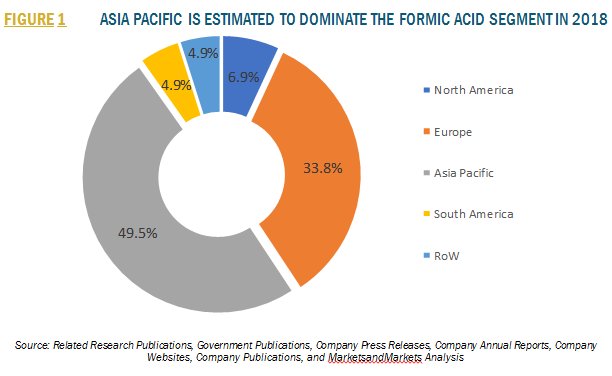
The formic acid segment is projected to be the fastest-growing in the global market, in terms of value

The formic acid segment is projected to be the fastest-growing segment during the forecast period, in terms of value. Formic acid is a colorless fuming liquid and remains soluble in water in almost all proportions. This characteristic of the acidulant enables its proper mixture in the feed, thereby allowing consistent feed formulations. While formic acid remains highly efficient in improving ATTD (apparent total tract digestibility) of protein, it also aids in improving feed efficiency.

Formic acid also acts as an ensiling agent, apart from being used for the preservation and acidification of feed mixes. While being used as an ensiling agent, formic acid supports lactic acid bacteria activity during the fermentation process. The acidulant remains particularly effective in ensiling wet and high-protein fodder plants. Additionally, the use of formic acid is known to be environmentally safe, as it decomposes after it has been used as an ensiling agent. Formic acid also boasts antibacterial effects that help to preserve the feed. Formic acid, when used in tandem with propionic acid, enhances this functionality further.

Speak to Analyst @ https://www.marketsandmarkets.com/speaktoanalystNew.asp?id=268013619

Based on region, the feed acidulants market is segmented into North America, Europe, Asia Pacific, South America, and Rest of the World.

  • South America accounted for the market size of USD 167.2 million, in the feed acidulants market in 2017. It is projected to grow at the highest CAGR of 5.6% during the forecast period. BASF SE (Denmark) and Kemin Industries Inc. (US) are the two of the prominent players present in the region.
  • Increase in annual livestock production in South America subsequently drives the demand for compound feed, which, in turn, drives the consumption of feed acidulants. The rapid expansion of the livestock industry in the region has also resulted in steady imports of feed acidulants. According to the WHO, the per capita meat and milk & dairy product consumption in South America was the highest in 2015, as compared to other regions; and this trend is expected to continue to drive the demand for feed acidulants in this region.