PEA STARCH: AN ECONOMICAL OPTION TO IMPROVE TEXTURE OF FOOD PRODUCTS

Pea starches are carbohydrates extracted from peas for application in the food and feed industries. In addition, due to their biodegradable and renewable nature, they are increasingly being used as an alternative to fossil fuel components in various chemical applications, including detergents, cosmetics, and pharmaceuticals. They are stable under high temperature, and various pH levels and have good resistance to shearing. In addition, they are mostly used for the aseptic processing of food products such as sauces, soups, and meat products.

Pea starch stability is also used for enhancing the crispness in food products along with improving volume in various extruded snacks. Along with various nutritional properties, it is also used in products such as gluten-free and lactose-free solutions, low-calorie formulations, and allergen solutions, due to which it is widely used in the pet food industry.  

According to MarketsandMarkets, the global pea starch market is projected to grow from USD 91.8 million in 2018 to USD 134.7 million by 2023. The market growth is attributed to the rise in demand for high-quality convenience food and beverage products.

What is driving the growth of the pea starch market?

  • The rising demand for pea starch in various food and industrial applications

Pea starch offers various functions such as gelling, texturizing, binding, coating, thickening, and film forming. Due to its multifunctionalities, pea starch is used in various food applications, such as pasta, noodles, bakery products, confectioneries, soups, sauces, meat products, and poultry. It is also widely used in vermicelli as a binding agent. Pea starch is also a potential replacement for other starches in food and beverage applications as it is an economical option and offers a wide range of functions. In the pharmaceutical and cosmetic industries, pea starch is used for its gelling, thickening, and texturizing properties. With the rapid growth and changing trends in the pharmaceutical industry, the demand for pea starch is projected to increase. Companies such as Meelunie B.V. (Netherlands) and Parrheim Foods (US) are the major producers of pea starch, which cater to the pharmaceutical and cosmetic industries.
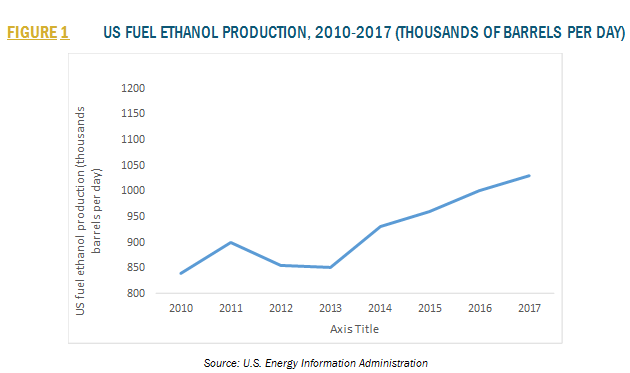
  • The rapid growth in the corn ethanol industry has contributed to a significant increase in the prices of corn and ethanol, due to which producers are focusing on shifting from corn to low-cost alternatives such as pea starch, which in turn, contributed to the growth of the pea starch market. The production of ethanol by pea starch improves the fermentation rates and allows ethanol producers to expand the annual production capacity and decrease capital costs by increasing the number of fermentations per year.
  • Starch granules, when heated in excess water above their gelatinization temperature, undergo irreversible swelling, resulting in amylose leaching into the solution. The changes that pea starch undergoes due to retrogradation are a major determinant to its functional properties for food and industrial applications and pose significant challenges to the food processing industry. For instance, it causes the staling of bakery products and the embrittlement of starch plastics, coatings, and adhesives. In non-food uses of pea starch such as in paper and adhesive applications or plastics, retrogradation affects the processing and final properties. Hence, it is one of the major restraints for the growth of the market globally.
  • The pea starch market is witnessing significant demand in developing countries such as China and India, due to the rising awareness of healthy and natural ingredients in food products, along with the increasing production of food and feed products in these countries. Localizing operations can help in reducing costs and improving access to local distribution networks, thereby optimizing profit margins. Resources and labor are readily available at a cheaper rate in these regions. The local governments in China and India are providing incentives for multinationals to set up Greenfield ventures. The Indian government has declared major tax breaks to attract multinational investors. China provides special tax incentives over the usual tax holidays to encourage foreign investors.

Speak to Analyst @ 
https://www.marketsandmarkets.com/speaktoanalystNew.asp?id=78961382

The gelling segment is estimated to dominate the global pea starch market

Pea starch is used to maintain the texture of food and also to create texture in water-based products. Gelling improves the availability of starch for amylase hydrolysis. Hence, the gelling process for starch is used constantly in the food & beverage industry to make starch digestible and to thicken or bind food products.  Pea starch as a gelling agent is used in various applications such as confectionery and feed due to the high availability of amylose. In addition, the gelling function helps to keep the nutrients in food and feed products intact. As pea starch has strong gelling capabilities, manufacturers are using it to produce various food products and meet consumer demands globally.
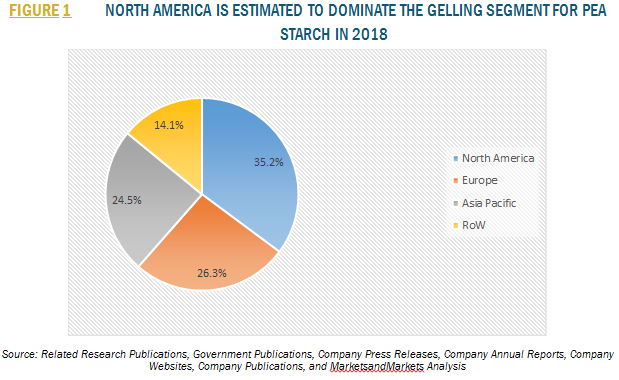
Based on region, the pea starch market is segmented into North America, Europe, Asia Pacific, and Rest of the World.

  • North America accounted for the largest share with a value of USD 29.5 million in 2017. This market is projected to grow at a CAGR of 8.4% during the forecast period. Emsland Group (Germany), Cosucra Groupe Warconing SA (Belgium), Parrish and Heimbeckar, Ltd. (Canada), Puris Foods (US), and Axiom Foods, Inc. (US) are a few key players that occupy a significant share in the global market for pea starch.
  • The major factors driving the demand for pea starch in North America are the growing awareness of animal nutrition and the presence of a large number of pea starch companies in the region.

Cannabis: Increasing medicinal use driving market growth

Cannabis is a drug derived from the cannabis sativa, cannabis indica, and hybrid strains. Although cannabis is composed of different cannabinoids, the two main cannabinoids that are considered to be the most active compounds are tetrahydrocannabinol (THC), the psychoactive compound, and cannabidiol (CBD), the non-psychoactive compound. The market definition for cannabis, in this study, takes into consideration both medical as well as recreational cannabis. 

The use of medical cannabis and the implementation of cannabis-derived compounds for treatment and therapy have been widely debated, globally. Furthermore, there are several opposing notions associated with the use of cannabis for medical purposes, owing to its societal and ethical implications. However, the adoption of cannabis has continued to evolve, with a growing gradual acceptance of its use by a number of states. The least contentious extract of cannabis is derived from its hemp plant and is known as CBD (cannabidiol). CBD is currently touted as the safest and most potent form of cannabis and is effective for medicinal use.

According to MarketsandMarkets, the global cannabis market is projected to grow from USD 10.30 billion in 2018 to USD 39.35 billion by 2023. The growth of this market is attributed to the growing number of medicinal applications and increasing legalization of cannabis. The complex regulatory structure for the use of cannabis is restraining market growth. The cannabis market is projected to grow at a CAGR of 30.7% from 2018 to 2023.

What is driving the growth of Cannabis?

  • Growing medicinal application of cannabis

CBD-dominant strains of cannabis have little or no amount of THC (tetrahydrocannabinol), the chemical that is responsible for psychological alterations. As a result, when the extract is used for treatment purposes, the benefits such as relief from insomnia, anxiety, spasticity, epilepsy, and pain, have been observed with little or no alteration in consciousness. Another important and extensive use of cannabis for medical purposes is observed for pain control. Although the use of cannabis is not strong enough for severe pain, its use remains potent for chronic pain. Cannabis remains especially effective in easing the pain caused by multiple sclerosis and nerve-related issues. It also acts as a muscle relaxant and could be used to lessen the tremors caused by Parkinson’s disease.

Therefore, CBD, being non-psychoactive in nature, has highly garnered favor for being used for the treatment of a number of ailments. There are various studies confirming the anti-inflammatory, anti-pain, and antipsychotic properties of CBD wherein its use has been proven effective. To further establish its effective use amongst consumers, the pharmaceuticalized form of CBD, Epidiolex, was approved by the US Food and Drug Administration in June 2018 as a treatment for seizures associated with two rare and severe forms of epilepsy. According to the data published in the New England Journal of Medicine, the use of the drug could help reduce seizures by about 40%. Additionally, GW Pharmaceutical’s drug, Sativex, which contains both CBD and THC, is available as a treatment for multiple sclerosis-related spasticities, in Canada, Australia, and a majority of the European and South American regions. Furthermore, the infusion of CBD in edible products has also been developing as an emerging wellness trend in many countries, which is further expected to impact the market for cannabis positively.

  • Increasing legalization of cannabis

Cannabis legalization is often viewed upon with dual perceptions wherein its legalization has been proven to be met with skepticism associated with possible abuse. While supporters of cannabis legalization have argued that its prohibition has not been successful at reducing access to and the use of cannabis, it has been presumed that legalization could, in turn, allow people to practice safe substance use while also reaping its medicinal benefits. As a result, there is an increase in the number of states that are gradually legalizing the use of cannabis across the globe. As of November 2018, it is legal to smoke marijuana for medical use in 33 states in the US, whereas nine states will still be requiring a doctor’s prescription to do so. The recreational use of cannabis is, in turn, legalized in 10 of these states. Similarly, Uruguay became the first country to legalize marijuana fully, outside the US, in 2013. Similarly, Canada too legalized the complete use of marijuana in 2018.

While most countries across the globe have still not legalized the use, the approach to the use and sales has been relaxed over the years. For example, the Netherlands allows citizens to store and cultivate some amount of marijuana while they are also permitted to be sold via coffee stores as long as they are not sold to minors. Additionally, Spain permits the use of marijuana in clubs while it still remains illegal to be traded. While marijuana legalization is still at a nascent stage, globally, its growing use for medicinal and therapeutic purposes has been gradually driving a number of countries toward its legalization. As more countries move toward its partial or complete legalization, the market for cannabis will be experiencing a positive trajectory.

Speak to Analyst @ https://www.marketsandmarkets.com/speaktoanalystNew.asp?id=201768301

Medical cannabis is expected to be the most widely used application of cannabis

The use of cannabis is being legalized across countries for medical purposes for the treatment of various illnesses and ailments. CBD or cannabidiol, which is a major component of cannabis, is not psychoactive in nature and provides various medicinal benefits associated. In addition, regulatory bodies in various countries are legalizing medical cannabis, as the compound is considered safe for use compared to other medications prescribed for the treatment of similar ailments. Over the past few years, countries such as Australia, Argentina, Mexico, and Germany have legalized the use of medical cannabis. Furthermore, with the use of medical CBD in the form of oils, topical pain relief treatment solutions and edibles could also dissuade its smoke intake among patients while being equally effective medically. Medical cannabis remains the most effective, as they are also used for various health conditions which include pain management, neurological health management, and mental health management.

Based on region, the cannabis market is segmented into North America, Europe, South America, and the Rest of the World.

  • North America accounted for the largest share, with a value of USD 6,122.7 million, in 2017. This market is projected to grow at a CAGR of 30.8% during the forecast period.  Canopy Growth Corporation (Canada), Aurora Cannabis Inc. (Canada), and Medical Marijuana Inc., (US) are a few key players who occupy a significant share in the global market for cannabis.
  • The growing legalization of cannabis for both medical and recreational purposes all over North America and the increasing awareness among consumers regarding the health benefits of cannabis have driven the cannabis market in the region.