Fueling Wellness: Unraveling the Booming Medium Chain Triglycerides (MCT) Market

In the realm of nutritional trends, the medium chain triglycerides (MCT) market is a shining star, with a valuation of USD 763 million in 2021. But what’s even more intriguing is the forecasted growth at a compelling CAGR of 6.3%, propelling it to a projected value of USD 1,034 million by 2026. The driving force behind this meteoric rise? A surge in the demand for MCT oil in dietary supplements and functional foods, coupled with a heightened public consciousness of the manifold health benefits that MCTs bring to the table.

Medium chain triglycerides, a category of saturated fatty acids, find their home in coconut oil, palm oil, and dairy products. What sets them apart from their long-chain counterparts is their unique metabolism in the body. MCTs are swiftly absorbed and processed, making them the darlings of energy bars, sports drinks, and weight-loss supplements.

These versatile triglycerides find their way into a myriad of products, including nutritional diets, infant formulas, functional foods, pharmaceuticals, personal care items, sports drinks, and dietary supplements. Why? Their shorter fatty acid chains facilitate rapid breakdown and absorption, reducing the likelihood of being stored as body fat and delivering an immediate energy boost. This quality makes them ideal for low-carb or ketogenic diets, where ketone production is key to effective weight management.

But MCTs don’t stop there. Enter medium chain triglyceride powder, a white or off-white, water-soluble powder sourced from coconut oil, palm oil, or palm kernel oil. It joins forces with other nutritional ingredients to craft a variety of formulations, from infant formula to weight management products and sports nutrition offerings.

Request Sample Pages: https://www.marketsandmarkets.com/requestsampleNew.asp?id=248063458

In the MCT world, coconut reigns supreme, commanding a market share of 42.2% and a valuation of USD 303 million in 2020. Why the coconut craze? Well, in coconut oil, nearly 60% of the fatty acids are MCTs, making it a primary source for MCT oil production. Beyond its utility, coconut oil packs a potent health punch, with benefits spanning cholesterol management, blood pressure regulation, cardiovascular risk reduction, weight management, cognitive enhancement, antimicrobial properties, and more.

Zooming in on the global landscape, the Asia Pacific region emerges as a dynamic player in the MCT game. It’s one of the fastest-growing markets, driven by surging adoption in cosmetics, personal care, and the food and beverage sector. Leading the charge are China, India, and Japan, where busy lifestyles and rising disposable incomes fuel demand for nutritional products. In addition, the beauty industry thrives on MCTs, integrating them into lotions, gels, creams, and cosmetics, elevating the market’s trajectory in the Asia Pacific region.

In this blog, we’ll delve deeper into the remarkable journey of the medium chain triglycerides market, exploring the factors fueling its ascent and how it’s becoming a vital ingredient in our pursuit of wellness and vitality.

The Rise of Food Anti-Caking Agents: Meeting Demand Amidst Shifting Landscapes

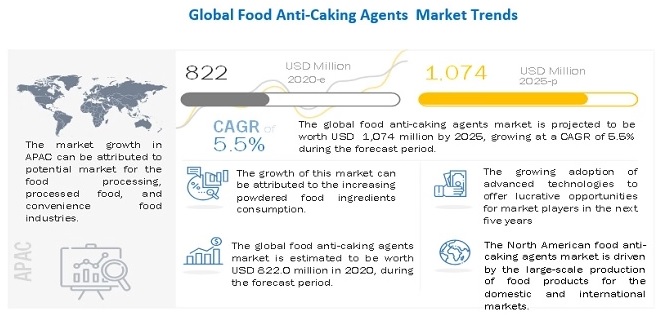
The food anti-caking agents market has been making waves, with a size estimated at USD 822 million in 2020 and a promising projection to reach USD 1,074 million by 2025. This journey is marked by a robust CAGR of 5.5% during the forecast period. Numerous factors are propelling the food anti-caking agents industry forward, including a growing disparity between the demand and supply of cocoa butter. Additionally, the ever-increasing consumption of confectionery and processed foods, coupled with a rising appetite for clean label food products, is fuelling the market’s expansion.

The global dynamics of supply and demand for food anti-caking agents have undergone a significant transformation in response to the COVID-19 crisis. This period has brought about heightened uncertainty in prices and triggered shifts in market equilibrium. Palm oil, a key player in the global oil production landscape, bore the brunt of these changes. Demand plummeted worldwide, trade routes were disrupted, and production faced setbacks in Indonesia and Malaysia, major producers of this vegetable oil. Industry giants like Wilmar International and Mehwah Group, deeply rooted in the region, were not immune to the challenges. To restore balance in the market, numerous countries initiated efforts to stabilize the situation.

Request Sample Pages: https://www.marketsandmarkets.com/requestsampleNew.asp?id=3259107

Calcium compounds, with their diverse applications spanning salt, garlic salt, onion salt, baking powder, dry cures, unstandardized dry mixes, confectioner’s sugar (Icing sugar), meat binders, and grated or shredded cheese preparations, hold a pivotal role in this narrative. As demand for these products surges, particularly in developed nations, the food anti-caking agents market is poised for substantial growth.

North America leads the charge in the global markets, commanding the largest market share. This growth is underpinned by the region’s insatiable appetite for a wide array of food ingredients, many of which exhibit hygroscopic properties, along with an increasing demand for premixes across a diverse range of food products and applications.

Key players shaping the global food anti-caking agents market include Evonik Industries AG (US), PPG Industries, Inc. (US), Brenntag AG (Germany), Univar Solutions Inc. (US), and Solvay SA (Belgium).

In this blog, we’ll delve deeper into the driving forces, challenges, and regional dynamics that define the food anti-caking agents market’s ascent, exploring how it adapts to meet evolving consumer demands and global shifts.

Exploring the Dynamic Landscape of the Pulse Ingredients Market

The global pulse ingredients market is on an upward trajectory, with an estimated value of USD 20.7 billion in 2022. Projections indicate that it will further surge to USD 25.9 billion by 2027, boasting a noteworthy compound annual growth rate (CAGR) of 4.6% throughout the forecast period. Pulse ingredients, derived from peas, lentils, and chickpeas without the use of processing aids or chemical compounds, have emerged as natural, food-grade products that augment the nutritional profile of various foods while preserving their flavor, aroma, and color properties. These ingredients play a pivotal role in the formulation of food and feed products, including pet foods and aquaculture feeds.

Chickpeas, also known as garbanzo beans, stand out as a significant source of proteins, vitamins, minerals, carbohydrates, and dietary fiber. According to the Food and Agriculture Organization (FAO), India held the distinction of being the largest producer of chickpeas in 2019, contributing to approximately 70% of the global supply. In South Asia, chickpeas rank as the third most cultivated legume after beans and peas. Desi and Kabuli are the two primary varieties of chickpeas, with Kabuli primarily grown in West Asia and the Mediterranean region, while the desi type is cultivated in the Indian subcontinent. The increased consumption of chickpeas, coupled with their diverse applications in the food and beverage industry, is expected to drive significant growth in this segment.

Speak to Analyst: https://www.marketsandmarkets.com/speaktoanalystNew.asp?id=246427813

The Asia Pacific region, encompassing countries such as India, China, Australia, New Zealand, and Japan, plays a pivotal role in the global pulse production landscape. In 2018, this region accounted for 49% of global pulse production, with India alone contributing a substantial 57% to the total production. India stands as one of the leading pulse producers and consumers globally, with prominent pulse crops including chickpeas, peas, green gram, black gram, and lentils. The region’s growth is underpinned by factors such as population growth, increasing disposable income, and heightened consumer interest in functional ingredients, all of which are poised to bolster sales within the pulse ingredients market.

Key industry players driving innovation and growth in this market include ADM (US), Roquette Frères (France), Ingredion (US), The Scoular Company (US), Axiom Foods, Inc. (US), PURIS (US), Emsland Group (Germany), AGT Food and Ingredients (Canada), Batory Foods (US), Vestkron Milling M/S (Norway), and Dakota Ingredients (US).

In this blog, we’ll delve deeper into the dynamics and factors influencing the global pulse ingredients market’s expansion and explore the regional nuances that contribute to its robust growth.

Market Leaders in Liquid Milk Replacers Market

The global liquid milk replacers market size is expected to grow from USD 188 million in 2018 to USD 243 million by 2023, at a Compound Annual Growth Rate (CAGR) of 5.3% during the forecast period. The major driving factors in the liquid milk replacers market are increasing consumption of dairy products and the adoption of precision nutrition technique.

The major liquid milk replacers vendors include Liprovit, BV (Netherlands), Calva products LLC (US), PETAG Inc. (US), Cargill (US), Archer Daniels Midland Company (ADM) (US), CHS Inc. (US), Land O’Lakes Inc. (US), Glanbia Plc (Ireland), Nutreco N.V. (Netherlands), and Lactalis Group (France). These players have adopted various growth strategies such as expansions, acquisitions, and new product launches to expand their presence in the global liquid milk replacers market. Expansions has been the most dominating strategy adopted by major players from 2014 to 2018. This has helped them to innovate their offerings and broaden their customer base.

To know about the assumptions considered for the study download the pdf brochure

In line with the rising importance of the liquid milk replacers, Cargill has established its presence in diversified feed markets; this has helped it to minimize risks and dependency on any particular business segment. The company has a strong product portfolio and brand image, which enables it to strengthen its position in the market. It has strong R&D capabilities, which provide it with a strategic advantage over its competitors. The company is focusing on R&D to meet the demands of the feed industry. The company focuses on obtaining market-driven solutions to meet the increasing demand for milk replacers and other feed products. It is involved in various strategic growth initiatives such as expansions and investments. For instance, Cargill opened a new animal nutrition technology application center in Izmir, Turkey, in January 2016, to aid the increase in local awareness for calf milk replacers.

Nutreco N.V. focuses on catering not only to the milk replacers market but the overall feed industry. The company leads in terms of operational and financial strength and has focused on growing  within the milk replacers market through both organic and inorganic means. It has expanded its product portfolio and geographic reach through new product launches, expansions, investments, and acquisitions. For instance, in 2017, Sprayfo altered the composition of its products in the above product range to reduce the usage of chemicals to a minimum level. In 2016, Trouw Nutrition (Netherlands), a subsidiary of Nutreco (Netherlands), opened a new Calf & Beef Research Facility close to Boxmeer (Netherlands) to meet the demand for milk replacers in animal nutrition applications.

Related Reports:

Liquid Milk Replacers Market by Type (Medicated and Non-Medicated), Livestock (Calves, Piglets, Kittens, Puppies, Foals, Kids & Lambs), and Region (North America, Europe, Asia Pacific and Rest of the World) – Global Forecast to 2023

Contact:
Mr. Aashish Mehra
MarketsandMarkets™ INC.
630 Dundee Road
Suite 430
Northbrook, IL 60062
USA : 1-888-600-6441

The Growth of the Bakery Industry to Drive Market Growth

Europe is projected to dominate the bakery premixes market due to the rise in the consumption of bakery products as a staple food product among consumers. The European bakery premix market is an established market, as key players have enhanced distribution channels, comply with regulations, develop innovative products, and align with consumer preferences.

Russia is projected to witness the highest growth in the European market during the forecast period. The demand for bread and bakery products in the country is projected to increase in the coming years, as consumers are adapting to the urbanized lifestyle, which drives the sales of convenience food products. The consumption of bread remains the highest in the county, and the demand seems to be increasing in the coming years, as manufacturers are focusing on launching bread products with value addition for health-conscious consumers.

This report includes a study on the marketing and development strategies, as well as product portfolios of the leading companies. It consists of profiles of leading companies, such as Oy Karl Fazer AB (Finland), Archer Daniels Midland Company (US), Puratos (Belgium), Corbion (Netherlands), Bakels Group (Switzerland), Nestle (Switzerland), Cargill (US), Nisshin Seifun Group Inc. (Japan), KCG Corporation, Swiss Bake Ingredients Pvt. Ltd. (Switzerland), Lesaffre (France), GK Ingredients (Malaysia), Premia Food Additives Pvt. Ltd. (India), Winner Group (Thailand), Midas Foods (US), Synova (Thailand), Heliofood (Malaysia), Watson Inc.(US), Limagrain (France), KCG Corporation (Thailand), Pondan (Indonesia), Trans Standard International (Malaysia), PT Sriboga Flour Mill (Indonesia), Winner Group (Thailand), Pt Gandum Mas Kencana (Indonesia), Heliofood (Malaysia) and Synova (Thailand), Dongguan Dongmei Foods Co. Ltd. (China), and GK Ingredients (Malaysia).

Make an Inquiry: https://www.marketsandmarkets.com/Enquiry_Before_BuyingNew.asp?id=126304017

By application, the bakery premixes market is segmented into bread products and bakery products. Bread mixes are primarily used by bakers to ensure the quality of products and minimize the cost of the final product. They help bakers to diversify their product portfolio by including different products, such as Italian panettone and French baguette. The bread mixes help in producing high-quality products with improved taste and texture at a competitive cost.

Among the bakery products, the pastries segment is projected to witness the highest growth over the forecast period, as they are convenient to use and provide moist texture and consistent flavor to the final products. These products are available in different flavors, such as chocolate, vanilla, and fruits, which are projected to drive the market growth over the forecast period.

Rising Adoption of Plant-Based Protein Drives Meat Substitutes Market

Meat Substitutes Market is projected to reach USD 3.5 billion by 2026, from USD 1.6 billion in 2019, recording a CAGR of 12.0% during the forecast period. The rising awareness about plant-based meat and increasing health-cautiousness due to increasing obesity are projected to drive industry growth during the forecast period.

The demand for pea protein, as a source, to remain high during the forecast period

The market for pea proteins as a source of meat substitutes projected to grow at the highest CAGR during the forecast period; the projected growth is owing to the high nutritious value that pea protein. Furthermore, the rise in disposable income among the increasing middle-class population of Europe is facilitating more expenditure on the premium, highly-priced, and pant-based meat products. Hence, the growing demand for vegan products in the region is expected to fuel the growth of pea protein meat substitutes.

The solid segment is estimated to dominate the meat substitutes market due to the increasing consumption by food manufacturers

The solid segment, by form, is projected to dominate the global meat substitutes market during the forecast period. This is due to the high consumption of solid meat substitutes in powder and chunks forms. Solid meat substitutes also help to increase the shelf-life of products, which help food manufacturers to buy solid meat substitutes at a wholesale level, which reduces the cost of raw materials. These factors have been driving the growth of this segment for the past few years.

Make an Inquiry: https://www.marketsandmarkets.com/Enquiry_Before_BuyingNew.asp?id=979

With the increasing demand for plant-based meat, North America is estimated to dominate the meat substitutes market in 2019

The changing lifestyle and increasing buying power of consumers have increased the demand for meat substitutes. The growth of the region is owing to the increasing sale of plant-based meat products in North America and the rising acceptance of convenience foods among consumers due to their hectic lifestyles. Also, the inclination of the millennial population toward ready-to-eat foods drives the North American processed food market, which, in turn, is driving the demand for global meat substitutes.

In recent years, the rise in innovation in plant-based meat products has also been seen in the US. This factor is also expected to propel the market growth. Major companies of this region, such as Cargill (US) and ADM (US), are highly focusing on innovations to provide better products to their customers.

This report includes a study of the development strategies of the leading companies. The scope of this report consists of a detailed study of meat substitute manufacturers, such as Cargill, (US), Archer Daniels Midland Company (US), DuPont (US), Ingredion (US), Axiom Foods (US), MGP Ingredient (US), A&B Ingredients (US), and Puris (US).

Highlights of the Food Emulsifiers Market

Any major development that can change the business landscape as well as market forecasts

Clean-label ingredients in food products are slowly gaining global importance amongst consumers. Ingredient labeling has become mandatory in developed economies due to rising consumer awareness. This has brought about a change in the use of ingredients for production by the manufacturers. The demand for natural ingredients is increasing, owing to which, manufacturers are launching various products having natural ingredients that can provide an advantage to drive the consumption of emulsifiers. In 2020, a number of major food manufacturers such as General Mills (US), Hershey’s (US), Kellogg’s (US), and Nestle (Switzerland) aimed at eliminating artificial additives from a majority of their food products sold in the US; this initiative took a hit, in terms of the effectiveness of these additives.

Addition/Refinement in segmentation – Increase in the depth or width of segmentation

Emulsifier Type Segmentation Refinement: In the previous edition of the report, the food emulsifier market, on the basis of type, was segmented into lecithin, mono- & di-glycerides and their derivatives, sorbitan esters, stearoyllactylates, polyglycerol esters, others.

(i)            Addition of subsegment for Lecithin: Two new subsegments of lecithin have been added for a better understanding of the market.

Food emulsifiers market, by type,

Lecithin:

•             Oiled

•             De-Oiled

Additionally, the market numbers for applications are given at the country level, in terms of value

Request for Customization of the Report: https://www.marketsandmarkets.com/requestCustomizationNew.asp?id=972

Coverage of new market players, brand mapping, and micro-quadrants for key players and startups

Company Profiles: Company profiles give a glimpse of the key players in the market, with respect to business overview, financials, product offerings, and recent developments. In the new edition of the report, Tate & Lyle (Ireland)has been profiled, as it has emerged as a key player in recent years due to various strategic investments, agreements, and product launches performed in the food emulsifiers market. These strategic developments have challenged the status quo of industry leaders,and it was prudent to analyze the changing business landscape.Extensive brand mapping with respect to the properties of the food emulsifiers has been carried out in this new version of the report, in the “by brand” chapter. Competitive leadership mapping (Micro-quadrants) of key players (Tier 1 and 2) and start-ups are also added as new segments.

Updated financial information/ product portfolio of players

Newer and improved representation of financial information: The new edition of the report provides updated financial information in the context of food emulsifiers market till 2019/2020 for each listed company in a graphical representation in a single diagram (instead of multiple tables). This would easily help to analyze the present status of the profiled companies, in terms of their financial strength, product portfolio strength, key revenue generating region/country, business segment focus in terms of the highest revenue generating segment, and investment on research and development activities.

Plant-based Protein Market – Insights on Strategies of Key Players

The report Plant-based Protein Market by Type (Isolates, Concentrates, Protein Flour), Application (Protein Beverages, Dairy Alternatives, Meat Alternatives, Protein Bars, Processed Meat, Poultry & Seafood, Bakery Product), Source, and Region – Global Forecast to 2025″, is estimated at USD 18.5 billion in 2019 and is projected to grow at a CAGR of 14.0% from 2019 to 2025, to reach USD 40.6 billion by 2025. Public awareness regarding the increase in obesity levels due to unhealthy food consumption that includes packaged food, fast food, carbonated beverages, cold drinks, and excess consumption of animal meat has led to the demand for plant-based protein products such as protein beverages, protein bars, meat alternatives, and dairy alternatives, thereby driving plant-based food & beverage manufacturers to develop plant protein-based products.

Download PDF brochure: https://www.marketsandmarkets.com/pdfdownloadNew.asp?id=14715651

The pea segment is projected to be the fastest-growing in the plant-based protein market during the forecast period.

Pea protein is gaining popularity among plant-based protein manufacturers at a global level owing to its high protein content, and health benefits offered such as reduced cholesterol and lower blood pressure. Pea, as a source for plant-based protein products, is used in a wide range of food applications that include meat alternatives, beverages, snacks, bakery products, meat applications, and nutritional supplements. Pea offers characteristic advantages of emulsion, process & extrusion stability. It adds texture, taste, and mouthfeel to a variety of food applications, hence experiencing huge demand. Also, the market is driven by the rising demand for plant-based meat and healthy food products. A significant increase in the usage of pea as a key ingredient is being noticed in the plant-based meat industry.

Drivers

•             Rise in Trend of Health and Sustainability

•             Innovations in Terms of Integrating Plant-Based Proteins With Meat and Poultry Products

•             Increase in Cases of Lactose Intolerance and Milk Allergies

•             Growth in Investments in Plant-Based Food Businesses

•             Social Media Trends to Sway More Consumers Toward Plant-Based Proteins

Restraints

•             Allergies Associated With Plant-Based Protein Sources Such as Soy and Wheat

Opportunities

•             Constant Rise in Demand for Food With Organic Ingredients

•             Immense Opportunity in the Need for Alternative Solutions to Meet the Increasing Meat Demand

Challenges

•             Increase in Production of and Adulteration With Genetically Modified (GM) Soybean

•             Unpleasant Flavor of Soy Products

The nutrition supplements segment is projected to record the fastest growth during the forecast period.

Plant-based proteins are beneficial for weight loss, in addition to providing the building blocks for healthy muscles and tissues. The application of plant-based proteins as nutritional supplements is attributed to their high amino acid profile. Plant-based proteins tend to be lower in calories and fat than animal proteins but higher in fiber and essential nutrients. For instance, pea protein is allergen-free, provides iron, helps in muscle recovery, and helps to regulate blood sugar and insulin effect to prevent body fat storage potentially. Thus, pea protein is emerging as a key ingredient in manufacturing nutritional supplements and is growing at the highest CAGR.

Make an Inquiry: https://www.marketsandmarkets.com/Enquiry_Before_BuyingNew.asp?id=14715651

The North American region is projected to account for the largest market share during the forecast period.

The North American market for plant-based proteins is the largest due to the increasing awareness for healthy food ingredients and the trend of weight management among consumers. Plant-based proteins are highly versatile and can be used in applications such as meat analogs and meat extenders. According to research conducted by key players in the market and government surveys, it has been recorded that consumers are demanding meat alternatives to reduce their meat consumption. This trend is expected to drive industry growth in the near future.

This report includes a study of marketing and development strategies along with the product portfolios of leading companies in the plant-based protein market. It includes the profiles of leading companies such as ADM (US), DuPont Danisco (US), Ingredion Inc. (US), Burcon NutraScience Corp. (Canada), Axiom Foods (US), and The Scoular Company (US).

Market Leaders in Grain Analysis Market

The grain analysis market is projected to reach 2,323.1 Million by 2022, at a CAGR of 5.8% from 2017 to 2022. The grain analysis market, by equipment, is projected to reach USD 761.7 Million in 2022 during the same period. The market is driven by an increase in the outbreak of foodborne illnesses, globalization in grain trade, and stringent safety and quality regulation for food & feed.

Key players in the grain analysis market include SGS SA (Switzerland), Bureau Veritas SA (France), Intertek Group plc (UK), Eurofins Scientific (Luxembourg), TÜV SÜD (Germany), TÜV Nord Group (Germany), and ALS Limited (Australia). Neogen Corporation (US) and Romer Labs Division Holding GmbH (Austria) are the key market players that provide both services as well as equipment for the grain testing market. Further, Thermo Fisher Scientific, Inc. (US), Shimadzu Corporation (Japan), Waters Corporation (US), and AB Sciex (US) are some key equipment providers in the grain analysis market.

SGS SA (Switzerland) is one of the active players in the grain analysis market; it is involved in inspection, verification, testing, certification, and quality assurance services.  The company offers testing services in the grain analysis market for various contaminants such as mycotoxins, pesticide residues, and pathogens. Moreover, the company has significant R&D centers and adopts techniques as per technology advancements. In addition, the company has strong testing services across the globe with strong presence in US, Germany, UK, France, and India among others; this has enabled it to strengthen its customer base and client base.

Download PDF brochure: https://www.marketsandmarkets.com/pdfdownloadNew.asp?id=40376219 

Eurofins Scientific is an international group of laboratories that provide testing and support services to the pharmaceutical, food, environmental, and consumer products industries, as well as to governments. The company adopts strategies such acquisition & expansion to increase its geographic presence. In March 2017, the company acquired a leading food testing lab in Istanbul named, Gözlem Gýda Kontrol ve Araþtýrma Laboratuvarlarý (Turkey) with a view of accelerating the rollout of its capabilities to serve the thriving food & beverage industry in the EMEA region. In 2016, it opened a new 557 square meters food testing facility in Paya Lebar (Singapore). This was expected to help the company to better serve the growing markets in growing markets in The Philippines, Thailand, and Indonesia.Thermo Fisher Scientific offers a complete and integrated portfolio of solutions and services for laboratory research and analysis, healthcare and clinical science, manufacturing, and other fields.  The company operates in over 150 countries across North America, Europe, Asia, and Latin America. It focuses on expansions as its key strategy to develop its networks. In 2015, the company opened a new center called Customer Experience Center (CEC) in Dubai. The center offers training facilities for researchers, educational institutions, healthcare providers, and food & beverage companies.

Market Leaders in Calcium Propionate Market

The market for calcium propionate is estimated at USD 277.1 million in 2018 and is projected to reach USD 363.3 million by 2023, at a CAGR of 5.6%. The calcium propionate market has been segmented on the basis of application, form, and region. On the basis of application, the calcium propionate market has been segmented into food, feed, and others (pharmaceuticals and agriculture). This market has also been segmented on the basis of form into dry and liquid. On the basis of key regions, the calcium propionate market has been segmented into North America, Europe, Asia Pacific, and the Rest of the World (RoW), which includes South America and the Middle East & Africa.

The growth of the calcium propionate market is driven by the growing concerns about food and feed safety and shelf life stability which have resulted in the demand for calcium propionate for various food products.

Request for Sample Report Pages: https://www.marketsandmarkets.com/requestsampleNew.asp?id=1288

The growth of the calcium propionate market is driven by factors such as food security, increasing demand for livestock-based products, which translates into the resultant demand for calcium propionate in order to avoid food spoilage and wastage. The high-growth potential in the emerging markets and untapped regions provide new growth opportunities for market players. However, increasing demand for food products devoid of synthetic preservatives and stringent government regulations are expected to restrain the market growth over the next few years.

Market Dynamics

Drivers

•              Functional Potential of Calcium Propionate in New Product Lines

•              Cost-Effective Preservation Solution

•              Increasing Health Concerns of Consumers in the Food Industry

Restraints

•              Increasing Demand for Food Products Devoid of Synthetic Preservatives

•              Stringent Regulations

Opportunities

•              Untapped Emerging Markets

•              Technological Advancements to Develop New Product Lines

•              R&D & Innovations to Strengthen Demand

Challenges

•              Competition From Substitutes

On the basis of application, the feed segment is projected to be the fastest-growing market for calcium propionate. Calcium propionate helps combat microbial pathogens in various feed and raw materials, thereby enhancing the shelf life of feed products. The growth in the usage of calcium propionate for feed preservation is linked to a large extent to its cost-effectiveness as compared to other preservatives such as sodium propionate, sorbic acid, and sorbates.

Based on form, the dry segment is projected to be the larger and faster-growing segment between 2018 and 2023. Dry calcium propionate has more advantages such as ease of mixing and better dispersion throughout the food matrix; additionally, dry calcium propionate does not affect the leavening action of baking powder in bakery products when compared to the liquid form. It is hence used in several applications such as bakery products, frozen desserts, meat processing, and feed.

Speak to Analyst: https://www.marketsandmarkets.com/speaktoanalystNew.asp?id=1288

Geographical prominence

The Asia Pacific region is projected to be the fastest-growing market for calcium propionate between 2018 and 2023. Asia Pacific presents tremendous opportunities for calcium propionate and its end-use applications. China has emerged as a recent exporter of calcium propionate for the food and feed industry. Factors such as rapid urbanization, high disposable incomes, strong demand for processed foods, coupled with a low cost of production, position China as a strong consumption and production hub.