Attractive Opportunities In Hydroponics Market

The increasing population and urbanization have led to a decline in the arable land, globally. According to the United Nations Department of Economic and Social Affairs, about 55% of the world’s population lives in urban areas as of 2018, and that figure is expected to grow to 68% by 2050. Considering the overall growth in population, up to 2.5 billion additional people are expected to be added to urban areas by 2050. Hydroponics is the technique of growing plants with water and nutrients without the use of soil. This technique makes use of containers or specially designed benches with troughs to enable the suspension of plants in water. The hydroponics market is estimated to be valued at USD 8.1billion in 2019 and is projected to reach USD 16.0 billion by 2025, at a CAGR of 12.1% during the forecast period.

Major developmentsthat can change the business landscape as well as market forecasts

With the increased adoption of hydroponics globally, manufacturers and researchers are working on improving the efficiency of hydroponics technology to increase the quality and quantity of the produce. For instance, Preferred Produce, an organic and kosher greenhouse in Deming, New Mexico, introduced a new patented technology that combines hydroponics with aeroponics. It was developed in partnership with Russian scientists. This new patented technology includes a large plastic urn filled with water and includes tubes for circulating oxygen. This new technology was introduced due to the restricted supply of oxygen when plants are submerged in oxygen in a hydroponics system.

Another technology was developed by Phytoponics, a UK-based hydroponic systemcompany. It introduced a similar technology called the Hydrosac, in which the roots of the plant are held in contact with an oxygenated, nutrient-rich solution. The concentration of liquid nutrients facilitates high growth rates and resource efficiency. The Hydrosac acts like a long thin container connected to a pump and nutrient solution reservoir. Sitting on the fluid’s surface are integrated flotation chambers in which

plants sit within a healthy, rot preventing air gap above water. An inbuilt aerator blows oxygen bubbles through the solution to maintain dissolved oxygen levels for healthy roots. The bubbles burst at the surface, spraying a nutrient-rich mist on to the plant roots,nourishing the plant to grow strong.

Request for Sample Report Pages: https://www.marketsandmarkets.com/requestsampleNew.asp?id=94055021

Geographical Prominence

The Asia Pacific hydroponics market has strong potential to become the leading market in the coming years. The region has also been susceptible to the effects of climate change that have had a profound impact on agriculture produce. The increasing instances of droughts, floods, and other natural disasters in countries such as India, China, and Japan have raised concerns over food security. This has spurred the adoption of indoor hydroponic agriculture in the region. China is projected to be the fastest-growing market for hydroponic farming in the region and has displayed notable growth potential. Not only in AsiaPacific but globally has the growth in hydroponics market been observed, with the increasing investments in this market. For instance, Larry Ellison, the founder, chairman, and CTO of Oracle, launched a hydroponic farming start-up named Sensei in Los Angeles, which plans to build 10 greenhouses covering 200,000 square feet on the Hawaiian island of Lanai. Also, Future Farms based in Chennai, India, has developed effective and accessible farming kits to facilitate hydroponics. Also, there are new technological innovations tapped by start-ups that can further propel the growth of this market.

Coverage of new market players and change in the market share of existing players

Company Profiles: Company profiles give a glimpse of the key players in the market, with respect to their business overview, financials, product offerings, and recent developments. In the new edition of the report, Freight Farms (US), Terra Tech Corp (US), Emirates Hydroponics (UAE), Advanced Nutrients (Canada), Emerald Harvest (US) and Green Sense Farms (US) were profiled, as they have emerged as key players in the recent years due to various strategic investments, agreements, and product launches performed in the hydroponicsmarket. These strategic developments have challenged the status-quo of industry leaders,and it was prudent to analyze the changing business landscape. Company share analysis has been added in the new report, which was not provided in the earlier one. Competitive leadership mapping and competitive benchmarking of key players (crop producers and system input providers) are also added as new segments.

Updated financial information/product portfolio of players

Newer and improved representation of financial information: The new edition of the report provides updated financial information in the context of the hydroponicsmarket till 2017/2018 for each listed company in the graphical representation in a single diagram (instead of multiple tables). This would help to easily analyze the present status of profiled companies in terms of their financial strength;product portfolio strength;key revenue generating region/country; business segment focus in terms of the highest revenue generating segment; and investment on R&D activities.

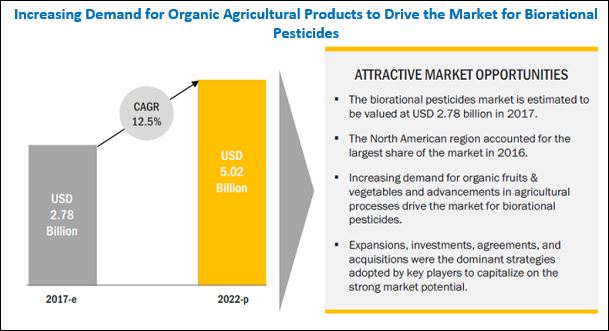
Bayer (Germany) and BASF (Germany) are the Key Players in the Biorational Pesticides Market

The key players profiled in the report have a strong presence in the global biorational pesticides market; these include Valent Biosciences (US), Bayer (Germany), Monsanto BioAg (Germany), BASF (Germany), DowDuPont (US), and Syngenta (Switzerland).

These players adopted growth strategies such as expansions & investments and mergers & acquisitions to cater to the increasing demand for biorational pesticides. They are increasing their research & development expenditure to expand their biorational pesticide products portfolio.

Download PDF Brochure: https://www.marketsandmarkets.com/pdfdownloadNew.asp?id=57324225

The core strength of the key players is their strategic expansion to enhance their presence in the biorational pesticides market. Companies such as Bayer and BASF SE are expanding their production facilities as well as R&D to develop new biorational pesticide products. Such strategies are expected to maximize market share and increase their overall customer base. Players such as Bayer, Syngenta, and DowDuPont adopted the mergers & acquisition strategy to improve their distribution network, gain a stronger foothold, and enhance their market share. These companies are also focused on offering a diverse range of biorational pesticide products to be in line with the government policies of different regions. 

Bayer CropScience, a subsidiary of Bayer, is an agricultural enterprise that offers crop protection, seeds, and non-agricultural pest control products. These products are offered through its two main operating business segments: crop protection/seeds and environmental science. Bayer has been one of the major players in the global biorational pesticides market. The company has been focusing on expansions and mergers & acquisitions. In September 2016, Bayer and Monsanto announced their definitive merger agreement; Bayer acquired Monsanto for an all-in-cash transaction at USD 128 per share. This agreement combined the companies’ leading innovation capabilities and R&D technology platforms for the agricultural industry

BASF is a chemical manufacturing company operating in the segments of chemicals, performance products, functional materials & solutions, agricultural solutions, and oil & gas. Under these broad categories, it offers products such as intermediate chemical products, monomers, petrochemicals, dispersions & pigments, nutrition & health, paper chemicals, performance chemicals, catalysts, construction chemicals, coatings, performance materials, and crop protection. The company provides biorational pesticide products through its agricultural solutions unit. In October 2015, BASF expanded its production capacities of innovative biorational solutions for agriculture and horticulture in Littlehampton (UK). This helped the company to increase its production volume of beneficial nematodes and inoculants for conventional crop protection. In May 2015, BASF also opened a new agricultural research station in Pune (India). It helped the company to carry out global agricultural research on herbicides, fungicides, and insecticides.

Speak to Analyst: https://www.marketsandmarkets.com/speaktoanalystNew.asp?id=57324225

Demand for Improved Crop Varieties to Drive the Growth of the Plant Genomics Market

The global plant genomics market is estimated to be valued at USD 7.3 billion in 2019 and is projected to reach USD 11.7 billion by 2025, recording a CAGR of 8.3%. The plant genomics market has high potential in emerging markets, such as Asia Pacific, due to the increasing awareness about the possible ill-effects of GM crops or food products in developing countries.

By trait, the plant genomics market is segmented into herbicide tolerance, disease resistance, yield improvement, and others. According to industry experts from prominent seed manufacturers, disease resistance and herbicide tolerance are the traits that have been on demand, owing to the increasing instances of early germination pest attacks and regulations against crop protection chemicals.

Download PDF Brochure: https://www.marketsandmarkets.com/pdfdownloadNew.asp?id=239362357

Based on application, the plant genomics market is segmented into cereals & grains, oilseeds & pulses, fruits & vegetables, and others. Among cereals & grains, rice, wheat, and corn are majorly bred using plant breeding & sequencing techniques, to develop high-performing varieties. Rice, along with wheat and corn, underpins the global food supply. Field crop science (including breeding, pathology, and economics) has contributed to a steady increase in crop productivity from decades through the availability of better varieties and hybrids with more effective pest and disease control and better production capacities. Molecular engineering technique development for genetic analysis has led to a great upsurge in the knowledge of cereal genetics and understanding of the structure and behavior of cereal genomes.

Based on objectives, the plant genomics market is segmented into DNA/RNA sequencing, genotyping, market-assisted selection, gene expression profiling, GMO-trait purity testing, DNA extraction & purification, and other objectives. DNA/RNA sequencing is estimated to be the most popular service required in the plant genomics market. The increasing number of samples tested per machine run due to efficient technological developments have encouraged companies to offer these services at cheaper costs. A common trend witnessed for basic information sequencing in the agricultural industry and among research professionals is to identify common markers such as plant height for breeding purposes. However, with the evolution of plant genomics research, the demand for genotyping tests is projected to surpass the demand for other objectives by 2025.

Request for Customization of the Report: https://www.marketsandmarkets.com/requestCustomizationNew.asp?id=239362357

By type, the plant genomic market is divided into molecular engineering, genetic engineering, and others. The major plant breeders such as Bayer (Germany), Monsanto (US), DowDuPont (US), and BASF (Germany) have invested in plant breeding and been developing seed traits based on molecular breeding and genetic engineering techniques. Moreover, the favorable regulatory environment for GM crops in the US has encouraged plant breeders to adopt biotechnological methods at a larger scale in the country. The use of genetic engineering techniques for corn and soybean breeding is the highest in the US, while the adoption of molecular breeding techniques in Canada has been slowly rising.

The major players, such as Eurofins Scientific (Luxembourg), Agilent Technologies (US), and Illumina, Inc. (US) in the plant genomics market are focusing on new product launches, expansions & investments, acquisitions & mergers, agreements, joint ventures, collaborations, and partnerships to expand their global footprint.

Seed Coating Market is Projected to Reach $3.0 billion by 2025

The report Seed Coating Market by Additive (Polymers, Colorants, Pellets, Minerals/Pumice, Active Ingredients), Process (Film Coating, Encrusting, Pelleting), Active Ingredient (Protectants and Phytoactive Promoters), Crop Type, Region – Global Forecast to 2025″, is projected to grow at a CAGR of 8.5% from USD 1.8 billion in 2019 to reach a projected value of USD 3.0 billion by 2025. The quality, appearance, and nutritive value of seeds are the key factors contributing to the growth of the seed coating market. Seed coatings offer help to raise the commercial value of seeds by enhancing their appearance, improved handling, flowability through planters, and making them more productive. Hence, seed coatings are projected to offer business opportunities for manufacturers in the next five years. Due to these factors, many multinational players are focusing on producing various types of seed coating products.

The cereals & grains segment is estimated to account for a larger market share, in terms of value, in 2019

Seed coatings are applied to cereals,  grains, oilseeds, pulses, vegetables, flowers, ornamentals, and other crops, such as turf and forage grass. The demand for seed coating materials is projected to remain high due to the high consumer awareness about the key attributes of coated seeds and their advantages to increase the crop yield and protection against soilborne pests and diseases.

Speak to Analyst: https://www.marketsandmarkets.com/speaktoanalystNew.asp?id=149045530

The polymer segment is estimated to hold the largest share in seed coatings market, in terms of value, in 2019

Key additives of seed coatings include polymers, colorants, active ingredients, pellets, minerals/pumice, and other additives. Seed coating polymers are widely used as coatings in two major forms, which are polymer gels and superabsorbent polymer gels. These are water-based polymers of low viscous range that are required for enhanced seed germination. Ease of handling and improved flowability through planters are also the key factors, due to which this segment accounts for a major share in the market.

Innovative, environment-friendly, and cost-effective solutions—the key to success for manufacturers in the North American and European region

The North American and European region accounted for the largest share in the global seed coating market in 2018. Increasing awareness about the benefits of seed coatings is projected to drive the growth of the market in these regions. In addition, adding seed coatings is an economical option and is preferred by the Canadian farmers as a risk-hedging technique, which has led to increased sales of coated seeds in the North American market. North America and Europe dominated the market and accounted for the largest share globally, as seed coating products are gaining acceptance among the organic cultivators, which prefer only biodegradable techniques of seed coating production for cultivation.

Request for Sample Report Pages: https://www.marketsandmarkets.com/requestsampleNew.asp?id=149045530

This report includes a study of marketing and development strategies, along with the product portfolio of leading companies. It includes the profiles of leading companies, such as BASF SE (Germany), Bayer AG (Germany), Clariant AG (Switzerland), and Croda International Plc (UK).

About MarketsandMarkets™

MarketsandMarkets™ provides quantified B2B research on 30,000 high growth niche opportunities/threats which will impact 70% to 80% of worldwide companies’ revenues. Currently servicing 7500 customers worldwide including 80% of global Fortune 1000 companies as clients. Almost 75,000 top officers across eight industries worldwide approach MarketsandMarkets™ for their painpoints around revenues decisions.

Our 850 fulltime analyst and SMEs at MarketsandMarkets™ are tracking global high growth markets following the “Growth Engagement Model – GEM”. The GEM aims at proactive collaboration with the clients to identify new opportunities, identify most important customers, write “Attack, avoid and defend” strategies, identify sources of incremental revenues for both the company and its competitors. MarketsandMarkets™ now coming up with 1,500 MicroQuadrants (Positioning top players across leaders, emerging companies, innovators, strategic players) annually in high growth emerging segments. MarketsandMarkets™ is determined to benefit more than 10,000 companies this year for their revenue planning and help them take their innovations/disruptions early to the market by providing them research ahead of the curve.

MarketsandMarkets’s flagship competitive intelligence and market research platform, “Knowledgestore” connects over 200,000 markets and entire value chains for deeper understanding of the unmet insights along with market sizing and forecasts of niche markets.

Contact:
Mr. Sanjay Gupta
MarketsandMarkets™ INC.
630 Dundee Road
Suite 430
Northbrook, IL 60062
USA : 1-888-600-6441
sales@marketsandmarkets.com

Need for Increase of Yield in Crops Drives the Secondary Macronutrients Market

The report Secondary Macronutrients Market by Nutrient (Calcium, Magnesium, and Sulfur), Form (Dry and Liquid), Application Method (Solid Application and Liquid Application), Crop Type (Cereals & Grains and Oilseeds & Pulses), and Region – Global Forecast to 2022″, The secondary macronutrients market is projected to reach USD 37.12 Billion by 2022, at a CAGR of 3.76% from 2017 to 2022. Secondary macronutrients help to combat the impact of nutrient deficiency in crop production. One of the major factors driving the growth of the secondary macronutrients market is the rising demand for fruits & vegetables that require sufficient nutrition during their growth stage.

Download PDF Brochure: https://www.marketsandmarkets.com/pdfdownloadNew.asp?id=45874881

The calcium segment estimated to dominate the market with the largest share in 2017.

The calcium segment is estimated to be the largest nutrient type of secondary macronutrients in 2017 owing to the growing demand for gypsum and lime to tackle soil acidity issues. In addition, calcium is the most important nutrient among three macronutrients as it helps to strengthen the cell wall, reduce soil salinity, and improve water penetration.

The liquid formulation segment is projected to grow at a higher rate during the forecast period.

The liquid formulation segment is projected to grow at a higher CAGR during the forecast period due to the increasing use of fluid fertilizers that can be uniformly applied to the field, thereby maintaining low application levels. Also, liquid fertilizers save labor costs and are generally used as secondary fertilizers for a quick boost during the growing season.

Speak to Analyst: https://www.marketsandmarkets.com/speaktoanalystNew.asp?id=45874881

The Asia Pacific region is estimated to dominate the market in 2017.

Increasing agricultural practices and requirement of high-quality agricultural produce are the factors fueling the demand for secondary macronutrients in Asia Pacific. The major crops produced in this region include rice, wheat, and fruits & vegetables. Also, the presence of major players such as Nufarm (Australia), Coromandel International (India), and Deepak Fertilisers and Petrochemicals (India) supports the growth of the secondary macronutrients market in this region.

This report includes a study of marketing and development strategies, along with the product portfolios of leading companies. It also includes the profiles of leading companies such as Nutrien (Canada), Yara International (Norway), The Mosaic Company (US), Israel Chemicals Ltd. (Israel), and K+S (Germany).

Variable Rate Technology Set For Rapid Growth Forecast 2017-2022

The variable rate technology (VRT) market was valued at USD 1.31 Billion in 2016. It is projected to grow at a CAGR of 9.65% from 2017, to reach 2.24 Billion by 2022. Increasing focus on farm efficiency and productivity is the most significant factor driving the variable rate technology market. Increase in global food demand, extended profitability & production, and crop monitoring for yield production benefits are the major factors behind the growth of the variable rate technology market. Also, government initiatives across countries are helping farmers to use optimized agricultural and technological tools and improve their production levels.

Download PDF Brochure: https://www.marketsandmarkets.com/pdfdownloadNew.asp?id=178591689

Scope of the report:

On the basis of Type, the market for variable rate technology has been segmented as follows:

  • Fertilizer VRT
  • Crop protection chemical VRT
  • Soil sensing VRT
  • Seeding VRT
  • Yield monitor VRT
  • Irrigation VRT
  • Others (weed control VRT and lime VRT)

On the basis of Crop Type, the market for variable rate technology has been segmented as follows:

  • Cereals & grains
  • Oilseeds & pulses
  • Fruits & vegetables
  • Others (turf & ornamentals, plantation crops, fiber crops, and silage & forage crops)

On the basis of Application method, the market for variable rate technology has been segmented as follows:

  • Map-based VRT
  • Sensor-based VRT

On the basis of Farm Size, the market for variable rate technology has been segmented as follows:

  • Large
  • Mid-sized
  • Small

On the basis of Offering, the market for variable rate technology has been segmented as follows:

  • Hardware
  • Variable rate software
  • Variable rate services

On the basis of Region, the market for variable rate technology has been segmented as follows:

  • North America
  • Europe
  • Asia-Pacific
  • South America
  • Rest of the World (RoW)

Speak to Analyst: https://www.marketsandmarkets.com/speaktoanalystNew.asp?id=178591689

North America is estimated as the largest contributor to the global variable rate technology market due to early adoption of variable rate technologies by countries in this region such as the U.S. and Canada. The presence of a large number of vendors, continuous advancements in technology, and reduced price of equipment are contributing to the growth of the variable rate technology market in North America.

Key Players:

  • Deere & Company (U.S.)
  • AGCO Corporation (U.S.)
  • Trimble, Inc. (U.S.)
  • CNH Industrial N.V. (U.K.)
  • Topcon Corporation (Japan)
  • Raven Industries, Inc. (U.S.),
  • Ag Leader Technology (U.S.)

Key Opportunities and Challenges in Agricultural Surfactants Market

The agricultural surfactants market was valued at 1.37 Billion in 2017 and is projected to reach USD 1.88 Billion by 2022, growing at a CAGR of 6.46%. Agricultural surfactants reduce the surface tension and allow the spray solution droplets to spread on the surface of the leaf. They are added to pesticides to increase their efficiency, provide greater coverage of the spray solution, and improve the retention & penetration of pesticides. One of the major factors driving the growth of the agricultural surfactants market is the modern agricultural practices and technologies that involve the use of surfactants.

The non-ionic segment dominated the market with the largest share in 2017.

Most agricultural surfactants are non-ionic and are used for general wetting and spreading. Non-ionic surfactants reduce the surface tension and contact angle of individual spray droplets; they are most compatible with water-soluble herbicides, insecticides, fungicides, and plant growth regulators (PGRs).

The fungicides segment is projected to grow at a higher rate during the forecast period.

The fungicides segment is projected to grow at a higher CAGR during the forecast period; this growth is attributed to the growing usage of surfactants in fungicide formulations to improve the adhesion of fungicides to the crops. In addition, combining fungicides and surfactants increases the efficacy of the existing control options by helping fungicides stick to plant surfaces.

Make an Inquiry: https://www.marketsandmarkets.com/Enquiry_Before_BuyingNew.asp?id=52947416

The North American region is estimated to dominate the market in 2017 while the South American region is projected to grow at the highest rate during the forecast period.

The North American region accounted for the largest share due to the presence of players such as DowDuPont (US), Huntsman Corporation (US), Helena Chemical (US), and Stepan Company (US). Moreover, the presence of these companies in technologically advanced countries such as the US and Canada results in an increase in the adoption of surfactants in agriculture.

The South American region is projected to grow at the highest rate during the forecast period. This growth can be attributed to the increasing need for high-quality surfactants for the agricultural application.

This report includes a study of the marketing and development strategies, along with the product portfolios of leading companies. It also includes the profiles of leading companies such as DowDuPont (US), BASF (Germany), AkzoNobel (Netherlands), Evonik (Germany), and Solvay (Belgium).

Population Growth and Increase in Demand for Food Drive the Soil Aerators Market

The population growth, increase in demand for food, rising net farm income due to mechanization, along with a shift towards organic farming are some of the major driving factors for the soil aerators market. Factors such as increasing farm mechanization levels and rising profitability are also increasing the demand for the soil aerators, globally. R&D activities carried out by leading manufacturers, to develop low-cost production techniques are expected to further drive the growth rate of the soil aerators market. 

Market Dynamics:

Drivers:

  • Shrinking Arable Land
  • Population Growth and Increase in Demand for Food
  • Increase in Net Farm Income Due to Mechanization
  • Shift Toward Organic Farming     

Restraints:

  • Small and Fragmented Land Holding Restricting the Usage of Heavy Farm Equipment

Opportunities:

  • Innovations in Soil Aerator Types

Challenges:

  • Lack of Awareness of Soil Aerators
  • Rise in No-Tillage Farming in the Us

Request for Sample Report Pages: https://www.marketsandmarkets.com/requestsampleNew.asp?id=116962473

Agriculture segment set to dominate the market by 2023

The soil aerators market, by application, is projected to be dominated by the agriculture segment during the forecast period. The dominance of agriculture in soil aerators is attributable to the increase in large-scale holdings of farmers in most developed countries and an increasing trend of farm mechanization in developing countries. The rapid increase in population growth and increasing demand for food, with shrinking arable land, are expected to drive the soil aerators market growth.

Mounted segment is projected to be the fastest-growing during the forecast period

The mounted segment is estimated to dominate the mode of operation segment for soil aerators in 2018 and is also projected to be the fastest-growing from 2018 to 2023. Low turnaround time, higher accuracy, availability of large land holdings for cultivation, specifically in North America and Europe are the factors driving the market for the mounted mode of operation.

Asia Pacific is projected to be the fastest-growing market during the forecast period

The Asia Pacific market is projected to grow at the highest CAGR from 2018 to 2023. Major growth drivers of the region include the adoption of smart, mechanized aerators owing to technological advancements in countries such as India, China, and Japan. In addition, factors such as an increase in footfall, overgrazing by livestock, the pressure exerted by heavy equipment, climatic conditions, strong government support through subsidies, and increased productivity requirements also drive the soil aerators market in the region.

This report includes a study of marketing and development strategies, along with the product portfolios of leading companies. It includes the profiles of leading service companies such as Deere & Company (US), Mahindra and Mahindra (India), Bucher Industries (Switzerland), CNH Industrial (UK), ALAMO (US), and AGCO Corporation (US).

Key Market Dynamics in Global Hydroponics Market

The hydroponics market is projected to reach USD 16.0 billion by 2025, from USD 8.1 billion in 2019, at a CAGR of 12.1% during the forecast period. The market is driven by factors such as the growing acceptance of controlled environment agriculture and increasing technological advancements in hydroponic systems.

According to the FAO, due to the increasing population, food production is expected to rise by 70% before 2050. On the other hand, natural prerequisites of agriculture, viz., arable land and water have been depleting, with rapid urbanization across the globe. To feed the increasing population, the productivity of food crops needs to be increased in the existing arable land, and also alternative farming techniques such as urban farming need to be encouraged.

Key Players:

• Signify Holdings (Netherlands)
• Argus Control Systems (Canada)
• Heliospectra AB (Sweden)
• Scotts Miracle Gro (US)
• American Hydroponics (US)
• LumiGrow (US)

Download PDF Brochure: https://www.marketsandmarkets.com/pdfdownloadNew.asp?id=94055021

Higher yield as compared to conventional agriculture practices

Hydroponic systems or soil-less agriculture reduce the farmer’s consumption of resources, thereby enabling this farming technique to be adopted by a large number of stakeholders, ranging from home gardeners to professional growers, and supermarkets to restaurants. According to the UN reports on global population, plants grown in hydroponic systems have achieved 20%–25% higher yield than the traditional agriculture system, with its productivity being 2–5 times higher. Also, owing to controlled environmental conditions, the effect of climatic changes can be balanced with the help of these systems, thereby not affecting the annual crop production. CEH techniques directly affect the crop harvest cycle; hence, for hydroponic systems, crop harvest cycles are shorter in comparison to traditional farming techniques, thereby increasing the annual yield. Also, since climatic changes show a minimal effect on such systems, crops can be produced all year round, thereby again increasing the produce.

Lack of government policy and tax breaks in developing countries

Hydroponic farming is seen as a key factor in improving food security in developing regions; however, while government support through tax cuts is present in developed countries, the same cannot be said for developing countries. The availability of the best equipment is fairly limited and often needs to be imported, which attracts taxes adding to the costs for hydroponic growers. The lack of tax cuts and incentives is also a key factor that hinders the growth of hydroponics in developing regions as the high set-up costs and running costs can often render operations unfeasible. The need for basic training and technical knowledge is necessary for operating hydroponic farms, which although is present in developing countries, does not add significantly to the value of hydroponic farms. The high costs of production often result in high costs of the final product, which in itself can draw consumers away in price-sensitive markets.

Entrance of new players in the market

Due to increased popularity and adoption of hydroponics, many new players are entering the market. For instance, Larry Ellison, founder, chairman, and CTO of Oracle, launched a hydroponic farming start-up, named Sensei in Los Angeles. The company plans to build 10 greenhouses covering 200,000 square feet on the Hawaiian island of Lanai and instead of measuring output by volume, Sensei will measure nutrition per acre.

Various investors are also supporting hydroponics start-ups globally. For instance, in June 2017 a high-tech indoor, vertical farming start-up, Bowery Farming, announced it had raised USD 20 million in a Series A1 co-led by General Catalyst and GGV Capital, and including GV, First Round Capital, and other seed round investors. In July 2017, a San Francisco-based indoor vertical farming start-up, Plenty, raised the largest agtech funding round in history – a USD 200 million Series B led by SoftBank Vision Fund – the USD 93 billion all-stage tech fund headed by a Japanese investor, Masayoshi Son. Other participants in the round include affiliates of Louis M. Bacon, the founder of Moore Capital Management, and existing investors Eric Schmidt’s Innovation Endeavors, Finistere, DCM, Data Collective, and Bezos Expeditions. Plenty has plans to open 500 hydroponics farms in all the major cities of more than 1 million inhabitants, globally.

Speak to Analyst: https://www.marketsandmarkets.com/speaktoanalystNew.asp?id=94055021

Many start-ups have also emerged in the Asia Pacific region, the fastest-growing region for the hydroponics market. For instance, Future Farms based in Chennai, India has developed effective and accessible farming kits to facilitate hydroponics. The company develops indigenous systems and solutions, made from premium, food-grade materials that are efficient and affordable for Indian growers. Junga FreshnGreen, an agri-tech start-up, is a joint venture with a leading Netherlands-based Agricultural technology company – Westlandse Project Combinatie BV (WPC). It is setting up high-technology farms in India. The company will create a hydroponics model that can cultivate farm fresh vegetables that have a predictable quality, having little or no pesticides, and unaffected by weather or soil conditions.

Europe is projected to account for the largest market size during the forecast period

The European hydroponics market is projected to be the largest between 2019 and 2025, while the Asia Pacific market is projected to grow at the highest CAGR. Europe was the largest producer of hydroponic crops in 2018. It is still the largest market for hydroponically produced crops. Europe has traditionally been at the forefront of implementing advanced techniques in hydroponic smart greenhouse horticulture. Countries such as the Netherlands, Spain, and France have large areas under greenhouse cultivation. However, in the Netherlands, growers mostly cultivate their plants in simple tunnel-like greenhouses without the use of climate control technologies. The advancement in greenhouse farming has supported the growth of hydroponics in Europe.

Need for Higher Productivity Using Limited Land Area Drives the Potash Fertilizers Market

“Potash” is a synonym term usually used for “fertilizer potassium”, in crop production techniques. It is a plant macronutrient that is available in the form of potassium chloride (KCl) or potassium sulphate (K₂SO₄) in the soil. Potassium is one such nutrient that is not stored by human body and needs to be continually supplemented for from dietary sources, which necessitates the presence of potassium in appropriate quantities in the food crops. One potassium form that is highly used in fertilizers in “Potassium oxide” (K2O), along with some other elements that enhance its solubility in the soil. The fertilizers are either in solid form which is powder, or liquid form. These are directly applicable via methods like broadcasting, foliar spraying, and fertigation.

The global potash fertilizers market is estimated to be valued at USD 21.60 billion in 2017, and is projected to reach USD 26.87 billion by 2022, at a CAGR of 4.47%. The potash fertilizers market is driven by the rise in need for higher productivity using limited land area and increase in applicability of potash fertilizers. There is rising trend toward the consumption of organic food & food products, those which are produced without any synthetic or chemical inputs or with only natural or biofertilizers. This has been considered as one of the restraining factors for the market.

Download PDF Brochure:
https://www.marketsandmarkets.com/pdfdownloadNew.asp?id=35790308

Supply-Demand indexes for potash based:

According to the “Status of the World soil resources” report 2016 of “Food and Agricultural organisation” of U.N,  soil erosion is estimated to wash off around 15-26 million tonnes of potassium (K), from the agricultural lands all over the world. These losses need to be curbed through external supply of the nutrient into the soil. A steady rise in the supply of potash fertilizers has been observed over the years 2015-2020.

The world fertilizer demand is projected for year 2020, by the “World Fertilizer trends and outlooks” report of “Food and Agricultural organisation” of U.N, the demand for the potash along with expected rise in CAGR.

Future Market Prospects and Challenges:

The fertilizers market is greatly driven by substantial natural factors such as, rising soil erosion levels, nutrient imbalances in the soils, land take or increasing urbanisation leading to lesser availability of agricultural lands, and soil acidification. Macro-economic factors driving the market include rising population in turn rising food demands globally, dependence on fertilizers for larger volumes of produce, and decreasing arable lands in different regions. The global potash fertilizers market was valued at USD 20,724.6 Million in 2016, and was projected to rise at a CAGR of 4.47% from 2017-2022. Over these the potential challenges that the fertilizer market faces today cannot be underestimated, such as rising awareness regarding organic soil management practices, rising consumption of organic foods, advancements of agricultural technologies and machineries.

Speak to Analyst:
https://www.marketsandmarkets.com/speaktoanalystNew.asp?id=35790308

Although the market for these fertilisers has its drivers and challenges in equity, demand of potash as an agricultural nutrient has still managed to experience constancy in the level of demand over the years, and is expected to keep steadily rising. Infact potash fertilizer prices have risen by approximately 10% in 2019, due to the rise of prices of potash as a raw materials, which denotes significant opportunities in the market.