Global Microirrigation Systems Market Report: Size, Share, Growth and Opportunities

Microirrigation systems, also known as drip irrigation or trickle irrigation systems, are irrigation methods that deliver water directly to the root zone of plants in small, controlled amounts. Unlike traditional irrigation methods such as flood or sprinkler irrigation, which apply water over the entire soil surface, microirrigation systems apply water precisely where it is needed, minimizing water wastage and optimizing water use efficiency. The microirrigation systems market size is estimated at USD 10.4 billion in 2022 and is projected to reach USD 17.8 billion by 2028, at a CAGR of 9.4% from 2023 to 2028.

Download PDF brochure: https://www.marketsandmarkets.com/pdfdownloadNew.asp?id=566

Microirrigation systems offer an effective solution to optimize water usage in agriculture, especially in regions facing water scarcity or limited water resources like parts of France. By delivering water directly to the root zone of plants in controlled amounts, microirrigation systems minimize water wastage and improve water use efficiency. This is particularly important in areas where water availability is limited or where traditional irrigation methods may result in excessive water loss through evaporation or runoff.

Plantation crops is the fastest-growing segment during the forecasted period. Tea, coffee, and cocoa are some of the majorly cultivated plantation crops. Plantation crops are well-known for producing a high yield per unit area. They are carefully selected and bred for maximum production, resulting in a large output of raw materials or finished goods. Plantation crops are generally cultivated continuously over a period of many years. These crops’ management practices, such as mulching, terracing, and contour plowing, assist to prevent soil erosion and preserve soil fertility.

In France, the rise in population coupled with the increased demand for food production is expected to drive the global microirrigation systems market growth. As the population grows, there is a corresponding increase in the demand for food to meet the needs of the growing population. This heightened demand for food necessitates efficient agricultural practices to enhance productivity and ensure food security.

Speak to Analyst: https://www.marketsandmarkets.com/speaktoanalystNew.asp?id=566

Climate issues in the Asia Pacific area include irregular rainfall patterns, droughts, and heat waves. Microirrigation systems provide regulated and efficient water distribution, increasing resilience to severe climatic circumstances. Farmers may tune irrigation schedules and water applications to individual crop demands, allowing crops to endure and adapt to changing climatic circumstances. In some areas, irrigation water may include excessive quantities of salts, heavy metals, or other impurities. To eliminate these pollutants, microirrigation systems may be outfitted with filtration and purification devices, ensuring that plants receive clean water. Microirrigation improves crop health and yield by mitigating the negative impacts of inadequate water quality.

Eminent players operating in the microirrigation systems market report are Jain Irrigation Systems Ltd. (India), The Toro Company (US), Netafim (Israel), Nelson Irrigation (US), Rain Bird Corporation (US), Finolex Plasson (India), Mahindra EPC Irrigation Limited (India), T-L Irrigation (US), Hunter Industries (US), Rivulis (Israel), Chinadrip irrigation Equipment co., Ltd. (China), Elgo Irrigation Ltd. (Israel), Antelco (Australia), Microjet (South Africa) and Irritec S.p.A (Italy) among others.

Global Irrigation Automation Market Set to Flourish, Projected to Reach USD 9.2 Billion by 2027

The latest report on the global irrigation automation market reveals promising growth prospects, with the market valued at USD 4.2 billion in 2022 and expected to register a remarkable CAGR of 17.2% during the forecast period. This surge is attributed to several factors including increasing government initiatives to modernize agriculture, particularly in developing nations, widespread adoption of smart irrigation technologies, and the urgent need for water conservation practices.

Automatic Segment Emerges as Key Growth Driver

The automatic segment within the irrigation automation market is poised for significant expansion, projected to witness the highest growth rate. Automatic systems offer unparalleled control and flexibility, enabling users to precisely regulate the timing, location, and volume of water applied to crops. Equipped with central controllers, these systems ensure consistency and efficiency, outperforming semi-automatic or manual counterparts. Moreover, automatic systems boast additional functionalities such as rain detection, pH control, and alarm systems, further enhancing their appeal to farmers and agricultural professionals.

Download PDF brochure: https://www.marketsandmarkets.com/pdfdownloadNew.asp?id=60266313

Sensors Lead the Charge in Innovation

Among components, sensors are anticipated to exhibit the highest growth rate in the irrigation automation market. These sensors, typically integrated with controllers, provide real-time data crucial for scheduling controlled irrigation. Known for their compatibility with existing systems and ease of installation, sensors play a pivotal role in optimizing irrigation processes. Soil moisture, rain, freeze, and wind sensors represent the forefront of sensor-based irrigation technology, offering accurate insights for efficient water management.

Real-time Feedback System Revolutionizes Irrigation Management

The real-time feedback system, a cornerstone of irrigation automation, is poised to witness remarkable growth over the forecast period. By leveraging sensors such as tensiometers, humidity sensors, and temperature sensors, this system enables data-driven decision-making based on live demand from plants. Through seamless integration with irrigation management software, real-time feedback systems empower users to make informed adjustments to irrigation schedules, thereby maximizing efficiency and crop yield.

Drip Irrigation Spearheads Water Conservation Efforts

Drip irrigation emerges as the frontrunner in water conservation, projected to achieve the highest CAGR among irrigation types. Renowned for its root-to-root irrigation capabilities, drip irrigation minimizes water wastage while ensuring optimal moisture levels for crops. Integrated with sensors, controllers, and valves, modern drip irrigation systems offer enhanced monitoring, automation, and analysis capabilities, empowering farmers with greater control over their irrigation practices.

Speak to Analyst: https://www.marketsandmarkets.com/speaktoanalystNew.asp?id=60266313

Non-agricultural Sector Presents Untapped Opportunities

The non-agricultural segment presents lucrative opportunities for irrigation automation, with a forecasted high CAGR. From sports grounds to residential areas, efficient water management is paramount for maintaining lush landscapes while conserving resources. Automated systems, equipped with advanced sensors and weather forecasting capabilities, enable precise control over watering schedules, ensuring minimal wastage and optimal plant health.

Asia Pacific: A Hotspot for Market Expansion

Asia Pacific emerges as the epicenter of growth in the irrigation automation market, driven by robust agricultural activity in China and India. With increasing investments from global players and favorable regulatory frameworks, the region is witnessing a surge in demand for irrigation automation solutions. China stands out as a key contributor to market growth, accounting for the largest share of the Asia Pacific irrigation automation market.

Agricultural Variable Rate Technology (VRT) Market – A Smart Approach to Enhance Crop Production

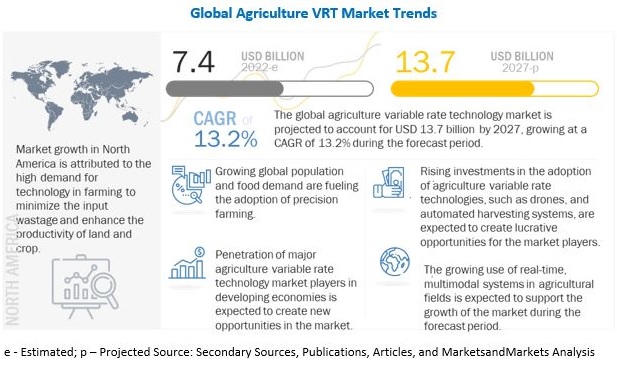
The agricultural industry has undergone a revolutionary change in recent years with the introduction of variable rate technology (VRT). The VRT is a modern farming technique that allows the farmers to vary the rate of input such as seeds, fertilizer, herbicide, and water according to the specific requirement of the field. The application of VRT in agriculture enhances crop production, reduces environmental impacts, and increases profitability by lowering input and application costs. The global agricultural variable rate technology (VRT) market is projected to reach USD 13.7 billion by 2027, recording a CAGR of 13.2% during the forecast period.

Download PDF brochure: https://www.marketsandmarkets.com/pdfdownloadNew.asp?id=178591689

Crop Type: Cereals & Grains to Dominate the Agriculture VRT Market

As per the statistics, cereals and grains are the largest crop type being harvested globally, with around 728 million hectares of land under cereal cultivation in 2018. Among various crop types, cereals such as corn, wheat, and rice have the highest adoption rate as they are majorly grown in large farms. The cereals & grains segment is projected to account for the largest growth in the agriculture variable rate technology market. The VRT allows input application rates to be varied across fields for site-specific management of the field variability. VRT helps in reducing input usage, thereby decreasing environmental impacts such as greenhouse gas emission, soil erosion & degradation, and genetic erosion.

Application Method: Sensor-Based VRT to Exhibit Fastest Growth

Sensor-based VRT is expected to account for the fastest growth in the agriculture variable rate technology market. Unlike map-based application methods, the sensor-based VRT does not require a map or positioning system. The sensor based VRT utilizes active optical sensors, drones, and satellite mapping for real-time site-specific management of the field variability. However, the high cost of these sensor based VRT systems could be a major concern during the forecast period.

Farm Size: Mid-Sized Farms to Grow Fastest

Mid-sized farms are expected to account for the highest growth rate during the forecast period. Agriculture VRT helps in increasing farmers’ profitability while preserving the environment with chemical fertilizers and crop protection chemicals. The increasing demand for food supply has led to high adoption of precision farming technologies in medium-sized farms in emerging countries.

Region: North America to Dominate the Market

North America is expected to dominate the agriculture variable rate technology market due to the increasing adoption of advanced technologies in various crops. The U.S. has more than 15% of farms that are more than 200 hectares and grows commercial crops that require these types of advanced technologies for profitable and efficient farming.

Request Sample Pages: https://www.marketsandmarkets.com/requestsampleNew.asp?id=178591689

Key Market Players

The key players in this market include Deere & Company, Trimble, Inc, AGCO Corporation, Topcon Corporation, CNH Industrial N.V., Kubota Corporation, Yara International, SJ DJI Technology Co., Ltd., Valmont Industries, Inc, Lindsay Corporation, and others.

Conclusion

The inclination of farmers toward maintaining the health of their crop and increasing productivity is driving the market for agricultural variable rate technology products. The adoption of VRT can help in reducing input usage and environmental impacts, increasing productivity and profitability, and preserving the environment. The VRT is a smart approach to farming that helps farmers to efficiently manage their field variability, thereby enhancing crop production.

Dynamics of the Global Agricultural Biologicals Market Size, Share, and Forecast to 2027

Agricultural biologicals refer to products derived from natural sources such as microorganisms, plant extracts, beneficial insects, or other organic materials that are used in agriculture to enhance crop productivity, improve soil health, and manage pests and diseases. These products can include biopesticides, biostimulants, biofertilizers, and microbial inoculants. The agricultural biologicals market size is projected to reach USD 27.9 billion by 2028 from USD 14.6 billion by 2023, at a CAGR of 13.8% during the forecast period in terms of value. The market for agricultural biologicals is experiencing growth due to growing organic farming and government initiatives.

Download PDF brochure: https://www.marketsandmarkets.com/pdfdownloadNew.asp?id=100393324

Agricultural Biologicals Market share

  • BASF SE (Germany)
  • Syngenta AG (Switzerland)
  • Bayer AG (Germany)
  • UPL (India)
  • Corteva Agriscience (US)

Agricultural Biologicals Market forecast

The agricultural biologicals market is projected to experience significant growth in the coming years. Factors driving this growth include increasing demand for organic and sustainable agricultural practices, rising awareness about the harmful effects of chemical pesticides and fertilizers on the environment and human health, and government initiatives promoting bio-based products in agriculture.

Moreover, advancements in biotechnology and microbial research are leading to the development of more effective and diverse agricultural biologicals, which are expected to further fuel market expansion. Additionally, the growing adoption of precision farming techniques and integrated pest management strategies is likely to boost the demand for biopesticides, biostimulants, and other biological products.

Regionally, Asia-Pacific is anticipated to witness rapid growth in the agricultural biologicals market, driven by expanding agricultural activities, increasing population, and rising demand for organic food products. North America and Europe are also expected to contribute significantly to market growth due to strong regulatory support for sustainable agriculture and growing consumer preference for organic produce.

Inquiry before buying: https://www.marketsandmarkets.com/Enquiry_Before_BuyingNew.asp?id=100393324

By product type, microbials hold a significant market share during the forecast period

The demand for microbials in the agricultural biologicals market is increasing globally due to the growing concern over the environmental impact of conventional agriculture. This includes the use of chemical inputs, which has led to a greater emphasis on sustainable and environmentally friendly farming practices. Microbials provide a natural and eco-friendly alternative by reducing the reliance on synthetic pesticides and fertilizers. As sustainability becomes a priority for consumers and regulatory bodies, there is a rising demand for microbial-based agricultural products.

Microbials, including beneficial bacteria, fungi, and other microorganisms, offer the advantage of improving soil health and nutrient availability. They form symbiotic relationships with plant roots, facilitating nutrient uptake and enhancing plant growth. Farmers are increasingly recognizing the significance of soil health in achieving sustainable agriculture, leading to an increased demand for microbials as a means to promote soil fertility and nutrient cycling.

Agricultural Biologicals Market Size, Share, Forecast and Trends – 2028

The Agricultural Biologicals Market includes products such as biopesticides, biofertilizers, and biostimulants. Factors influencing the market growth include the increasing demand for sustainable farming practices, rising awareness about the environmental impact of chemical pesticides and fertilizers, and the growing trend towards organic farming.

To find the latest agricultural biologicals market forecast, consider looking into reports from market research firms, industry associations, and government agencies. Additionally, news articles and updates from agricultural and biotechnology sources can provide insights into current trends and future projections.

The agricultural biologicals market share is projected to reach USD 27.9 billion by 2028 from USD 14.6 billion by 2023, at a CAGR of 13.8% during the forecast period in terms of value. The market for agricultural biologicals is experiencing growth due to growing organic farming and government initiatives.

Download PDF brochure: https://www.marketsandmarkets.com/pdfdownloadNew.asp?id=100393324

South America to boost market growth during the forecast period

Due to the vast agricultural lands in South America, there is a growing awareness and concern regarding the environmental impact of conventional agricultural practices. To address these concerns, there is an increasing demand for agricultural biologicals as they provide more sustainable alternatives by reducing the reliance on synthetic pesticides and fertilizers. These biological products are derived from naturally occurring substances like beneficial microorganisms, plant extracts, and biopesticides, which contribute to improved soil health, biodiversity, and overall ecosystem sustainability. Additionally, South American countries are significant exporters of agricultural commodities, and to meet the stringent regulations of international markets, particularly in Europe and North America, farmers are adopting agricultural biologicals as a sustainable and residue-free alternative to conventional agrochemicals.

Agricultural Biologicals Market trends

Following are Agricultural Biologicals Market trends:

Increasing Demand for Sustainable Agriculture:

  • Growing awareness of environmental issues and the need for sustainable agricultural practices is driving the demand for biological products.
  • Consumers are increasingly seeking products grown using environmentally friendly and sustainable methods.

Rise in Organic Farming Practices:

  • With an increasing focus on health and wellness, there is a growing trend toward organic farming.
  • Agricultural biologicals, including biopesticides and biofertilizers, are key components of organic farming practices.

Advancements in Biotechnology:

  • Ongoing advancements in biotechnology contribute to the development of more effective and targeted biological products.
  • Improved understanding of plant-microbe interactions and genetic engineering techniques are enhancing the efficacy of agricultural biologicals.

Integrated Pest Management (IPM):

  • The adoption of Integrated Pest Management practices is rising, encouraging the use of biological control agents alongside traditional chemical methods.
  • Farmers are incorporating a combination of biologicals, crop rotation, and other IPM strategies for pest and disease management.

Speak to Analyst: https://www.marketsandmarkets.com/speaktoanalystNew.asp?id=100393324

Aquaculture Products Market: Future Demand and Top Key Players Analysis | 2027

The aquaculture products market research report provides a thorough and in-depth study of the industry’s segmentation based on Types, Applications, and Regions. It covers the important factors affecting market growth as well as the current trends, opportunities, and concerns. The market’s CAGR status is included, giving important information about how the market has performed over time. The Aquaculture Market report is an invaluable tool for organizations, providing a thorough overview of market dynamics and future strategies for enterprises to successfully map their path forward.

Who is the largest Manufacturer of Aquaculture Products Market worldwide?

  • Pentair PLC (US)
  • AKVA Group (Norway)
  • Xylem Inc. (US)
  • Aquaculture Equipment Ltd. (UK)
  • Aquaculture System Technologies LLC (US)
  • Pioneer Group (Taiwan)
  • CPI Equipment Inc. (Canada)

Get a sample PDF of the report: https://www.marketsandmarkets.com/pdfdownloadNew.asp?id=2224024

Market Overview of Global Aquaculture Market

Aquaculture, also known as aqua farming, is the cultivation of aquatic organisms such as fish, crustaceans, mollusks, and plants. It plays a crucial role in meeting the increasing demand for seafood globally. The industry has been evolving with advancements in technology, sustainable practices, and increasing consumer awareness.

Key Trends and Factors:

  • Growing Demand for Seafood: Rising global population and increasing awareness of the health benefits associated with seafood consumption contribute to the growing demand for aquaculture products.
  • Technological Advancements: Technology is playing a key role in improving the efficiency and sustainability of aquaculture. Innovations in aquaculture equipment, monitoring systems, and genetic technologies are enhancing production practices.
  • Sustainability and Environmental Concerns: Sustainable practices are becoming increasingly important in aquaculture to address environmental concerns. The industry is focusing on reducing the environmental impact, minimizing the use of antibiotics, and adopting responsible farming practices.
  • Regional Market Dynamics: The aquaculture market varies significantly by region. Asia has traditionally been a major player, particularly China, which is the largest producer of aquaculture products globally. Other regions, including Europe and North America, also contribute significantly.

By species, aquatic animal segment is the fastest-growing segment in the aquaculture products market during the forecast period

The sales of fish products have seen a spike since last two decades globally. One of the main drivers of this growth is the increasing demand for seafood due to its high protein content and health benefits. Additionally, the rise in global population and food security has led to an increase in demand for seafood items. Technological advancements in aquaculture practices have also enabled the cultivation of a wider variety of aquatic animals, including high-value species such as shrimp, salmon, and tuna. These trends indicate a bright future for the aquatic animal market, with increasing demand and new opportunities for growth.

By Culture, marine segment is projected to grow at the fastest rate during the forecast period

Marine aquaculture can be beneficial for both ecosystems and humans if it is managed within a broader framework that takes into account its impact on different ecosystem services, such as regulating, provisioning, habitat, and cultural services. Marine aquaculture includes a variety of activities and objectives, such as large-scale food production, specialized operations aimed at improving environmental outcomes or producing multiple species for various benefits, and the restoration of native species. By focusing on habitat restoration, creating jobs, and increasing food security, aquaculture can have a positive impact on ecological, economic, and social needs. Therefore, actively developing aquaculture to provide ecosystem services may generate more significant benefits.

In recent years, there have been several significant acquisitions and mergers in the marine aquaculture market. In 2019, Thai Union, one of the world’s largest seafood producers, acquired a 45% stake in the Canadian lobster firm, Clearwater Seafoods, for USD 1 billion, expanding its presence in North America. These acquisitions and mergers reflect the growing importance of the marine aquaculture market and the interest of large corporations in investing in this sector.

Get Sample Pages of Aquaculture Market Report: https://www.marketsandmarkets.com/requestsampleNew.asp?id=2224024

Asia Pacific is estimated to dominate the aquaculture products market

The Asia Pacific region has been experiencing significant growth in the aquaculture products market in recent years. This is due to several factors, including the region’s large population and increasing disposable income, which is driving demand for seafood. In addition, the Asia Pacific region has favorable geographic conditions for aquaculture, with a long coastline, large rivers, and favorable weather conditions. The region is the largest producer of aquaculture products globally, accounting for over 90% of global aquaculture production. China is the largest producer of aquaculture products in the region, followed by India, Indonesia, and Vietnam. In recent years, there has been a shift towards higher value aquaculture products, such as shrimp, salmon, and tilapia, driven by changing consumer preferences and increasing health consciousness. As a result, the aquaculture products market in the Asia Pacific region is expected to continue its growth trajectory, offering significant opportunities for investors and businesses in this industry.

Cultivating a Greener Future: The Surge of Agricultural Biologicals in Global Markets

The agricultural biologicals market is set to witness substantial growth, with an anticipated size of USD 27.9 billion by 2028, reflecting a significant increase from the 2023 figure of USD 14.6 billion. This surge is attributed to a compound annual growth rate (CAGR) of 13.8% during the forecast period. The driving force behind this expansion is the increasing global demand for safer and more sustainable alternatives to chemical pesticides, as governments and regulatory bodies tighten regulations to protect human health and the environment.

Download PDF brochure: https://www.marketsandmarkets.com/pdfdownloadNew.asp?id=100393324

Governments and regulatory bodies worldwide are acknowledging the potential risks associated with chemical pesticides, ranging from adverse effects on human health to environmental concerns. The push for stricter regulations aims to limit the use and impact of chemical pesticides, prompting a significant shift in the agricultural industry. The recognition of agricultural biologicals as safer and sustainable alternatives has consequently fueled their adoption on a global scale.

The rise of Integrated Pest Management (IPM) is contributing to the growth of the agricultural biologicals market. IPM, recognized as a holistic approach to pest control, advocates for diverse strategies, including biological control methods. Agricultural biologicals play a pivotal role in promoting sustainable pest management within the framework of IPM, offering farmers effective tools to manage pests while minimizing environmental and health impacts. This trend presents substantial opportunities for the utilization of agricultural biologicals across diverse cropping systems.

The European Union (EU) has taken a forefront position in implementing stringent regulations on chemical pesticides. The Sustainable Use Directive (2009/128/EC) encourages integrated pest management practices and non-chemical methods, leading to a significant reduction in the use of chemical pesticides within European agriculture. The EU’s emphasis on biological controls has driven the adoption of agricultural biologicals in the region.

Make an Inquiry: https://www.marketsandmarkets.com/Enquiry_Before_BuyingNew.asp?id=100393324

North America is expected to dominate the global agricultural biologicals market, fueled by a high level of awareness and willingness among farmers in the United States and Canada to embrace sustainable agricultural practices. The increasing demand for organic and sustainable food, coupled with concerns about chemical pesticide use, has driven the active pursuit of alternatives like agricultural biologicals in these regions. The well-established distribution networks and marketing channels for agricultural inputs in North America have further facilitated accessibility, contributing to the robust growth of the agricultural biologicals market.

The agricultural biologicals market’s trajectory is significantly influenced by the global shift towards stricter regulations on chemical pesticides, prompting a surge in demand for safer and sustainable alternatives. As the adoption of Integrated Pest Management practices continues to rise, agricultural biologicals are poised to play a crucial role in shaping the future of pest control in agriculture, ensuring a balance between productivity and environmental stewardship.

The Growing Impact of Variable Rate Technology in Global Agriculture

Introduction:

The global agriculture Variable Rate Technology (VRT) market is witnessing substantial growth, with an estimated value of USD 7.4 billion in 2022. Projections suggest that it will reach USD 13.7 billion by 2027, showcasing a Compound Annual Growth Rate (CAGR) of 13.2% during the forecast period. VRT, enabled through field monitoring and equipment, allows farmers to optimize inputs like seeds, fertilizers, herbicides, and water based on site-specific requirements. This targeted approach reduces costs and enhances yields, contributing to the increasing adoption of agricultural VRT.

Download PDF brochure: https://www.marketsandmarkets.com/pdfdownloadNew.asp?id=178591689

Crop Type Dominance:

The cereals and grains segment leads the agricultural VRT market, primarily due to the widespread cultivation of crops like corn, wheat, and rice. In 2018, approximately 728 million hectares of land were dedicated to cereal cultivation globally. The VRT’s ability to vary input application rates across fields aligns with the demands of large-scale cereal farming, reducing environmental impacts such as greenhouse gas emissions, soil erosion, and genetic erosion.

Application Method Dynamics:

Among various application methods, sensor-based VRT is poised for the fastest growth. Unlike map-based approaches, sensor-based VRT utilizes active optical sensors, drones, and satellite mapping in real-time, eliminating the need for a pre-existing map or positioning system. However, concerns regarding the high cost of sensor-based VRT remain a challenge during the forecast period.

Farm Size Trends:

Mid-sized farms are projected to experience the highest growth in the agricultural VRT market. This growth is attributed to VRT’s role in increasing farmers’ profitability while promoting environmentally sustainable practices with reduced chemical fertilizer and crop protection chemical usage. In countries like the U.S., Australia, and the United Kingdom, mid-sized farms are increasingly adopting smart farming techniques to meet the rising demand for food supply.

Regional Leadership:

North America emerges as the largest market for agricultural VRT, driven by increasing automation and digitization in agriculture. The region boasts more than 15% of farms exceeding 200 hectares, where advanced technologies are essential for profitable and efficient farming of commercial crops. The U.S. Department of Agriculture (USDA) reports a steady growth in the adoption of VRT across various crops in North America.

Make an Inquiry: https://www.marketsandmarkets.com/Enquiry_Before_BuyingNew.asp?id=178591689

Key Market Players:

Leading players shaping the agricultural VRT market include Deere & Company, Trimble Inc, AGCO Corporation, Topcon Corporation, CNH Industrial N.V., Kubota Corporation, Yara International, SJ DJI Technology Co., Ltd., Valmont Industries, Inc., Lindsay Corporation, Hexagon, AgJunction, Teejet Technologies, AG LEADER Technology, and The Climate Corporation.

Conclusion:

As global agriculture continues to evolve, the adoption of Variable Rate Technology is becoming instrumental in optimizing farming practices. The emphasis on precision and efficiency, particularly in mid-sized farms, is driving the market’s growth. Despite challenges such as the cost of sensor-based VRT, the industry is poised for significant expansion, contributing to sustainable and productive agriculture worldwide.

Plant-Based Leather Market Set to Reach USD 97 Million by 2027: A Sustainable Fashion Revolution

In a transformative shift towards sustainability, the global plant-based leather market is projected to soar to USD 97 million by 2027, with a remarkable Compound Annual Growth Rate (CAGR) of 7.5% during the forecast period. The driving forces behind this surge include a heightened awareness of climate change and animal welfare issues, leading to an increased demand for products that are not only environmentally friendly but also ethical and cruelty-free.

Download PDF brochure: https://www.marketsandmarkets.com/pdfdownloadNew.asp?id=215444895

Designers, artisans, fashion brands, and automotive companies are actively embracing this change, abandoning conventional leather in favor of plant-based alternatives. Collaborations and partnerships with companies specializing in plant-based leather manufacturing have become strategic imperatives in this evolving landscape.

Among the diverse applications of plant-based leather, the fashion segment stands out as the fastest-growing. Recognizing the growing trend of vegan fashion, renowned international brands like H&M, Stella McCartney, and Gucci are gradually incorporating plant-based leather into their collections. These industry leaders are poised to transition from traditional animal leather to cruelty-free, eco-friendly alternatives, satisfying the demands of an increasingly environmentally conscious consumer base. The appeal of these products lies not only in their ethical production but also in their ability to retain the style and texture of traditional leather.

The Asia Pacific region is witnessing the highest growth rate in the plant-based leather market. Encompassing countries such as China, India, Japan, Thailand, Indonesia, South Korea, Australia, and New Zealand, the region leverages agricultural waste to fuel the alternative leather industry. In Japan, consumer behavior is shifting towards climate-friendly, sustainable, and cruelty-free choices, leading to a rising demand for plant-based products. Notably, Japanese brands like Belle and Sofa are making strides by using vegan leather in lieu of traditional leather to craft designer bags and shoes.

Inquiry before buying: https://www.marketsandmarkets.com/Enquiry_Before_BuyingNew.asp?id=215444895

Key players driving innovation and growth in the plant-based leather market include Ananas Anam (UK), DESSERTO (Mexico), NUPELLE (Taiwan), Natural Fiber Welding, Inc. (US), and PEEL Lab (Japan). These companies are at the forefront of the sustainable fashion revolution, pioneering the development of eco-friendly alternatives that align with the values of a conscientious and discerning consumer base.

Biorational Pesticides Market: Trends, Application and Report Forecast

The global biorational pesticides market will grow from USD 7.5 billion in 2023 to USD 15.1 billion by 2028, growing at a CAGR of 15.2% during the forecast period. As reported by the FiBL & IFOAM – Organics International in 2023, the global organic agricultural land surpassed 76.4 million hectares in 2021, encompassing areas undergoing conversion. This significant expansion in organic farming practices has notably influenced the surge in the biorational pesticides market. Organic agriculture, prioritizing natural and sustainable methods while shunning synthetic chemicals, has been pivotal. It underscores a focus on eco-friendly solutions and aligns perfectly with the essence of biorational pesticides—derived from natural origins and demonstrating minimal environmental impact. This mutual alignment complements the core principles of organic farming, fostering the heightened adoption of biorational pesticides within this evolving agricultural landscape.

Significant investments from both public and private sectors have been drawn to the expanding market potential of biorational pesticides. This influx of capital has played a crucial role in enabling the development and commercialization of novel biorational pesticide products which are sourced from botanical, microbial, and non-organic materials. Investment in research and infrastructure has further stimulated market growth, enhancing global accessibility of biorational pesticides for farmers.

Download PDF brochure:https://www.marketsandmarkets.com/pdfdownloadNew.asp?id=57324225

Pesticides derived from plant sources or their extracts, known as botanical-based pesticides, frequently exhibit characteristics that enhance their stability during storage. These compounds, originating from plants, often possess inherent stability, mitigating rapid degradation or breakdown under standard storage conditions. This inherent stability contributes to an extended shelf life in comparison to certain microbial-based pesticides.

In terms of storage requirements, botanical-based pesticides typically demand simpler conditions than some microbial-based counterparts. While they may require standard storage practices, such as averting extreme temperatures or excessive moisture, they generally do not mandate specialized storage facilities or rigorous environmental controls.

Moreover, some botanical-based pesticides exhibit a broad-spectrum effect, meaning they have the capability to target and control a wide range of pests. These pesticides, derived from plant sources or their extracts, might possess compounds that affect various types of insects, fungi, or other pests. For instance, certain plant-derived compounds like pyrethrins or neem oil can impact a broad range of insects and diseases, offering a comprehensive approach to pest control.

Liquid formulations of pesticides present distinct advantages over their dry counterparts, propelling their increased market demand. Their ease of application stands out as a primary factor, as liquids allow for more uniform spraying over large areas, ensuring enhanced coverage, particularly on uneven or densely foliated surfaces. This attribute facilitates efficient application, contributing to better pest management outcomes.

Moreover, the precision of liquid formulations in delivering active ingredients to specific pests or targeted areas further distinguishes them. This targeted delivery mechanism elevates their efficacy in pest control strategies, ensuring a more focused and effective approach. Additionally, the convenience in handling and mixing liquid formulations during preparation and application adds to their appeal. Their ability to seamlessly blend with diverse substances or additives enhances their versatility in pest management practices. As a result of these advantages and their perceived efficiency, liquid formulations have gained favor among farmers and pest management professionals, fostering their increasing preference and market growth.

The agricultural sector in North America is characterized by a variety of farming systems, including large-scale commercial operations and smaller organic and specialty crop farms. This diverse landscape creates favorable conditions for the utilization of biorational pesticides across a wide range of crops.

In North America, regulatory bodies have erected robust frameworks, rigorously scrutinizing the usage of conventional pesticides, fueled by apprehensions encompassing safety and environmental repercussions. These stringent measures have triggered a surge in the quest for biorational pesticides, esteemed for their perceived safety and eco-friendly attributes. A significant milestone unfolded when the U.S. Environmental Protection Agency (EPA) championed the cause of shielding children and agricultural workers from the perils of a hazardous pesticide with ties to enduring cognitive impairments.

In a monumental move unveiled in August 2021, the agency unveiled plans for a sweeping prohibition on chlorpyrifos across all food crop applications, marking an epochal stride in safeguarding public health and the environment. This decisive action, born out of mounting concerns about the pesticide’s detrimental impacts, stands as a testament to the intensifying drive toward embracing safer and more sustainable alternatives in the agricultural landscape. The pronounced pivot towards biorational pesticides amid stringent regulatory reforms underscores an ardent commitment to fostering a safer, greener future in pest management practices within North America.

Make an Inquiry:https://www.marketsandmarkets.com/Enquiry_Before_BuyingNew.asp?id=57324225

The key players in the biorational pesticides market include BASF SE (Germany), Bayer AG (Germany), UPL (India), FMC Corporation (US), Syngenta AG (Switzerland), Novozymes A/S (Denmark), Sumitomo Chemical Co., Ltd (Japan), Pro Farm Group Inc (US), Koppert (Netherlands), Valent BioSciences LLC (US), Gowan Company (US), Certis Biologicals (US), Biobest Group (Belgium), BIONEMA (UK), and Vestaron Corporation (US).