Key Market Dynamics in Global Hydroponics Market

The hydroponics market is projected to reach USD 16.0 billion by 2025, from USD 8.1 billion in 2019, at a CAGR of 12.1% during the forecast period. The market is driven by factors such as the growing acceptance of controlled environment agriculture and increasing technological advancements in hydroponic systems.

According to the FAO, due to the increasing population, food production is expected to rise by 70% before 2050. On the other hand, natural prerequisites of agriculture, viz., arable land and water have been depleting, with rapid urbanization across the globe. To feed the increasing population, the productivity of food crops needs to be increased in the existing arable land, and also alternative farming techniques such as urban farming need to be encouraged.

Key Players:

• Signify Holdings (Netherlands)
• Argus Control Systems (Canada)
• Heliospectra AB (Sweden)
• Scotts Miracle Gro (US)
• American Hydroponics (US)
• LumiGrow (US)

Download PDF Brochure: https://www.marketsandmarkets.com/pdfdownloadNew.asp?id=94055021

Higher yield as compared to conventional agriculture practices

Hydroponic systems or soil-less agriculture reduce the farmer’s consumption of resources, thereby enabling this farming technique to be adopted by a large number of stakeholders, ranging from home gardeners to professional growers, and supermarkets to restaurants. According to the UN reports on global population, plants grown in hydroponic systems have achieved 20%–25% higher yield than the traditional agriculture system, with its productivity being 2–5 times higher. Also, owing to controlled environmental conditions, the effect of climatic changes can be balanced with the help of these systems, thereby not affecting the annual crop production. CEH techniques directly affect the crop harvest cycle; hence, for hydroponic systems, crop harvest cycles are shorter in comparison to traditional farming techniques, thereby increasing the annual yield. Also, since climatic changes show a minimal effect on such systems, crops can be produced all year round, thereby again increasing the produce.

Lack of government policy and tax breaks in developing countries

Hydroponic farming is seen as a key factor in improving food security in developing regions; however, while government support through tax cuts is present in developed countries, the same cannot be said for developing countries. The availability of the best equipment is fairly limited and often needs to be imported, which attracts taxes adding to the costs for hydroponic growers. The lack of tax cuts and incentives is also a key factor that hinders the growth of hydroponics in developing regions as the high set-up costs and running costs can often render operations unfeasible. The need for basic training and technical knowledge is necessary for operating hydroponic farms, which although is present in developing countries, does not add significantly to the value of hydroponic farms. The high costs of production often result in high costs of the final product, which in itself can draw consumers away in price-sensitive markets.

Entrance of new players in the market

Due to increased popularity and adoption of hydroponics, many new players are entering the market. For instance, Larry Ellison, founder, chairman, and CTO of Oracle, launched a hydroponic farming start-up, named Sensei in Los Angeles. The company plans to build 10 greenhouses covering 200,000 square feet on the Hawaiian island of Lanai and instead of measuring output by volume, Sensei will measure nutrition per acre.

Various investors are also supporting hydroponics start-ups globally. For instance, in June 2017 a high-tech indoor, vertical farming start-up, Bowery Farming, announced it had raised USD 20 million in a Series A1 co-led by General Catalyst and GGV Capital, and including GV, First Round Capital, and other seed round investors. In July 2017, a San Francisco-based indoor vertical farming start-up, Plenty, raised the largest agtech funding round in history – a USD 200 million Series B led by SoftBank Vision Fund – the USD 93 billion all-stage tech fund headed by a Japanese investor, Masayoshi Son. Other participants in the round include affiliates of Louis M. Bacon, the founder of Moore Capital Management, and existing investors Eric Schmidt’s Innovation Endeavors, Finistere, DCM, Data Collective, and Bezos Expeditions. Plenty has plans to open 500 hydroponics farms in all the major cities of more than 1 million inhabitants, globally.

Speak to Analyst: https://www.marketsandmarkets.com/speaktoanalystNew.asp?id=94055021

Many start-ups have also emerged in the Asia Pacific region, the fastest-growing region for the hydroponics market. For instance, Future Farms based in Chennai, India has developed effective and accessible farming kits to facilitate hydroponics. The company develops indigenous systems and solutions, made from premium, food-grade materials that are efficient and affordable for Indian growers. Junga FreshnGreen, an agri-tech start-up, is a joint venture with a leading Netherlands-based Agricultural technology company – Westlandse Project Combinatie BV (WPC). It is setting up high-technology farms in India. The company will create a hydroponics model that can cultivate farm fresh vegetables that have a predictable quality, having little or no pesticides, and unaffected by weather or soil conditions.

Europe is projected to account for the largest market size during the forecast period

The European hydroponics market is projected to be the largest between 2019 and 2025, while the Asia Pacific market is projected to grow at the highest CAGR. Europe was the largest producer of hydroponic crops in 2018. It is still the largest market for hydroponically produced crops. Europe has traditionally been at the forefront of implementing advanced techniques in hydroponic smart greenhouse horticulture. Countries such as the Netherlands, Spain, and France have large areas under greenhouse cultivation. However, in the Netherlands, growers mostly cultivate their plants in simple tunnel-like greenhouses without the use of climate control technologies. The advancement in greenhouse farming has supported the growth of hydroponics in Europe.
Need for Higher Productivity Using Limited Land Area Drives the Potash Fertilizers Market

“Potash” is a synonym term usually used for “fertilizer potassium”, in crop production techniques. It is a plant macronutrient that is available in the form of potassium chloride (KCl) or potassium sulphate (K₂SO₄) in the soil. Potassium is one such nutrient that is not stored by human body and needs to be continually supplemented for from dietary sources, which necessitates the presence of potassium in appropriate quantities in the food crops. One potassium form that is highly used in fertilizers in “Potassium oxide” (K2O), along with some other elements that enhance its solubility in the soil. The fertilizers are either in solid form which is powder, or liquid form. These are directly applicable via methods like broadcasting, foliar spraying, and fertigation.

The global potash fertilizers market is estimated to be valued at USD 21.60 billion in 2017, and is projected to reach USD 26.87 billion by 2022, at a CAGR of 4.47%. The potash fertilizers market is driven by the rise in need for higher productivity using limited land area and increase in applicability of potash fertilizers. There is rising trend toward the consumption of organic food & food products, those which are produced without any synthetic or chemical inputs or with only natural or biofertilizers. This has been considered as one of the restraining factors for the market.

Download PDF Brochure:
https://www.marketsandmarkets.com/pdfdownloadNew.asp?id=35790308

Supply-Demand indexes for potash based:

According to the “Status of the World soil resources” report 2016 of “Food and Agricultural organisation” of U.N,  soil erosion is estimated to wash off around 15-26 million tonnes of potassium (K), from the agricultural lands all over the world. These losses need to be curbed through external supply of the nutrient into the soil. A steady rise in the supply of potash fertilizers has been observed over the years 2015-2020.

The world fertilizer demand is projected for year 2020, by the “World Fertilizer trends and outlooks” report of “Food and Agricultural organisation” of U.N, the demand for the potash along with expected rise in CAGR.

Future Market Prospects and Challenges:

The fertilizers market is greatly driven by substantial natural factors such as, rising soil erosion levels, nutrient imbalances in the soils, land take or increasing urbanisation leading to lesser availability of agricultural lands, and soil acidification. Macro-economic factors driving the market include rising population in turn rising food demands globally, dependence on fertilizers for larger volumes of produce, and decreasing arable lands in different regions. The global potash fertilizers market was valued at USD 20,724.6 Million in 2016, and was projected to rise at a CAGR of 4.47% from 2017-2022. Over these the potential challenges that the fertilizer market faces today cannot be underestimated, such as rising awareness regarding organic soil management practices, rising consumption of organic foods, advancements of agricultural technologies and machineries.

Speak to Analyst:
https://www.marketsandmarkets.com/speaktoanalystNew.asp?id=35790308

Although the market for these fertilisers has its drivers and challenges in equity, demand of potash as an agricultural nutrient has still managed to experience constancy in the level of demand over the years, and is expected to keep steadily rising. Infact potash fertilizer prices have risen by approximately 10% in 2019, due to the rise of prices of potash as a raw materials, which denotes significant opportunities in the market.

Aquaculture Market Size, Share and Market Forecast to 2025 | Key Players: Pentair plc, AKVA Group, Xylem Inc.

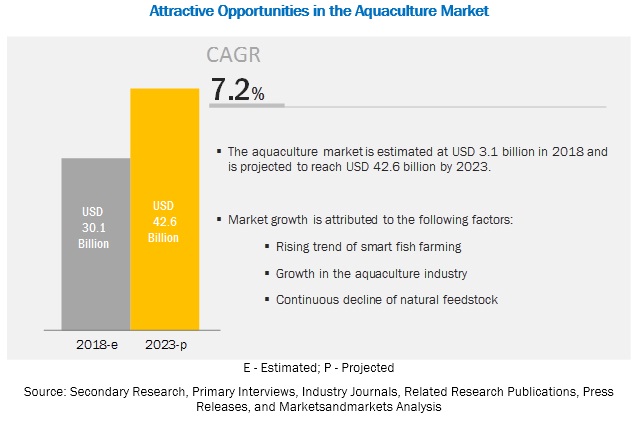
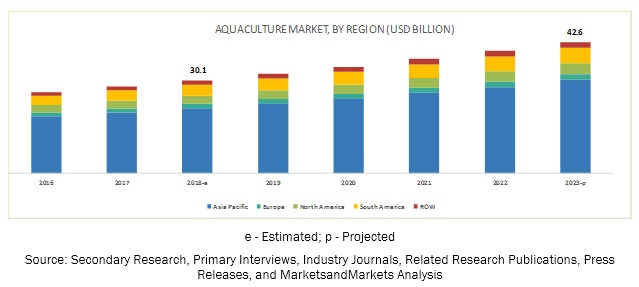
 The global aquaculture market size is projected to grow from USD 30.1 billion in 2018 to USD 42.6 billion by 2023, recording a CAGR of 7.2% during the forecast period. The aquaculture market is driven by increasing consumption of aquaproducts, rise in cage aquafarming, and the decline in the value of captured fishes. Furthermore, advancements in aquaculture technology and seafood trade are also driving the demand for aquaculture products. However, stringent food safety regulations associated with the consumption of aquaculture food products is projected to hinder the market growth.

Request for Customization of this report: https://www.marketsandmarkets.com/requestCustomizationNew.asp?id=2224024

The pharmaceuticals segment in the aquaculture market is projected to be the fastest-growing segment, in terms of value

The demand for pharmaceutical products in aquaculture has increased due to their role in promoting growth and preventing diseases in fish. Further, increasing R&D in the pharmaceuticals sector has facilitated higher acceptance of drugs, medicated feed, and vaccines, specifically in developed countries such as the US and Canada. Additionally, there has been a growing adoption of in-feed medication for fish to prevent the large-scale spread of diseases across Europe, given the limited use of antibiotics in the region.

Key Players:

  • Pentair plc, (US)
  • AKVA Group (Norway)
  • Xylem Inc. (US)
  • Aquaculture Equipment Ltd. (UK)
  • Aquaculture System Technologies (US)
  • Luxsol (Belgium)
  • Pioneer Group (Taiwan)
  • CPI Equipment Inc. (US)
  • Asakua (Turkey)

The aquatic animals segment is projected to account for the largest market share during the forecast period

The aquatic animals segment is further divided into crustaceans, mollusks, finfishes, and others. The growing demand for protein-rich food in developing countries such as India, Bangladesh, Indonesia, and Vietnam is driving the demand for aquatic animals. Additionally, the government support for fish aquafarming, specifically in Asia Pacific and Africa is growing to mitigate poverty levels, as aquaculture is an important source of employment in the coastal regions of these countries; hence, several aquaproduct manufacturers are encouraged to invest in these two regions.

Speak to Analyst: https://www.marketsandmarkets.com/speaktoanalystNew.asp?id=2224024

The Asia Pacific market is projected to account for the largest share during the forecast period

Asia Pacific is projected to account for the largest market share during the forecast period, due to the rising consumer demand for aquaculture food products and the increasing industrialization of aquafarming. Furthermore, according to FAO, Asia has the largest inland and marine culture cultivation of aquatic plants, with freshwater culture acquiring more than 50% and marine water acquiring more than 30% of the total aquatic animal cultivation, globally, which drives the aquaculture market. Additionally, the adoption of new technologies and modern tools is also driving the market growth in this region.

Process Equipment Market for Seed Industry: Drivers, Restraints, Opportunities, and Challenges

Process equipment market for seed industry includes processed seed market and seed processing equipment market. The processed seed market is projected to reach a value of USD 91.32 billion by 2022, growing at a CAGR of 10.2% during the forecast period. The seed processing equipment market, on the other hand, is projected to reach USD 3.25 billion by 2022 from 2017, at a CAGR of 10.2%. This market is projected to grow at a high rate due to the necessity to increase the food production, with the decrease in arable land. Furthermore, greater acceptance and area under GM crop, followed by the increase in globalized trade for processed seed, are some of the major factors driving the growth of the market, globally.

Speak to Analyst @ https://www.marketsandmarkets.com/speaktoanalystNew.asp?id=112191741

In the processed seed market, on the basis of crop type, the fruits & vegetables segment is projected to grow at the highest CAGR during the forecast period. The increase in demand for vegetables & fruits and limited production have driven the demand for high yielding traits and commercial seed products. Also, the growing awareness among farmers in developing countries about the benefits of processed seed over farm-saved seed is driving the production of processed seed around the globe.

Market Dynamics:

Drivers:

  • Increasing Acceptance and Area Under GM Crop
  • Increasing Global Trade for Processed Seed
  • Increasing Awareness in Developing Countries

Restraints:

  • High Price of Processed Seeds

Opportunities:

  • Improving Seed Replacement Rate in Developing Countries
  • Arrival of New Technologies With Potential Advantages on Existing Conventional Crops

Challenges:

  • Regulations in GM Crop

Read more @ https://www.marketsandmarkets.com/PressReleases/seed-process-equipment.asp

On the basis of method, the processed seed market is segmented into mechanical, biological, and chemical. The biological segment is projected to grow at a higher CAGR during the forecast period. The high growth of the segment is attributed to the increase in the demand for organic products and organic farming, which has led the growth of the biological processed seed and also led to the increase in scientific development of biological control agents in the crop protection industry.

In the seed processing equipment market, on the basis of type, the market for coaters is projected to grow at the highest CAGR during the forecast period. The increasing awareness about the benefits of seed coating with various pesticides, insecticides, and biologicals has driven the demand for the coated processed seed products, thus boosting the demand for coaters in the developing countries.

In the Asia Pacific region; the market is projected to grow at the highest CAGR during the forecast period. The major factors for this growth are increasing awareness about the benefits of processed seed and increasing demand for food in the region. This has led to increased processing, which acted as a major driver for the seed processing equipment market.

Growing Demand for Seafood Products and Protein Intake to Drive the Demand for Aquaculture

Farming implies some form of intervention in the rearing process to enhance production, such as regular stocking, feeding, protection from predators, etc.,” as defined by the Food and Agriculture Organization (FAO). Aquaculture is the farming of aquatic organisms, such as fish, mollusks, crustaceans, and aquatic plants.

MarketsandMarkets projects that the global aquaculture market is to grow from USD 30.1 billion in 2018 to USD 42.6 billion by 2023, recording a compound annual growth rate (CAGR) of 7.2% during the forecast period. The decline in the amount of captured fish and rise in consumption of fishes due to their protein and omega-3 fatty acid content are projected to drive the growth of the aquaculture market. Furthermore, rising trade of seafood is also propelling the market demand.

Report Objectives:

  • Determining and projecting the size of the aquaculture market, with respect to rearing product type, culture, species, production type, and regional markets, over a five-year period ranging from 2018 to 2023
  • Identifying attractive opportunities in the market by determining the largest and fastest-growing segments across regions
  • Providing detailed information about the key factors influencing the growth of the market (drivers, restraints, opportunities, and industry-specific challenges)
  • Analyzing the micromarkets, with respect to individual growth trends, future prospects, and their contribution to the total market
  • Identifying and profiling key market players in the aquaculture market
  • Providing a comparative analysis of the market leaders on the basis of the following:
    • Product offerings
    • Business strategies
    • Strengths and weaknesses
    • Key financials
  • Understanding the competitive landscape and identifying the major growth strategies adopted by players across the key regions
  • Analyzing the value chain, products, and regulatory frameworks across key regions and their impact on the prominent market players
  • Providing insights into key product innovations and investments in the aquaculture market

Download PDF brochure @ https://www.marketsandmarkets.com/pdfdownloadNew.asp?id=2224024

The freshwater aquaculture segment is estimated to dominate the market in 2018, as it an important sector of many economies such as Asia Pacific and South America and is considered to be important in sustaining the livelihoods of many rural communities. Further, advancements in pond aquaculture and the introduction of new technology to produce a high amount of freshwater species are driving the market growth of freshwater aquaculture.

The pharmaceutical segment, by rearing product type, is projected to be the fastest-growing segment in the aquaculture market during the forecast period, due to higher acceptance of drugs, medicated feed, and vaccines into the regional markets, specifically in developed countries such as the US and Canada. Furthermore, growing demand for medicated aquafeed is increasing in organized aquafarms across Europe, given the limited use of antibiotics across the region, which is driving the growth of the aquaculture market.

In terms of geographic coverage, the aquaculture market has been segmented into five regions, namely, North America, Europe, Asia Pacific, South America, and RoW. South America is projected to be the second fastest-growing region due to the strong fish production base in Ecuador and Chile, along with high technological advancements in aquafarming. According to FAO, the total fish production in the region would reach 16.2 million tons by 2025. Further, there is a high production of salmon in the region, especially in Chile, due to favorable market conditions. Other factors such as the presence of favorable temperatures & coastlines and strong governmental support for aquafarming in the region also cater to the development of the aquaculture industry.

Increasing government support provides a huge opportunity for the aquaculture sector. For instance, USAID-funded Fisheries Improved for Sustainable Harvest (FISH) Project in the Philippines, the Management of Aquatic Ecosystems through Community Husbandry (MACH) project in Bangladesh, the SUCCESS fisheries management programs in three West African countries, and the Global FISH Alliance in the spiny lobster fishery of Honduras.

Speak to Analyst @ https://www.marketsandmarkets.com/speaktoanalystNew.asp?id=2224024

Recent Developments:

  • In August 2018, AKVA Group set up a feed conveyor concept by the name of flexible feeding, which would allow farmers to send and feed silo to any cage, making it easier to use different feed types and sizes.
  • AKVA Group entered into an agreement in June 2018 to acquire Egersund Net AS (Norway) to expand its product portfolio.
  • In June 2017, Pentair plc set up a new facility of 87,000-square feet for aquafarming at its Schmidt’s brewery building in St. Paul, Minnesota, US.
  • In November 2016, Pentair Aquatic Ecosystems acquired Vaki Aquaculture Systems Limited (Iceland) to enhance its product portfolio of aquaculture systems, products, and services.
  • Aquaculture System Technologies, LLC, launched the Endurance filter for home and koi ponds in May 2016.

Soil Treatment Market With Top Countries data : Evolving Technology, Trends and Industry Analysis 2020 Appraised By Global Players

The report Soil Treatment Market by Type (Soil protection, Organic amendments, pH adjusters), Technology (Physiochemical, Biological, and Thermal) & Region – Global Forecasts to 2020″, The soil treatment market, estimated to be valued at USD 24.11 Billion in 2015, at USD 36.29 Billion by 2020, and projected to grow at a CAGR of 8.5% through 2020.

Product types of pH adjusters such as aglime and gypsum have been in demand, owing to the increasing knowledge of farmers towards the need to correct pH levels of agricultural soil. Weed control products of glyphosate and atrazine base have also been in demand due to high yield requirements in food crops. Hence, soil treatment will be viewed as a business opportunity in the next five years. As a result, many multinational players have entered into the production of varied types of soil treatment methods.

Browse in-depth TOC on “Soil Treatment Market”
78 – Tables
52 – Figures
146 – Pages

Soil protection products to dominate the soil treatment market

The market for soil protection products has been estimated to lead the soil treatment market in terms of value. Weed control, which is a sub segment of the soil protection market, is likely to dominate the market, and projected to grow at a comparatively higher CAGR than pest control products.

Soil protection products are likely to face stiff competition from organic amendments such as crop residue and sewage sludge as these segments have been rapidly growing, owing to environmental concerns regarding over usage of agrochemicals causing soil degradation. Gypsum-based pH adjusters may also pose a threat to this segment in the next five years.

Speak to Analyst @ https://www.marketsandmarkets.com/speaktoanalystNew.asp?id=958

Weed control products: The most widely used soil treatment product used globally

Weed control sub-segment of soil protection products accounted for the largest share in the soil treatment market in terms of value. However, the sub segments of the organic amendments segment are projected to grow at comparatively higher CAGRs due to increasing demand from developing agrarian economies.

Increasing usage of agricultural inputs in developed and developing countries to boost the soil treatment market

Countries in the Asia-Pacific, Latin America, Eastern Europe, and the Middle East regions are prospering in terms of increasing contribution of agriculture towards GDP with the commercialization of agricultural products on the rise. The rising population levels have also created the need to ensure food security by promoting high yield production. Increasing per capita consumption of fruits and vegetables in this region is another driver for the soil treatment market.

This report includes a study of marketing and development strategies, along with the product portfolios of leading companies. It includes the profiles of leading companies such as Syngenta AG (Switzerland), Monsanto Company (U.S.), BASF SE (Germany), Arkema S.A. (France), and Adama Agricultural Solutions Ltd. (Israel).

The report covers organic amendments such as crop residue and compost segments, soil protection types such as weed and pest control segments and pH adjuster types such as aglime and gypsum in terms of value and volume. In terms of insights, this research report has focused on various levels of analysis—industry analysis, market share analysis of top players, and company profiles, which collectively comprise and discuss the basic views on the competitive landscape, emerging & high-growth segments of the global soil treatment market, high-growth regions, countries, and their respective regulatory policies, government initiatives, drivers, restraints, and opportunities.