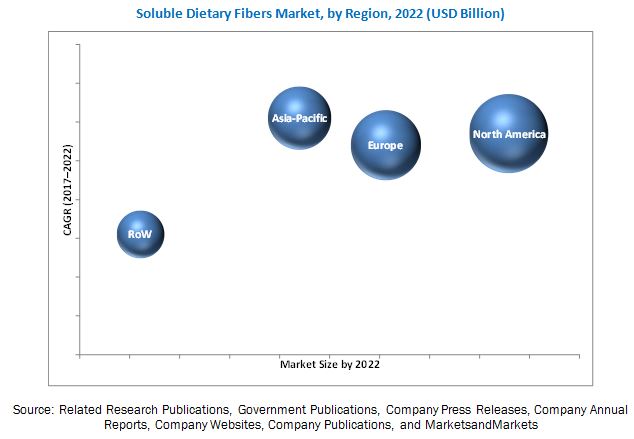
The beta-glucan market was valued at USD 307.8 million in 2016, and is expected to grow at a CAGR of 7.57%, to reach USD 476.5 million by 2022. The market is primarily driven by factors such as growing health consciousness among consumers and the increasing health expenditure. North America is projected to be the fastest-growing region as the consumers in are gradually becoming aware of the health benefits of oat beta-glucan and its significance in enhancing the body’s immunity. One of the major restraints in the growth of the beta-glucan market is the inconsistency in regulatory norms governing beta-glucan.
Pharmaceuticals segment is projected to be the
fastest-growing application
The pharmaceuticals
application of beta-glucan dominates the market due to its ability to cure problems
such as obesity, blood pressure, and diabetes. With the increase in the quality and the arrival of
clinically proven products in the market, the trust of consumers is growing for these products. The growing market for functional food & beverages
is presenting opportunities for the application of beta-glucan in the food
& beverage industry.
North America: High growth is expected in the beta-glucan
market
North America
is projected to be the fastest-growing market for the period considered for
this study as the beta-glucan market here is led by its broad applications in
various products, along with their health benefits. The North American region
is majorly driven by the U.S. market and the increasing incidences of diseases
and widespread application of fibers & specialty ingredients in various food
products, beverages, and dietary supplements.
Beta-glucan market includes the profiles of leading
companies such as Cargill (U.S.), Kerry Group plc (Israel), Tate & Lyle
(U.K.), Royal DSM (Netherlands), Ohly (Germany), Frutarom (Israel),
MilliporeSigma (U.S.), Super Beta Glucan (U.S.), and Lesaffre Human Care
(France).
The report “Hydroponics Market by Type (Aggregate Systems, Liquid
Systems), Crop Type (Vegetables, Fruits, Flowers), Equipment (HVAC, Led Grow
Light, Irrigation Systems, Material Handling, Control Systems), Input, and
Region – Global Forecast to 2025″, published by MarketsandMarkets™. The
hydroponics market is projected to reach USD 16.0 billion by 2025, from USD 8.1
billion in 2019, at a CAGR of 12.1% during the forecast period. The market is
driven by factors such as the growing acceptance of controlled environment
agriculture and increasing technological advancements in hydroponic systems.
Increasing adoption of urban farming is the key
factor driving the growth in the hydroponics market during the forecast period.
Hydroponics is a technique of growing plants in
water and nutrients, without using soil as a base. This technique is gaining
rapid popularity, as growers can obtain higher yields with each harvest. The
recent advances in urban farming and the emergence of vertical farming
technology have further fueled the growth of this market. Hydroponic systems
have been a combination of multiple technologies and hence encompass a specific
set of system models. Based on the system model, the hydroponic systems market
can be classified into aggregate and liquid systems. Aggregate systems utilize
a grow media for plant growth support and nutrition, while liquid hydroponic
systems do not require a grow media. Owing to their higher efficiency and
productivity obtained, liquid systems have been in high demand among the
growers for vegetable cultivation.
By input, the nutrients segment dominated the
hydroponics market in 2018.
Hydroponic farming is also termed as
substrate-based farming due to the use of growing media, nutrient, and water,
instead of soil. In the absence of the soil, nourishment to the plants is
imparted through these nutrients and grow media inputs. Nutrients form an
integral part of all types of hydroponic systems. Varied types of grow media
are available in the market at different prices, and the use of a suitable
growing media depends on the crop type and crop cycle. There are two major
types of nutrients used in hydroponics-macronutrients, and micronutrients.
Hydroponics helps the grower to take complete control over the implementation
of fertilizers, in terms of type and concentration.
Europe is projected to dominate the hydroponics
market by 2025.
The hydroponics market in Europe is projected
to witness significant growth during the forecast period due to the growing
adoption of CEA for horticultural crops and increasing development of new
innovative technologies that target specific crop needs. The adoption of
hydroponics has been the highest in the Netherlands, followed by Spain and
Turkey. According to industry experts, almost 90% of the greenhouses in the
Netherlands are converted to hydroponic structures, and a majority of this area
is used for flower and vegetable cultivation. Though the area under cover is high
in Spain, Italy, and France, the adoption of hydroponics across these
greenhouses is not more than 20% in these countries, thereby providing fair
growth potential for this region.
This report includes a study of the development
strategies, along with the product portfolios of leading companies. It also
includes the profiles of input providers such as Signify Holdings (Netherlands), Argus Control Systems (Canada),
Heliospectra AB (Sweden), Scotts Miracle Gro (US), American Hydroponics (US),
and LumiGrow (US). It also includes the profiles of crop producers such as
Aerofarms (US), Terra Tech Corp (US), Emirates Hydroponic Farms (UAE), Triton
Foodworks Ltd. (India), Urban cultivator (Canada), Village Farms (Canada),
Green Sense Holdings (US), Iron Ox (US), Gracia Farms (UAE), Bright Farms (US),
Freight Farms (US), Eurofresh (US), and Letcetra Agritech (India).
The report “Food Stabilizers (Blends & Systems)
Market by Source (Plant, Microbial, Seaweed, Synthetic, and Animal),
Application (Dairy, Bakery, Confectionery, Beverages, Convenience Foods, Meat,
and Sauces & Dressings), Function, and Region – Global Forecasts to
2023”, The global food stabilizers (blends & systems)
market is estimated to be valued at USD 2.3 billion in 2018 and is projected to
reach USD 2.8 billion by 2023, at a CAGR of 4.0% during the forecast period.
The food stabilizers (blends &
systems) market is driven by factors such as versatility of food
stabilizers in various food & beverage products and an increase
in demand for customized products by food manufacturers and growth
in concerns toward naturally sourced ingredients. According to the Food
Marketing Institute 2015, US Grocery Shopper Trends Report, more than 25%
of the consumers preferred natural food ingredients and more than 35% of
consumers preferred no artificial ingredients in their food products.
With the increasing popularity and consumption of convenience and
ready-to-eat food products, the demand for customized food & beverage
stabilizer blends and systems is projected to grow.
The Asia Pacific region is projected to be the
fastest-growing market for food stabilizers (blends & systems) for the next
five years. The abundant availability of raw materials such as seaweed and guar
gum, along with the growing popularity of dairy products, beverages, and
convenience food, is a growth driver in the Asia Pacific food stabilizers
market. Developing economies such as China, India, and Japan are potential
markets for the food stabilizers. The main driving force for the growing market
is the scope and range of innovative system solutions and food processing
technologies.
The hydrocolloids market
is estimated to be valued at USD 8.4 billion in 2018 and is projected to reach
USD 11.4 billion by 2023, at a CAGR of 5.3%
during the forecast period. The growth of the hydrocolloids market is driven by
factors such as the expansion of the processed food industry due to the increasing
demand for convenience foods in regions such as the Asia Pacific, South
America, and the Middle East & African. Apart from this, manufacturers are engaged
in R&D to offer high-quality hydrocolloids due to its multi-functionality
in the food industry.
Expansion of the food processing industry due
to the increased demand for convenience foods in the emerging countries of the Asia
Pacific and South America is projected to create lucrative opportunities for
hydrocolloids manufacturers in the coming years.
By source, the botanical segment is projected
to be one of the fastest growing segments for the hydrocolloids market due to the
increased demand for natural products and ingredients. Some of the popular hydrocolloids
of botanical origin used by manufacturers of the food & beverage industry
include gum arabic, gum tragacanth, gum karaya, and gum ghatti.
By type, guar gum is projected to be the
fastest growing segment in the hydrocolloids market. Derived from the guar
plant, it finds applications in the food, pharmaceutical, and cosmetics industries.
In the food industry, it is used as a thickening and binding agent. It is used
in a wide variety of food products such as ice cream, baked goods, cheese, soups,
gravies, noodles, and meat. In addition, it is used in cosmetics products such
as lotions, creams, and shampoos. In the pharmaceutical industry, it is used as
a binder in tablets. Expansion of the food processing industry in the
developing countries is projected to boost the sales of guar gum in the coming
years.
North America is the fastest-growing market
for hydrocolloids and is projected to record the highest CAGR during the
forecast period. The North American market is completely driven by the US,
which accounted for nearly 84.0% of the market share in 2017. The US has a
large market for bakery, confectionery, convenience food, and packaged food
products; hence, it constitutes a major share in the market. Consumers in the
US are calorie-conscious, due to which low-calorie and low-fat foods are
popular in the country. The increasing prevalence of obesity and cardiac
diseases have led to an increasing demand for natural and low-calorie food products
among consumers. Food manufacturers are therefore concentrating on the
application of natural hydrocolloids and their functions as fat replacers.
Recent Market Developments:
Recent developments are helpful to know the
market trend and growth strategies adopted by players in the market. For
instance, in the previous version, expansions were the major strategies adopted
by players during 2010–2015. The current analysis shows that expansions, new
product launches, mergers, and acquisitions have become more popular during 2013–2018.
It is well
known that organic acids act as preserving agents and control the growth of
certain bacteria that are widely used in the food industry. In the feed
industry, acidulants are widely used for their usefulness in promoting a
healthy gut by modulating the intestinal flora through their bacteriostatic
and/or bactericidal effects on different types of bacteria. The acidulants used
in the feed have two modes of action. The first one is the reduction of pH in the digestive tract and the
second is the direct anti-microbial
effect against gram-negative bacteria like E. coli.
Feed
acidulants are expected to witness healthy
growth and adoption during the forecast period due to the ban on antibiotics in
the US and the European Union (EU), and the growing government aids or funds
promoting the feed industry wellness. Furthermore, the high threat of diseases in livestock is expected to impact the
market positively during the forecast period. While manufacturers are looking
forward to tapping this industry, the major hindering factors are the rising
prices of feed acidulants and the maintenance
of the efficacy of feed acidulants due to
their corrosive properties. These factors are restraining the growth of this
market.
According to MarketsandMarkets, the global feed
acidulants market is projected to grow from USD 2.73 billion in 2018 to USD 3.45
billion by 2023. The growth of the market is expected to be directly affected
by the growth of feed additives and the increasing government aid for livestock
welfare. The feed acidulants industry is projected to grow at a CAGR of 5.1%
from 2018 to 2023.
What is driving the growth of the
feed acidulants market?
High threat of diseases in
livestock
The
outbreak of diseases such as avian flu, BSE (bovine spongiform encephalopathy),
and SARS (severe acute respiratory syndrome) not only affects livestock
breeding and the economy but also poses a
serious threat to human health. The emergence of swine diarrhea in the US
caused significant losses to swine farmers. Countries such as China, India, and
Indonesia are constantly facing outbreaks of avian flu and swine flu due to their
hot and humid climatic conditions. Meat vendors, meat processors, wholesalers,
retailers, and ultimately, livestock growers suffer financial losses due to the
culling of disease-affected animals, which further leads to a drop in animal
productivity.
The
use of feed acidulants in such cases proves to be an effective medium to reduce
disease outbreaks. They improve animal health, improve feed efficiency by
inhibiting pathogenic bacteria growth, and reduce the risk of sub-clinical
infections. The addition of feed acidulants to the feed also helps in
maintaining an optimum pH in the stomach of the livestock, stimulates feed
consumption, and improves protein and energy digestibility by reducing
microbial competition with host nutrients and endogenous nitrogen losses.
Therefore, the inclusion of feed acidulants is important for the maintenance of
animal health. This is one of the major factors driving the demand for feed
acidulants.
The formic acid segment is projected
to be the fastest-growing in the global market, in terms of value
The
formic acid segment is projected to be the fastest-growing segment during the
forecast period, in terms of value. Formic acid is a colorless fuming liquid
and remains soluble in water in almost all proportions. This characteristic of the
acidulant enables its proper mixture in the
feed, thereby allowing consistent feed formulations. While formic acid remains
highly efficient in improving ATTD (apparent total tract digestibility) of
protein, it also aids in improving feed
efficiency.
Formic
acid also acts as an ensiling agent, apart from being used for the preservation
and acidification of feed mixes. While being used as an ensiling agent, formic
acid supports lactic acid bacteria activity during the fermentation process.
The acidulant remains particularly effective in ensiling wet and high-protein
fodder plants. Additionally, the use of formic acid is known to be
environmentally safe, as it decomposes after it has been used as an ensiling
agent. Formic acid also boasts
antibacterial effects that help to preserve the feed. Formic acid, when used in
tandem with propionic acid, enhances this functionality further.
Based on region, the feed acidulants market is segmented
into North America, Europe, Asia Pacific, South America, and Rest of the World.
South America accounted for the
market size of USD 167.2 million, in the feed acidulants market in 2017. It is
projected to grow at the highest CAGR of 5.6% during the forecast period. BASF
SE (Denmark) and Kemin Industries Inc. (US) are the two of the prominent
players present in the region.
Increase in annual livestock
production in South America subsequently drives the demand for compound feed,
which, in turn, drives the consumption of feed acidulants. The rapid expansion
of the livestock industry in the region has also resulted in steady imports of
feed acidulants. According to the WHO, the per capita meat and milk & dairy
product consumption in South America was the highest in 2015, as compared to
other regions; and this trend is expected to continue to drive the demand for
feed acidulants in this region.
Similar to peas,
rice, and canola, potato proteins are vegetable sourced proteins with significantly smaller market size. The small
market size of potato protein can be mainly attributed to the introductory stage of its lifecycle.
However, it is increasingly becoming a subject of R&D in the protein
industry among both food and feed manufacturers. The consumption of potato
protein is currently the largest in the feed industry, especially in cattle and
swine feed, whereas in the food industry, it is used in limited applications
such as confectionery, bakery, processed meat, and to some extent in dairy
products. However, it is extensively researched as potato protein isolated by
thermal coagulation is highly unstable and insoluble, resulting in the loss of
their functionality in food applications. Furthermore, due to its solubility
issues, potato protein concentrate is considered as a by-product of low value
despite the high nutritional value of the indentured protein.
According to
MarketsandMarkets, the global potato protein market is projected to grow from
USD 72.2 million in 2017 to USD 88.2 million by 2022. The growth of the market
is projected to be directly affected by the rising veganism trends and
increased concerns toward the food allergen products. The global potato protein
market is projected to grow at a CAGR of 4.1% from 2017 to 2022.
What is driving the growth of the
potato protein market?
Consumer
concerns regarding food allergens in food products
Intolerance
and allergenic reactions are common health concerns globally, particularly in
regions such as North America and Europe. According to the Food Allergy
Research & Education (FARE), in the US, nearly 200,000 people each year
require emergency medical care due to allergic reactions to food, which cost
about USD 25 billion annually. In the EU, according to The European Academy of
Allergy and Clinical Immunology (EAACI), currently, around 150 million citizens
suffer from chronic allergic diseases, and by 2025, it is estimated that more
than 50% of all Europeans will suffer from allergies.
As a result of
the growing concerns regarding allergies, an increasing emphasis is placed on
accurate labeling of food products in order to help customers identify the presence of allergens. Manufacturers in the
food industry have responded accordingly by introducing allergen-free products,
labeling them as ‘gluten-free,’ ‘lactose-free,’ or by providing disclaimers on
food products such as ‘this product is processed in a factory that also
processes soy, wheat, peanuts, and eggs, among others’, in order to create
product awareness and prevent allergen concerns among consumers through
cross-contamination.
Therefore,
consumers in the European and North American regions prefer allergen-free
proteins such as potato proteins in food products. This has resulted in an increasing focus of food manufacturers on the
identification of alternate sources of protein that are allergen-free, such as
potato proteins. Consequently, this has resulted in increasing industrial
investments in R&D for the use of potato protein in food applications.
Untapped
regional markets are creating opportunities for potato protein
The market
for potato protein is currently at a nascent stage of its life cycle, and its
production is largely concentrated in the European region, followed by the
North American region. Moreover, the production of potation protein for use in
both food and feed applications is significantly low in regions such as the Asia
Pacific and South America. As a result, any industrial demand in these regions
has to be met with imports from the European and North American regions, which
significantly adds to the cost of procurement, and thereby production,
translating into higher prices of the final products. This provides an
opportunity for investments in potato protein production facilities in emerging
economies that would enable easy procurement of potential potato protein for
industrial users.
The feed segment is projected
to dominate the potato protein market by 2022.
The feed segment dominated the potato protein market in 2016 and is projected to grow at the highest CAGR during the forecast period. Potato protein is widely used in feed applications. However, its usage in food & beverage applications is still at a nascent phase. Of the various feed applications, it is mainly used for piglets and broilers. The high usage of potato protein in the feed is due to its high digestibility, pure protein content, and good palatability. It is known to be of superior quality as compared to various animal protein sources and other plant protein as soy concentrates and pea protein.
Based on region, the potato
protein market is segmented into North America, Europe, Asia Pacific, and Rest
of the World.
The Asia Pacific
accounted for the fastest growing market for potato protein in 2016. This market
is projected to grow at the highest CAGR of 4.4% during the forecast period. The
growth of this market is attributed to the increasing demand for potato protein,
which is used in feed, due to Asia Pacific’s highest livestock population as
well as feed consumption in the world.
The large base of the vegan population in the Asia Pacific
region is another major driver for the market. However, predominant preferences
for soy protein in food applications, the lack of awareness about the benefits
of potato protein, constrained supply issues, and drawbacks associated with potato
protein inhibit its growth in the food industry.
Pea starches are carbohydrates extracted from peas for application in the food and feed industries. In addition, due to their biodegradable and renewable nature, they are increasingly being used as an alternative to fossil fuel components in various chemical applications, including detergents, cosmetics, and pharmaceuticals. They are stable under high temperature, and various pH levels and have good resistance to shearing. In addition, they are mostly used for the aseptic processing of food products such as sauces, soups, and meat products.
Pea starch stability is also used for enhancing the crispness in food products along with improving volume in various extruded snacks. Along with various nutritional properties, it is also used in products such as gluten-free and lactose-free solutions, low-calorie formulations, and allergen solutions, due to which it is widely used in the pet food industry.
According to MarketsandMarkets, the global pea starch market is projected to grow from USD 91.8 million in 2018 to USD 134.7 million by 2023. The market growth is attributed to the rise in demand for high-quality convenience food and beverage products.
What is driving the growth of the pea starch market?
The rising demand for pea starch in various food and industrial applications
Pea starch offers various functions such as gelling, texturizing, binding, coating, thickening, and film forming. Due to its multifunctionalities, pea starch is used in various food applications, such as pasta, noodles, bakery products, confectioneries, soups, sauces, meat products, and poultry. It is also widely used in vermicelli as a binding agent. Pea starch is also a potential replacement for other starches in food and beverage applications as it is an economical option and offers a wide range of functions. In the pharmaceutical and cosmetic industries, pea starch is used for its gelling, thickening, and texturizing properties. With the rapid growth and changing trends in the pharmaceutical industry, the demand for pea starch is projected to increase. Companies such as Meelunie B.V. (Netherlands) and Parrheim Foods (US) are the major producers of pea starch, which cater to the pharmaceutical and cosmetic industries.
The rapid growth in the corn ethanol industry has contributed to a significant increase in the prices of corn and ethanol, due to which producers are focusing on shifting from corn to low-cost alternatives such as pea starch, which in turn, contributed to the growth of the pea starch market. The production of ethanol by pea starch improves the fermentation rates and allows ethanol producers to expand the annual production capacity and decrease capital costs by increasing the number of fermentations per year.
Starch granules, when heated in excess water above their gelatinization temperature, undergo irreversible swelling, resulting in amylose leaching into the solution. The changes that pea starch undergoes due to retrogradation are a major determinant to its functional properties for food and industrial applications and pose significant challenges to the food processing industry. For instance, it causes the staling of bakery products and the embrittlement of starch plastics, coatings, and adhesives. In non-food uses of pea starch such as in paper and adhesive applications or plastics, retrogradation affects the processing and final properties. Hence, it is one of the major restraints for the growth of the market globally.
The pea starch market is witnessing significant demand in developing countries such as China and India, due to the rising awareness of healthy and natural ingredients in food products, along with the increasing production of food and feed products in these countries. Localizing operations can help in reducing costs and improving access to local distribution networks, thereby optimizing profit margins. Resources and labor are readily available at a cheaper rate in these regions. The local governments in China and India are providing incentives for multinationals to set up Greenfield ventures. The Indian government has declared major tax breaks to attract multinational investors. China provides special tax incentives over the usual tax holidays to encourage foreign investors.
The gelling segment is estimated to dominate the global pea starch market
Pea starch is used to maintain the texture of food and also to create texture in water-based products. Gelling improves the availability of starch for amylase hydrolysis. Hence, the gelling process for starch is used constantly in the food & beverage industry to make starch digestible and to thicken or bind food products. Pea starch as a gelling agent is used in various applications such as confectionery and feed due to the high availability of amylose. In addition, the gelling function helps to keep the nutrients in food and feed products intact. As pea starch has strong gelling capabilities, manufacturers are using it to produce various food products and meet consumer demands globally.
Based on region, the pea starch market is segmented into North America, Europe, Asia Pacific, and Rest of the World.
North America accounted for the largest share with a value of USD 29.5 million in 2017. This market is projected to grow at a CAGR of 8.4% during the forecast period. Emsland Group (Germany), Cosucra Groupe Warconing SA (Belgium), Parrish and Heimbeckar, Ltd. (Canada), Puris Foods (US), and Axiom Foods, Inc. (US) are a few key players that occupy a significant share in the global market for pea starch.
The major factors driving the demand for pea starch in North America are the growing awareness of animal nutrition and the presence of a large number of pea starch companies in the region.
Beverage flavoring systems are a mix of different components, based on natural, nature-identical, or artificial ingredients being combined to create novel flavors. Beverage flavoring systems are regarded as semi-finished products having a limited shelf life and are manufactured according to the highest quality requirements, making production procedures easier, by providing customized flavor solutions for the beverage industry.
With the growing
awareness, consumers are looking for healthy alternatives with functional
properties and are more inclined toward drinks with natural flavors, natural
ingredients, and those that serve functional properties, while also avoiding
high-sugar consumption. Natural flavors required in functional drinks should be
derived and added from herbs, trees, fruits, or flowers. This promotes the
growth of clean-label flavor systems with natural ingredients for various
beverage applications.
Some statistics
reflecting the growth in fortified drinks consumption are mentioned below:
According to Natural Product
Insider, energy drink consumption in the US among the 27 to 37 age group
population increased from 55% in 2014 to 61% in 2015.
According to the 2013 Energy Drinks Report published by the
European Food Safety Authority (EFSA), about 41% adolescent and 52% adult
population in Europe consume energy drinks during sports activities.
According to a report published by Beverage Industry magazine
in 2017, the sales of juice concentrates
in the US increased by 4.5% in 2017 as compared to 2016.
The global
beverage flavoring systems market was valued at USD 3,692.2 million in 2017. It
is projected to grow at CAGR of 6.1% from 2018 to reach USD 5,215.6 million by
2023. This growth is attributed to the growing
demand for beverages including fortified and non-fortified drinks across the
world.
The beverage flavoring systems market, by beverage type, is segmented into alcoholic and non-alcoholic beverages. The market was dominated by the non-alcoholic beverages segment in 2017. The non-alcoholic segment is projected to grow at a significant rate due to the growing consumption of carbonated soft drinks, fruit- & vegetable-based juices, and functional drinks. The carbonated soft drinks and juice industries are major application areas of flavoring systems to enhance the taste of certain drinks. Consumer demand for innovative tastes encourages flavor manufacturers to launch new flavor products. Unusual flavors such as tropical fruits, herbs & spices, floral flavors, beer-flavored non-alcoholic beverages, smoked flavor beverages, and vegan dairy flavors are receiving global attention.
The use of flavoring agents is
estimated to dominate the beverage flavoring systems market in 2018
The various components of the beverage
flavoring systems include flavoring agents such as flavors, taste modulators
& taste-masking agents, flavor carriers, flavor enhancers, and other
ingredients, which include curing & pickling agents, preservatives, acidity
regulators, emulsifiers, and stabilizers. Flavoring agents are additives that are used to enhance and modify
the flavors of beverages. These are further sub-segmented into flavors and
taste modulators & taste-masking agents and are an integral part of any
flavoring system. For instance, flavor masking agents are required to mask the
harsh taste of functional ingredients such as proteins or high-intensity
sweeteners present in the beverages. Firmenich (Switzerland) offers Mask-IT, a
flavor masking agent, which can be used to mask bitterness. The flavoring agents
segment accounted for the largest share of the beverage flavoring systems
market.
Key Developments in the Market:
Sensient Technologies (US), Givaudan
(Switzerland), International Flavors and Fragrances (IFF) (US), Firmenich
(Switzerland), and Symrise (Germany) are among the key players in the market. The
market players focused on various development strategies such as new product
launches, expansions & investments, acquisitions, partnerships, mergers,
and collaborations in the last few years to meet the growing
demand for beverage flavoring systems.
Some of the major developments in the
market are listed below:
In August 2018, ADM (US) opened its new technical innovation
center in Shanghai, China, to support the development and creation of
innovative and nutritious products. This center would help the company to
accommodate the increasing demand for nutritional food & beverage products
in the Asia Pacific region.
In September 2018, Givaudan (Switzerland)
acquired Naturex (France), with an aim to cater to the customers across the
food & beverage, nutrition, and health & personal care sectors with
natural, clean labeled, and organic products.
In June 2018, Firmenich (Switzerland) launched its Natural and Clean
Label platform through which it would provide the natural, authentic, and
traceable products to gain customer and their trust.
The market for
nature-identical flavoring systems is growing worldwide due to cheaper sources
of these flavoring systems. Nature-identical flavoring systems are preferred by
the industry, because they are less expensive than the natural ones, easily
available, and have a molecular structure similar to the natural flavors. It is
impossible to meet the large demand for natural ingredients due to lack of
availability of required quantities. This is fueling the demand for
nature-identical products in the market.
Market Drivers:
Growth in demand for a variety
of innovative flavors in soft drinks
With the growth in the soft
drinks market, the demand for innovative beverage flavoring systems is also rising
at a fast pace due to consumer inclination toward innovative flavors.
Some of the latest innovative
beverage flavor system launches in the market are as follows:
In June 2017, IFF (US)
launched its Tastepoint program to offer a differentiating taste in alcoholic
and non-alcoholic beverages.
In July 2017, Tate & Lyle
(UK) launched ‘Taste for Adventure’ flavor range, which includes dark soft
brown, organic dark soft brown, golden caster, organic golden caster, and
demerara.
In June 2018, Firmenich
(Switzerland) launched its natural and clean label platform through which it
offers natural flavor systems for beverage manufacturers.
Launch of advanced
technologies for flavor processing
Companies
are adopting new technologies such as advanced extraction and non-thermal
processes to produce better varieties of beverage flavoring systems with
natural and synthetic ingredients for more stability and suitability.
Some
other technologies used in beverage flavoring systems for various functions and
that have fueled the market growth are as follows:
Dry blending
Retorting
Tunnel pasteurization
Spray drying
Agglomeration
Encapsulation
Consumer inclination toward clean-label and organic products
The growth in demand for plant-based or natural origin flavor systems is attributed to consumer awareness about clean-label products. This has led beverage manufacturers to adopt flavor systems incorporated with clean-label ingredients. According to a study published by the Journal of Food Science in 2017, consumers are willing to pay more for food products labeled as “all-natural” as compared to products without labels. This factor fuels growth of the beverage flavoring systems market players to launch innovative natural products.
Asia Pacific is projected to dominate the market through 2023
The Asia Pacific market dominated in 2017
due to the increasing demand for carbonated soft drinks across the region. The
region is an emerging market with investments from several multinational
manufacturers, especially in countries such as China, India, and Japan; these
are the major markets in the region. According to the World Economic Forum, the per capita consumption of carbonated soft
drinks has been increasing in India, which is a potential market for carbonated
soft drink flavor system manufacturers.
Cannabis is a drug derived from the cannabis sativa, cannabis indica, and hybrid strains. Although cannabis is composed of different cannabinoids, the two main cannabinoids that are considered to be the most active compounds are tetrahydrocannabinol (THC), the psychoactive compound, and cannabidiol (CBD), the non-psychoactive compound. The market definition for cannabis, in this study, takes into consideration both medical as well as recreational cannabis.
The use of medical cannabis and the implementation of cannabis-derived compounds for treatment and therapy have been widely debated, globally. Furthermore, there are several opposing notions associated with the use of cannabis for medical purposes, owing to its societal and ethical implications. However, the adoption of cannabis has continued to evolve, with a growing gradual acceptance of its use by a number of states. The least contentious extract of cannabis is derived from its hemp plant and is known as CBD (cannabidiol). CBD is currently touted as the safest and most potent form of cannabis and is effective for medicinal use.
According to MarketsandMarkets, the global cannabis market is projected to grow from USD 10.30 billion in 2018 to USD 39.35 billion by 2023. The growth of this market is attributed to the growing number of medicinal applications and increasing legalization of cannabis. The complex regulatory structure for the use of cannabis is restraining market growth. The cannabis market is projected to grow at a CAGR of 30.7% from 2018 to 2023.
What is driving the growth of Cannabis?
Growing medicinal application of cannabis
CBD-dominant strains of cannabis have little or no amount of THC (tetrahydrocannabinol), the chemical that is responsible for psychological alterations. As a result, when the extract is used for treatment purposes, the benefits such as relief from insomnia, anxiety, spasticity, epilepsy, and pain, have been observed with little or no alteration in consciousness. Another important and extensive use of cannabis for medical purposes is observed for pain control. Although the use of cannabis is not strong enough for severe pain, its use remains potent for chronic pain. Cannabis remains especially effective in easing the pain caused by multiple sclerosis and nerve-related issues. It also acts as a muscle relaxant and could be used to lessen the tremors caused by Parkinson’s disease.
Therefore, CBD, being non-psychoactive in nature, has highly garnered favor for being used for the treatment of a number of ailments. There are various studies confirming the anti-inflammatory, anti-pain, and antipsychotic properties of CBD wherein its use has been proven effective. To further establish its effective use amongst consumers, the pharmaceuticalized form of CBD, Epidiolex, was approved by the US Food and Drug Administration in June 2018 as a treatment for seizures associated with two rare and severe forms of epilepsy. According to the data published in the New England Journal of Medicine, the use of the drug could help reduce seizures by about 40%. Additionally, GW Pharmaceutical’s drug, Sativex, which contains both CBD and THC, is available as a treatment for multiple sclerosis-related spasticities, in Canada, Australia, and a majority of the European and South American regions. Furthermore, the infusion of CBD in edible products has also been developing as an emerging wellness trend in many countries, which is further expected to impact the market for cannabis positively.
Increasing legalization of cannabis
Cannabis legalization is often viewed upon with dual perceptions wherein its legalization has been proven to be met with skepticism associated with possible abuse. While supporters of cannabis legalization have argued that its prohibition has not been successful at reducing access to and the use of cannabis, it has been presumed that legalization could, in turn, allow people to practice safe substance use while also reaping its medicinal benefits. As a result, there is an increase in the number of states that are gradually legalizing the use of cannabis across the globe. As of November 2018, it is legal to smoke marijuana for medical use in 33 states in the US, whereas nine states will still be requiring a doctor’s prescription to do so. The recreational use of cannabis is, in turn, legalized in 10 of these states. Similarly, Uruguay became the first country to legalize marijuana fully, outside the US, in 2013. Similarly, Canada too legalized the complete use of marijuana in 2018.
While most countries across the globe have still not legalized the use, the approach to the use and sales has been relaxed over the years. For example, the Netherlands allows citizens to store and cultivate some amount of marijuana while they are also permitted to be sold via coffee stores as long as they are not sold to minors. Additionally, Spain permits the use of marijuana in clubs while it still remains illegal to be traded. While marijuana legalization is still at a nascent stage, globally, its growing use for medicinal and therapeutic purposes has been gradually driving a number of countries toward its legalization. As more countries move toward its partial or complete legalization, the market for cannabis will be experiencing a positive trajectory.
Medical cannabis is expected to be the most widely used application of cannabis
The use of cannabis is being legalized across countries for medical purposes for the treatment of various illnesses and ailments. CBD or cannabidiol, which is a major component of cannabis, is not psychoactive in nature and provides various medicinal benefits associated. In addition, regulatory bodies in various countries are legalizing medical cannabis, as the compound is considered safe for use compared to other medications prescribed for the treatment of similar ailments. Over the past few years, countries such as Australia, Argentina, Mexico, and Germany have legalized the use of medical cannabis. Furthermore, with the use of medical CBD in the form of oils, topical pain relief treatment solutions and edibles could also dissuade its smoke intake among patients while being equally effective medically. Medical cannabis remains the most effective, as they are also used for various health conditions which include pain management, neurological health management, and mental health management.
Based on region, the cannabis market is segmented into North America, Europe, South America, and the Rest of the World.
North America accounted for the largest share, with a value of USD 6,122.7 million, in 2017. This market is projected to grow at a CAGR of 30.8% during the forecast period. Canopy Growth Corporation (Canada), Aurora Cannabis Inc. (Canada), and Medical Marijuana Inc., (US) are a few key players who occupy a significant share in the global market for cannabis.
The growing legalization of cannabis for both medical and recreational purposes all over North America and the increasing awareness among consumers regarding the health benefits of cannabis have driven the cannabis market in the region.