Several New Product Developments/Launches Have Been Made In The Past Few Years By Various Key Companies In Sugar Toppings Market

The global sugar toppings market is growing at a moderate pace over the past five years, owing to increase in the demand for confectioneries and beverages. Currently, the global sugar toppings market is dominated by various key players, such as The J.M. Smucker Company (U.S.), The Hershey Company (U.S.), Pinnacle Foods Inc. (U.S.), The Kraft Heinz Company (U.S.), Baldwin Richardson Foods Company (U.S.), Monin Incorporated (U.S.), R. Torre & Company, Inc. (U.S.), W.T. Lynch Foods Ltd. (U.S.), Ghirardelli Chocolate Company (U.S.), CK Products LLC (U.S.), Quaker Oats Company (U.S.), and Regal Food Products Group Plc, (U.K.) among others.

Several new product developments/launches have been made in the past few years by various key companies, such as Monin Incorporated (U.S.), R. Torre & Company, Inc. (U.S.)., and The J.M. Smucker Company (U.S.) in the global sugar toppings market. The strategy of product innovations is among the key growth strategies adopted by the leading players operating in the global sugar toppings market to gain competitive edge over their competitors. Product innovations address the increasing demand for sugar toppings from the growing confectionaries, and hot and cold beverages industries. The key players in this market are also focused on carrying out increased research & development activities for product innovations. For instance, Monin Incorporated introduced falernum syrup, which is a mix of spices, lime, and almond. The company also introduced white peach, wild strawberry, and Morello cherry-flavored syrups. These can be used with both alcoholic as well as non-alcoholic drinks. The launch of these products has strengthened presence of Monin Incorporated in the fruit-flavored syrups market. Monin Incorporated also introduced pumpkin spice syrup. This syrup is made from real pumpkin juice and is used by bars, cafes, and restaurants.

Speak to Analyst: https://www.marketsandmarkets.com/speaktoanalystNew.asp?id=30272679

R. Torre & Company, Inc. (U.S.) is another company that is involved in launching new products in the global sugar toppings market. It launched Torani Sweet Heat Syrup which consists of peppers. It gives a spicy flavor to beverages. The company also introduced Torani Signature Syrups, which include natural syrups made from real ingredients. Various flavors available in this category include almond, blood orange, and caramel, among others. Moreover, R. Torre & Company, Inc. also launched Torani Salted Caramel and Torani Cinnamon Vanilla flavored syrups. Salted Caramel syrups offered by the company can be used with coffee.

The J.M. Smucker Company (U.S.) launched new flavors of syrups, such as cinnamon & brown sugar, pumpkin spice, and honey maple under its Hungry Jack brand.

Sucrose Esters Market worth $106 million by 2025

The report Sucrose Esters Market by Application (Food, Personal Care Products, Detergents & Cleaners), Form (Powder, Liquid, Pellet), and Region (North America, Europe, Asia Pacific, South America, Rest of the World) – Global Forecast to 2025″ The sucrose esters market is projected to grow from USD 76 million in 2019 to USD 106 million by 2025, recording a compound annual growth rate (CAGR) of 5.7% during the forecast period. The major factors driving the growth of the sucrose esters market include the increasing trend of spending on convenience food products in developing countries and the multifunctional properties of sucrose esters.

The confectioneries subsegment in the food segment is projected to be the fastest-growing segment in the sucrose esters market during the forecast period.

The increasing usage of sucrose esters in confectioneries is due to its sugar crystallization properties, which improves the emulsification of molten sugar and oil, and prevents adherence to the teeth, machine or wrapping papers. It helps in increasing the plasticity, softness, and chewiness of chewing gums, and majorly increases the flavor insulating properties.

The cosmetics subsegment in the personal care products segment is projected to account for a larger share in the sucrose esters market during the forecast period.

Sucrose ester is used in cosmetics, such as foundation creams, lipsticks, face cleansing creams, and eye makeup cosmetics, which include eye shadow, eyeliners, and eyebrow products. Sucrose esters in cosmetic products help to thicken oils and silicon oil used in manufacturing cosmetics. It helps in enhancing the properties of cosmetic products by improving the sensory properties of oil and natural butter used for manufacturing cosmetics.

Speak to Analyst: https://www.marketsandmarkets.com/speaktoanalystNew.asp?id=191170937

The powder segment is projected to account for the largest share in the sucrose esters market during the forecast period.

The powder form in the sucrose esters market has gained significant attention from the manufacturers for its functional benefits, such as emulsification, protein protection, sugar crystallization, and aeration, as well as its role in starch interaction. The usage of sucrose esters in the powdered form is witnessed in food applications, such as bakery products, dairy products, confectionery products, and packaged meat products, as it helps to increase the shelf life of food products. These factors are projected to drive the demand for sucrose esters during the forecast period.

The Asia Pacific region is projected to be the fastest-growing market for sucrose esters during the forecast period.

The Asia Pacific region is projected to be the fastest-growing market for sucrose esters during the forecast period. The region witnesses a high demand for sucrose esters in dairy products, confectioneries, and bakery products. Furthermore, the rise in awareness about the functional benefits of sucrose esters has led to an increase in their usage in the personal care products segment. They help in improving the sensory properties of oil and natural butter, which has contributed to the growth of the sucrose esters market in countries, such as China, Japan, and India.

According to Adana Food Tech (China), sucrose esters are the key ingredients used across industries due to their functional benefits, such as emulsification, crystallization, and aeration. The company also stated that the usage of sucrose esters in the Asia Pacific region has drastically increased year-on-year (Y-o-Y) rate. The major players for the sucrose esters market in the Asia Pacific region include Dai-Ichi Kogyo Seiyaku (Japan), Compass Foods (Singapore), Zhejiang Synose Tech (China), Guangxi Gaotong Food Technology (China), Guangzhou ZIO Chemical (China), and Adana Food Tech (China). 

Market Leaders in Irrigation Automation Market

The irrigation automation market size is estimated to account for a value of USD 2.8 billion in 2020 and is projected to grow at a CAGR of 18.5% from 2020 to reach a value of USD 6.7 billion by 2025. Factors such as increased mechanization and adoption of smart technologies for agricultural activities, government initiatives to promote water conservation, and the growing awareness among farmers about the benefits of adopting irrigation automation are the key drivers fueling the growth of the irrigation automation market. New product, service, and technology launch was the dominant strategies adopted by key players to capitalize on the strong market potential.

Key Players:

•              The Toro Company (US)

•              Hunter Industries (US)

•              Valmont Industries Inc. (US)

•              Rain Bird (US)

•              Jain Irrigation Systems (India)

•              Lindsay Corporation (US)

Download PDF brochure: https://www.marketsandmarkets.com/pdfdownloadNew.asp?id=60266313

Most developing countries across the globe make use of irrigation technologies, such as sprinklers and drip irrigation. The automation of drip irrigation has become increasingly popular due to higher consistency in yields, reduced power usage as compared to sprinkler irrigation, the possibility of being used in smaller pieces of land, and higher efficiency in the application of fertilizers with little or no leaching.

The market for semi-automatic irrigation systems holds the largest as the demand for irrigation systems, which would allow the growers to modify the irrigation process is high in open fields and greenhouses. Semi-automatic systems are relatively cost-effective and hence are adopted in developing countries such as India, China, and Brazil.

Non-agricultural applications of irrigation control include sports grounds, residential, pastures, turf & landscapes, golf courses, and gardens. Automatic watering systems in golf courses enable the owners and the growers to adjust the watering based on time or volume and control it remotely.

The irrigation automation market, based on components, is segmented into controllers, valves, sensors, sprinklers, and other components, which include pressure gauges, monitoring devices, and flow meters. Controllers hold the largest share as they are the central unit of the entire irrigation automation system and are also the costliest component. The increased demand for semi-automatic systems, such as time-based and volume-based systems, in developing countries, has led to an increase in demand for simple controllers across the globe.

The market for irrigation automation, based on automation type, has been segmented into time-based, volume-based, real-time feedback, and computer-based irrigation control systems. Since developing countries majorly use irrigation automation systems for agricultural lands, the need for semi-automated irrigation systems, which would allow timely intervention at different irrigation stages, and is cost-effective remains high. Due to these factors, the time-based segment is projected to account for the largest share in the irrigation automation market.

Speak to Analyst: https://www.marketsandmarkets.com/speaktoanalystNew.asp?id=60266313

Geographical Prominence:

The increased awareness among farmers about the benefits related to the adoption of semi-automated and automated irrigation systems, along with reducing water levels in river basins of the Asia Pacific region, are some of the factors driving the growth of the market. The change in precipitation pattern is compelling farmers to use sensor-based irrigation systems to take better-informed decisions.

Key Players in Plant-based Protein Market

The plant-based protein market is estimated at USD 18.5 billion in 2019 and is projected to reach USD 40.6 billion by 2025, at a CAGR of 14.0% during the forecast period. Consumers are focused toward a better understanding of the provenance of their food and avoid products deemed unnatural or unhealthy. These “clean” eating trends, driven primarily by millennials, favor foods that are healthy, ethically and naturally sourced, and less processed. Increased plant-based protein product consumption is a direct consequence of this shift.

By source, the pea segment is projected to be the fastest-growing segment within the global plant-based protein industry during the forecast period. The pea segment is driven by the rising demand for plant-based meat and healthy food products. A significant increase in the usage of pea as a key ingredient is being noticed in the plant-based meat industry. It is gradually becoming the primary choice for plant-based meat consumers due to its high nutritional profile and rich protein content. Leading players in the global plant-based meat industry are now shifting their interest toward pea and have also started developing pea-based meat products such as patties, sausages, and slides, which are high in protein content.

To know about the assumptions considered for the study download the pdf brochure

Based on type, isolates accounted for the highest demand in 2018, followed by concentrates and protein flour. Protein isolates contain a larger amount of protein along with higher digestibility. Isolates are demanded widely in protein and nutrition-oriented applications such as sports nutrition, protein beverages, and nutrition supplements. In recent years, they have been required more from athletes, bodybuilders, vegetarians, and have gained wide application in various beverages and dairy products, due to their different functional properties. Market players such as ADM (US), DuPont Danisco (US), Ingredion Inc. (US), Burcon NutraScience Corp. (Canada), Axiom Foods (US), and The Scoular Company (US) offer protein isolates for various food applications such as protein bars, meat alternatives, protein beverages, dairy alternatives, nutrition bars, and bakery products.

On the basis of application, the demand for protein beverages was the highest in 2019; as a result, the protein beverages segment is estimated to account for the largest market share, followed by dairy alternatives, meat alternatives, protein bars, nutrition supplements, processed meat, poultry, and seafood, bakery products, sports nutrition, and convenience food. The perception of consumers about beverage products has changed as beverages are no longer just thirst-quenching drinks. Considering these requirements, beverage manufacturers across the world are actively developing and introducing plant-based beverage products. Moreover, in response to this trend, leading plant protein producers are introducing new and high-protein sources in the global market. For instance, DuPont Nutrition & Health expanded its plant-based protein product range with a new pea protein for beverages called TRUPRO 2000 Pea Protein in 2018.

Speak to Analyst: https://www.marketsandmarkets.com/speaktoanalystNew.asp?id=14715651

North America is the fastest-growing market for plant-based protein; it is projected to record the highest CAGR during the forecast period. The presence of leading plant-based protein companies in this region, along with the availability of a variety of plant-based protein products that are manufactured using different sources such as soy, wheat, pea, canola, and rice, is a key factor driving the North American plant-based protein market. Consumers in the region are incorporating plant-based protein products in their daily routine diets, owing to the health concerns related to the consumption of animal protein products.

Plant-based protein manufacturers are focusing on product launches to expand their consumer base in the market. Leading players operating in the plant-based protein market include Cargill Inc. (US), ADM (US), DuPont Danisco (US), Glanbia (Ireland), Kerry Group (Ireland), Tate & Lyle (UK), Ingredion Inc. (US), Burcon NutraScience Corporation (Canada), Royal DSM N.V. (Netherlands), Sotexpro S.A (France), Axiom Foods (US), and The Scoular Company (US).

Key Players in the Biorational Pesticides Market

The biorational pesticides market is estimated at USD 2.78 Billion in 2017 projected to reach a value of USD 5.02 Billion by 2022, at a CAGR of 12.5% from 2017. The market is driven by factors such as evolving farming technologies & practices, consumer demand for organic fruits & vegetables, and increasing promotion by government organizations for the adoption of environment-friendly pesticides. As demand for organic fruits, vegetables, and crops is increasing globally, the market for biorational pesticides is expected to grow. The area under organic crop cultivation is expected to rise because of the growing demand for organic food, a result of increasing health-consciousness among consumers. This indicates that there is immense scope for growth of the biopesticides market, globally.

Download PDF brochure: https://www.marketsandmarkets.com/pdfdownloadNew.asp?id=57324225

Key Players:

•             Valent Biosciences (US)

•             Bayer (Germany)

•             Monsanto BioAg (Germany)

•             BASF (Germany)

•             DowDuPont (US)

•             Syngenta (Switzerland)

Bayer CropScience, a subsidiary of Bayer, is an agricultural enterprise that offers crop protection, seeds, and non-agricultural pest control products. These products are offered through its two main operating business segments: crop protection/seeds and environmental science. Bayer has been one of the major players in the global biorational pesticides market. The company has been focusing on expansions and mergers & acquisitions. In September 2016, Bayer and Monsanto announced their definitive merger agreement; Bayer acquired Monsanto for an all-in-cash transaction at USD 128 per share. This agreement combined the companies’ leading innovation capabilities and R&D technology platforms for the agricultural industry

BASF is a chemical manufacturing company operating in the segments of chemicals, performance products, functional materials & solutions, agricultural solutions, and oil & gas. Under these broad categories, it offers products such as intermediate chemical products, monomers, petrochemicals, dispersions & pigments, nutrition & health, paper chemicals, performance chemicals, catalysts, construction chemicals, coatings, performance materials, and crop protection. The company provides biorational pesticide products through its agricultural solutions unit. In October 2015, BASF expanded its production capacities of innovative biorational solutions for agriculture and horticulture in Littlehampton (UK). This helped the company to increase its production volume of beneficial nematodes and inoculants for conventional crop protection. In May 2015, BASF also opened a new agricultural research station in Pune (India). It helped the company to carry out global agricultural research on herbicides, fungicides, and insecticides.

Inquiry before buying: https://www.marketsandmarkets.com/Enquiry_Before_BuyingNew.asp?id=57324225

Geoghraphic Prominence:

The North American market for biorational pesticides is driven by the simple registration process of biorational products, increasing consumer preference for organic products, and growing consumer awareness about the ill-effects of synthetic pesticides on human health. The rigorous regulatory system in the US and Canada regarding the environment and human health has compelled manufacturers to develop biorational pesticides with low risks to consumers. The market in Europe is expected to grow at a moderate rate in the near future owing to the stringent regulations for pesticides and increasing demand for organic products. Developing countries such as China, India, Brazil, and Argentina are showing a significant increase in the demand for biorational pesticides.

Market Leader – Grain Analysis Market

The grain analysis market is projected to reach 2,323.1 Million by 2022, at a CAGR of 5.8% from 2017 to 2022. The grain analysis market, by equipment, is projected to reach USD 761.7 Million in 2022 during the same period. The market is driven by an increase in the outbreak of foodborne illnesses, globalization in grain trade, and stringent safety and quality regulation for food & feed.

Key players in the grain analysis market include SGS SA (Switzerland), Bureau Veritas SA (France), Intertek Group plc (UK), Eurofins Scientific (Luxembourg), TÜV SÜD (Germany), TÜV Nord Group (Germany), and ALS Limited (Australia). Neogen Corporation (US) and Romer Labs Division Holding GmbH (Austria) are the key market players that provide both services as well as equipment for the grain testing market. Further, Thermo Fisher Scientific, Inc. (US), Shimadzu Corporation (Japan), Waters Corporation (US), and AB Sciex (US) are some key equipment providers in the grain analysis market.

Download PDF brochure: https://www.marketsandmarkets.com/pdfdownloadNew.asp?id=40376219

SGS SA (Switzerland) is one of the active players in the grain analysis market; it is involved in inspection, verification, testing, certification, and quality assurance services.  The company offers testing services in the grain analysis market for various contaminants such as mycotoxins, pesticide residues, and pathogens. Moreover, the company has significant R&D centers and adopts techniques as per technology advancements. In addition, the company has strong testing services across the globe with strong presence in US, Germany, UK, France, and India among others; this has enabled it to strengthen its customer base and client base.

Eurofins Scientific is an international group of laboratories that provide testing and support services to the pharmaceutical, food, environmental, and consumer products industries, as well as to governments. The company adopts strategies such acquisition & expansion to increase its geographic presence. In March 2017, the company acquired a leading food testing lab in Istanbul named, Gözlem Gýda Kontrol ve Araþtýrma Laboratuvarlarý (Turkey) with a view of accelerating the rollout of its capabilities to serve the thriving food & beverage industry in the EMEA region. In 2016, it opened a new 557 square meters food testing facility in Paya Lebar (Singapore). This was expected to help the company to better serve the growing markets in growing markets in The Philippines, Thailand, and Indonesia.

Thermo Fisher Scientific offers a complete and integrated portfolio of solutions and services for laboratory research and analysis, healthcare and clinical science, manufacturing, and other fields.  The company operates in over 150 countries across North America, Europe, Asia, and Latin America. It focuses on expansions as its key strategy to develop its networks. In 2015, the company opened a new center called Customer Experience Center (CEC) in Dubai. The center offers training facilities for researchers, educational institutions, healthcare providers, and food & beverage companies.

Speak to Analyst: https://www.marketsandmarkets.com/speaktoanalystNew.asp?id=40376219

Technological Advancements And Wide Industry Scope To Drive The Enzymes Market Growth

According to MarketsandMarkets, the enzymes market is estimated to be valued at USD 10.0 billion in 2019 and is projected to reach USD 14.7 billion by 2025, recording a CAGR of 6.7% in terms of value. Due to the increasing environmental concerns among people, the importance of manufacturing biofuels is increasing. These factors are projected to drive the growth for the enzymes market during the forecast period.

Enzymes play an important role as a catalyst in the processing for several industries, pharmaceutical, and biotechnology products. In addition, enzymes are increasingly used as a substitute for chemicals, which is significantly contributing to the growth of the enzymes market. These enzymes are specifically used in industries such as food & beverage and pharmaceutical. The feed industry is also witnessing significant growth in the usage of enzymes as ingredients in the production process.

Download PDF brochure: https://www.marketsandmarkets.com/pdfdownloadNew.asp?id=46202020

Developments such as protein engineering and genetic engineering provide scope for research & development in enzymes. The research and development activities help the industry to innovate products and meet the demand of industries by increasing production.In addition, biotechnology will help in increasing the efficiency of enzyme production and enhance its properties.Along with this, the increase in demand for biofuels is also contributing to the growth of the enzymes market. Enzymes, such as amylase, lipases, cellulases, and protease, are used for the production of biofuels.

In terms of product type, the industrial enzymes segment has shown significant growth in the market due to its wide range of applications across various industries. With technological advancements, the application of enzymes has expanded in various industrial and specialty applications. The ability of industrial enzymes to catalyze chemical reactions and increase its applications hascontributed to the growth of the enzymes market.In addition, enzymes have several other benefits,such as lower production costs, higher product quality, reduced power energy consumption, and less wastage. These factors also drive the growth of the enzymes market, while the use of specialty enzymes in pharmaceuticals is increasing for the production of drugs.

Asia Pacific is projected to witness the fastest growth in the enzymes market during the forecast period due to the globalization of business and technological innovations. The reason that Asia Pacific is the fastest-growing market in the enzymes market is that it is the leading region in terms of production of sugar as the production of sugar enzymes are used to hydrolyze starch to convert it into sugar.In addition, enzymes are being used increasingly in the production of bioethanol with the growth of the biofuel industry. One of the major factors contributing to the growth of the enzymes market in the Asia Pacific region is the increase in population in this region, which is driving the growth of the pharmaceutical industry.These factors are the major factors driving the market growth for enzymes in the Asia Pacific region for industrial and specialty applications.

Make an Inquiry: https://www.marketsandmarkets.com/Enquiry_Before_BuyingNew.asp?id=46202020

Industrial Alcohol Market: Increasing Demand for Petrochemicals Drives the Market

The industrial alcohol market for the chemical & biofuel industry has been growing in accordance with the increase in demand for petrochemicals and commercialization of alternative fuels such as bioethanol and bio-butanol.The application of industrial alcohol is varied across innumerable applications such as cosmetics, pharmaceuticals, and paints & coatings, due to their multi-functionality.Traditionally, industrial alcohol was largely derived from fossil fuels (coal, natural gas, petrochemical derived). Still, in recent years, a trend has been observed in the production of alcohols from biological sources (crops such as corn, wheat, sorghum, and sugarcane).The industrial alcohol is classified, based on type, into ethyl alcohol, methyl alcohol, isopropyl alcohol, isobutyl alcohol, benzyl alcohol.

Download PDF brochure: https://www.marketsandmarkets.com/pdfdownloadNew.asp?id=202506822

The global market for industrial alcohol market is projected to reach USD 180.83 billion by 2022, at a CAGR of 9.8%

The growing demand for bioethanol and increasing usage of alcohol in various applications across regions are projected to drive the market growth for industrial alcohol. The changing lifestyles, growing economy, and shift toward renewable resource utilization in developing economies have led to the increasing demand for alcohol in fuel and other applications. Also, governments across the world are encouraging the development of biofuel, guided by its several beneficial features, over and above fossil fuels. The development of economies plays an essential role in the increase in demand for biofuels in the global market.

Significant increase in awareness regarding the utilization of low carbon alternate fuels to drive the demand forindustrial alcohol

Industrial alcohol plays an important role in many applications, such as pharmaceuticals, fuel, personal care products, food ingredients, and chemical intermediates & solvents, among others. Among the various alcohols available commercially, ethyl alcohol is the most commonly used and widely accepted industrial alcohol, globally. The methyl alcohol segment is projected to dominate the industrial alcohol segment by 2022. The demand for bioethanol is the highest due to its high octane number and renewability. Ethyl alcohol is widely used in the food industries as a flavoring & coloring agent and also in candy glazing, whereas sorbitol and maltitol are the most common sweeteners.Alcohols also find applications in bakery and confectionery industries apart from beverages.Due to alcohol’s excellent disinfectant properties, it is used in home and industrial cleansing agents as well. Hence, antimicrobial property of ethyl alcohol helps it to be used in pharmaceuticals, for both drug development and non-oral applications.

Geographical Prominence

The largest market for industrial alcohol includesNorth America, which represent a large share of industry participants and consumers.The region is one of the largest exporters in the global ethyl alcohol market in the last two decades. The increase in demand for ethanol and methanol from the fuel industry is fueling the market in the region. The US is one of the largest producers of ethyl alcohol and the world’s largest producer of corn. Therefore, the US uses most of the produced corn to prepare industrial alcohol. The Asia Pacific region is the fastest-growing market for industrial alcohol, due toits increasing adoption of alcohol in applications such as cosmetics, pharmaceuticals, chemical intermediates, solvents, and fuel. Asia Pacific produces sugar-based ethyl alcohol, due to the abundant availability of sugar and molasses, which are the key raw materials for producing alcohol.Also, India has the highest potential for growth in the industrial alcohol sector due to the extensive agricultural land available and also the growth in demand for alcohol in different sectors. Due to these factors, Asia Pacific is projected to be the fastest-growing market for industrial alcohol.

Speak to Analyst: https://www.marketsandmarkets.com/speaktoanalystNew.asp?id=202506822

Conclusion

The multifunctional nature of industrial alcohol, ease of incorporation in a wide range of applications, and increase in demand for biofuel are the factors driving the industrial alcohol market. An increase in awareness concerning the environment deterioration among the global population fuels the demand for industrial alcohol.The industrial alcohol market has been segmented, by type, into ethyl alcohol, methyl alcohol, isopropyl alcohol, isobutyl alcohol, benzyl alcohol, and others. The ethyl alcohol segment has emerged as the most widely used industrial alcohol, owing to its multifunctional properties and its vast application in the energy sector as biofuel. The global demand for industrial alcohol from fossil fuels is seen to witness an exponential increase. Since ethyl alcohol is the largest produced industrial alcohol, and the USis the main producer of ethyl alcohol from corn, corn is estimated to have the largest share among all other sources.Industrial alcohol has been gaining importance in the fuel segment with an increase in demand for biofuels and the development of flex cars to boost the use of biofuels, for a safe and healthy environment. Top industrial alcohol manufacturers such as Cargill (U.S.), RaizenEnergia (Brazil), Green Plains Inc. (U.S.), Cristalco (France), and MGP Ingredients (U.S.)have been exploring the market in new regions by adopting key strategies. These companies have a high presence in Europe and North America. They also have their manufacturing facilities and strong distribution networks across these regions.

Top 10 Trends In Food Safety Testing And Technologies

‘Farm to Fork’ Food Safety Trend on a Rise Due to the Growing Consumer Awareness for Health and Wellness

The tremendously growing global food trade is evolving into complexity. Food safety has become a growing concern for consumers who are aware of the various technologies, and they demand more information regarding the products they are consuming. Food safety is an assurance that food is not contaminated and is good for consumption by the consumers. The key trends in the food safety testing industry are GMO testing, food authenticity testing, food pathogen testing, meat speciation testing, pesticide residue market, mycotoxin testing, and allergen testing. Along with this, regulatory mandates for each level in the value chain are also boosting the market growth.

Download PDF brochure: https://www.marketsandmarkets.com/pdfdownloadNew.asp?id=19285603

The global market for food safety testing and technologies is projected to reach USD 18.4 billion by 2022, recording a CAGR of 7.4%

The growing population has resulted in the rising demand for convenience and processed food. The growing food industry is eventually contributing to the growth of the food safety testing market, as farmers and manufacturers are compelled to offer high-quality agriculture produce and food products. Last few decades have observed an increase in the globalization of food trade, which has increased the risk of food contamination. The changing climatic conditions add to the problem of food safety threats. This is the reason the food safety testing market has gained importance recently. Furthermore, the rising awareness among consumers about the safety of health is fueling the global food safety testing market. With the technological advancement, the market growth is projected to be for in the next few years.

The ban on the production of GM crops has led to the high growth of the GMO testing market

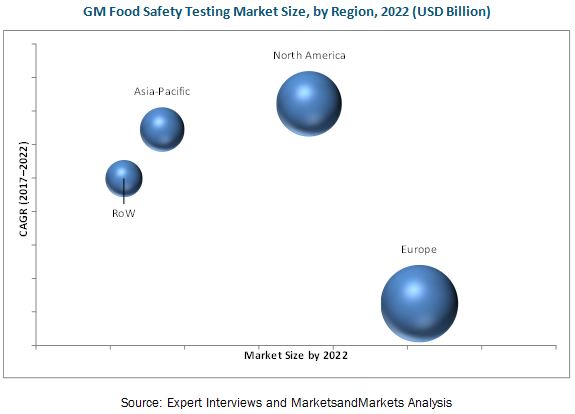
The demand for GMO testing in crops has been increased due to the regulatory policies of governments of various countries, such as the Russian Federation, and a majority of the European Union nations to ban their production. The European Union, for instance, has only permitted the production of one variety of GM corn. Most of the samples tested in the European market are from imported crops or processed foods either from the US or countries in the Asia Pacific region. Due to the restricted regulations, the federal authorities opt for GMO testing to ensure the safety of products and compliance of products with regulations.

Increasing outbreak due to pathogens in food is a major market driver for pathogen testing

Incidences of foodborne illnesses have been increasing across the world. The primary incidences of foodborne illnesses have been attributed to pathogens such as salmonella, campylobacter, E. coli, and listeria. According to the FDA, in 2012, it was anticipated that nearly 48 million people in the US are affected by foodborne illnesses each year. In the US, foods with the highest chance of food poisoning are meat & poultry products. In the UK, around one million people suffer from foodborne illnesses, and nearly 20,000 people receive hospital treatment for the same. About 500 deaths have been reported due to food poisoning each year, which costs approximately Euro 1.5 billion. The prevalence of contaminants in food products responsible for foodborne illnesses has resulted in the introduction of new legislation for the implementation of pathogen testing.

Make an Inquiry: https://www.marketsandmarkets.com/Enquiry_Before_BuyingNew.asp?id=19285603

Conclusion

Rising awareness among consumers about food safety is the reason for the growth of the food safety testing market. Furthermore, the rising global food trade and foodborne illnesses have fueled the market for food safety testing. Using the right techniques and GMP for food preparation and handling processes can reduce the chance of food contamination. With technological advancement, various technologies were introduced in the food safety testing market. These include LC-MS, GC-MS, and HPCL. Among the various targets of food safety testing, GMO testing is estimated to witness the highest growth rate. The market for GMO testing is driven by the need to ensure sufficient nutrient consumption and safeguarding crops against damage. North America and Europe are the dominating regions in the food safety testing market. As water testing and analysis is an important aspect of food safety, the global bottled water testing market is projected to witness significant growth with CAGR of 5.3%. The food safety testing market is competitive, with a large number of players. The major players in the market are SGS (Switzerland), Mérieux (US), Intertek (UK), Eurofins (Luxemburg), and Bureau Veritas (France). The Asia Pacific region is an emerging market receiving investments from various multinational manufacturers, especially in countries such as China, Japan, and Australia.

Aquaculture Market worth $42.6 billion by 2023

The report Aquaculture Market by Rearing Product Type (Equipment, Chemicals, Pharmaceuticals, Fertilizers), Culture (Freshwater, Marine, Brackish Water), Species (Aquatic Animals, Aquatic Plants), Production Type, and Region – Global Forecast to 2023″The aquaculture market is projected to grow from USD 30.1 billion in 2018 to USD 42.6 billion by 2023, recording a compound annual growth rate (CAGR) of 7.2% during the forecast period. The major factors driving the growth of the aquaculture market include a decline in the amount of captured fish, rise in consumption of fish and other products due to their nutritional value, and growth in adoption of advanced technology and aquafarming methods.

The brackish water segment is projected to be the fastest-growing segment in the aquaculture market during the forecast period.

The aquaculture market is segmented, on the basis of culture, into freshwater, marine, and brackish water. The brackish water segment is projected to be the fastest-growing segment in the aquaculture market during the forecast period. This is attributed to its high adoption in underdeveloped countries such as those in Africa. Further, brackish water aquafarming involves culturing of fin and shell fishes that are found in the coastal environment; it has the capacity to supply required food fish on a regular basis, thereby contributing to food security through supplemented feeding and aquafarming methods.

The aquatic animals segment is projected to grow at a higher rate during the forecast period.

The aquatic animals segment is further divided into crustaceans, mollusks, finfishes, and others. The growing demand for protein-rich food in developing countries such as India, Bangladesh, Indonesia, and Vietnam is driving the demand for aquatic animals. Additionally, the government support for aquafarming, specifically in Asia Pacific and Africa, is growing to mitigate poverty levels, as aquaculture is an important source of employment in the coastal regions of these countries; this has prompted several aquaproduct manufacturers to invest in this segment in these two regions.

Make an Inquiry: https://www.marketsandmarkets.com/Enquiry_Before_BuyingNew.asp?id=2224024

The equipment segment is projected to account for the largest market share in the aquaculture market during the forecast period.

The aquaculture market is segmented, on the basis of rearing product type, into equipment, chemicals, fertilizers, and pharmaceuticals. The equipment segment is projected to be a leading segment in the aquaculture market. This is attributed to the rising adoption of advanced feeding systems to meet the rising demand for the inclusion of nutrients at an optimum level in the diets of aquatic animals. Furthermore, the growth in demand for seafood and decline in the volume of captured fishes is prompting the farmers to use equipment for higher production.

Asia Pacific is projected to be the fastest-growing region in the aquaculture market during the forecast period.

Asia Pacific is projected to be the fastest-growing region in the aquaculture market during the forecast period due to the rapid development of aquaculture in most of the countries in the region in terms of improving the food supply. The demand for aquaculture products is rising, as the farmers in this region are investing in new technologies and innovations in order to meet the increasing food supply and nutrient food. The consumption of fish and shrimp is witnessing an upward trend in the region, which aids the aquafarming industry.

Major vendors in the aquaculture market include Pentair Plc, (US), AKVA Group (Norway), Xylem Inc (US), Aquaculture Equipment Ltd (UK), Aquaculture System Technologies (US), Luxsol (Belgium), Pioneer Group (Taiwan), CPI Equipment Inc (US), Asakua (Turkey), FREA Aquaculture Solutions (Denmark), Lifegard Aquatics (US), Tan International Ltd (UK), Reef Industries Inc (US), Aquafarm Equipment AS (Norway), and Aquaculture of Texas, Inc (US).