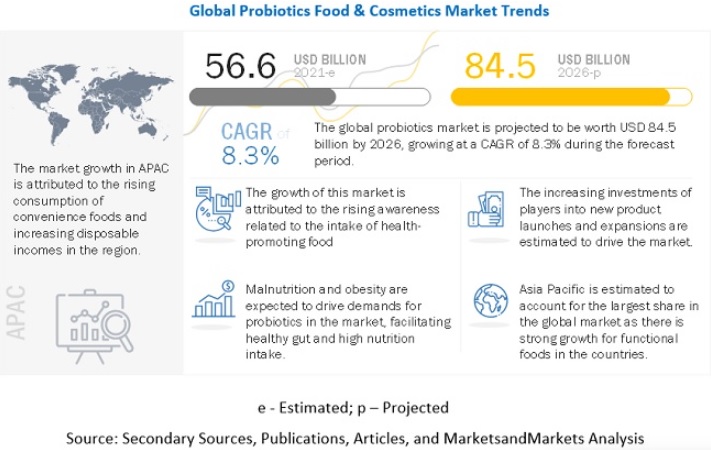
The global probiotics food & cosmetics market is estimated to reach $84.5 billion by 2026, growing at a 8.3% compound annual growth rate (CAGR). The global market size was valued $56.6 billion in 2021.
The global perception toward daily food products is shifting from products providing basic nutrition to those offering several health benefits, such as functional foods. Today, a wide range of functional foods have been developed, including probiotics, prebiotics, and symbiotic foods. These products have changed the approach of various food processors from considering food only as a source of energy and nutrition to biologically active food components that confer benefits on human health.
Download PDF brochure: https://www.marketsandmarkets.com/pdfdownloadNew.asp?id=22485898
Surviving the Gauntlet: Probiotics’ Journey through the Gastric Environment
Probiotics, touted for their health benefits, face a formidable challenge as they navigate through the acidic terrain of the stomach and the small intestine. Despite undergoing rigorous manufacturing processes, many probiotic strains succumb to the harsh conditions prevalent in the digestive system. According to UK food microbiologists, only select resilient bacteria such as lactobacillus and bifidobacteria stand a chance against stomach acids, with an intolerance level to acidity typically below pH 2. While stomach acid serves to eliminate harmful bacteria, it also poses a threat to beneficial probiotics. However, the human stomach’s mucous lining offers some protection against acid degradation, aiding in the survival of probiotic strains.
The Rise of Specialty Stores: A Haven for Probiotic Enthusiasts
Specialty stores have emerged as havens for consumers seeking probiotic dietary supplements. These stores cater to a diverse range of health-conscious individuals, including athletes, seniors, children, and women, who prioritize products that enhance immunity and vitality. Brands like Nutrilite Digestive Probiotic by Amway (US) have capitalized on this trend, with a global presence spanning over 100 countries. Notable probiotic and health supplement specialty stores like General Nutrition Centers, Inc. (US) and the Vitamin Shoppe (US) offer an array of probiotic options, featuring different ingredients, flavors, and formulations.
Fueling Growth: The Quest for Digestive Health and Immunity
The quest to improve digestive health and bolster immunity has propelled the growth of probiotics in the United States. According to a survey conducted by Dupont Nutrition & Biosciences, probiotic supplement consumption in the US surged by 66% in mid-2020, with daily usage on the rise. Consumers are increasingly cognizant of probiotics’ immune-supporting properties, with digestive health emerging as a primary focus. The COVID-19 pandemic has accelerated this trend, drawing more individuals towards probiotic products. Additionally, factors such as the prevalence of osteoporosis, obesity, cardiovascular ailments, and other conditions stemming from micronutrient deficiencies contribute to the demand for probiotics in US food and beverage products.
Speak to Analyst: https://www.marketsandmarkets.com/speaktoanalystNew.asp?id=22485898
Key Players Shaping the Probiotics Market
Leading the charge in the probiotics market are key players such as Probi AB (Sweden), Nestlé (Switzerland), ADM (US), Danone (France), DuPont (US), Yakult Honsha (Japan), Kerry (Ireland), BioGaia (Sweden), Esse Skincare (South Africa), and L’Oréal (France). These companies play a pivotal role in innovating and diversifying probiotic offerings, catering to evolving consumer preferences and health needs.
In conclusion, the journey of probiotics from manufacturing to consumption involves overcoming significant hurdles, including the acidic environment of the digestive system. Nonetheless, the burgeoning demand for probiotic products underscores their perceived benefits for digestive health and immunity, driving growth and innovation in the market.

 Trends & Forecast on Agricultural and Food Industry