Reasons Why Plant-based Protein Market Is Getting More Popular In The Past Decade ($14.5 billion by 2025)

 “Innovations & Developments in plant-based protein augmenting the vegan trend, which in turn driving the market for plant-based protein.”

The global plant-based protein market size is projected to grow from USD 10.3billion in 2020 to USD 14.5billion by 2025, in terms of value, recording a compound annual growth rate (CAGR) of 7.1% during the forecast period. Some of the major factors driving the growth of theplant-based proteinmarket include growing demand in the food industry, increasing demand for pea-based protein, and the opportunity to expand in the high growth potential markets.
Download PDF brochure: https://www.marketsandmarkets.com/pdfdownloadNew.asp?id=225613386

“The foodsegmentis projected to dominate the plant-based protein market throughout the forecast period.”

The food segment is projected to dominate the plant-based protein market, by application, in terms of value,due to their extensive use in human nutrition.Plant-based proteinis incorporated in food to add nutritional value to various food products. Different product sources are developed into types such as isolates, concentrates, and even textured proteins, which can be utilized in different types of plant-based foods, including dairy and meat alternatives, ready meals, confectionery, and other food types.

“The liquidsegment is projected to grow at the highest growth rate during the forecast period.”

The liquid segment is projected to grow at the highest growth rate due to its major use in plant-based dairy, food & beverages, and nutritional supplements such as shakes and other healthy beverages. Wet/liquid form of processing is a mainstream technology used for producing plant-derived protein isolates. This form of processing involves the consumption of copious amounts of water and energy. During the extraction of the protein, the source crop is dispersed in water so that other components, such as carbohydrates, are also extracted through ultrafiltration or iso-electric precipitation. With the growing demand for plant-based protein in the food and feed segments, the demand for plant-based protein that is obtained through wet processing is projected to remain high during the forecast period.

Request for Customization: https://www.marketsandmarkets.com/requestCustomizationNew.asp?id=225613386

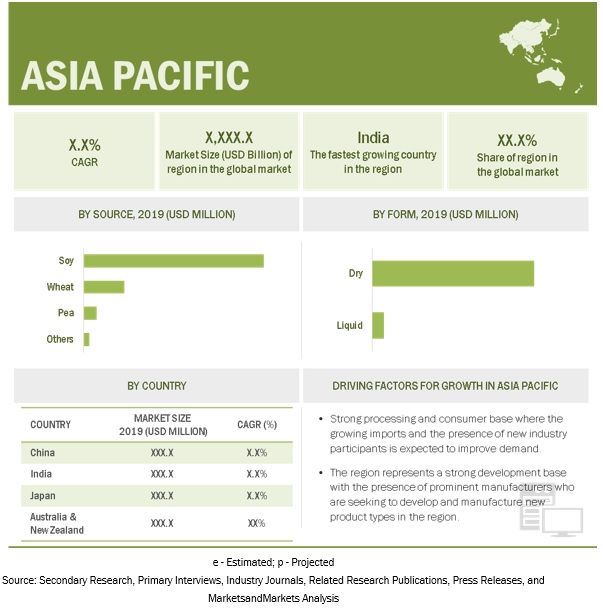
“Asia Pacificis projected to record the highest growth during the forecast period.”

The Asia Pacificregion is projected to record the highest growth during the forecast period. The risingvegan food consumption has led to anincreased demandfor plant-based food.  The feed sector is also growing in countries such as China, India, and Japan, which aids the growth of the plant-based marketin the region.Some of the leading players operating in the region include Herblink Biotech Corporation (China)and ET Chem (China). Apart from regional manufacturers, major foreign players such as Cargill(US), DSM (The Netherlands), and ADM (US)have established their production and research & development facilities in countries in the Asia Pacific region.

The plant-based protein marketcomprises major players,which includeDSM (Netherlands), ADM (US), DuPont (US), Kerry Group (Ireland), Cargill (US), Glanbia (Ireland), Wilmar International (Singapore), Emsland Group (Germany), Puris (US), Cosucra Group (Belgium), Batory Foods (US), Roquette Freres (France), Ingredion (US), BurconNutracience (Canada), Sotexpro (France), AGT Food & Ingredients (Canada), Beneo (Germany), ProlupinGmbh (Germany), Aminola (Netherlands), Herblink Biotech Corporation (China), ET  Chem (China), Shandong Jianyuan Group (China), The Greenlans LLC (US), and Parabel (US)
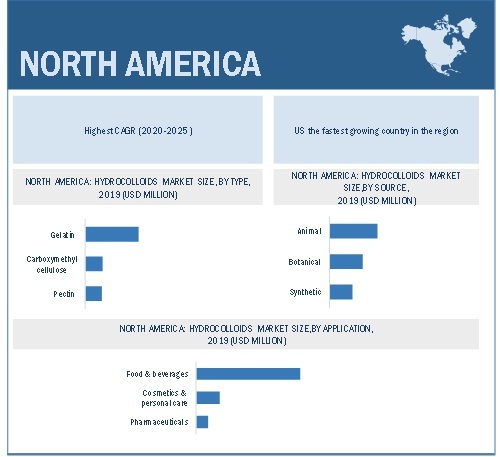
Food & Beverages Segment To Dominate The Hydrocolloids Market By 2025

“The hydrocolloids market is projected to grow at a CAGR of 5.3%.”

The hydrocolloids market is estimated to be valued at USD 9.7 billion in 2020 and is projected to reach USD 12.6 billion by 2025, at a CAGR of 5.3% from 2020 to 2025. The growth of the hydrocolloids market is driven by factors such as the expansion of the processed food industry due to the increase in demand for convenience foods in the emerging countries of the Asia Pacific, South America, and the Middle East & African regions. Key drivers for the market’s growth include a robust R&D base, as manufacturers are focusing on with product innovations to offer high-quality hydrocolloids for the end-user industries and the multifunctionality of hydrocolloids.

The key hydrocolloids manufacturing players include the following:

  • Archer Daniels Midland Company (US)
  • DuPont (US)
  • Cargill (US)
  • Kerry Group Plc. (Ireland)
  • Ingredion Incorporated (US)
  • Palsgaard A/S (Denmark)
  • Tate & Lyle (Ireland)
  • Koninklijke DSM N.V. (Netherlands)

Request for Customization: https://www.marketsandmarkets.com/requestCustomizationNew.asp?id=1231

“The thickeners segment for hydrocolloids is estimated to account for the largest share in 2020.”

The hydrocolloids markets, by function, is estimated to be dominated by the thickeners segment in 2020. Hydrocolloids are widely used as thickeners in various food products such as soups, salad dressings, gravies, sauces, and toppings. Key hydrocolloids used as thickeners include xanthan gum, guar gum, locust bean gum (LBG), gum Arabic, and carboxymethyl cellulose (CMC).

“The animal segment isestimated to account for the largest share in 2020”

The hydrocolloids market, by source, is estimated to be dominated by the animal segment in 2020. Hydrocolloids of animal origin are produced using skins and bones of different sources, such as beef, pork, and fish. Gelatin is one of the major hydrocolloids derived from animal sources having applications in the confectionery industry.

“The gelatin segment for hydrocolloids is estimated to account for the largest share in 2020.”

The hydrocolloids market, by type, is estimated to be dominated by the gelatin segment in 2020. Gelatin is derived from animal sources and has applications in food products such as candies, desserts, marshmallows, and ice creams. In Europe, gelatin is classified as food and is not subjected to food additive legislation. This is projected to create a lucrative opportunity for hydrocolloids manufacturers in the coming years.

“The food & beverages segment for hydrocolloids is estimated to account for the largest share in 2020.”

The hydrocolloids market, by application, is estimated to be dominated by the food & beverage segment in 2020.The demand for hydrocolloids is projected to increase in the coming years due to its multifunctionality in the food industry and the rise in demand for convenience foods in emerging countries. 

“North Americais projected to witness significant growth in the hydrocolloids market.”

The North Americanhydrocolloidsmarket is projected to witness significant growth with higher CAGR during the forecast period. due to the presence of major players such as Ashland (US), TIC Gums (US), CP Kelco (US), Cargill (US), Ingredion (US), and Darling Ingredients (US) operating in the region. The region is backed by the US, a major revenue pocket market for bakery, confectionery, convenience food, and packaged food products.

Make an Inquiry: https://www.marketsandmarkets.com/Enquiry_Before_BuyingNew.asp?id=1231

Research Coverage

The report analyzes the hydrocolloids market along with hydrocolloids market across different types and regions. It aims at estimating the market size and future growth potential of this market across different segments such as type (gelatin, pectin, carrageenan, xanthan, agar, arabic, locustbean gum, carboxymethyl cellulose, alginates, guar gum, and microcrystalline cellulose);source (botanical, microbial, animal, seaweed, and synthetic); application (food & beverages, cosmetics & personal care products, and pharmaceuticals);function (thickeners, stabilizers, gelling agents, coating materials, fat replacers, and others) and region. The report also includes an in-depth competitive analysis of the key players in the market, along with their company profiles, recent developments, and key market strategies.

High Adoption Rate Of Indoor Farming Is Projected To Increase The Demand For Hydroponics

The global hydroponics market is estimated to account for a value of USD 9.5billion in 2020 and is projected to grow at a CAGR 11.9% from 2020, to reach a value of USD 16.6billion by 2025.  The hydroponics market is projected to witness significant growth due to the increasing need for components installed for crop cultivation, the input nutrient and grow media for hydroponic systems, and the value of crop cultivated from these systems. Based on the system model, the hydroponic systems market can be classified into aggregate and liquid systems, wherein aggregate systems utilize a grow media for plant growth support and nutrition, while liquid hydroponic systems do not require a grow media. Owing to the higher efficiency and productivity obtained, liquid systems have been in high demand amongst growers for vegetable cultivation. The European hydroponic systems market is driven by the growing adoption of CEA for horticultural crops and increasing development of new innovative technologies that target specific crop needs.

Download PDF brochure: https://www.marketsandmarkets.com/pdfdownloadNew.asp?id=94055021

By type, the hydroponic systems market is segmented into aggregate systems and liquid systems. Aggregate systems are further divided into Ebb and flow system, drip system and wick system. Liquid systems are further divided into deep water culture technique, Nutrient-film technique, and aeroponics system. The Nutrient-film technique segment accounted for the largest share. The high productivity from Nutrient-film technique (NFT) and deep water culture (DWC) techniques have attracted growers to opt for these systems. The advent of aeroponics technology in recent times has further fueled the demand for liquid hydroponic systems. According to industry experts and multiple use cases, NFT systems are mostly preferred for vegetable cultivation, majorly lettuce and tomatoes, while DWC systems have been used for tomatoes, cucumbers, peppers, and fruit cultivation.

Based on crop type, the hydroponic crops market is segmented into vegetables, fruits, flowers, and other crops (cannabis, fodder crops and herbs). Hydroponic systems are majorly used for vegetable crops at the commercial scale, owing to the vast difference in yield obtained from this technology. Across the globe, tomatoes are the most widely produced vegetable through hydroponic technology, followed by leafy greens, mainly lettuce. Other vegetables such as cucumbers and peppers have been gradually gaining pace in the European and North American countries.

Some of the major players in the hydroponics system market are Signify Holdings (Netherlands), Argus Control Systems (Canada), Heliospectra AB (Sweden), Scotts Miracle Gro (US), American Hydroponics (US), and LumiGrow (US).Expansions & investments, mergers & acquisitions, and partnerships were some of the core strengths of the leading players in the hydroponics system market. These strategies were adopted by the key players to enhance their market presence. It also helped them diversify their businesses geographically, strengthen their distribution networks, and expand their product portfolios.

Make an Inquiry: https://www.marketsandmarkets.com/Enquiry_Before_BuyingNew.asp?id=94055021

Growing Demand for Packaged and Convenience Foods to Drive the Demand for Shelf-Life Testing

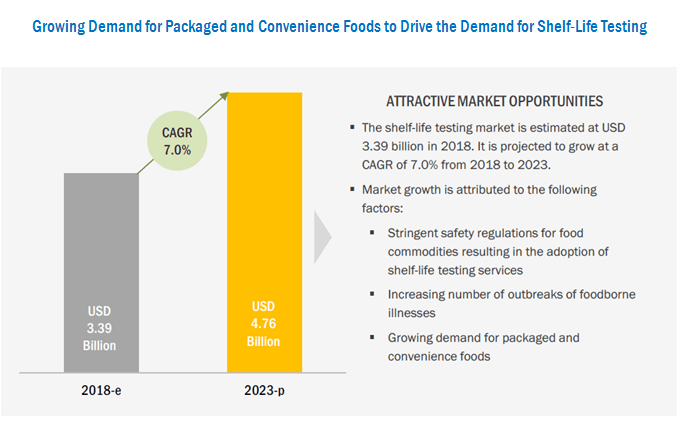
The shelf-life testing market is estimated to be valued at USD 3.39 billion in 2018 and is projected to reach USD 4.76 billion by 2023, at a CAGR of 7.0%. The market is driven by stringent safety regulations for food products, increase in the outbreak of foodborne illnesses, and growth in demand for packaged and convenience foods.

Download PDF brochure: https://www.marketsandmarkets.com/pdfdownloadNew.asp?id=133301640

Key Players:

  • SGS (Switzerland)
  • Bureau Veritas (France)
  • Intertek (UK), Eurofins (Luxembourg)
  • ALS Limited (Australia)
  • TÜV SÜD (Germany)
  • TÜV NORD GROUP (Germany)
  • Mérieux (US)

SGS primarily offers inspection, verification, testing, certification, and quality assurance services. It has a strong reputation for solutions that deliver a competitive advantage to customers in areas such as food testing, agricultural testing, environmental testing, and materials testing. The company has many R&D centers and adopts new techniques as per technological advancements. It focuses on strategic expansions to increase its capacity and strengthen its business network. For instance, in July 2017, SGS acquired an agriculture and food testing laboratory in Mississauga, Ontario (Canada). This acquisition helped the company strengthen its microbiology and food chemistry testing services and offer clients full-service offerings for food and agricultural testing in Canada.

Eurofins is one of the leading shelf-life testing service providers for food products due to its global presence and strong service infrastructure. This infrastructure helps it cope during peak periods of testing demand from clients. The major strengths of the company are its widespread global network and its testing services of superior technical quality and regulatory thoroughness. The company continues to witness significant growth by way of constant acquisitions. In April 2018, Eurofins signed an agreement with LabCorp to acquire its food testing and consulting business, i.e., Covance Food Solutions, for USD 670 million. This is expected to help Eurofins expand its presence in North America, the UK, and Asia since Covance Food Solutions operates through an integrated network of 12 facilities across the globe with 9 in the US, 2 in the UK, and 1 in Asia.

Intertek is a provider of quality and safety services. The company focuses on increasing its services in new as well as existing markets, which will allow it to capture new businesses. It also invests in new services and capabilities to support its clients’ current and future needs and to expand in the growing markets. It has been continuously improving its services through new and advanced technologies to create opportunities in the shelf-life testing market. Intertek has created a strong geographical network and supply chain due to which it has efficient service capabilities for the testing of food samples for shelf life.

Speak to Analyst: https://www.marketsandmarkets.com/speaktoanalystNew.asp?id=133301640

The shelf-life testing market, by technology, is projected to be dominated by the equipment- & kit-based segment and is also projected to grow at a higher rate during the forecast period. This segment consists of both, traditional and rapid systems, which are highly preferred by manufacturers because of their ability to provide faster and more reliable results.

The Asia Pacific market is projected to grow at the highest CAGR from 2018 to 2023. Growth in the Asia Pacific region can be attributed to factors such as growth in the number of shelf-life testing laboratories in India and China, the rise in the number of incidences of bacterial infectious diseases in the region, and growing adoption of convenience and packaged food on the region.

North America Is Projected To Dominate The Market For Specialty Enzymes

According to MarketsandMarkets, the specialty enzymes market is estimated to be valued at USD 4.4 billion in 2019 and is projected to reach USD 6.6 billion by 2025, recording a CAGR of 6.9% in terms of value. Due to the rise in demand for non-harmful biological catalysts in pharmaceuticals & diagnostics and advancement tools to optimize pharmaceutical production, specialty enzymes market has been boosting. These factors are projected to drive the growth for the specialty enzymesmarket during the forecast period.

Enzymes play an important role as a biological catalyst in the processing for several applications such as pharmaceutical, research &biotechnology, and diagnostics. In addition, enzymes are increasingly used as a substitute for chemical catalysts, which is significantly contributing to the growth of the specialty enzymesmarket.Developments such as protein engineering and genetic engineering provide scope for research & development in enzymes. The research and development activities help the industry to innovate products and meet the demand of industries by increasing production.In addition, biotechnology will help in increasing the efficiency of enzyme production and enhance its properties.Along with this, the increase in demand for diagnostics for the treatment of various chronic diseases is also contributing to the growth of the specialty enzymes market. Enzymes, such as polymerases & nucleases and carbohydrases, are used for the production of pharmaceuticals.

Download PDF Brochure: https://www.marketsandmarkets.com/pdfdownloadNew.asp?id=21682828

In terms of type, the polymerases & nucleases segmenthas shown significant growth in the market due to its wide range of usesacross various applications.The core structure and properties of polymerases are highly conserved through evolutions, as they function in coordination with several other proteins in order to synthesize nucleic acids in an accurate, efficient, and well-regulated manner. The ability of specialty enzymes to catalyze chemical reactions and increase its applications hascontributed to the growth of the specialty enzymes market.In addition, enzymes have several other benefits,such as lower production costs, higher product quality, reduced power energy consumption, and less wastage. These factors also drive the growth of the specialty enzymes market, while the use of specialty enzymes in pharmaceuticals is increasing for the production of drugs.

Asia Pacific is projected to witness the fastest growth in the specialty enzymes market during the forecast period due to the globalization of business and technological innovations. The Rest of the World (RoW) enzymes market has been growing due to advancements in various specialty applications and a rise in demand in developed countries. Novozymes (Denmark) expands its research &development facilities in Brazil that would focus on biotechnology-based innovations and developments in new enzyme product offerings. In addition, enzymes are being used increasingly to optimize the pharmaceutical industry. One of the major factors contributing to the growth of the enzymes market in the Asia Pacific and Rest of the World (RoW)regions is the increase in population in this region, which is driving the growth of the pharmaceutical and diagnostics industries.These factors are the major factors driving the market growth for enzymes in the Asia Pacific and Rest of the World (RoW) region for specialty applications.

GrainCorp (Australia) , Groupe Soufflet (France) and Boortmalt (Belgium) are the Major Player in the Malt Extracts and Ingredients Market

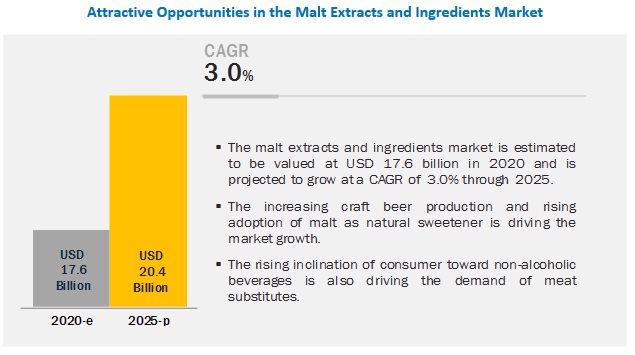
The malt extracts and ingredients market size is estimated to be valued at USD 17.6 billion in 2020 and is projected to reach USD 20.4 billion by 2025, recording a CAGR of 3.0% during the forecast period. The increase in the demand for beer has majorly been driving the market for malt extracts and ingredients. Factors such as their use as a sweetening agent and their ability to raise and soften the dough have propelled their use in various applications in the food & beverage industry.

The key players in this market include GrainCorp (Australia), Malteurop (France), Rahr Corporation (US), Boortmalt (Belgium), and Groupe Soufflet (France). New product launches, expansions & investments, and partnerships were some of the core strengths of the leading players in the malt extracts and ingredients market. These strategies were adopted by the key players to increase their market presence. It also helped them diversify their businesses geographically, strengthen their distribution networks, and enhance their product portfolios. Some of the other players in the malt extracts and ingredients market are Maltproducts (US), Maltexco (Chile), Holland Malt (Netherlands), Barmalt (India), IREKS (Germany), Muntons PLC (US), Simpsons (UK), Viking Malt (Finland), Agraria (Argentina), Puremalt (Scotland), Cerex (The Netherlands), EDME Ltd. (England) Imperial Malt(India), Diastatische Producten (The Netherland), and Laihian Mallas (Finland).

To know about the assumptions considered for the study download the pdf brochure

GrainCorp (Australia) is one of the major players in the global malt extracts and ingredients market. It is one of the leading manufacturers of malt extracts and ingredients globally. It operates in almost all the major markets through various agreements and subsidiaries. With the increase in the craft brewery, the demand for specialty malt has increased. GrainCorp provides a variety of specialty malt extracts and ingredients of premium quality to cater to the needs of craft brewers and microbreweries.

Groupe Soufflet (France) is another major player in the malt extracts and ingredients market. It is primarily engaged in the production and distribution of malt extracts and ingredients globally. It is based out of France, having eight maltries in the country. The organization is constantly working on expanding its capacity and on meeting the increased demand from all across the globe. To expand its production capacity and capture the market in East Africa, Soufflet established a malthouse in Ethiopia. Through this strategy, the company aimed at developing the regional industry.

Boortmalt (Belgium), a subsidiary of Axereal, is one of the leading players in the market. They mainly produce and distribute malt-based products in Europe as well as all across other geographies, as well.  It is continuously working on expanding its capacity and market share via different strategies such as expansions, acquisitions, and investments. Axereal, on behalf of Boortmalt, recently acquired the malt business of Cargill (US). Apart from this, they have established a malting tower in Belgium, which provides an important global presence to Boortmalt.

Related Reports:

Malt Extracts and Ingredients Market by Product (Extracts and Ingredients), Source (Soy, Wheat, and Rye), Grade (Standard malt and Specialty malt), Application (Beverages, Food, and Pharmaceuticals), Form (Dry and Liquid), Region – Global Forecast to 2025

Increased Consumer Demand for Reduced Calorie Products With Original Taste of Sugar Drives Taste Modulators Market

The global taste modulators market was valued at USD 994.7 million in 2017 and is projected to reach USD 1,758.7 million by 2023, at a CAGR of 10.2% during the forecast period. The key players in the taste modulators market include DSM (Netherlands), Kerry (Ireland), Ingredion (US), Givaudan (Switzerland), Firmenich (Switzerland), International Flavors and Fragrances (US), Symrise (Germany), Sensient Technologies (US), The Flavor Factory (US), Carmi Flavor & Fragrance (US), Flavorchem Corporation (US), and Senomyx (California). These key players focused on various business strategies such as new product launches, agreements, and expansions to increase their market presence. DSM and Kerry are the top two companies in the taste modulators market based on overall revenues, product offerings, and strategic activities related to taste modulators.

The sweet modulators segment is estimated to dominate the global taste modulators market in 2018. Sweet modulators provide a sweet taste with zero calories to food products. It is used by manufacturers to restore the sweet taste. Taste modulators are gaining popularity among consumers owing to enhanced taste and nutritional benefits.

Beverages are broadly classified into two categories, namely, alcoholic and non-alcoholic beverages. The non-alcoholic beverages segment was the largest; it includes both carbonated drinks and non-carbonated beverages such as juices, energy drinks, sports drinks, and fortified drinks. Taste modulators are used to alter the taste and support the reduction of calories in drinks (being used in conjunction with sugar substitutes) to meet consumer demand for healthy beverage products.

Download PDF Brochure: https://www.marketsandmarkets.com/pdfdownloadNew.asp?id=169998886

DSM is one of the major companies involved in the manufacturing of nutritional & pharmaceutical ingredients, biomedical materials, thermoplastics, resins, and industrial chemicals. The company has its presence in more than 60 countries and manufacturing facilities in more than 40 countries. It is consistently focused on product innovation, skillful marketing, and product promotion with R&D centers in domestic as well as international markets in China, India, the US, Canada, Australia, the UK, and Germany. The company’s subsidiaries include Fortitech, Inc. (US), Microbia, Inc. (US), DSM Food Specialties B.V. (Netherlands), Aland (Jiangsu) Nutraceutical Co., Ltd. (China), DSM Nutritional Products AG (Switzerland), DSM Dyneema LLC (US), DSM India Private Limited (India), and Ocean Nutrition Canada (Canada). The company also focuses on new product launch as a strategy; in November 2017, the company launched ModuMax, a taste modulator which is natural and allergen-free. Consumers can use it without compromising on the actual taste of the food product.

Kerry Group is involved in the marketing and production of consumer food products. It operates through two business segments, namely, taste & nutrition and consumer foods. Globally, the company has its presence in the US, the UK, Australia, Malaysia, Singapore, Germany, and New Zealand. It has 130 manufacturing locations and operations in 27 countries across the globe. The subsidiaries of the company include Kerry Ingredients Australia Pty. Ltd., Kerry Ingredients Malaysia, Kerry Ingredients North America, Kerry Agribusiness Ireland, Dera Holding NV (Belgium), Kerry Ingredients France S.A.S., Kerry Foods GmbH (Germany), Cremo Ingredients A/S (Denmark), Kerry Ingredients Italia S.p.A., Kerry Polska Sp. z.o.o. (Poland), and Kerry Ingredients UK. The company also focuses on new product launch as a strategy; in October 2017, it launched a new taste modulator to cut sugar content by almost one-third. This launch would help the company to expand its product line to meet the consumer demand for low-calorie food products.

The Asia Pacific region is expected to grow at the highest CAGR during the forecast period. China and India have witnessed major growth in the taste modulators market, acquiring significant shares in the region. The region witnesses a high demand for taste modulators due to the rise in meat consumption, population growth, and increase in awareness about healthy & nutritional food products.

Increasing Acceptance and Area Under GM Crop Drives Process Equipment Market

Process equipment market for seed industry includes processed seed market and seed processing equipment market. Seed processing is the refining stage of the post-harvest seed to prepare the seed for sowing or replanting, in the agricultural industry. The seed processing equipment includes the set of equipment required to make the harvested seed commercially available. The equipment considered includes those for grading, sorting, and treatment of the seed, which make it ready for sowing.

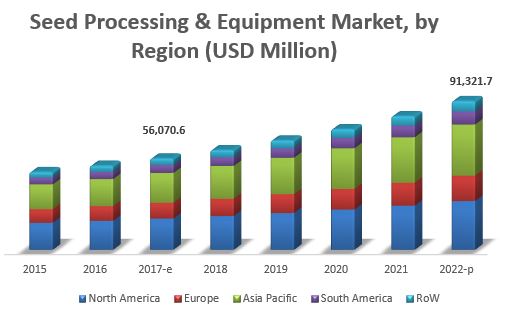
The processed seed market is organized and dominated by few large players such as Bayer (Germany), The Dow Chemical Company (US), Monsanto (US), Syngenta (Switzerland), and KWS Group (Germany), while seed processing equipment market is competitive and fragmented, with large-scale seed equipment manufacturers, such as Cimbria (Denmark), PETKUS Technologie (Germany), Lewis M. Carter Manufacturing (US), Westrup (Denmark), and Alvan Blanch Development Company (UK). The processed seed market is projected to reach USD 91.32 billion by 2022, at a CAGR of 10.2% from 2017 and seed processing equipment market is projected to reach USD 3.25 billion by 2022, growing at a CAGR of 10.2% from 2017.

The key market players in process equipment market for seed industry adopted investments and strategic alliances among many important strategies-expansions, new product launches, mergers & acquisitions, agreements, partnerships, joint ventures, and divestments-with other players to strengthen their businesses, to explore new and untapped markets, expanding in local areas of emerging markets, and developing a new customer base for long-term client relationships.

Request for Sample Report Pages: https://www.marketsandmarkets.com/requestsampleNew.asp?id=112191741

Bayer (Germany)

Bayer is one of the leading players in the agricultural industry and offers products that help in improving plant health. The company is engaged in seed, crop protection, and non-agricultural pest control businesses. The seeds segment develops provides the processed seed products such as those of cotton, soybean, canola, and vegetables through various brands. The company also provides seed treatment equipment through its Bayer Seed Growth segment.

The company has a global sales and distribution network in over 120 countries. Its key locations are situated in Germany, France, India, Brazil, and the US, with various subsidiaries.

In September 2016, the company acquired the GM seeds company, Monsanto (US) at USD 66 billion. This acquisition strengthened the company’s R&D along with the seed product portfolio.

Cimbria A/S (Denmark)

Cimbria A/S, a subsidiary of Your Agriculture Company (AGCO), is a leading agricultural equipment manufacturing company. The company operates in industrial processing, handling, and storage of grain and seed, as well as animal feed and foodstuffs and other bulk products and have expertise in conveying, drying, seed processing, electronic sorting, and storage.

The main production facilities of the company are in Denmark, Austria, Italy, and the Czech Republic; it has 18 subsidiaries in 18 countries. The company operates in 45 countries across North America, Europe, Asia Pacific, South America, the Middle East, and Africa. In February 2017, the company expanded in Casablanca, Morocco as a part of its sales strategy to have a local representation in all primary markets.

Increase in Consumption of Nutritive Convenience Food and Fortified Food Drives Functional Food Ingredients Market

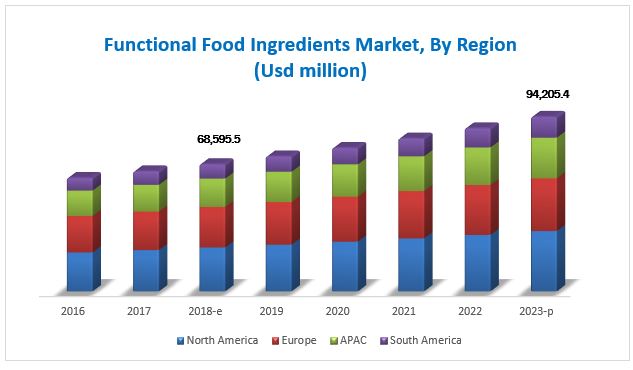
The functional food ingredients market is estimated to be valued at USD 68.60 billion in 2018 and is projected to reach USD 94.21 billion by 2024, at a CAGR of 6.6%. Functional food ingredients are those ingredients which have been demonstrated to have specific physiological benefits, apart from the main nutritional benefits that are derived from food & beverages. The usage of functional food ingredients in the manufacturing of functional food & beverage products is expected to provide nutritive health benefits, prevent/resist chronic diseases, or act as energy boosters. The market is driven by the increasing consumption of nutritive convenience food and fortified food and growing health awareness among consumers leading to increased consumption of healthier diets.


Download PDF Brochure:https://www.marketsandmarkets.com/pdfdownloadNew.asp?id=9242020

Key Players:
• DowDuPont (US)
• ADM (US)
• Arla Foods (Denmark)
• BASF (Germany)
• Cargill (US)
• Chr. Hansen (Denmark)
• DSM (Netherlands)
• ABF (UK)

Cargill is one of the market leaders for functional food ingredients. Although primarily focused on the North American market, the company has expanded its protein production capacities in Nashville, Tennessee, US. It supplies its products across the globe, catering to the business needs of clients in 70 countries. The company mainly focuses on achieving growth through expansions and new product launches in domestic as well as overseas markets. For instance, in November 2017, it invested USD 240 million in India, thereby enhancing the company’s market access in the Indian functional food ingredients market.


Archer Daniels Midland Company offers functional food ingredients through its Wild Flavors and Specialty Ingredients segment. It offers a wide range of products in the functional food ingredients market. The company majorly focuses on growth strategies such as mergers and acquisitions to increase its market reach in the global functional food ingredients market. For instance, in November 2017, the company expanded its product portfolio by introducing Nutriance, a new range of innovative wheat protein concentrates, which finds applications in sports nutrition and senior nutrition products.


The food segment is projected to be larger & faster-growing during the forecast period

The food segment is projected to be faster-growing, by application, during the forecast period. The market for functional food is increasing as consumers prefer balanced diets and food that not only takes care of their appetite but also helps enhance their immunity. This, along with product innovations in terms of flavors and variant offerings, presents significant opportunities for the growth of applications in the functional food ingredients market. Factors that are further fueling consumer interest in functional foods are the rapid advances in science & technology, increase in health care costs, aging, and growth in interest in attaining wellness through diet.
Inquiry Before Buying:https://www.marketsandmarkets.com/Enquiry_Before_BuyingNew.asp?id=9242020

The natural segment set to dominate the market by 2023


The functional food ingredients market, by source, is projected to be dominated by the natural segment during the forecast period. Functional food ingredients, in their natural form, are widely used due to growing consumer demand for natural ingredients; the growing awareness about the health benefits associated with ingredients sourced from natural sources is driving the growth of the natural segment over the synthetic one.


South America is projected to be the fastest-growing market during the forecast period
The South American market is projected to grow at the highest CAGR from 2018 to 2023. The region displays a variety of different demographic and developmental trends; the common regional trends that are expected to help drive market growth include rapid urbanization and increased life expectancy, the high occurrence of obesity and malnutrition, rise in incidences of chronic diseases, and mortality rates. All these factors have further propelled consumers to move toward increased adoption of healthier products.

Sucrose Esters Market worth $106 million by 2025

The report Sucrose Esters Market by Application (Food, Personal Care Products, Detergents & Cleaners), Form (Powder, Liquid, Pellet), and Region (North America, Europe, Asia Pacific, South America, Rest of the World) – Global Forecast to 2025″ The sucrose esters market is projected to grow from USD 76 million in 2019 to USD 106 million by 2025, recording a compound annual growth rate (CAGR) of 5.7% during the forecast period. The major factors driving the growth of the sucrose esters market include the increasing trend of spending on convenience food products in developing countries and the multifunctional properties of sucrose esters.

The confectioneries subsegment in the food segment is projected to be the fastest-growing segment in the sucrose esters market during the forecast period.

The increasing usage of sucrose esters in confectioneries is due to its sugar crystallization properties, which improves the emulsification of molten sugar and oil, and prevents adherence to the teeth, machine or wrapping papers. It helps in increasing the plasticity, softness, and chewiness of chewing gums, and majorly increases the flavor insulating properties.

The cosmetics subsegment in the personal care products segment is projected to account for a larger share in the sucrose esters market during the forecast period.

Sucrose ester is used in cosmetics, such as foundation creams, lipsticks, face cleansing creams, and eye makeup cosmetics, which include eye shadow, eyeliners, and eyebrow products. Sucrose esters in cosmetic products help to thicken oils and silicon oil used in manufacturing cosmetics. It helps in enhancing the properties of cosmetic products by improving the sensory properties of oil and natural butter used for manufacturing cosmetics.

Speak to Analyst: https://www.marketsandmarkets.com/speaktoanalystNew.asp?id=191170937

The powder segment is projected to account for the largest share in the sucrose esters market during the forecast period.

The powder form in the sucrose esters market has gained significant attention from the manufacturers for its functional benefits, such as emulsification, protein protection, sugar crystallization, and aeration, as well as its role in starch interaction. The usage of sucrose esters in the powdered form is witnessed in food applications, such as bakery products, dairy products, confectionery products, and packaged meat products, as it helps to increase the shelf life of food products. These factors are projected to drive the demand for sucrose esters during the forecast period.

The Asia Pacific region is projected to be the fastest-growing market for sucrose esters during the forecast period.

The Asia Pacific region is projected to be the fastest-growing market for sucrose esters during the forecast period. The region witnesses a high demand for sucrose esters in dairy products, confectioneries, and bakery products. Furthermore, the rise in awareness about the functional benefits of sucrose esters has led to an increase in their usage in the personal care products segment. They help in improving the sensory properties of oil and natural butter, which has contributed to the growth of the sucrose esters market in countries, such as China, Japan, and India.

According to Adana Food Tech (China), sucrose esters are the key ingredients used across industries due to their functional benefits, such as emulsification, crystallization, and aeration. The company also stated that the usage of sucrose esters in the Asia Pacific region has drastically increased year-on-year (Y-o-Y) rate. The major players for the sucrose esters market in the Asia Pacific region include Dai-Ichi Kogyo Seiyaku (Japan), Compass Foods (Singapore), Zhejiang Synose Tech (China), Guangxi Gaotong Food Technology (China), Guangzhou ZIO Chemical (China), and Adana Food Tech (China).