Key Players in the Termite Bait Systems Market

The termite bait systems market is estimated to be USD 260.8 million in 2018 and is projected to reach USD 342.5 million by 2023, growing at a CAGR of 5.60%. The growing demand for less toxic and target-specific termite control solutions is expected to boost the market for termite bait systems.

Key players in the termite bait systems market include DowDuPont (US), BASF (Germany), Bayer (Germany), Sumitomo Chemical (Japan), Syngenta (Switzerland), and Rentokil Initial (UK). Spectrum Brands (US), Ensystex (US), PCT International (Australia), Rollins (US), Terminix International (US), and Arrow Exterminators (US) are other key market players who also have a significant market presence.

Subterranean termites are the most common termites present globally and cause the most destructive damage to houses and other properties. Since subterranean termites are found below ground level, in-ground termite bait stations are used to control these termite infestations. The in-ground segment accounted for 72.5% of the global termite bait systems market in 2017, in terms of station type.

Download PDF brochure: https://www.marketsandmarkets.com/pdfdownloadNew.asp?id=211702476

The commercial & industrial segment is projected to register the highest growth rate from 2018 to 2023. The increasing commercial and industrial construction activities, especially in the developing regions, have led to an increased demand for termite control services. The commercial & industrial sector needs to adhere to certain hygiene standards. This can create a significant demand for pest and termite control services in and around commercial and industrial areas. Additionally, the need for less-toxic termite control methods, such as termite baits, is also expected to gain importance in the coming years from the commercial & industrial segment.

The North American region accounted for the largest share in 2017 due to the presence of players such as DowDuPont (US), BASF (Germany), and Rentokil (UK). Moreover, the presence of these companies in technologically advanced countries such as the US and Canada, and higher consumer awareness about and preference for pest control services have been key factors for the increasing adoption of bait systems for termite control.

The market for termite bait systems in the Asia Pacific region is projected to grow at the highest CAGR from 2018 to 2023, owing to the increasing investments in the commercial & industrial sectors.
Cargill (US) and BASF (Germany) are the Key Players in the Inoculants Market

The inoculants market is estimated at USD 808 million in 2019 and is projected to reach USD 1,207 million by 2025, at a CAGR of 6.9% during the forecast period. The global inoculants market is projected to grow in the coming years attributed to the growing trends of adopting organic and environment-friendly farming practices due to ill effects of fertilizers and chemicals, rise in feed grains, increase in compound feed prices, and expansion of the livestock industry, particularly in the South American and Asia Pacific regions.

The key players in the inoculants market include Corteva (US), BASF (Germany), Bayer (Germany), Novozymes (Denmark), Verdesian Life Sciences (US), Advanced Biological Marketing Inc. (US), BrettYoung (US), Precision Laboratories, LLC  (US), Queensland Agricultural Seeds Pty (Australia), and XiteBio Technologies Inc. (Canada). Apart from this, other key players include Chr. Hansen (Denmark), Lallemand Inc. (Canada), Kemin Industries, Inc (US), Provita Supplements GmbH (Germany), Cargill (US), Archer Daniels Midland Company (US), BIOMIN Holding GmbH (Austria), Terramax (US), BIO-CAT Microbials (US), and MBFi (South Africa).

To know about the assumptions considered for the study download the pdf brochure

Cargill (US) is among the leading players in the inoculants market. The company provides forage inoculants through its Promote brand. The Promote portfolio offers feed additives for the swine, poultry, dairy, and beef animal nutrition industries.  Its products are developed on the basis of Cargill Animal Nutrition’s global network of R&D centers, which is backed by over 500 researchers in 17 state-of-the-art facilities. Promote Forage-Mate product line is offered through Cargill, Provimi, and Citura. Cargill provides forage inoculants under its brand, Promote Forage-Mate, for alfalfa, corn, grass, small grain, and sorghum. Promote’s non-additive feed additive solutions are backed by Cargill Animal Nutrition’s innovative network of researchers and application scientists. It manufacturers forage inoculants in its Specialty Blending Facility, a state-of-the-art site, which was built in 2016. The company has 500 research professionals and has over 5 innovation centers, 13 technical application centres, and 19 global labs, which gives it a competitive edge over other players.

BASF (Germany) provides inoculants for soybeans, chickpeas, and peanuts under its brands, Vault and Nodulator. The products are formulated with rhizobia, and help in offering maximum nitrogen fixation and increasing yield potential of the crops. The growing demand for agricultural inoculants has encouraged the company to focus on effective strategies, such as expansions and new product launches, to attain a leading position in the market. In 2017, the company expanded its manufacturing facility to increase the production of its inoculant brand, Nodulator Duo, a granular inoculant for pea and lentil production in Canada. It made an investment of CAD 10 million (USD 8.0 million). In 2019, the company launched an agricultural inoculant, New Nodulaid, specifically designed for the Australian farmers.

Market Leaders in Irrigation Automation Market

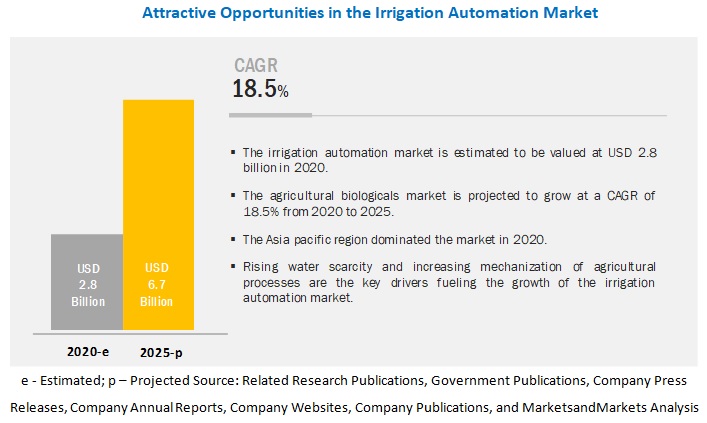
The irrigation automation market size is estimated to account for a value of USD 2.8 billion in 2020 and is projected to grow at a CAGR of 18.5% from 2020 to reach a value of USD 6.7 billion by 2025. Factors such as increased mechanization and adoption of smart technologies for agricultural activities, government initiatives to promote water conservation, and the growing awareness among farmers about the benefits of adopting irrigation automation are the key drivers fueling the growth of the irrigation automation market. New product, service, and technology launch was the dominant strategies adopted by key players to capitalize on the strong market potential.

Key Players:

•              The Toro Company (US)

•              Hunter Industries (US)

•              Valmont Industries Inc. (US)

•              Rain Bird (US)

•              Jain Irrigation Systems (India)

•              Lindsay Corporation (US)

Download PDF brochure: https://www.marketsandmarkets.com/pdfdownloadNew.asp?id=60266313

Most developing countries across the globe make use of irrigation technologies, such as sprinklers and drip irrigation. The automation of drip irrigation has become increasingly popular due to higher consistency in yields, reduced power usage as compared to sprinkler irrigation, the possibility of being used in smaller pieces of land, and higher efficiency in the application of fertilizers with little or no leaching.

The market for semi-automatic irrigation systems holds the largest as the demand for irrigation systems, which would allow the growers to modify the irrigation process is high in open fields and greenhouses. Semi-automatic systems are relatively cost-effective and hence are adopted in developing countries such as India, China, and Brazil.

Non-agricultural applications of irrigation control include sports grounds, residential, pastures, turf & landscapes, golf courses, and gardens. Automatic watering systems in golf courses enable the owners and the growers to adjust the watering based on time or volume and control it remotely.

The irrigation automation market, based on components, is segmented into controllers, valves, sensors, sprinklers, and other components, which include pressure gauges, monitoring devices, and flow meters. Controllers hold the largest share as they are the central unit of the entire irrigation automation system and are also the costliest component. The increased demand for semi-automatic systems, such as time-based and volume-based systems, in developing countries, has led to an increase in demand for simple controllers across the globe.

The market for irrigation automation, based on automation type, has been segmented into time-based, volume-based, real-time feedback, and computer-based irrigation control systems. Since developing countries majorly use irrigation automation systems for agricultural lands, the need for semi-automated irrigation systems, which would allow timely intervention at different irrigation stages, and is cost-effective remains high. Due to these factors, the time-based segment is projected to account for the largest share in the irrigation automation market.

Speak to Analyst: https://www.marketsandmarkets.com/speaktoanalystNew.asp?id=60266313

Geographical Prominence:

The increased awareness among farmers about the benefits related to the adoption of semi-automated and automated irrigation systems, along with reducing water levels in river basins of the Asia Pacific region, are some of the factors driving the growth of the market. The change in precipitation pattern is compelling farmers to use sensor-based irrigation systems to take better-informed decisions.

Key Players in Plant-based Protein Market

The plant-based protein market is estimated at USD 18.5 billion in 2019 and is projected to reach USD 40.6 billion by 2025, at a CAGR of 14.0% during the forecast period. Consumers are focused toward a better understanding of the provenance of their food and avoid products deemed unnatural or unhealthy. These “clean” eating trends, driven primarily by millennials, favor foods that are healthy, ethically and naturally sourced, and less processed. Increased plant-based protein product consumption is a direct consequence of this shift.

By source, the pea segment is projected to be the fastest-growing segment within the global plant-based protein industry during the forecast period. The pea segment is driven by the rising demand for plant-based meat and healthy food products. A significant increase in the usage of pea as a key ingredient is being noticed in the plant-based meat industry. It is gradually becoming the primary choice for plant-based meat consumers due to its high nutritional profile and rich protein content. Leading players in the global plant-based meat industry are now shifting their interest toward pea and have also started developing pea-based meat products such as patties, sausages, and slides, which are high in protein content.

To know about the assumptions considered for the study download the pdf brochure

Based on type, isolates accounted for the highest demand in 2018, followed by concentrates and protein flour. Protein isolates contain a larger amount of protein along with higher digestibility. Isolates are demanded widely in protein and nutrition-oriented applications such as sports nutrition, protein beverages, and nutrition supplements. In recent years, they have been required more from athletes, bodybuilders, vegetarians, and have gained wide application in various beverages and dairy products, due to their different functional properties. Market players such as ADM (US), DuPont Danisco (US), Ingredion Inc. (US), Burcon NutraScience Corp. (Canada), Axiom Foods (US), and The Scoular Company (US) offer protein isolates for various food applications such as protein bars, meat alternatives, protein beverages, dairy alternatives, nutrition bars, and bakery products.

On the basis of application, the demand for protein beverages was the highest in 2019; as a result, the protein beverages segment is estimated to account for the largest market share, followed by dairy alternatives, meat alternatives, protein bars, nutrition supplements, processed meat, poultry, and seafood, bakery products, sports nutrition, and convenience food. The perception of consumers about beverage products has changed as beverages are no longer just thirst-quenching drinks. Considering these requirements, beverage manufacturers across the world are actively developing and introducing plant-based beverage products. Moreover, in response to this trend, leading plant protein producers are introducing new and high-protein sources in the global market. For instance, DuPont Nutrition & Health expanded its plant-based protein product range with a new pea protein for beverages called TRUPRO 2000 Pea Protein in 2018.

Speak to Analyst: https://www.marketsandmarkets.com/speaktoanalystNew.asp?id=14715651

North America is the fastest-growing market for plant-based protein; it is projected to record the highest CAGR during the forecast period. The presence of leading plant-based protein companies in this region, along with the availability of a variety of plant-based protein products that are manufactured using different sources such as soy, wheat, pea, canola, and rice, is a key factor driving the North American plant-based protein market. Consumers in the region are incorporating plant-based protein products in their daily routine diets, owing to the health concerns related to the consumption of animal protein products.

Plant-based protein manufacturers are focusing on product launches to expand their consumer base in the market. Leading players operating in the plant-based protein market include Cargill Inc. (US), ADM (US), DuPont Danisco (US), Glanbia (Ireland), Kerry Group (Ireland), Tate & Lyle (UK), Ingredion Inc. (US), Burcon NutraScience Corporation (Canada), Royal DSM N.V. (Netherlands), Sotexpro S.A (France), Axiom Foods (US), and The Scoular Company (US).

Market Leader – Grain Analysis Market

The grain analysis market is projected to reach 2,323.1 Million by 2022, at a CAGR of 5.8% from 2017 to 2022. The grain analysis market, by equipment, is projected to reach USD 761.7 Million in 2022 during the same period. The market is driven by an increase in the outbreak of foodborne illnesses, globalization in grain trade, and stringent safety and quality regulation for food & feed.

Key players in the grain analysis market include SGS SA (Switzerland), Bureau Veritas SA (France), Intertek Group plc (UK), Eurofins Scientific (Luxembourg), TÜV SÜD (Germany), TÜV Nord Group (Germany), and ALS Limited (Australia). Neogen Corporation (US) and Romer Labs Division Holding GmbH (Austria) are the key market players that provide both services as well as equipment for the grain testing market. Further, Thermo Fisher Scientific, Inc. (US), Shimadzu Corporation (Japan), Waters Corporation (US), and AB Sciex (US) are some key equipment providers in the grain analysis market.

Download PDF brochure: https://www.marketsandmarkets.com/pdfdownloadNew.asp?id=40376219

SGS SA (Switzerland) is one of the active players in the grain analysis market; it is involved in inspection, verification, testing, certification, and quality assurance services.  The company offers testing services in the grain analysis market for various contaminants such as mycotoxins, pesticide residues, and pathogens. Moreover, the company has significant R&D centers and adopts techniques as per technology advancements. In addition, the company has strong testing services across the globe with strong presence in US, Germany, UK, France, and India among others; this has enabled it to strengthen its customer base and client base.

Eurofins Scientific is an international group of laboratories that provide testing and support services to the pharmaceutical, food, environmental, and consumer products industries, as well as to governments. The company adopts strategies such acquisition & expansion to increase its geographic presence. In March 2017, the company acquired a leading food testing lab in Istanbul named, Gözlem Gýda Kontrol ve Araþtýrma Laboratuvarlarý (Turkey) with a view of accelerating the rollout of its capabilities to serve the thriving food & beverage industry in the EMEA region. In 2016, it opened a new 557 square meters food testing facility in Paya Lebar (Singapore). This was expected to help the company to better serve the growing markets in growing markets in The Philippines, Thailand, and Indonesia.

Thermo Fisher Scientific offers a complete and integrated portfolio of solutions and services for laboratory research and analysis, healthcare and clinical science, manufacturing, and other fields.  The company operates in over 150 countries across North America, Europe, Asia, and Latin America. It focuses on expansions as its key strategy to develop its networks. In 2015, the company opened a new center called Customer Experience Center (CEC) in Dubai. The center offers training facilities for researchers, educational institutions, healthcare providers, and food & beverage companies.

Speak to Analyst: https://www.marketsandmarkets.com/speaktoanalystNew.asp?id=40376219

Technological Advancements And Wide Industry Scope To Drive The Enzymes Market Growth

According to MarketsandMarkets, the enzymes market is estimated to be valued at USD 10.0 billion in 2019 and is projected to reach USD 14.7 billion by 2025, recording a CAGR of 6.7% in terms of value. Due to the increasing environmental concerns among people, the importance of manufacturing biofuels is increasing. These factors are projected to drive the growth for the enzymes market during the forecast period.

Enzymes play an important role as a catalyst in the processing for several industries, pharmaceutical, and biotechnology products. In addition, enzymes are increasingly used as a substitute for chemicals, which is significantly contributing to the growth of the enzymes market. These enzymes are specifically used in industries such as food & beverage and pharmaceutical. The feed industry is also witnessing significant growth in the usage of enzymes as ingredients in the production process.

Download PDF brochure: https://www.marketsandmarkets.com/pdfdownloadNew.asp?id=46202020

Developments such as protein engineering and genetic engineering provide scope for research & development in enzymes. The research and development activities help the industry to innovate products and meet the demand of industries by increasing production.In addition, biotechnology will help in increasing the efficiency of enzyme production and enhance its properties.Along with this, the increase in demand for biofuels is also contributing to the growth of the enzymes market. Enzymes, such as amylase, lipases, cellulases, and protease, are used for the production of biofuels.

In terms of product type, the industrial enzymes segment has shown significant growth in the market due to its wide range of applications across various industries. With technological advancements, the application of enzymes has expanded in various industrial and specialty applications. The ability of industrial enzymes to catalyze chemical reactions and increase its applications hascontributed to the growth of the enzymes market.In addition, enzymes have several other benefits,such as lower production costs, higher product quality, reduced power energy consumption, and less wastage. These factors also drive the growth of the enzymes market, while the use of specialty enzymes in pharmaceuticals is increasing for the production of drugs.

Asia Pacific is projected to witness the fastest growth in the enzymes market during the forecast period due to the globalization of business and technological innovations. The reason that Asia Pacific is the fastest-growing market in the enzymes market is that it is the leading region in terms of production of sugar as the production of sugar enzymes are used to hydrolyze starch to convert it into sugar.In addition, enzymes are being used increasingly in the production of bioethanol with the growth of the biofuel industry. One of the major factors contributing to the growth of the enzymes market in the Asia Pacific region is the increase in population in this region, which is driving the growth of the pharmaceutical industry.These factors are the major factors driving the market growth for enzymes in the Asia Pacific region for industrial and specialty applications.

Make an Inquiry: https://www.marketsandmarkets.com/Enquiry_Before_BuyingNew.asp?id=46202020

Top 10 Trends In Food Safety Testing And Technologies

‘Farm to Fork’ Food Safety Trend on a Rise Due to the Growing Consumer Awareness for Health and Wellness

The tremendously growing global food trade is evolving into complexity. Food safety has become a growing concern for consumers who are aware of the various technologies, and they demand more information regarding the products they are consuming. Food safety is an assurance that food is not contaminated and is good for consumption by the consumers. The key trends in the food safety testing industry are GMO testing, food authenticity testing, food pathogen testing, meat speciation testing, pesticide residue market, mycotoxin testing, and allergen testing. Along with this, regulatory mandates for each level in the value chain are also boosting the market growth.

Download PDF brochure: https://www.marketsandmarkets.com/pdfdownloadNew.asp?id=19285603

The global market for food safety testing and technologies is projected to reach USD 18.4 billion by 2022, recording a CAGR of 7.4%

The growing population has resulted in the rising demand for convenience and processed food. The growing food industry is eventually contributing to the growth of the food safety testing market, as farmers and manufacturers are compelled to offer high-quality agriculture produce and food products. Last few decades have observed an increase in the globalization of food trade, which has increased the risk of food contamination. The changing climatic conditions add to the problem of food safety threats. This is the reason the food safety testing market has gained importance recently. Furthermore, the rising awareness among consumers about the safety of health is fueling the global food safety testing market. With the technological advancement, the market growth is projected to be for in the next few years.

The ban on the production of GM crops has led to the high growth of the GMO testing market

The demand for GMO testing in crops has been increased due to the regulatory policies of governments of various countries, such as the Russian Federation, and a majority of the European Union nations to ban their production. The European Union, for instance, has only permitted the production of one variety of GM corn. Most of the samples tested in the European market are from imported crops or processed foods either from the US or countries in the Asia Pacific region. Due to the restricted regulations, the federal authorities opt for GMO testing to ensure the safety of products and compliance of products with regulations.

Increasing outbreak due to pathogens in food is a major market driver for pathogen testing

Incidences of foodborne illnesses have been increasing across the world. The primary incidences of foodborne illnesses have been attributed to pathogens such as salmonella, campylobacter, E. coli, and listeria. According to the FDA, in 2012, it was anticipated that nearly 48 million people in the US are affected by foodborne illnesses each year. In the US, foods with the highest chance of food poisoning are meat & poultry products. In the UK, around one million people suffer from foodborne illnesses, and nearly 20,000 people receive hospital treatment for the same. About 500 deaths have been reported due to food poisoning each year, which costs approximately Euro 1.5 billion. The prevalence of contaminants in food products responsible for foodborne illnesses has resulted in the introduction of new legislation for the implementation of pathogen testing.

Make an Inquiry: https://www.marketsandmarkets.com/Enquiry_Before_BuyingNew.asp?id=19285603

Conclusion

Rising awareness among consumers about food safety is the reason for the growth of the food safety testing market. Furthermore, the rising global food trade and foodborne illnesses have fueled the market for food safety testing. Using the right techniques and GMP for food preparation and handling processes can reduce the chance of food contamination. With technological advancement, various technologies were introduced in the food safety testing market. These include LC-MS, GC-MS, and HPCL. Among the various targets of food safety testing, GMO testing is estimated to witness the highest growth rate. The market for GMO testing is driven by the need to ensure sufficient nutrient consumption and safeguarding crops against damage. North America and Europe are the dominating regions in the food safety testing market. As water testing and analysis is an important aspect of food safety, the global bottled water testing market is projected to witness significant growth with CAGR of 5.3%. The food safety testing market is competitive, with a large number of players. The major players in the market are SGS (Switzerland), Mérieux (US), Intertek (UK), Eurofins (Luxemburg), and Bureau Veritas (France). The Asia Pacific region is an emerging market receiving investments from various multinational manufacturers, especially in countries such as China, Japan, and Australia.

Aquaculture Market worth $42.6 billion by 2023

The report Aquaculture Market by Rearing Product Type (Equipment, Chemicals, Pharmaceuticals, Fertilizers), Culture (Freshwater, Marine, Brackish Water), Species (Aquatic Animals, Aquatic Plants), Production Type, and Region – Global Forecast to 2023″The aquaculture market is projected to grow from USD 30.1 billion in 2018 to USD 42.6 billion by 2023, recording a compound annual growth rate (CAGR) of 7.2% during the forecast period. The major factors driving the growth of the aquaculture market include a decline in the amount of captured fish, rise in consumption of fish and other products due to their nutritional value, and growth in adoption of advanced technology and aquafarming methods.

The brackish water segment is projected to be the fastest-growing segment in the aquaculture market during the forecast period.

The aquaculture market is segmented, on the basis of culture, into freshwater, marine, and brackish water. The brackish water segment is projected to be the fastest-growing segment in the aquaculture market during the forecast period. This is attributed to its high adoption in underdeveloped countries such as those in Africa. Further, brackish water aquafarming involves culturing of fin and shell fishes that are found in the coastal environment; it has the capacity to supply required food fish on a regular basis, thereby contributing to food security through supplemented feeding and aquafarming methods.

The aquatic animals segment is projected to grow at a higher rate during the forecast period.

The aquatic animals segment is further divided into crustaceans, mollusks, finfishes, and others. The growing demand for protein-rich food in developing countries such as India, Bangladesh, Indonesia, and Vietnam is driving the demand for aquatic animals. Additionally, the government support for aquafarming, specifically in Asia Pacific and Africa, is growing to mitigate poverty levels, as aquaculture is an important source of employment in the coastal regions of these countries; this has prompted several aquaproduct manufacturers to invest in this segment in these two regions.

Make an Inquiry: https://www.marketsandmarkets.com/Enquiry_Before_BuyingNew.asp?id=2224024

The equipment segment is projected to account for the largest market share in the aquaculture market during the forecast period.

The aquaculture market is segmented, on the basis of rearing product type, into equipment, chemicals, fertilizers, and pharmaceuticals. The equipment segment is projected to be a leading segment in the aquaculture market. This is attributed to the rising adoption of advanced feeding systems to meet the rising demand for the inclusion of nutrients at an optimum level in the diets of aquatic animals. Furthermore, the growth in demand for seafood and decline in the volume of captured fishes is prompting the farmers to use equipment for higher production.

Asia Pacific is projected to be the fastest-growing region in the aquaculture market during the forecast period.

Asia Pacific is projected to be the fastest-growing region in the aquaculture market during the forecast period due to the rapid development of aquaculture in most of the countries in the region in terms of improving the food supply. The demand for aquaculture products is rising, as the farmers in this region are investing in new technologies and innovations in order to meet the increasing food supply and nutrient food. The consumption of fish and shrimp is witnessing an upward trend in the region, which aids the aquafarming industry.

Major vendors in the aquaculture market include Pentair Plc, (US), AKVA Group (Norway), Xylem Inc (US), Aquaculture Equipment Ltd (UK), Aquaculture System Technologies (US), Luxsol (Belgium), Pioneer Group (Taiwan), CPI Equipment Inc (US), Asakua (Turkey), FREA Aquaculture Solutions (Denmark), Lifegard Aquatics (US), Tan International Ltd (UK), Reef Industries Inc (US), Aquafarm Equipment AS (Norway), and Aquaculture of Texas, Inc (US).

Molluscicides Market worth $727.8 million by 2023

The report Molluscicides Market by Type (Chemical (Metaldehyde, Methiocarb, Ferric Phosphate) and Biological Molluscicides), Application (Agricultural and Non-Agricultural), Form (Pellets, and Liquid & Gel), and Region – Global Trends & Forecast to 2023″, The molluscicides market is estimated to be USD 587.8 million in 2018 and is projected to reach USD 727.8 million by 2023, at a CAGR of 4.4% during the forecast period. The high commercial losses incurred due to snail attacks on horticulture crops have increased the usage of molluscicides for these crops. Further, the golden apple snail (GAS) is among the growing species of snails that attack rice crops in Asian countries such as China and Japan. For this reason, the demand for biological molluscicides is increasing significantly across all regions.   

The agricultural segment is estimated to account for the larger share of the molluscicides market, by application, in 2018.

On the basis of application, the agricultural segment is estimated to hold the larger share of the molluscicides market in 2018. The agricultural application of molluscicides includes cereals & grains; fruits & vegetables; and oilseeds & pulses, while the non-agricultural application includes residential and commercial uses. The applicability of molluscicides is mainly limited to low-lying crops that are susceptible to attacks by snails and slugs that travel through water bodies.

Speak to Analyst: https://www.marketsandmarkets.com/speaktoanalystNew.asp?id=177621172

The chemical molluscicides segment is estimated to hold the larger share in 2018, by type.

On the basis of type, the chemical molluscicides segment dominated the global molluscicides market in 2018. Metaldehyde and methiocarb are the main active ingredients used in chemical molluscicides. For many decades, chemical molluscicides have been widely used in the market. However, the US EPA restricts the use of metaldehyde as a pesticide due to its negative impact on the environment and on the health of animals and humans.

North America is estimated to dominate the molluscicides market in 2018.

North America is estimated to be the largest market for molluscicides in 2018. The high production of corn, oilseeds, and horticulture crops in the region is the major driver for the molluscicides market. Bulk production of these crops creates the need for molluscicides to control insects, pests, and weeds for better and efficient production. The key players in the US market include AMVAC Chemical Corporation (US) and Marrone Bio Innovations Inc. (US). To gain market share, these companies are adopting strategies such as innovative product developments, partnerships, mergers & acquisitions, and expansions of existing facilities.

This report includes a study of marketing and development strategies, along with the product portfolios of the leading companies. It includes profiles of leading companies such as Lonza Group (Switzerland), Bayer CropScience (Germany), American Vanguard Corporation (US), BASF (Germany), Adama Agricultural Solutions (Israel), Marrone Bio Innovations (US), De Sangosse (UK), Doff Portland (UK), Certis Europe (Netherlands), PI Industries (India), Syngenta (Switzerland), and Neudorff GmbH (Germany).

Dietary Fibers Market worth $9.6 billion by 2025

According to MarketsandMarkets, the Dietary Fibers Market by Type (Soluble and Insoluble), Application (Functional Food & Beverages, Pharmaceuticals, and Feed), Source (Fruits & Vegetables, Legumes, Cereals & Grains, and Nuts & Seeds), Processing Treatment, Region – Global Forecast to 2025″, is estimated to be valued at USD 5.3 billion in 2020 and is projected to reach USD 9.6 billion by 2025, recording a CAGR of 12.5% in terms of value. The growing demand for fiber supplements to meet the nutritional need of the individual and the health benefits of dietary supplements are projected to drive the growth of the dietary fibers market, globally.

The pharmaceuticals segment is projected to witness significant growth during the forecast period.

Based on application, there are various supplements and nutraceutical options available for dietary fibers. The dietary fibers are carbohydrate polysaccharides that, when ingested, are not fully digestible through the gastrointestinal enzymes, therefore absorbing water and ferment, which leads to the growth of beneficial bacteria in the intestine. This is advantageous for building immunity and for smooth bowel movements. The intake of fibers in diet either in food or supplement form has been associated with a positive impact on several gastrointestinal disorders such as duodenal ulcers, appendicitis, constipation, and colon cancer.

Speak to Analyst: https://www.marketsandmarkets.com/speaktoanalystNew.asp?id=858

The soluble fibers segment is projected to account for a major share in the dietary fibers market during the forecast period.

By type, water-soluble dietary fibers form one of the crucial types. It consists of inulin, pectin, polydextrose, beta-glucan, fructooligosaccharides, galactooligosaccharides, and corn fiber. It delays gastric emptying and regulates blood sugar level; it lowers the cholesterol level as well. Its main role is in increasing the viscosity of gut content and colonic fermentation.

The North American region dominates the dietary fibers market with a share of 34.4% in 2019, whereas Asia Pacific is to witness the highest growth rate.

The North American dietary fibers market is projected to witness growth with the rising demand for fiber supplements due to an increase in health awareness and a high surge in the exports to other countries. In addition to this, it is the innovation in the fiber supplements market, such as a fiber supplement products that are offered in multiple flavors and combinations (such as cinnamon oatmeal raisin and cranberry lemon drizzle), that aids in lowering the cholesterol levels and promotes better heart health. Moreover, according to the FAO, dietary fiber reaches the large intestine and is fermented by the colonic microflora, with the production of short-chain fatty acids (SCFA), hydrogen, carbon dioxide, and biomass.

This report includes a study on the marketing and development strategies, along with the product portfolios of leading companies. It consists of profiles of leading companies, such as Beneo (Germany), ADM (US), DuPont (US), Lonza (Switzerland), Kerry Group plc (Ireland), Roquette Frères (France), Ingredion Incorporated (US), PURIS (US), Emsland (US), The Green Labs LLC (US), Nexira (France), Tate & Lyle (UK), Nutri-Pea Ltd (Canada), Farbest Brands (US), R & S Blumos (Brazil), J. RETTENMAIER SÖHNE GmbH (Germany), A & B Ingredients (US), AGT Foods(Canada), and Batory Foods (US).